How to Transfer from a Work Visa to a Residence Card in Poland
Moving to Poland on a work visa often feels like winning half the battle, right? You've landed the job, navigated the initial bureaucracy, and stepped onto Polish soil. But for many expats, the work visa is just the first chapter in their immigration story. The real long-term stability and ease of life often come with transitioning to a Temporary Residence Permit, commonly known as a Karta Pobytu. This guide is here to walk you through that crucial next step, transforming your temporary work status into a more grounded residency.
Understanding Your Initial Status: Work Visa vs. Residence Permit
When you first arrive in Poland to work, chances are you're holding a National D-Visa, which is directly tied to your work permit. This is your ticket in, a temporary permission slip that gets you through the border and allows you to start your new job. But let's be honest, it feels exactly like what it is: temporary. You're constantly aware of its expiry date, and the thought of having to potentially leave and re-enter, or deal with renewals abroad, can be a real source of stress.
The Work Visa National D-Visa Experience
The National D-Visa is typically issued for a specific period, usually coinciding with the validity of your work permit. It’s designed for a single purpose: to allow you to enter Poland and commence your employment. While it’s absolutely necessary, it doesn't grant you the broader rights and flexibility that a full residence permit does. For instance, while you can technically travel within the Schengen Area on a D-Visa, it's generally advised for short trips and there can be complexities, especially if you're trying to re-enter Poland from outside the Schengen zone near its expiry. It’s primarily a national visa, focused solely on your stay in Poland. Many expats feel a constant low-level anxiety about these limitations, even if they're minor, because it underscores the provisional nature of their stay.
Why the Transition to Karta Pobytu is Essential
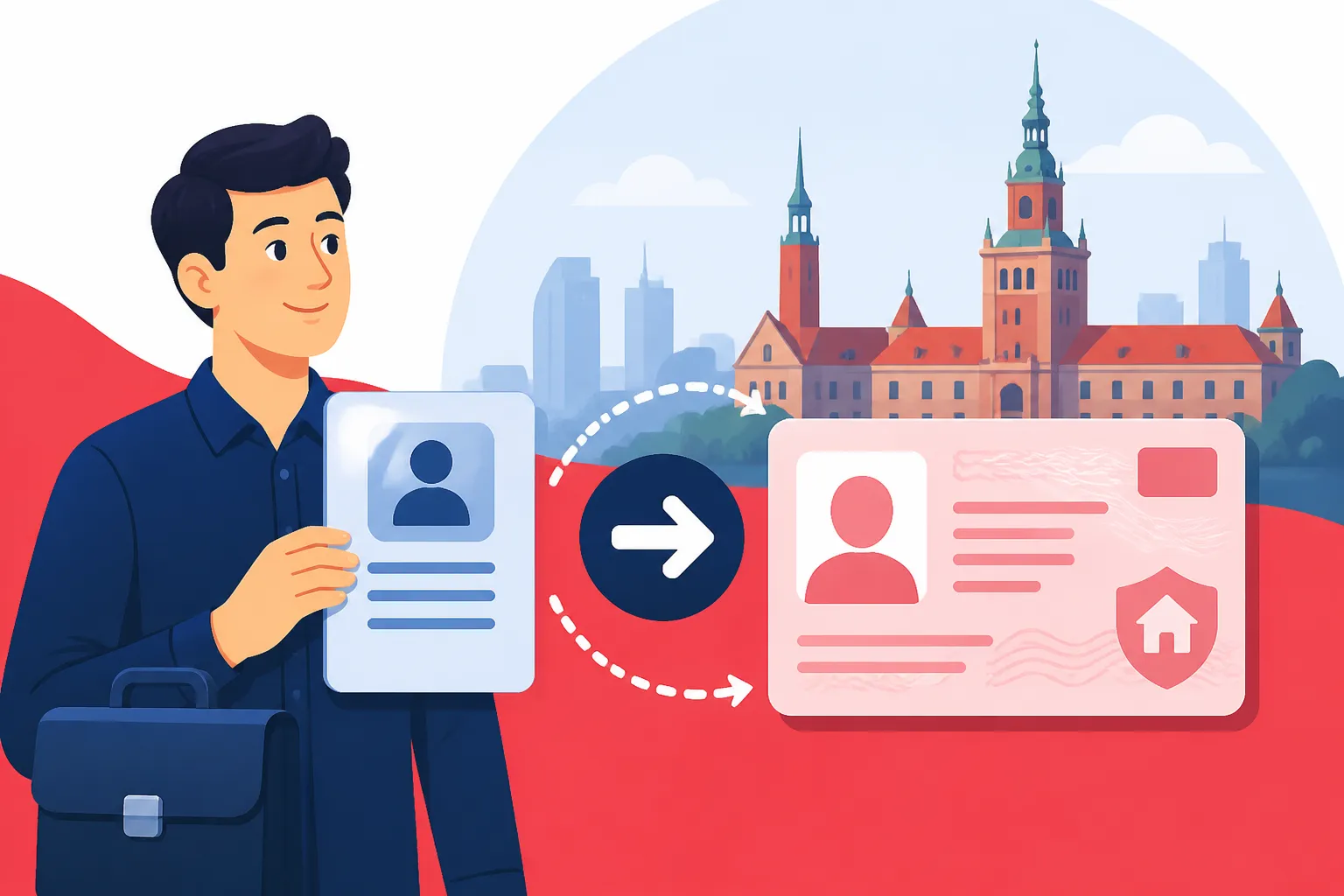
Making the switch from a work visa to a Karta Pobytu is more than just a bureaucratic upgrade; it's about stability and peace of mind. The Karta Pobytu, or Temporary Residence Permit, is a physical card that serves as your identification and proof of residence in Poland. It signifies a deeper level of integration and commitment to staying in the country. For many, it's the moment they feel truly 'settled' rather than just 'visiting with permission.' It alleviates the constant worry about visa validity and opens up new possibilities. It's especially vital for those planning a long-term future in Poland, perhaps even considering Polish citizenship down the line. It's the sturdy bridge from being a temporary foreign worker to becoming a resident.
Key Differences and Benefits of a Residence Permit
The Karta Pobytu offers several significant advantages over a mere work visa. Firstly, it often grants a longer period of stay, typically up to three years at a time, reducing the frequency of applications. Secondly, and crucially, it allows for much smoother travel within the entire Schengen Area without needing additional visas or worrying about the 90/180-day rule for non-EU citizens. The Karta Pobytu is recognized as a valid travel document within the Schengen Zone. Thirdly, it simplifies many administrative tasks in Poland, from opening bank accounts to registering for certain services, as it's a more universally accepted form of ID. It is also the stepping stone towards applying for Permanent Residence in Poland: The Complete Pathway (2027).
Here's a quick comparison of the two statuses:
| Feature | Work Visa (National D-Visa) | Temporary Residence Permit (Karta Pobytu) |
|---|---|---|
| Purpose | Entry into Poland for work; temporary stay. | Long-term residency based on work, study, family, etc. |
| Validity | Usually up to 1 year, tied to work permit. | Typically 1 to 3 years. |
| Document Type | Stamp in passport (visa sticker). | Physical biometric card (plastic ID card). |
| Schengen Travel | Limited; primarily for direct travel to Poland. Short trips possible but use with caution. | Unlimited travel within Schengen area (up to 90 days in any 180 in other Schengen states). |
| Identification in PL | Passport and work permit required. | Karta Pobytu functions as ID. |
| Renewal Process | Often requires leaving Poland, re-applying abroad. | Applied for and processed within Poland. |
| Path to Permanent Stay | No direct path; must transition to Karta Pobytu first. | Direct path to long-term EU resident status or permanent residence. |
| Flexibility for Work | Tied to specific employer/position on work permit. | Generally more flexible if you change employers (requires update, not new application). |
Eligibility and General Requirements for the Karta Pobytu
Alright, so you're convinced the Karta Pobytu is the way to go. Excellent decision! But before you dive headfirst into filling out forms, it's vital to understand if you even qualify and what the baseline requirements are. This isn't just a simple upgrade; it's a new application that needs to prove your continued right to reside in Poland based on your employment.
Who Can Apply for a Work-Based Residence Permit?
Generally, if you're a non-EU citizen legally working in Poland with a valid work permit (or a declaration of intent to entrust work, known as oświadczenie), you're eligible to apply for a Karta Pobytu based on employment. This is the most common route for expats. The key here is "legally working." This means your current work permit or oświadczenie must be active, and you must actually be employed by the Polish company that sponsored your initial visa. You can’t just show up and say, "I want a Karta Pobytu!" without a concrete job offer and legal employment status. Furthermore, you'll generally need to be physically present in Poland when applying, and your application should be submitted while your current visa or previous Karta Pobytu is still valid. Trying to apply when you're already illegally overstaying can lead to significant problems.
The Fundamental Documentation Checklist
This is where the Polish bureaucracy truly shines – or, depending on your perspective, presents its greatest challenge. The list of documents required for a Karta Pobytu application can feel overwhelming, and it's notoriously prone to changes or regional variations. It’s not just a stack of papers; it’s a carefully curated portfolio proving your eligibility. You’ll definitely need your passport, copies of all pages, and a set of recent biometric photos. The application form (Wniosek o udzielenie zezwolenia na pobyt czasowy) is central, and it must be filled out meticulously in Polish. Beyond that, expect to provide proof of your employment, financial stability, and accommodation. Neglecting even one document, or having one with a slight error, can send your application back to square one, leading to frustrating delays. Always check the specific requirements on your local Urząd Wojewódzki website – I can't stress this enough.
Proving Stable and Sufficient Income
One of the cornerstones of a successful Karta Pobytu application for work purposes is demonstrating that you have a stable and sufficient source of income in Poland. This isn't just about showing a payslip; it's about proving that you can financially support yourself and any dependents living with you, without relying on social welfare. The exact threshold for "sufficient income" can vary slightly by region and whether you're supporting a family, but it generally means your net income should be at least the amount required to cover the living costs and, crucially, should not be lower than the minimum wage, which changes annually.
You'll usually need:
- Employment Contract: Your umowa o pracę (employment contract) is primary, clearly stating your position, salary, and duration of employment.
- Work Permit (Zezwolenie na Pracę) or Declaration (Oświadczenie): This proves your legal right to work in the specific role. Sometimes, for a single permit application (which combines work and residence), a new work permit is issued alongside the Karta Pobytu, but you'll still need the employer's supporting documents like a job offer. If you initially came on an oświadczenie, your employer will typically need to apply for a full work permit (Type A or B) for you as part of the Karta Pobytu application process. Check out our guide on How to Apply for a Polish Work Permit (Zezwolenie na Pracę).
- Bank Statements: Showing regular salary deposits for the last few months.
- PIT-11 or other tax documents: If applicable, to show your previous year's earnings and tax contributions.
- ZUS Contributions: Proof of regular social security contributions, often covered by your employer, is also crucial. Your employer can provide a certificate of your Understanding ZUS Health Contributions (Składka Zdrowotna) in Poland.
The authorities want to see that your income is not just hypothetical but real and ongoing. They're looking for stability, so if you've recently changed jobs or had gaps in employment, be prepared to explain those situations clearly and provide additional evidence. Remember, the goal is to convince them you're a self-sufficient, contributing member of society. You can get more details on What Income Do I Need for a Polish Residence Permit in 2026?.
Navigating the Application Process: Step-by-Step
Applying for a Karta Pobytu can feel like a marathon, not a sprint. It involves meticulous preparation, understanding the local Urząd Wojewódzki (Provincial Office) procedures, and a healthy dose of patience. Don't underestimate the need for planning – trying to rush this will only lead to headaches.
Booking Your Appointment at the Urząd Wojewódzki
This is often the first real hurdle, especially in larger cities like Warsaw or Krakow, where demand is high. Most Urzędy Wojewódzkie now require you to book an appointment online via their dedicated booking system. These slots can be snatched up within minutes of becoming available, sometimes weeks or even months in advance. My advice? Set an alarm, refresh the page religiously, and be ready to click fast. It's a frustrating system, I know, but it's the gatekeeper.
Some regional offices might have slightly different systems, or even allow walk-ins for certain types of submissions, but this is increasingly rare. Always check the official website of your specific Urząd Wojewódzki (e.g., Mazowiecki Urząd Wojewódzki for Warsaw, Małopolski Urząd Wojewódzki for Krakow). Be prepared to fill in your basic details – name, passport number, PESEL if you have one – and choose the correct type of application (usually "zezwolenie na pobyt czasowy i pracę" – temporary residence and work permit). For a full breakdown, check our guide on How to Book an Appointment at the Urząd Wojewódzki for Immigration.
Preparing Your Comprehensive Application Packet
Once you have your appointment, the real work begins: assembling your application packet. Think of this as your personal case for staying in Poland. It needs to be complete, accurate, and organized. Here's what you'll typically need, presented clearly and ready for submission:
- Application Form (Wniosek o udzielenie zezwolenia na pobyt czasowy): Downloadable from the Urząd Wojewódzki website. Fill it out completely in Polish, avoiding any errors.
- Passport: Original for verification, plus photocopies of all pages with stamps, visas, and personal data.
- Photos: 4-6 recent biometric photos, meeting specific Polish requirements (usually 3.5 x 4.5 cm, head-on, white background).
- Work Permit (Zezwolenie na Pracę) or supporting documents for a new one: This is critical. Your employer must provide specific documents.
- Employment Contract: Original and copy.
- Proof of Income: Bank statements, payslips from the last few months.
- Proof of Accommodation: Rental agreement (umowa najmu), confirmation from landlord, or zameldowanie. If you’re living with someone, they might need to provide a declaration.
- Health Insurance: Proof of health insurance coverage. This could be public NFZ insurance (if employed) or private insurance. More on this below.
- PESEL Number: While not strictly mandatory for applying, it is essential for many aspects of life in Poland, including healthcare. If you don't have one, it's often assigned during the Karta Pobytu process, but having it beforehand can smooth things over. Learn How to Get Your PESEL Number and Why It Matters for Healthcare.
- Administrative Fees: Proof of payment of the stamp duty for the permit and the card itself.
- Other Supporting Documents: Depending on your situation (e.g., marriage certificate if applying for family reunification), criminal record checks, etc.
It's a lot, I know. I remember my first time feeling like I was packing my life into a folder! Organizations like Sirelo can help with the broader moving process, but for these specific documents, it’s all on you and your employer. Make sure everything is in order and clearly labelled.
The Submission, Biometrics, and Interview Stages
When your appointment day finally arrives, take a deep breath. You'll submit your meticulously prepared packet to an immigration officer. They will conduct an initial check to ensure all required documents are present. If anything is missing, they will often issue a formal letter (called a wezwanie do uzupełnienia braków formalnych) requesting the missing items and giving you a deadline, usually 7-14 days. This is where attention to detail pays off!
During the submission, you will also typically provide your biometrics – fingerprints and a digital photograph. This is usually done on the spot or at a separate biometric appointment, which might be scheduled for you.
An interview may or may not be required. For straightforward work-based applications, especially if all documents are perfectly clear, an interview might be skipped. However, officers have the right to call you for an interview at any point. This would usually be to clarify details about your employment, your relationship with your employer, your daily life, or your intentions in Poland. If an interview is requested, you will receive a formal letter. If you’re not fluent in Polish, you might be allowed to bring a translator, but this varies by office and officer. Always be honest and prepared to answer questions about your application.
After successful submission and biometrics, the officer will usually stamp your passport with a "Złożono wniosek o pobyt czasowy" (Application for temporary residence submitted) stamp. This is crucial as it legalizes your stay in Poland while your application is pending, even if your current visa expires. Don't lose this stamp!
Essential Documents: Beyond the Basics
While the previous section covered the fundamental documents, some specific elements deserve a deeper dive. These are often areas where expats face unique challenges or misunderstandings.
Your Employer's Role: Work Permits and Declarations
Your employer is your co-pilot in this journey. Their active participation and understanding of the process are absolutely non-negotiable. For a work-based Karta Pobytu, the Urząd Wojewódzki will need specific documents from your company:
- Work Permit (Zezwolenie na Pracę): This is the bedrock. If you arrived on a national visa that was based on a work permit, you'll provide a copy of that. If you were working based on an oświadczenie (declaration of intent to entrust work), your employer will usually need to initiate the process for a full work permit for you. This often happens simultaneously or just before your Karta Pobytu application is processed. The Urząd will want to see that your employer has legitimately sought to hire a foreign national.
- Annexes to the Application Form (Załączniki): Your employer fills out specific annexes confirming your employment, your salary, the terms of your contract, and that they are covering your social security (ZUS) and health contributions (NFZ).
- Company Registration Documents: Sometimes, the Urząd may ask for copies of the employer's company registration (KRS, NIP, REGON) to verify the legitimacy of the company.
- Declaration of No Obstacles: A formal declaration from the employer that there are no legal obstacles to your employment.
The relationship with your employer's HR or legal department is vital. They should be familiar with the process of The Complete Guide to Polish Work Permits for Foreign Workers (2027) and the requirements for supporting your Karta Pobytu. Many employers, especially larger international ones, have dedicated staff for this. Smaller companies might need more guidance from you, so be prepared to gently inform them of the requirements. Without their cooperation, your application will stall.
Proof of Accommodation and Financial Stability
Beyond your salary, the Polish authorities want to see that you have a stable roof over your head and can genuinely support yourself.
-
Proof of Accommodation (Potwierdzenie Zamieszkania):
- Rental Agreement (Umowa Najmu): This is the most common and accepted form. Ensure it's a formal, signed agreement (preferably notarized for clarity, though not always mandatory for residence permits) and that your name is clearly on it.
- Zameldowanie: While not always strictly necessary for the Karta Pobytu application itself (especially if your rental agreement is solid), having your official residence registration (zameldowanie) is generally a good idea for overall administrative ease in Poland. It provides a strong, official link to your address. Read our guide on Registering Your Residence (Zameldowanie) in Poland: The Complete Guide.
- Landlord Declaration: If you're living with friends or family, they may need to provide a formal declaration (oświadczenie) confirming your address and stating that they are providing you accommodation.
- Deed of Ownership: If you own property in Poland, a copy of the deed (akt notarialny) is proof.
-
Proof of Financial Stability:
- Beyond your salary, the Urząd may look at your overall financial situation. This is particularly relevant if you have dependents. They want to ensure that even after covering your accommodation and basic needs, you still have enough funds for daily living.
- Bank Statements: Regular bank statements showing your transactions and a healthy balance can bolster your case, especially if your salary is close to the minimum threshold.
- Savings: Proof of savings in a Polish bank account can also be submitted, though consistent income is usually preferred.
Health Insurance and Other Critical Papers
One area that causes a lot of confusion for expats is health insurance. Poland has a public healthcare system (NFZ), but proving coverage for your Karta Pobytu application needs to be done correctly. The Complete Guide to Healthcare in Poland for Expats (2027) is a great place to start learning more broadly.
- Public Health Insurance (NFZ): If you are employed in Poland, your employer is legally obligated to register you for NFZ (Narodowy Fundusz Zdrowia) and pay your contributions. This is fantastic, as it means you're covered by the public system. For your Karta Pobytu application, you'll need proof of this. Your employer can provide a ZUS RMUA form or a certificate from the ZUS (Zakład Ubezpieczeń Społecznych) confirming your registration and contributions. This is usually sufficient.
- Private Health Insurance: If you are not (yet) covered by NFZ or prefer private options, you will need private health insurance that meets specific requirements set by the Polish government. This usually means it must cover emergency medical treatment, hospital stays, and transport for at least the full period of your requested permit. Ensure the coverage amount is substantial (often a minimum of 30,000 EUR or equivalent). Many expats choose international providers like Cigna Global for comprehensive private health coverage, or local Polish private providers such as Medicover or LUX MED, especially if their employer offers it as a benefit. If you are opting for private insurance, make sure the policy is issued in Polish or accompanied by a sworn translation. Dive deeper into What Health Insurance Do I Need for a Polish Residence Permit?.
- Criminal Record Check: For certain nationalities or specific types of permits, a criminal record check from your home country (and potentially from Poland if you've been here a while) might be requested. Always check the specific requirements for your Urząd Wojewódzki.
- Translation of Documents: Any document not originally in Polish (e.g., birth certificate, marriage certificate, diplomas from your home country) must be translated by a sworn translator (tłumacz przysięgły) registered in Poland. Do not skip this step or use unofficial translations; they will be rejected.
What Happens After Application: Waiting, Decisions, and Appeals
You've submitted your monumental packet of documents, given your fingerprints, and have that precious stamp in your passport. Now, the infamous "waiting game" begins. This can be the most trying part of the process, a test of patience that often feels uniquely Polish.
The Inevitable Waiting Game and Stamp in Your Passport
Once your application is formally accepted and stamped, you're in a legal limbo, but a safe one. The stamp in your passport (or a formal letter confirming submission) allows you to stay in Poland legally while your application is being processed, even if your existing visa expires. This is a massive relief for many, as it prevents you from becoming an "overstayer."
However, this doesn't mean you can just sit back and relax entirely. The processing times for Karta Pobytu applications can vary wildly, from a few months to well over a year, depending on the Urząd Wojewódzki, the complexity of your case, and the current workload. Major cities like Warsaw, Krakow, and Wrocław often have longer waiting times. During this period, you might find yourself checking the online status tracker (if your Urząd offers one) multiple times a day. It's a test of resilience, and many expats share stories of the agonizing wait. You can learn more about What Is the Processing Time for a Karta Pobytu in Poland?.
Potential Pitfalls and Request for Additional Documents
The waiting period isn't always silent. It's common for the Urząd to send you requests for additional documents (wezwanie do uzupełnienia). This might happen for several reasons:
- Minor Errors or Omissions: You forgot a signature, a document wasn't properly translated, or a copy was unclear.
- Changes in Circumstances: Your employer's details changed, your salary increased, or you moved apartment. These changes need to be communicated to the Urząd immediately.
- Clarification: The officer might need more information about your employment, your funds, or your family situation.
- Missing Specific Documents: Sometimes, a particular Urząd or officer might have slightly different expectations or request something not explicitly listed on the general checklist.
When you receive such a request, it will come by registered mail (list polecony) to your declared address. Do not ignore these letters! They usually give you a strict deadline (e.g., 7 or 14 days) to provide the missing information. Failing to respond within the given timeframe can lead to your application being left without consideration (pozostawienie wniosku bez rozpoznania), effectively rejecting it. It's stressful, but view it as an opportunity to fix something and push your application forward. Always respond promptly and provide exactly what they ask for.
Understanding the Decision and What to Do Next
Eventually, after what feels like an eternity, you will receive a decision letter (decyzja). This will either be a positive decision (granting you the Karta Pobytu) or a negative one (rejecting your application).
- Positive Decision: Congratulations! You'll be instructed on how to pay the fee for the physical card and how to collect it. You'll usually need to give your fingerprints again at this stage to produce the biometric card. Once you have that shiny plastic card in your hand, you're officially a resident! Remember to keep an eye on its expiry date and start planning for its renewal well in advance. Our guide on How to Renew Your Polish Residence Card will be helpful down the line.
- Negative Decision: This is tough, but it's not always the end of the road. The decision letter will clearly state the reasons for the rejection. You have the right to appeal this decision within a specific timeframe (usually 14 days) to the Head of the Office for Foreigners (Szef Urzędu do Spraw Cudzoziemców) in Warsaw, through the same Urząd Wojewódzki that issued the negative decision. An appeal allows you to present new arguments or additional documents to counter the reasons for rejection. It’s highly advisable to seek legal counsel from an immigration lawyer if your application is rejected, as appeals can be complex.
Life with Your New Karta Pobytu: Rights and Responsibilities
Receiving your Karta Pobytu is a moment of triumph. It’s the physical manifestation of your settled status in Poland. But this new status comes with a set of rights and, equally important, responsibilities. Understanding these will help you navigate your long-term life in Poland smoothly.
Travel, Work, and Family Reunification Privileges
One of the most immediate and appreciated benefits of your Karta Pobytu is the enhanced travel freedom. Your residence card, combined with your passport, allows you to travel visa-free within the Schengen Area for periods of up to 90 days in any 180-day period. No more worrying about D-visa limitations for those weekend trips to Berlin or Prague! Just make sure your passport and Karta Pobytu are always valid when you travel.
Regarding work, your Karta Pobytu is typically issued with the specific purpose of your employment. This means you are authorized to work for the employer that sponsored your application. If you change jobs, it's not as simple as just starting a new role. You generally need to inform the Urząd Wojewódzki of any changes in your employment (e.g., employer, position, salary). In many cases, a change of employer will require an update to your Karta Pobytu, or sometimes even a new application, depending on the specifics. Always clarify with the Urząd or an immigration lawyer before making a job switch to ensure you remain compliant.
For those with families, the Karta Pobytu is a crucial step towards family reunification. Once you have your permit, you can apply for residence permits for your immediate family members (spouse, minor children) based on your own residency. This allows them to join you and reside legally in Poland. Our guide on How to Apply for Family Reunification in Poland provides detailed steps for this process.
Keeping Your Permit Valid: Changes in Circumstance
Your Karta Pobytu isn't a "set it and forget it" document. It's a living document that reflects your current legal status in Poland. Certain changes in your personal circumstances must be reported to the Urząd Wojewódzki. Failing to do so can lead to problems, including potential revocation of your permit or difficulties with renewal.
Crucial Changes to Report:
- Change of Employer: As mentioned, this is one of the biggest. Whether you quit, get fired, or find a new job, inform the Urząd promptly. They will assess if your Karta Pobytu needs updating or if a new application is required.
- Change in Salary/Employment Terms: Significant changes in your employment contract (e.g., a drastically reduced salary, shift from full-time to part-time) might also need to be reported as they could impact your financial stability assessment.
- Change of Address: Moving to a new apartment or house requires you to inform the Urząd of your new address. You will also need to update your zameldowanie.
- Change in Personal Status: Marriage, divorce, birth of a child, or death of a dependent.
- Loss or Damage of Karta Pobytu: If your card is lost, stolen, or damaged, you must report it immediately and apply for a replacement.
- Leaving Poland Permanently: If you decide to leave Poland for good, it's generally good practice to inform the Urząd to formally end your residency.
The timeframe for reporting these changes is usually 15 days. Always check the specifics with your local Urząd Wojewódzki as requirements can vary. Proactive communication is key to avoiding issues.
Planning for Renewal or Permanent Residence
Your Karta Pobytu will have an expiry date. It is absolutely critical to start the renewal process well in advance of this date. I'm talking months, not weeks! The Polish immigration system, as you've already experienced, isn't known for its speed. Start gathering documents, booking appointments, and contacting your employer at least 3-4 months before your card expires. The renewal process is very similar to your initial application, requiring updated employment contracts, financial proof, and biometric photos.
If you have lived in Poland for a continuous period (usually 5 years on a Temporary Residence Permit), you might become eligible to apply for Permanent Residence (Pobyt Stały) or EU Long-Term Resident status. This is a much more stable form of residency, often with fewer restrictions. The requirements are more stringent, usually involving proving Polish language proficiency, stable income over a longer period, and a clean criminal record. It’s a significant milestone for expats committed to making Poland their long-term home. Start exploring the options for How to Apply for Permanent Residence (Pobyt Stały) in Poland as your Karta Pobytu nears its end. The journey through Polish immigration can be long and winding, but with each step, you gain more stability and a deeper connection to this fascinating country.
Disclaimer
Please note that immigration laws and procedures in Poland are subject to change. While this guide provides comprehensive and up-to-date information based on current knowledge and reliable sources, it is for informational purposes only and does not constitute legal advice. Always consult the official websites of the relevant Polish authorities (such as your local Urząd Wojewódzki or the Office for Foreigners) or seek advice from a qualified immigration lawyer for personalized guidance regarding your specific situation.