Understanding ZUS Health Contributions (Składka Zdrowotna) in Poland
Oh, the infamous Składka Zdrowotna – that little deduction on your payslip or looming payment for your self-employment that can feel like a complete enigma when you first move to Poland. Many of us expats have stared at our bank statements, scratching our heads, wondering what exactly this "health contribution" entails and what it actually gets us. This guide is here to untangle the complexities of Poland's ZUS health contributions, known as składka zdrowotna, helping you understand how it's calculated, what it covers, and how to navigate this essential part of the Polish healthcare system.
What Exactly is Składka Zdrowotna and Why Do I Pay It?
When you’re an expat in Poland, one of the most significant pieces of the social security puzzle you’ll encounter is the składka zdrowotna, or health contribution. This isn't just another tax; it's your ticket into the public healthcare system, managed by the National Health Fund (NFZ). It's a mandatory payment that funds all state-provided medical services, from routine GP visits to specialist consultations, hospital stays, and even some dental care. For many, it's the primary way to ensure you're covered for unexpected illnesses or accidents without racking up crippling medical bills.
The NFZ: Your Public Healthcare Gateway
Think of the składka zdrowotna as your monthly membership fee to the NFZ. Once you're properly registered and making these contributions, you gain access to the public healthcare system. This means that when you visit a doctor at a public przychodnia (clinic) or need treatment at a state-run szpital (hospital), the costs are largely covered by your contributions. It’s a collective system, much like in many other European countries, where everyone contributes a small part to ensure medical care is available to all who need it. It might not always be the fastest or most convenient, but it's fundamentally there to catch you when you fall ill. If you want to dive deeper into how the entire system operates, you'll find a wealth of information in our guide on How Poland's National Health Fund (NFZ) Works: A Full Overview.
For us foreigners, understanding this link between our contributions and access to services is crucial. It directly impacts things like being able to register with a family doctor, obtaining e-prescriptions, and getting referrals to specialists. Without these contributions, or proof of them, accessing public healthcare can be a non-starter.
Who is Obligated to Pay Składka Zdrowotna?
The short answer is: almost everyone who lives and works in Poland. The obligation primarily falls on individuals who are employed under a standard employment contract (umowa o pracę), those engaged in civil law contracts like umowa zlecenie (mandate contract), and crucially, those who are self-employed (jednoosobowa działalność gospodarcza or JDG). Students, pensioners, and registered unemployed individuals also have their health contributions covered, often by the state or through specific schemes.
Even if you're not working, but are a resident, you might find yourself needing to ensure you have coverage, perhaps through a spouse’s employment or through voluntary insurance. It’s a fundamental principle here that if you reside in Poland, you should have health coverage. This is also why securing your PESEL number is so vital, as it's often the identifier used in the health system. You can learn more about How to Get Your PESEL Number and Why It Matters for Healthcare.
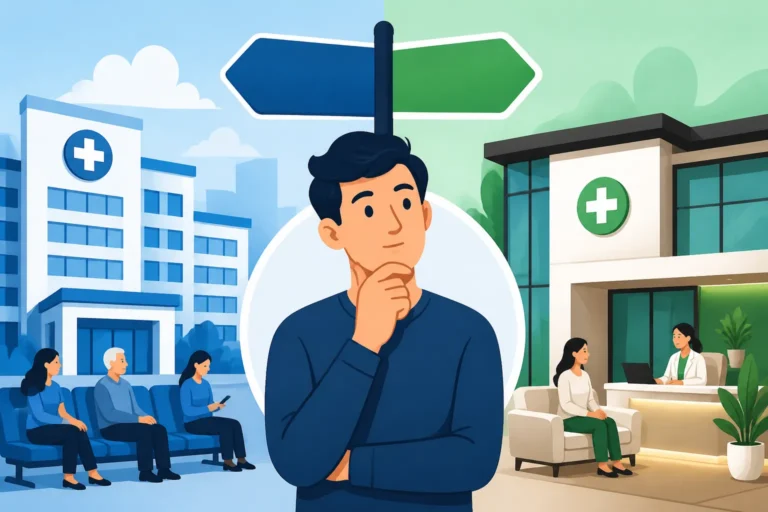
What sometimes catches expats off guard is that even if you have private insurance, the składka zdrowotna is still a mandatory deduction if you’re employed or self-employed. Many of us opt for private subscriptions from providers like Medicover or LUX MED for the convenience and access to English-speaking doctors, but these don't negate your public health contribution. It's an important distinction to make, as it means you’re often paying for both systems simultaneously, an expense worth factoring into your budget. If you're weighing your options between private and public, our article on Understanding Private Medical Subscriptions (Medicover, LUX MED) in Poland might offer some clarity.
How Składka Zdrowotna Works for Employees
For most expats arriving in Poland on an employment contract (umowa o pracę), your składka zdrowotna is something you rarely have to think about actively. It’s seamlessly handled behind the scenes, yet it’s good to understand the mechanics, if only to decode your payslip.
Calculation and Automatic Deductions for Umowa o Pracę
If you're working under an umowa o pracę, your employer is legally obligated to register you with ZUS (Zakład Ubezpieczeń Społecznych – the Social Insurance Institution) and deduct your health contributions directly from your gross salary. It's a fixed percentage of your gross income, currently 9%. What makes this a bit simpler for employees is that this 9% is calculated on your gross income minus your social security contributions (pension, disability, sickness insurance). So, it's not simply 9% of your stated gross salary, but rather a calculation based on a slightly lower base.
This automatic deduction is a double-edged sword: it’s incredibly convenient because you don't have to lift a finger, but it can also make it harder to grasp the actual amount you're contributing. When you look at your payslip, you'll typically see a line item for "Składka na ubezpieczenie zdrowotne" or similar, showing the deducted amount. This ensures you're continually covered, and your employer handles all the paperwork, registration, and payments to ZUS. This is part of the broader system of ZUS social contributions that every employee faces. Our comprehensive guide, Understanding ZUS Social Contributions in Poland: The Full Guide, breaks down all the different elements that come out of your salary.
The Employer's Pivotal Role
Your employer acts as the middleman between you and ZUS. They are responsible for:
- Registration: Enrolling you in the social insurance system as soon as your employment begins.
- Calculation and Deduction: Accurately calculating the składka zdrowotna based on your earnings and deducting it from your salary.
- Payment: Transferring these funds (along with your other social security contributions and their own share of contributions) to ZUS on your behalf.
- Reporting: Submitting monthly declarations to ZUS detailing your contributions.
This means that as long as you're legally employed under an umowa o pracę, you should be covered. However, it’s always wise to keep an eye on your payslips to ensure these deductions are being made, and if you ever have doubts about your coverage status, you can always check through the Internetowe Konto Pacjenta (IKP) system, or directly with ZUS or the NFZ. Setting up your IKP account is a great way to monitor your health insurance status and access your medical history, and we have a guide on How to Set Up an Internetowe Konto Pacjenta (IKP) Patient Account to walk you through it.
It's reassuring to know that this system takes care of the basic healthcare needs for employees. However, the public system can have its limitations, particularly with waiting times for specialists or specific procedures. This is where many expats consider supplementing their public coverage with private insurance. While SafetyWing primarily focuses on travel and remote work insurance, for long-term residents, it's a good example of the kind of supplemental protection you might consider for those moments when you need quick access to a doctor or wish to bypass the public queues.
Składka Zdrowotna for Self-Employed Individuals (JDG)
Ah, the self-employed life in Poland – liberating, yes, but also a world of extra administrative hoops, especially when it comes to składka zdrowotna. This is where things get significantly more complex compared to being an employee, thanks in large part to the Polski Ład reforms introduced in 2022. For anyone running a jednoosobowa działalność gospodarcza (JDG), understanding these calculations is paramount because you are entirely responsible for them.
Different Calculation Methods and Their Impact
Before Polski Ład, the health contribution for self-employed individuals was a flat rate, making it relatively straightforward. Now, the calculation of składka zdrowotna is directly linked to your chosen method of income taxation, and it can fluctuate with your income. This change introduced a layer of complexity that has left many expats (and Poles!) feeling bewildered.
Here’s a breakdown of the primary taxation methods and how they affect your health contribution:
- Tax Scale (Skala Podatkowa): If you opt for the progressive tax scale (the most common method, with 12% and 32% brackets), your health contribution is 9% of your income. The catch? Your "income" for this purpose is generally defined as your profit from the business after deducting social security contributions and eligible costs. There's also a minimum contribution amount, which changes annually. So, even in months with low or no profit, you'll still have to pay at least the minimum. This means you need to accurately track your income and expenses each month.
- Flat Tax (Podatek Liniowy): For those on the 19% flat tax, the składka zdrowotna is 4.9% of your income. Again, "income" here is typically your profit after deductions. Similar to the tax scale, there's a minimum contribution, ensuring a base level of payment regardless of profit fluctuations. This method is often chosen by those with higher incomes, as the fixed 19% can be more favourable than the progressive scale, even with the health contribution factored in.
- Lump Sum (Ryczałt od Przychodów Ewidencjonowanych): This method, known as ryczałt, is popular with freelancers and specific types of businesses (especially IT). Here, your tax is a percentage of your revenue (not profit), and the składka zdrowotna is calculated based on your revenue as well, but in a tiered system. Instead of a direct percentage, your monthly health contribution is a fixed amount based on a percentage of the average monthly salary in the previous year, with different tiers depending on your annual revenue. This can be fantastic for high-revenue, low-cost businesses, as it caps your health contribution at certain thresholds. However, it also means you pay składka zdrowotna even if you have zero profit in a given month. Understanding this particular nuance for self-employed individuals is so critical that we've dedicated an entire article to it: Understanding Health Coverage for the Self-Employed (JDG) in Poland.
Calculating these contributions can be a real headache. You need to declare your income (or revenue for ryczałt) by the 20th of the following month and then make the payment. Many self-employed expats rely on accountants or online accounting software to handle these calculations and ensure compliance. This is where the complexities of The Complete Guide to Taxes in Poland for Expats (2027) truly come into play.
The Impact of Polski Ład on Self-Employed Contributions
The Polski Ład reforms radically changed how składka zdrowotna is calculated for the self-employed. Previously, it was a fixed, relatively low amount that was partly tax-deductible. Now, it’s tied directly to income (or revenue), is generally not tax-deductible (with some exceptions for ryczałt and flat tax payers who can deduct a portion of the paid health insurance premium from their income tax base or flat tax), and often results in significantly higher payments, especially for those with higher incomes.
One of the biggest frustrations for expats (and Polish entrepreneurs) is the lack of clarity and frequent changes that have plagued the system since Polski Ład. What might seem like a simple calculation one year can change the next. This constant flux makes financial planning challenging and highlights the need for continuous vigilance and possibly professional accounting advice.
For instance, under the flat tax, a portion of the składka zdrowotna (up to a certain limit) can reduce your taxable income, but this is an ulga (relief), not a direct deduction from the health contribution itself. Similarly, for ryczałt payers, 50% of the składka zdrowotna paid can be deducted from your revenue when calculating your tax base. These nuances are vital to get right to avoid overpaying or, worse, falling foul of the tax office. For a detailed breakdown of the costs, you might find our guide on How Much Is the ZUS Health Contribution for the Self-Employed? incredibly useful.
It’s worth noting that while these contributions grant you access to the NFZ, many self-employed individuals also opt for private health insurance or medical subscriptions. This is often because the public system, while comprehensive, may not offer the speed or convenience that business owners value. Companies like SafetyWing, for example, cater to digital nomads and remote workers, offering flexible health insurance that can complement local public schemes or provide coverage during periods of transition.
Other Contribution Scenarios
Beyond the standard employment and self-employment routes, there are several other scenarios where you might encounter or need to arrange for składka zdrowotna. Poland's system tries to be comprehensive, ensuring most residents have some form of health coverage.
Umowa Zlecenie and Other Civil Law Contracts
If you’re working in Poland under an umowa zlecenie (mandate contract), your situation is a bit different from a full umowa o pracę. For an umowa zlecenie, the składka zdrowotna (9% of your gross income) is typically deducted by the payer (the company you're working for), similar to an employment contract. However, there are nuances:
- Multiple Contracts: If you have multiple umowy zlecenie, or an umowa zlecenie alongside an umowa o pracę, only one source of income is usually used as the basis for the full social security contributions (including health). Once you hit the minimum wage threshold from one contract, subsequent umowy zlecenie might only incur the health contribution and not other social security payments, but this can get tricky.
- Students: If you are a student under 26 years old and work on an umowa zlecenie, you are generally exempt from all social security contributions, including składka zdrowotna. This is a significant advantage for younger expats studying here.
For umowa o dzieło (contract for specific work), it’s even simpler: typically, no social security contributions, including składka zdrowotna, are paid from this type of contract. This is why it’s often used for creative or project-based work, but it offers no health coverage through the contract itself. It’s crucial to understand the differences between these contract types, which are elaborated in our guide on Understanding the Umowa o Pracę vs Umowa Zlecenie vs Umowa o Dzieło.
Voluntary Contributions and Unemployed Individuals
What if you're not employed, not self-employed, and not covered through a spouse? You still need health coverage! Poland offers options for voluntary health insurance with the NFZ. This is particularly relevant for:
- Non-working residents: If you’re living in Poland but not actively working or registered as unemployed, you can apply for voluntary health insurance. You’ll need to register at your local NFZ branch, provide some documents (like your PESEL and proof of residence), and then you’ll be issued a monthly payment slip. The monthly premium for voluntary insurance is typically calculated as 9% of the average monthly salary for the previous quarter, meaning it’s a fixed, albeit fluctuating, amount.
- Students over 26: If you're a student over 26 years old, you will likely need to arrange your own health insurance. This could be voluntary NFZ insurance, or a private plan. If your university doesn't cover you (some do for foreign students, but always confirm), then this is an important step to take.
- Individuals between jobs: There might be a gap in your employment, or perhaps you’re a tourist planning an extended stay that goes beyond typical travel insurance coverage. In such cases, voluntarily insuring yourself with the NFZ or obtaining a private international health insurance plan (like those offered by SafetyWing, which can be flexible for nomads) is essential to avoid being uninsured. Our article How Do I Voluntarily Insure Myself with the NFZ in Poland? gives a step-by-step overview.
For those registered as unemployed with the Poviat Labour Office (Powiatowy Urząd Pracy), the state generally covers your health contributions. This means you maintain your access to the NFZ system, which is a vital safety net during periods of unemployment.
| Type of Income/Status | Basis for Składka Zdrowotna Calculation | Current Rate (approx.) | Who Pays? |
|---|---|---|---|
| Umowa o Pracę | Gross income minus social contributions | 9% | Employer (deducted) |
| Umowa Zlecenie | Gross income (with exceptions) | 9% | Payer (deducted) |
| JDG (Skala Podatkowa) | Income (profit) | 9% (with minimum) | Self-employed |
| JDG (Podatek Liniowy) | Income (profit) | 4.9% (with minimum) | Self-employed |
| JDG (Ryczałt) | Tiered based on annual revenue | Fixed amount per tier | Self-employed |
| Voluntary NFZ | 9% of average monthly salary | Variable fixed amount | Individual |
| Registered Unemployed | Covered by the state | N/A | State |
| Students < 26 (Umowa Zlecenie) | Exempt | 0% | N/A |
Note: Rates and exact calculation methods can change, especially with new reforms. Always verify current regulations or consult an accountant.
Navigating the NFZ System with Your Contributions
So, you're paying your składka zdrowotna – fantastic! But how do you actually use the NFZ system and confirm that your contributions are indeed giving you access? This is where many expats encounter the practical side of Polish healthcare bureaucracy.
How to Confirm Your Coverage and Eligibility
Unlike some countries where you might receive a health insurance card in the mail, Poland's system relies more on digital verification and unique identifiers. Your primary proof of coverage isn't a physical card (though an EHIC card is available for travel if you're covered by the NFZ), but rather your registration in the ZUS system, linked to your PESEL number.
Here’s how you can confirm your eligibility:
- Internetowe Konto Pacjenta (IKP): This online patient portal is your best friend. Once you've set up your IKP account (which requires a trusted profile – Profil Zaufany), you can log in and instantly see your health insurance status. It will clearly indicate if you're actively insured by the NFZ. This digital record is often sufficient when visiting a doctor or clinic. Our detailed guide, How to Set Up an Internetowe Konto Pacjenta (IKP) Patient Account, will walk you through the process.
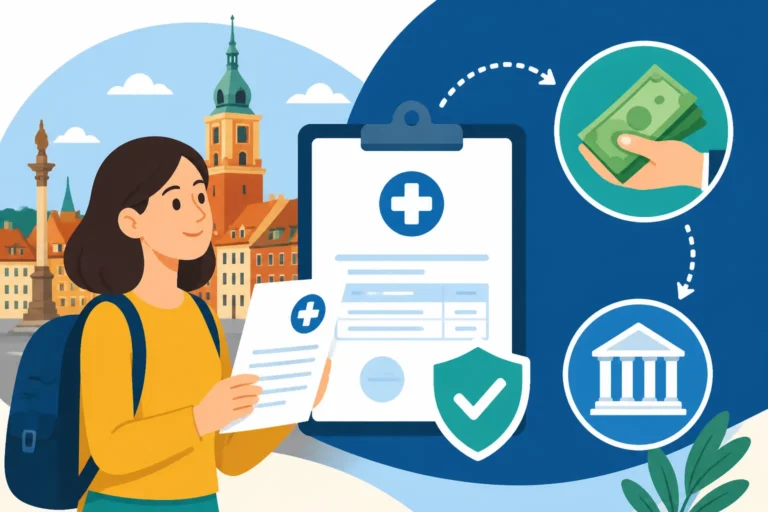
- ZUS Confirmation (for employees/self-employed): While you don't typically need to carry it, you can request a ZUS RMUA report from your employer (or generate it yourself if self-employed). This document confirms your social security and health contributions have been paid. For employees, your payslip itself can often serve as temporary proof of ongoing employment and, thus, coverage.
- NFZ Verification: At any public przychodnia or hospital reception, they can electronically verify your insurance status using your PESEL number. If there’s an issue, they might ask for additional proof, like a recent ZUS RMUA, but generally, the electronic system should suffice.
Don't wait until you're feeling unwell to check your status. Proactively confirming your coverage can save you a lot of stress and potential expense down the line.
Accessing Healthcare Services with NFZ Coverage
Once you’ve confirmed your NFZ coverage, you can access the public healthcare services. The process generally starts with registering with a family doctor, known as a lekarz rodzinny or lekarz POZ (Primary Healthcare Doctor).
- Choosing and Registering a GP: You are entitled to choose your own GP from any public przychodnia that has space. You fill out a declaration form (often available at the clinic or online via IKP) specifying your chosen doctor. This is a crucial step, as your GP is your gateway to most specialist care within the public system. Without a registered GP, accessing anything beyond emergency care can be very difficult. Our article, The Expat Guide to Finding a Family Doctor (Lekarz Rodzinny) in Poland, provides practical tips for this process.
- GP Appointments: Your GP handles general health issues, common illnesses, and provides e-recepty (e-prescriptions) and e-skierowania (e-referrals) for specialist consultations or diagnostic tests. Appointments are usually made by phone or in person. Waiting times can vary significantly depending on the clinic and city.
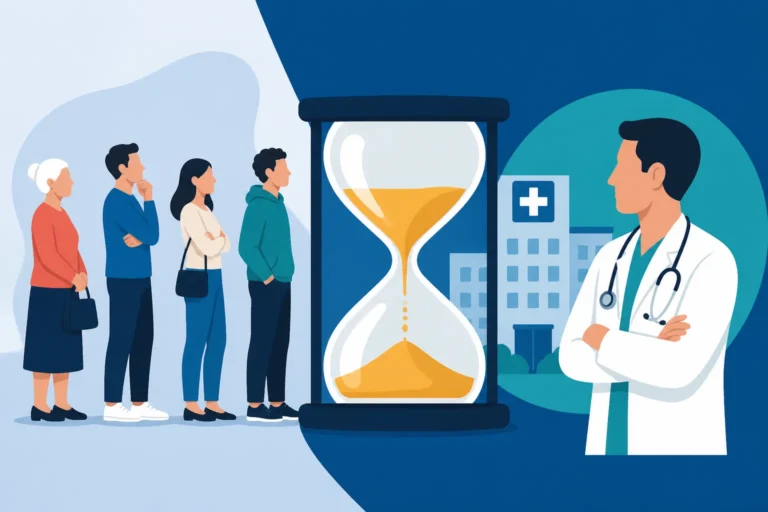
- Specialist Care: To see a specialist within the public system (e.g., a dermatologist, cardiologist, orthopedist), you generally need an e-skierowanie from your GP. Once you have a referral, you then need to find a specialist clinic or hospital that accepts NFZ patients for that specific specialty. This is often where the infamous waiting lists come into play, which can be long for popular specialists, sometimes extending for several months.
- Emergency Care: In an emergency, you can go directly to the nearest hospital emergency room (SOR – Szpitalny Oddział Ratunkowy) or call 112 or 999 for an ambulance (karetka). In true emergencies, your NFZ status won't be questioned initially, as care is provided to stabilize your condition. However, for non-life-threatening issues, going to the SOR might result in long waits and you could be redirected to a primary care clinic. Understanding Emergency Medical Care in Poland: What Every Expat Needs to Know is vital.
It’s important to manage expectations with the public system. While it's comprehensive, it can be slow. For quicker access, or if you prefer English-speaking doctors, many expats supplement their NFZ coverage with private medical subscriptions or health insurance. Providers like SafetyWing, for instance, offer insurance plans designed for those who travel frequently or want an extra layer of peace of mind, potentially covering costs that might not be as readily accessible through the NFZ.
Common Expat Frustrations and How to Deal with Them
Let's be real, navigating the Polish healthcare system, even with your składka zdrowotna paid, isn't always a walk in the park. Many of us expats have faced moments of utter confusion and exasperation. It's not necessarily because the system is bad, but because it's different, and the language barrier often amplifies every hurdle.
Language Barriers and Communication Challenges
This is perhaps the biggest and most common frustration. While younger doctors and those in larger cities might speak English, it's by no means guaranteed, especially in public przychodnias or with administrative staff. Trying to explain complex medical symptoms in broken Polish, or understanding medical terminology spoken quickly, can be incredibly stressful when you're already feeling vulnerable due to illness.
- Bring a Polish Speaker: If possible, always try to bring a Polish-speaking friend, colleague, or even a professional translator to appointments, especially initial ones or specialist visits. This can make a world of difference in clear communication.
- Prepare Phrases: Learn key medical phrases in Polish. Even simple ones like "boli mnie…" (my… hurts) or "jestem chory/chora" (I am sick) can be helpful.
- Google Translate (with caution): Use translation apps, but understand their limitations. For complex medical issues, they can sometimes cause more confusion than clarity.
- Find English-Speaking Doctors: Many private clinics, and some public ones in expat-heavy areas, have English-speaking staff. While your składka zdrowotna won't directly cover private clinic fees, your NFZ coverage does allow you to be seen by a GP who speaks English within the public system if you can find one. Our guide on How to Find an English-Speaking Doctor in Poland can point you in the right direction.
- Leverage IKP: The IKP portal often allows you to see appointment details and prescription information, which can be useful even if you struggled with the verbal communication during the visit.
Bureaucracy, Paperwork, and Long Waiting Times
The Polish administrative system loves its paperwork, and the healthcare sector is no exception. From registering with the NFZ itself to getting a PESEL, submitting applications, and dealing with ZUS, it can feel like a never-ending cycle of forms and waiting.
- Be Patient and Persistent: Things often take longer than you expect. Go into every interaction with a calm mindset and be prepared for multiple visits or calls.
- Keep Copies: Always make copies of every document you submit and every document you receive. This habit will save you immense headaches if something goes missing.
- Ask for Clarification: If you don't understand something, ask for it to be repeated or explained differently. Don't leave an office until you're clear on the next steps.
- Utilize Online Resources: The IKP portal and ZUS online services are increasingly useful, allowing you to manage some aspects digitally, which can sometimes bypass queues.
- Waiting Lists: The reality is that for many specialist appointments or non-urgent procedures in the public system, waiting lists can be considerable. If you need something quickly, or if your condition is not covered by the NFZ, this is where private options or a flexible insurance plan like SafetyWing can be a real lifeline. Having that alternative can alleviate a lot of stress.
Understanding Your ZUS Statements and Notifications
Deciphering ZUS statements, especially if you're self-employed, can be a major source of confusion. They are typically in Polish, use specific terminology, and don't always offer a clear, plain-language breakdown.
- Get an Accountant: For self-employed individuals, a good accountant who understands expat needs is invaluable. They will not only handle your tax declarations but also explain your ZUS contributions in clear terms.
- Use Online Translators for Documents: While careful, using a document translator for ZUS letters can help you grasp the gist of what’s being communicated.
- Consult Official ZUS Resources: ZUS does have some information in English on its website, but it’s often generic. For specific issues, direct communication (or communication via your accountant) is usually necessary.
- Attend Workshops: Some expat groups or business support organizations offer workshops on Polish taxes and social security, which can provide invaluable insights.
Remember, you're not alone in these frustrations. Many expats before you have navigated these same waters. Sharing experiences in online forums or expat groups can also provide practical tips and emotional support.
The Importance of Staying Compliant and Avoiding Pitfalls
Understanding your składka zdrowotna isn't just about accessing healthcare; it's about staying on the right side of Polish law. Non-compliance can lead to serious headaches and financial penalties.
Consequences of Non-Payment or Underpayment
The ZUS system is robust, and they do track contributions diligently. If you fail to pay your składka zdrowotna (or any other ZUS contributions), or if you consistently underpay, you could face several negative consequences:
- Loss of Healthcare Access: The most immediate impact is that your NFZ coverage will be suspended or revoked. This means any medical care you receive at a public facility will not be covered, and you'll be billed for the full cost, which can quickly add up to significant amounts.
- Penalties and Interest: ZUS will charge interest on overdue payments. The longer the payment is delayed, the more interest accrues. Additionally, there can be administrative fees and penalties imposed for late or incorrect declarations.
- Enforcement Actions: For persistent non-payers, ZUS has legal avenues to collect outstanding debts, which can include seizing assets or initiating legal proceedings. This is especially true for self-employed individuals, as the debt is directly tied to them.
- Issues with Future Applications: Having outstanding ZUS debts can complicate future applications for residence permits (Karta Pobytu), particularly if you need to demonstrate financial stability or compliance with Polish laws. This is covered in more detail in our article, The Complete Guide to Polish Residence Permits for Expats (2027).
It's far better to address any payment issues proactively rather than waiting for ZUS to chase you. If you realize you've missed a payment or made an error, contact ZUS (or your accountant) immediately to rectify the situation.
Seeking Professional Advice and Staying Informed
Given the complexities, especially for the self-employed, trying to navigate ZUS contributions entirely on your own can be risky.
- Accountants are Your Allies: For anyone self-employed in Poland, a good accountant specializing in JDG and expat taxation is almost a necessity. They can ensure correct calculations, timely payments, and accurate declarations, saving you from potential penalties and ensuring your peace of mind. They are also up-to-date with the latest changes from Polski Ład and other reforms.
- Legal Counsel: For particularly complex situations, or if you find yourself in a dispute with ZUS, consulting with a lawyer specializing in social security law might be advisable.
- Stay Informed: Polish tax and social security laws can change, sometimes with little warning. Keep an eye on reputable expat forums, news sources, and official ZUS communications (or rely on your accountant to do so) to stay informed about any relevant updates.
- Consider Supplemental Insurance: While not directly related to ZUS compliance, understanding the gaps in the public system (like waiting times) might lead you to explore private insurance options. Companies like SafetyWing offer policies that are transparent and flexible, allowing you to access private healthcare when the public system is slow or when you simply prefer a different experience. This isn’t about replacing your ZUS contributions, but supplementing them for a more robust healthcare strategy.
Your składka zdrowotna is more than just a line item on your financial statements; it’s a fundamental aspect of living and working in Poland, providing you with essential healthcare access. Taking the time to understand it, manage it correctly, and seek help when needed will make your life as an expat much smoother and more secure.
Disclaimer
The information provided in this guide is for general informational purposes only and does not constitute legal, financial, or medical advice. Regulations and laws in Poland, especially concerning taxation and social security, are subject to frequent changes. While we strive to keep the information up-to-date, it may not reflect the most current legal or administrative developments. Always consult with a qualified legal, tax, or medical professional for advice tailored to your specific situation. Reliance on any information in this guide is solely at your own risk.