What Documents Do I Need for the Single Permit in Poland?
Oh, the Single Permit application in Poland! If you’re a non-EU citizen looking to legally work and reside here, this document is your golden ticket, but navigating the bureaucratic labyrinth to get it can feel like a full-time job in itself. The sheer volume of paperwork, the seemingly endless list of requirements, and the distinct lack of a clear, friendly roadmap can leave even the most organised expat feeling completely overwhelmed. This guide is here to cut through the confusion, offering a realistic, step-by-step breakdown of exactly what documents you'll need for your Single Permit application in Poland, so you can gather everything efficiently and confidently.
Understanding the Single Permit: Your Gateway to Working and Living
The Single Permit, officially known as "Zezwolenie na pobyt czasowy i pracę," is a crucial document for many non-EU foreigners dreaming of a life in Poland. It’s designed to simplify things (in theory!) by combining both your right to reside in Poland temporarily and your authorisation to work for a specific employer into one single card – your Karta Pobytu.
What Exactly Is the Single Permit (Zezwolenie na pobyt czasowy i pracę)?
Before the Single Permit existed, foreigners often had to apply for a work permit and a temporary residence permit separately, leading to double the bureaucracy, double the waiting, and frankly, double the headaches. The Single Permit streamlines this, granting you temporary residence (usually for one to three years) and specifying the conditions of your employment within Poland. It’s a huge relief to have one cohesive document rather than juggling multiple permissions. However, "streamlined" in the Polish administrative context still involves a significant amount of paperwork and a detailed application process. It’s not just a matter of filling out a form; it's about proving your legal basis for both staying and working.
Who Needs a Single Permit?
Generally, if you're a citizen of a country outside the European Union, European Economic Area, or Switzerland, and you intend to be employed by a Polish company, the Single Permit is what you'll be aiming for. This includes people moving to Poland specifically for a job, as well as those already in Poland on a visa who have found employment and need to legalise their long-term stay and work status.
For instance, if you've landed a job in an IT firm in Krakow or a manufacturing company in Gdansk, and you're not an EU national, your employer will likely be sponsoring your Single Permit application. There are some exceptions, of course. Highly skilled workers might qualify for a Blue Card, and certain types of business owners might have different permit categories. But for the vast majority of non-EU employees, the Single Permit is the standard path. It's a comprehensive approach that ties your right to live in Poland directly to your employment, making the employer's role in the application process absolutely critical.
The Absolute Must-Have Documents for Your Single Permit Application
Alright, let's get down to brass tacks. This is where most expats start to feel the paper mountain growing. You need to be meticulous, as missing even a single item, or having a copy that's not quite right, can lead to frustrating delays. Think of it like building a Lego castle: if one tiny brick is missing, the whole thing eventually crumbles.
Your Personal & Identification Documents
These are the fundamental pieces that prove who you are and establish your presence in Poland. Don't underestimate the details here; they really do matter.
First and foremost, your passport is vital. You’ll need the original for inspection and photocopies of all pages that contain personal data, visas, and any entry/exit stamps. Make sure your passport has at least a few months' validity beyond the intended period of your permit, or ideally, several years. It's truly a pain if your permit is granted but your passport expires soon after! If you've had previous Polish visas or residence cards, you'll need copies of those too.
Next, proof of your address (zameldowanie) in Poland is usually required, or at least a rental contract. While some Urzędy might accept a rental agreement as sufficient proof for the application, having an actual zameldowanie (formal registration of residence) is always better. This proves you have a place to live. If you don't have a PESEL number yet, don't worry too much; it's often issued automatically as part of the residence permit process. But if you already have one, make sure to include its copy. If you're wondering how to navigate that, our guide on How to Get Your PESEL Number and Why It Matters for Healthcare can be incredibly helpful. If you're applying with family, be prepared to submit certified copies of your birth certificate, marriage certificate, and any other relevant family documents, all translated into Polish, of course.
Documents from Your Employer (The Bulk of the Paperwork)
This section is where your Polish employer really steps up, as their documentation forms the backbone of your Single Permit application. Their commitment to employing you is what makes this permit "single" – it proves both your right to work and your right to reside.
You'll need a completed application form (Wniosek o udzielenie zezwolenia na pobyt czasowy i pracę). This multi-page document is typically downloaded from your local Urząd Wojewódzki’s website and must be filled out in Polish. It asks for everything from your personal details to your proposed employment conditions. Pay close attention to every field; leaving even small parts blank or incorrect can result in a "braki formalne" (formal deficiency) letter, which means more waiting.
Crucially, you'll need a declaration from your employer (oświadczenie pracodawcy), confirming their intention to employ you and detailing the terms of employment, including your position, proposed salary, and working hours. This isn't just a casual letter; it's a formal document signed by an authorised representative of the company. A copy of your employment contract (umowa o pracę or umowa zlecenie), signed by both parties, is also essential. This contract should clearly state the type of contract, its duration, your gross salary, and your job title.
The employer also needs to provide proof of their legal status, such as an excerpt from the National Court Register (KRS) for companies or a CEIDG registration for sole proprietorships. This demonstrates that the company offering you a job is a legitimate, legally operating entity in Poland.
One of the most frequently asked for and often frustrating documents is the Labour Market Test (Opinia starosty). Unless your profession is on a special list of in-demand jobs (which varies by region and can change), or you meet other specific exemption criteria (like being a graduate of a Polish university, though often this isn't enough for the Single Permit itself), your employer will usually have to apply for this. It involves the local labour office confirming that no Polish or EU citizens were found who could adequately fill your position. It's meant to protect the local labour market, but for expats, it often feels like an unnecessary hurdle and can significantly extend the application timeline. If you want to dive deeper into this, our guide Understanding the Labour Market Test Test Rynku Pracy in Poland offers more insights.
Financial Stability & Health Insurance
The Polish authorities want to know that you won't become a burden on the state. This means demonstrating you have sufficient funds to support yourself and that you have appropriate health coverage.
You need to provide proof of sufficient funds to cover your living costs. While your salary from employment will be the primary source, you might be asked for bank statements to show additional savings, especially if your salary is close to the minimum threshold. As of early 2024, the minimum amount of financial resources required per month to cover living costs for an individual is typically around 776 PLN. This is in addition to meeting the minimum salary requirements for your specific employment contract.
Health insurance is non-negotiable. If you're employed on an umowa o pracę (employment contract), your employer will automatically register you for public health insurance with the National Health Fund (NFZ) through ZUS (the Social Insurance Institution). You'll need proof of this, usually in the form of a ZUS RCA report from your employer. If you're self-employed, or if your employment contract doesn't provide NFZ coverage (e.g., umowa zlecenie under certain conditions), you’ll need to arrange your own health insurance. This could be voluntary NFZ insurance or a private plan. For those considering private options, providers like Cigna Global offer comprehensive expat health insurance plans that are often accepted for residence permit applications. Understanding your ZUS contributions, covered by our Understanding ZUS Social Contributions in Poland The Full Guide article, is also crucial here.
Other Critical Documents
Beyond the core personal and employment documents, there are a few other essential items that you absolutely cannot forget.
First, the Opłata Skarbowa (Stamp Duty) payment confirmation. There's a fee for the Single Permit application itself and another fee for the issuance of the residence card. These fees need to be paid to the bank account of the specific Urząd Gminy/Miasta where your Urząd Wojewódzki is located. You usually can't pay it at the Urząd Wojewódzki itself, so you'll need to do a bank transfer or pay cash at the relevant city/municipality office and bring the proof of payment. The current application fee is usually 340 PLN.
You'll need several recent, passport-sized photographs. These must meet specific Polish requirements: 35×45 mm, taken within the last six months, showing your entire head clearly, against a plain white background, and in full colour. No selfies, no glamour shots – just a plain, serious photo.
Finally, and this is a big one: certified Polish translations for any documents not originally issued in Polish. This means a translation done by a sworn translator (tłumacz przysięgły) listed in the Polish Ministry of Justice's register. Don't try to use Google Translate or a friend who speaks Polish; they will not be accepted. This applies to birth certificates, marriage certificates, university diplomas, and often any foreign-issued professional certifications if they are relevant to your job.
Navigating the Application Process and Common Pitfalls
Even with all your documents in order, the process itself can be a journey. Knowing what to expect can help manage your stress levels and prepare you for the inevitable waiting periods.
Where to Apply and What to Expect
Your Single Permit application is submitted to the Urząd Wojewódzki (Voivodeship Office) in the province where you intend to reside. Specifically, you'll be dealing with the Wydział Spraw Obywatelskich i Cudzoziemców (Department for Citizens' Affairs and Foreigners). Each Urząd has its own rules and procedures for submission, which can be bafflingly inconsistent. Some require you to book an appointment months in advance, often through an online portal that feels like winning the lottery, while others might have a drop-box system. Our guide on How Do I Book an Urząd Wojewódzki Appointment for My Karta Pobytu? provides crucial advice for this often-frustrating step.
Once your application is submitted, you'll eventually be called in for odbieranie odcisków palców (fingerprinting). This is a crucial biometric step for your Karta Pobytu. After that, it’s mostly a waiting game. Officially, the processing time for a Single Permit is around 60 days, but realistically, it can take anywhere from three months to over a year, depending on the Urząd, the complexity of your case, and the current backlog. Don't be surprised if it takes longer than you expect; this is the norm.
The Dreaded "Braki Formalne" (Formal Deficiencies)
Ah, the "braki formalne" – almost every expat has a story about this. This is a letter from the Urząd informing you that your application has formal deficiencies. It could be anything from a missing signature, an incorrectly filled field, an uncertified copy, or a document that wasn't translated correctly. They will give you a deadline (typically 7 to 14 days) to submit the missing or corrected documents.
Receiving this letter can feel disheartening, especially after all your hard work. However, it's incredibly common, so try not to panic. Respond promptly and precisely to every point they raise. Make sure you understand exactly what they're asking for. Submitting clear, correctly translated copies and ensuring every signature is present are key strategies for avoiding these letters in the first place. Think of it as a rigorous checklist that they are systematically going through.
The Waiting Game and What to Do While You Wait
After submitting your application and having your fingerprints taken, the Urząd should place a "pieczątka" (stamp) in your passport, confirming that your application for temporary residence is pending. This stamp allows you to legally stay in Poland even if your visa or previous permit expires, provided you remain in Poland. However, it usually does not allow you to travel outside of Poland and re-enter without a valid visa for Poland/Schengen or another basis for entry.
While you wait, you can often track the status of your application online via the Urząd's website, though the updates can be sparse. It's a test of patience, but remember that the process does move forward, albeit at a glacial pace sometimes. Use this time to familiarise yourself with the local area, brush up on your Polish, or just enjoy your new life. Just make sure you keep an eye on your mailbox for any correspondence from the Urząd! For a broader understanding of the residence permit process, our comprehensive guide, The Complete Guide to Polish Residence Permits for Expats (2027), is an invaluable resource. Also, consider reviewing How to Apply for a Temporary Residence Permit Karta Pobytu in Poland for detailed steps.
Essential Tips for a Smoother Application (and Your Sanity)
Going through Polish immigration can be daunting, but with the right mindset and preparation, you can reduce much of the stress. It’s all about staying organised and understanding the system.
Organisation is Your Best Friend
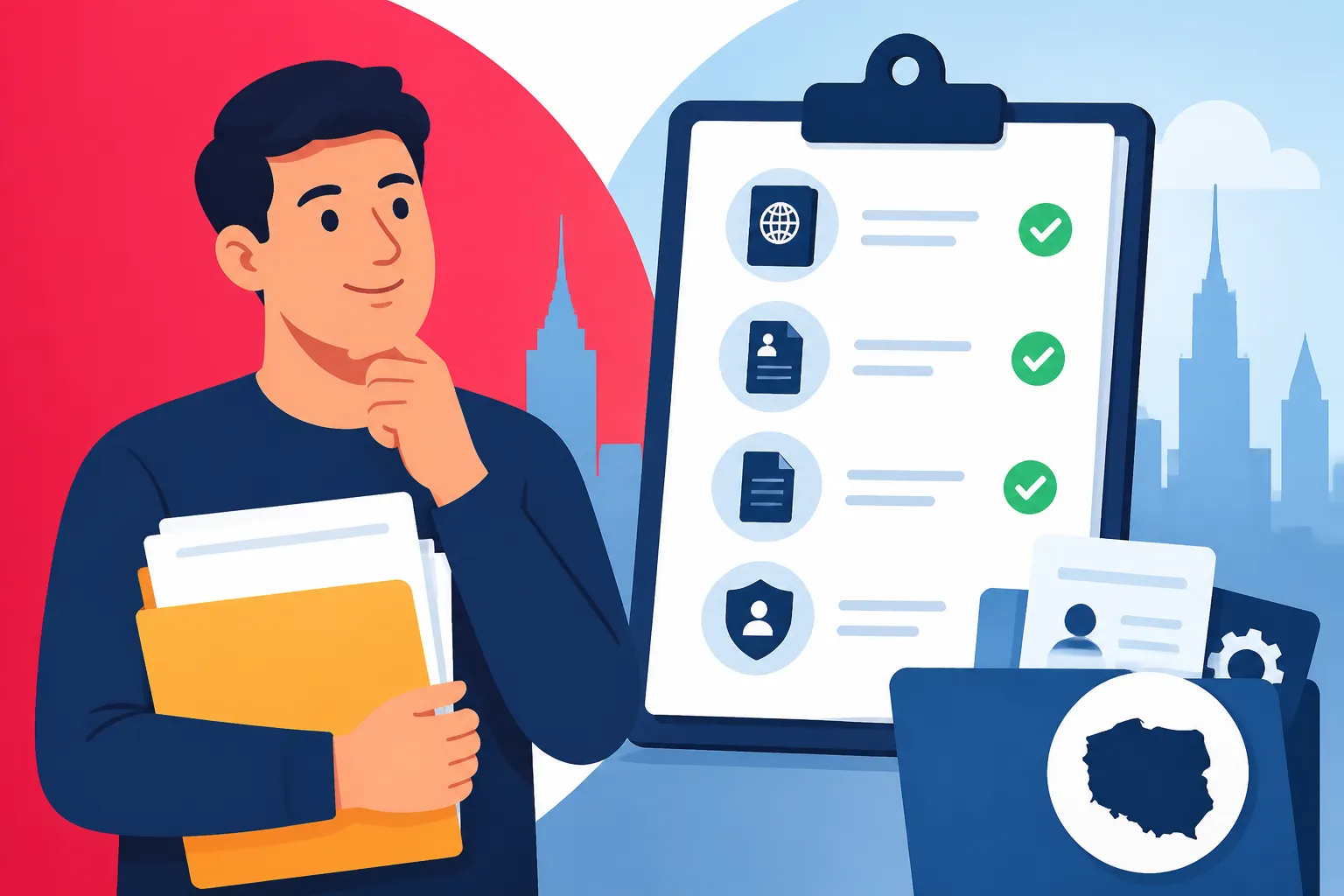
Honestly, this cannot be stressed enough. Create a dedicated folder – a physical one is often better – for all your original documents and another for photocopies. Keep a detailed checklist of every document, noting when you obtained it and when it was submitted. Make digital scans of everything as well, saved in a clearly organised manner on your computer or cloud storage. This way, if something goes missing or they request an additional copy, you have it readily available. When you're dealing with the chaos of an international move, sometimes getting all your paperwork in order feels like the biggest hurdle. Services like Sirelo can assist with the logistics of moving, leaving you more mental space to tackle the crucial document organisation for your Single Permit. They can help you keep track of what goes where, making your relocation process smoother overall.
Language Barriers and Professional Help
Unless you're fluent in Polish, the language barrier will be a significant challenge. All official communication from the Urząd will be in Polish, and while some clerks might speak English, it's not a guarantee. If your Polish isn't strong, bring a Polish-speaking friend or colleague with you to appointments. Better yet, consider engaging an immigration lawyer or a professional immigration consultant. They can help you correctly fill out forms, translate documents, liaise with the Urząd on your behalf, and provide expert advice, potentially saving you a lot of time and heartache. This might seem like an extra cost, but the peace of mind and efficiency it brings can be well worth it, especially given the complexities involved in How to Prepare Documents for a Karta Pobytu Application.
Patience, Persistence, and a Positive Outlook
Ultimately, getting your Single Permit in Poland requires a healthy dose of patience and persistence. There will be delays, there will be frustrating moments, and there might be unexpected requests for more documents. The system isn't designed for speed, so adjusting your expectations is key. Maintain a polite but persistent approach in your interactions with the Urząd, always respond to requests within deadlines, and try to keep a positive outlook. Remember, countless expats have successfully navigated this path before you, and you will too. Understanding all your options, including your health insurance requirements as detailed in What Health Insurance Do I Need for a Polish Residence Permit?, will definitely help calm some nerves. And when you finally receive that Karta Pobytu, remember it’s not just a card; it’s proof that you’ve conquered the Polish administrative beast and truly made Poland your home.
Key Documents for Your Single Permit Application in Poland
| Document Category | Specific Documents | Key Considerations |
|---|---|---|
| Personal ID | Valid Passport | Original + photocopies of all relevant pages, sufficient validity. |
| Previous Visas/Residence Cards (if applicable) | Photocopies. | |
| PESEL Number | If available, copy. Often issued with permit if not. | |
| Birth/Marriage Certificates | Certified Polish translations if not in Polish. | |
| Residence Proof | Rental Agreement / Zameldowanie | Valid proof of accommodation. |
| Employment Docs | Application Form (Wniosek) | Fill out carefully in Polish, available on Urząd Wojewódzki website. |
| Employer's Declaration (Oświadczenie pracodawcy) | Formal letter from employer confirming employment terms. | |
| Employment Contract (Umowa o pracę/zlecenie) | Copy of signed contract with clear terms. | |
| Employer Legal Status (KRS/CEIDG) | Proof of employer's legitimate operation. | |
| Labour Market Test (Opinia starosty) | Required unless exempt; applied for by employer. | |
| Financial/Insurance | Proof of Funds | Bank statements, employer declaration confirming salary meets minimums. |
| Health Insurance Proof (ZUS RCA / Private Policy) | Employer-provided ZUS report or private insurance policy details. | |
| Other Essentials | Passport-sized Photos (4-5) | Specific requirements: 35x45mm, white background, recent. |
| Opłata Skarbowa (Stamp Duty) Confirmation | Payment proof for application and card issuance. | |
| Certified Polish Translations | For all non-Polish documents, by a sworn translator. |
Disclaimer
The information provided in this guide is for general informational purposes only and does not constitute legal advice. Immigration laws and procedures in Poland are subject to frequent changes and individual circumstances. While we strive to keep the information accurate and up-to-date, it may not reflect the most current legal developments. Always consult with a qualified immigration lawyer or specialist for advice tailored to your specific situation before making any decisions related to your residence or work permit application in Poland.