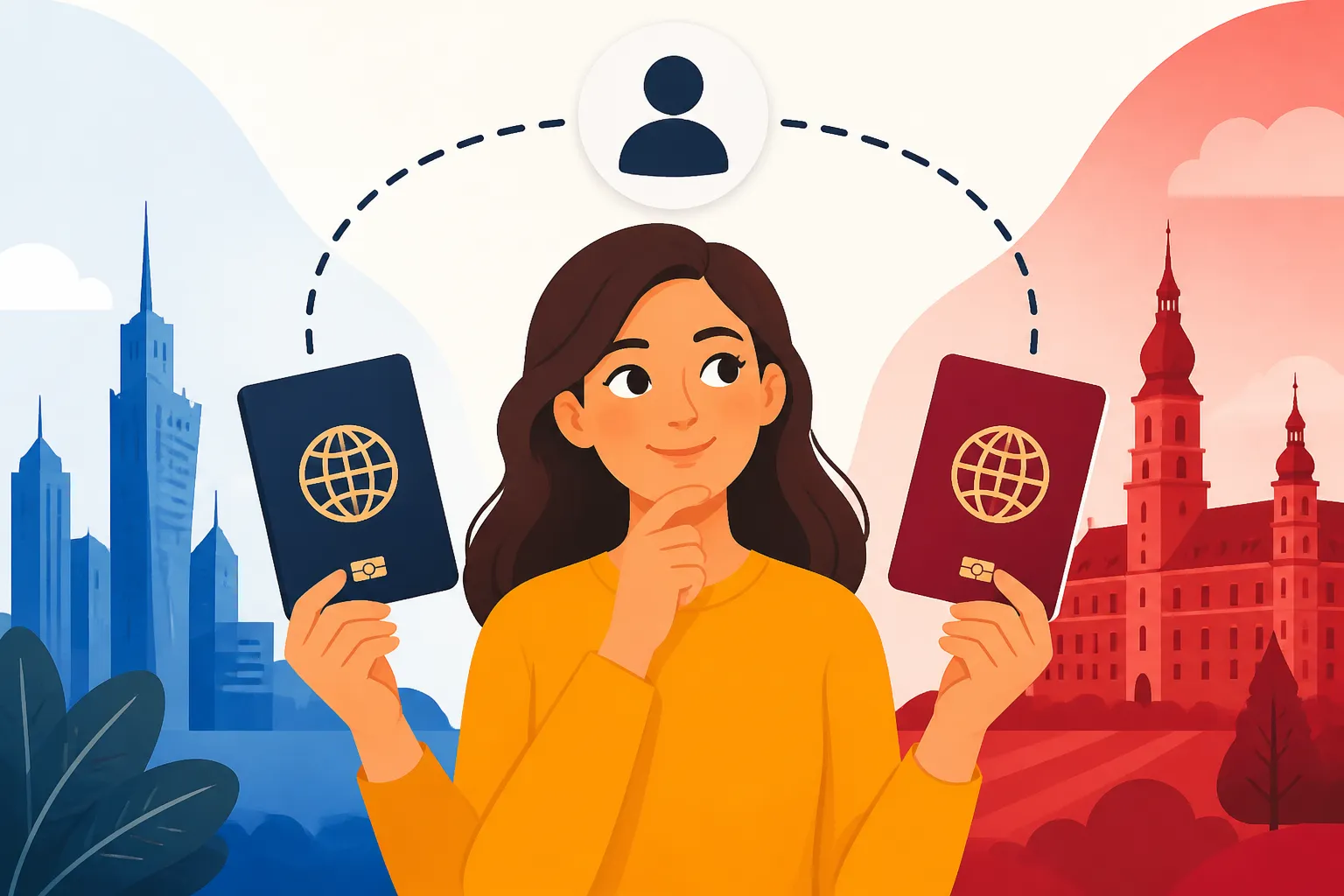
Can I Hold Dual Citizenship in Poland?
Moving to a new country like Poland often brings a flurry of questions, not just about practicalities like where to live or how to find a job, but also about your long-term status. One common query that often surfaces for expats considering making Poland their permanent home is the complex topic of dual citizenship. It can feel like wading through thick mud trying to understand how Poland views holding two passports, especially if your home country has strict rules. This guide will cut through the bureaucratic fog, offering a clear, empathetic, and realistic understanding of dual citizenship in Poland, and how it might apply to you.
The Nuances of Polish Dual Citizenship
When you're navigating the ins and outs of life in a new country, few things feel more fundamental than your identity and legal status. For many, the idea of holding onto a piece of their original identity while embracing a new one through citizenship is appealing. In Poland, the approach to dual citizenship is one of subtle tolerance rather than explicit, enthusiastic endorsement. It's a key distinction that can make a big difference in how you perceive your rights and obligations here.
Poland's Stance on Dual Nationality
Let's be clear from the outset: Poland does not explicitly prohibit dual citizenship. That's the good news. Unlike some countries that demand you utterly renounce all previous allegiances when you become a citizen, Poland doesn't generally force this choice upon you. However, it’s crucial to understand the nuance here. While Poland tolerates you holding another passport, from the perspective of Polish law and when you are on Polish soil, you are considered solely a Polish citizen. This principle means that for all official purposes – whether you're dealing with a local government office (Urząd), trying to vote, or seeking consular protection – the Polish state will treat you as only Polish.
Imagine you're at the airport, entering Poland. Even if you have a shiny new Polish passport and still hold your old one, you are expected to use your Polish passport for entry and exit. Should you run into any trouble, the Polish authorities will offer you support as a Polish citizen, and simultaneously expect you to act as one. They won't engage with your other nationality's embassy or consulate while you're in Poland. This "one citizenship" approach simplifies matters for the state but puts the onus on you to understand the implications of your dual status. This is particularly relevant for those who might have acquired Polish citizenship by descent, often without even realizing it for many years, only to discover it later in life.
When Dual Citizenship Becomes a Reality
Dual citizenship isn't just about a bureaucratic choice; it often emerges organically from various life circumstances. One common scenario is birth: if you're born in Poland to foreign parents, or born abroad to Polish parents, you might inherently possess two nationalities from day one. Poland follows the principle of jus sanguinis (right of blood), meaning if at least one of your parents is Polish, you are generally considered Polish, regardless of your birthplace. If your country of birth or your other parent's nationality grants you citizenship based on jus soli (right of soil) or their own jus sanguinis rules, then voilà, you're a dual national.
Another frequent path is through marriage to a Polish citizen, followed by naturalization, or simply through the naturalization process after living here for a sufficient period. For instance, if you've been living and working in Poland for several years, paid your taxes diligently, and met the residency requirements, you might apply for Polish citizenship. In most cases, the Polish authorities will not demand that you formally renounce your original citizenship. This is where Poland differs significantly from countries like Germany or Austria, which often require renunciation as a condition for naturalization. The key is that Poland doesn't care what your other country does with your citizenship, only that Poland considers you Polish when you're under its jurisdiction. So, you can become a Polish citizen, and if your birth country doesn't automatically revoke your citizenship because you've acquired another, then you become a dual national without any fuss from the Polish side. This generous approach is a huge relief for many expats who want to deepen their ties to Poland without severing their roots. You can find more details on the paths to becoming Polish in our guide on Polish Citizenship: Routes Through Residence, Descent and Naturalisation (2027).
Navigating the Legal Landscape as a Dual Citizen
Living in Poland as a dual citizen can be incredibly rewarding, offering you the best of both worlds – the sense of belonging here and the ties to your homeland. However, it's not a free pass to ignore the finer points of the legal framework. Understanding your obligations and potential pitfalls is key to a smooth experience.
Obligations and Rights for Dual Nationals in Poland
As a Polish citizen, regardless of whether you hold another nationality, you are expected to fulfill the same duties as any other Pole. This includes civic responsibilities like voting in national and local elections (if you choose to, of course) and, historically, military service. While mandatory conscription was suspended in 2008 and Poland now has a professional army, the legal framework for it still exists and could theoretically be reinstated. This is a point to be aware of, although for most expats, it remains a theoretical concern. You will also have access to all the rights and privileges of Polish citizens, such as unfettered access to the Polish labour market, the ability to vote, and the full protection of Polish law both at home and abroad (via Polish consulates and embassies).
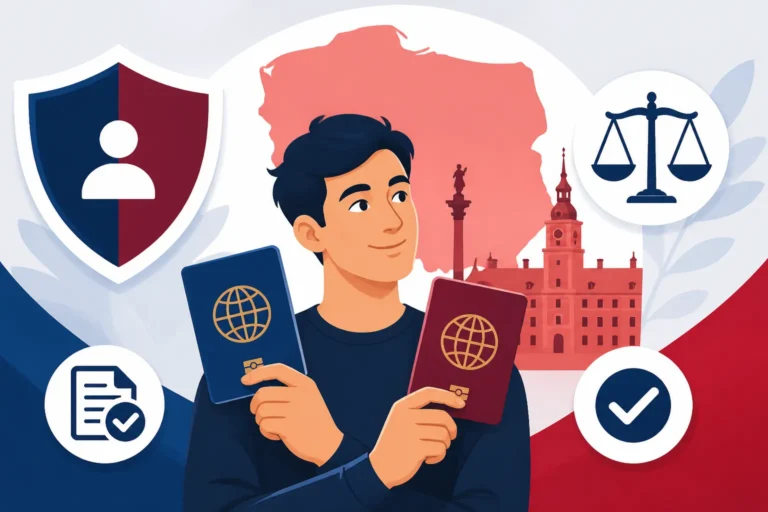
Critically, when dealing with Polish state institutions or border control, you are obliged to present yourself as a Polish citizen, using your Polish passport or ID card. This means that if you're traveling from, say, the UK to Poland and you hold both British and Polish passports, you should enter and exit Poland using your Polish passport. Using your other passport could lead to confusion or unnecessary questioning, as from Poland's perspective, you are a Polish citizen returning home, not a foreign visitor. This consistency in documentation helps streamline administrative processes and reinforces your status within the country. This can feel a bit odd at first, especially if you're used to only showing one passport, but it's a fundamental aspect of navigating dual nationality here.
Potential Pitfalls and Considerations
While Poland is generally lenient, navigating dual citizenship does come with its own set of potential complexities. One of the biggest challenges arises from the "conflict of laws." What happens if your two countries have conflicting demands or expectations of you? For instance, tax residency can become a headache. Poland has agreements to avoid double taxation with many countries, but the specifics can vary wildly. You might find yourself a tax resident in both countries based on their individual laws, necessitating careful planning and potentially professional tax advice to ensure you're compliant in both jurisdictions without paying more than your fair share. For a deeper dive into tax matters, refer to Understanding Tax Residency Rules for Expats in Poland.
Another critical consideration is military service, as mentioned earlier. While not currently mandatory, if your other country of citizenship does have mandatory military service, you might technically be liable in both places. This is rare but important to be aware of. The biggest practical pitfall, however, often revolves around travel and official identification. While you must use your Polish passport when entering and exiting Poland, what about when you travel between your two countries, or to a third country? Some nations may have rules about which passport you must use, or you might find yourself needing a visa on one passport but not the other. It's vital to stay informed about the specific travel requirements for both your nationalities. Remember, just because Poland allows you to have two passports doesn't mean your other country will treat you the same way. Always consult the respective government websites or legal experts from both countries involved.
Pathways to Polish Citizenship and Dual Nationality
Many expats in Poland consider citizenship as a way to truly plant roots, gain stability, and simplify their lives here. The good news is that for most, acquiring Polish citizenship does not require them to renounce their original nationality, making dual citizenship a very real and attainable goal.
Acquiring Polish Citizenship without Renouncing
There are several routes to becoming a Polish citizen, and thankfully, most of them do not force you to make that heart-wrenching choice of giving up your original passport.
The most common and often the simplest path for many foreigners with historical ties is citizenship by descent (Jus Sanguinis). If you have a Polish parent or grandparent (and sometimes even a great-grandparent), you might already be considered a Polish citizen, even if you or your ancestors never formally confirmed it. This process, often called "confirmation of Polish citizenship," is based on verifying your lineage. It's a fantastic option for those with Polish heritage because it almost never involves renouncing another citizenship. In essence, you're not acquiring new citizenship, but rather confirming a right you already possess. If you suspect you might be eligible, digging into your family history and seeking professional help for genealogical research can be incredibly rewarding. More details are available in How to Apply for Polish Citizenship by Descent (Obywatelstwo).
For those without direct Polish lineage, naturalization is the primary path. This usually involves demonstrating a period of stable residence in Poland, often tied to a temporary residence permit (The Complete Guide to Polish Residence Permits for Expats (2027)) followed by permanent residence (How to Apply for Permanent Residence (Pobyt Stały) in Poland), integration into Polish society, and often a proven knowledge of the Polish language. Generally, you need to have lived in Poland for a specified number of years (typically 3-5 years on a permanent residence permit) immediately preceding your application. The crucial point here is that Polish law, in most naturalization cases, does not require you to give up your prior citizenship. This means you can go through the entire application process, swear allegiance to Poland, and still retain your original nationality, thus becoming a dual citizen. This is a significant advantage compared to many other countries in Europe.
Finally, there's citizenship by Presidential Grant. This is a discretionary path, usually reserved for individuals who have rendered outstanding services to Poland or are deemed of particular national interest. While less common for the average expat, it also typically doesn't impose the requirement of renouncing other nationalities. Each pathway has specific criteria, and the timeframes can vary, but the underlying principle of allowing dual nationality remains consistent.
Key Steps and Documents for Citizenship Applications
Embarking on the journey to Polish citizenship can feel daunting, like navigating a labyrinth, but it's entirely manageable with the right preparation. The process generally starts at the local Voivodeship Office (Urząd Wojewódzki) relevant to your place of residence. You'll need to submit a comprehensive application along with a stack of supporting documents. These can include your birth certificate, marriage certificate (if applicable), proof of residency (like your Karta Pobytu or confirmation of Registering Your Residence (Zameldowanie) in Poland: The Complete Guide), evidence of your income stability, and proof of Polish language proficiency, usually demonstrated by an official certificate (at least B1 level for naturalization).
You'll also need a current passport from your existing nationality and potentially criminal record checks from both Poland and your home country. For those applying by naturalization, demonstrating integration into Polish society is key – this might involve showing proof of work, a stable income, and participation in local life. A crucial piece of identification you'll need for almost any official interaction, including citizenship applications, is your How to Get Your PESEL Number and Why It Matters for Healthcare. Without a PESEL, many administrative doors simply won't open. It's also increasingly useful to set up your How to Set Up an Internetowe Konto Pacjenta (IKP) Patient Account, which centralizes much of your medical and administrative data, and can streamline interactions with various offices. The entire process, from submission to receiving your citizenship certificate, can take anywhere from a few months to a couple of years, depending on the complexity of your case and the workload of the Urząd Wojewódzki. Patience, my friends, is not just a virtue, but a necessity!
Practical Advice for Expats with Dual Citizenship Aspirations
So, you’ve decided that dual citizenship is for you, and Poland seems to be on board with it. That’s fantastic! But before you pop the champagne, there are still a few practicalities to consider to ensure you navigate this unique status smoothly. It's not just about getting the piece of paper; it's about living with it.
Researching Your Other Nationality's Laws
This is arguably the most critical piece of advice for anyone considering dual citizenship. While Poland is generally accepting of you holding another passport, your original country might not be. This is not a trivial detail. Some countries have very strict laws about their citizens acquiring foreign nationalities. For example, countries like India and China generally do not permit dual citizenship and may automatically revoke your original citizenship the moment you acquire Polish nationality. Other countries might have specific rules, such as requiring you to inform their authorities, or they might only allow dual citizenship with certain nations.
Imagine the frustration of going through the entire Polish naturalization process, only to find out your original citizenship was silently stripped away, leaving you with only one passport anyway! To avoid such unpleasant surprises, you absolutely must research the citizenship laws of your country of origin in detail. Don't rely on hearsay; check official government websites or, even better, consult with a legal professional specializing in immigration or citizenship law in both your home country and Poland. This due diligence upfront can save you a world of heartache and complicated paperwork down the line. It's like checking the weather for both sides of the mountains before you embark on a journey.
Managing Travel and Official Documentation
Once you are a dual citizen, traveling becomes a bit of a dance between your two passports. As we discussed, when you enter or exit Poland, you must use your Polish passport. This is non-negotiable from the Polish perspective. However, when you're traveling from Poland to your other country of citizenship, or to a third country, the rules can get a little fuzzy, and it often depends on the specific requirements of those other nations. Generally, it's wise to use the passport of the country whose authorities you are dealing with for entry and exit. For example, if you're flying from Warsaw to London and you're a Polish-British dual national, you'd show your Polish passport to exit Poland and your British passport to enter the UK.
Beyond travel, consider how your dual nationality impacts other official documents. Your driving license, bank accounts, and employment records will generally be linked to your primary residency in Poland, likely under your Polish identity. However, if you maintain ties (and property or financial interests) in your other country, those might be linked to your other passport. It’s about keeping a clear and consistent record for each jurisdiction. The biggest convenience of holding both passports often comes when one of your passports offers visa-free travel to a wider range of countries, or access to larger economic blocs like the European Union. Suddenly, those long visa application processes become a thing of the past for many destinations.
Getting Your Affairs in Order
Being a dual citizen isn't just about passports; it permeates many aspects of your life. One area where it's particularly felt is financial planning and taxes. If you maintain assets, income streams, or even just bank accounts in both countries, you need to understand the tax implications. Poland has agreements to prevent double taxation with many countries, but navigating these can be complex. Consulting a tax advisor who understands international taxation is highly recommended. You want to ensure you're compliant in both jurisdictions and not accidentally caught in a bureaucratic tangle. Our guide on Filing Your Annual Tax Return (PIT) in Poland: The Complete Walkthrough (2027) might be helpful, but remember, dual nationality adds an extra layer of complexity.
Healthcare is another area to consider. As a Polish citizen, you'll have full access to Poland's public healthcare system (NFZ), but sometimes, especially during transitional periods or for specific needs, private health insurance can offer peace of mind. Providers like Cigna Global offer comprehensive international health plans that can cover you no matter which country you're in, providing a seamless healthcare experience that doesn't depend on which passport you're flashing. This can be especially valuable if you frequently travel between your two countries. For those considering the big move or planning to repatriate belongings, remember that logistics can be a beast. Services like Sirelo are incredibly helpful for comparing moving companies and managing international removals, ensuring your possessions cross borders as smoothly as your dual identity. It’s all about creating a robust support system, whether for your body, your finances, or your beloved furniture, to truly enjoy the benefits of your dual life.
| Feature / Consideration | Poland's Stance on Dual Citizenship | Example: Country X's Stance (Hypothetical) | Practical Implication for Expat |
|---|---|---|---|
| Legal Recognition | Tolerated, but for Polish law, you are solely a Polish citizen when in Poland. | Actively prohibits dual citizenship; requires renunciation upon naturalization. | You are a Polish citizen here, but your other country might revoke its citizenship. Research required! |
| Renunciation Req. | Generally NOT required for naturalization or descent. | Explicitly required for naturalization. | You can keep your old passport; your original country might force you to choose. |
| Travel (Entry/Exit) | Must use Polish passport for entering/exiting Poland. | May require using their passport for entry/exit. | Always carry both passports and know which to use where. |
| Rights & Obligations | Full Polish citizen rights (voting, consular aid) and obligations (e.g., potential military service if reactivated). | Full rights and obligations as their citizen. | You have dual protection and obligations; conflict of laws possible (e.g., military, tax). |
| Tax Residency | Based on Polish tax laws (centre of vital interests, 183+ days). | Based on their tax laws. | Potential for double tax residency; requires careful planning and advice. |
| Consular Protection | Only Polish consular protection offered in third countries. | Only their consular protection offered. | In a third country, you choose which embassy to approach, but only one can help at a time. |
Disclaimer
The information provided in this guide is intended for general informational purposes only and does not constitute legal, financial, or immigration advice. While we strive to provide accurate and up-to-date information, laws and regulations regarding citizenship, immigration, and taxation in Poland and other countries are subject to change and vary depending on individual circumstances. It is crucial to consult with qualified legal professionals, immigration consultants, or tax advisors in both Poland and your country of origin to get advice tailored to your specific situation. Reliance on any information in this guide is solely at your own risk.