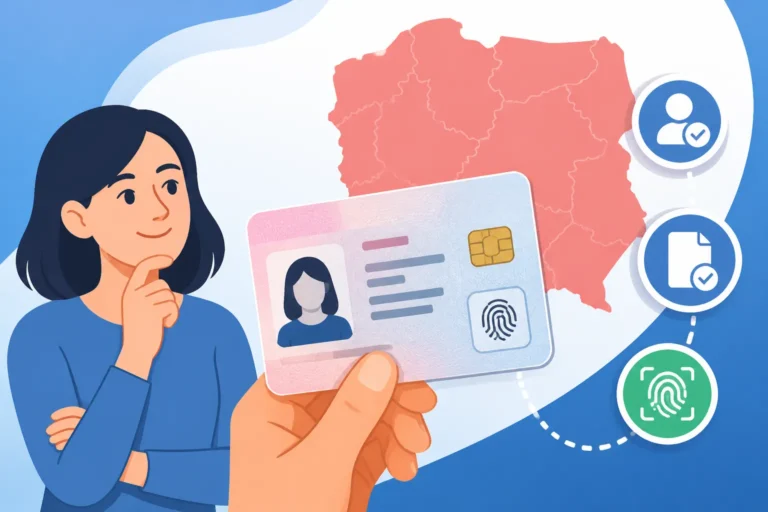
How Do I Prove My Income for a Polish Residence Permit?
Oh, the infamous Karta Pobytu application! If you've spent any time navigating the Polish administrative machine, you'll know that proving your financial stability for a temporary residence permit can feel like a game of bureaucratic "whack-a-mole." It's not just about showing you have money; it's about proving it the Polish way, with the right documents, in the right format, for the right period. This guide is here to demystify the income requirement, validate your frustrations, and walk you through exactly what those stern-faced officials at the Urząd Wojewódzki are really looking for.
Understanding the Income Requirement for Your Karta Pobytu
Let's face it, when you're applying for a residence permit, one of the biggest hurdles, beyond just getting your documents translated and notarized, is proving you won't become a burden on the state. It's a fundamental principle of immigration in most countries, and Poland is no exception. They want to see that you can comfortably support yourself and any family members you're bringing along for the ride.
Why Polish Authorities Care So Much About Your Money
At its core, the Polish government wants assurance that you are self-sufficient. This isn't just about paying your rent and buying groceries; it’s about demonstrating a stable financial footing that suggests you’re here to contribute and live independently, not to rely on social welfare. While the official minimums might seem quite low, the reality is that immigration officers often look for proof of an income significantly higher than these basic thresholds to be convinced of your long-term stability. It’s one thing to meet the absolute legal minimum, and another to genuinely show you’re thriving.
As of early 2024, the official minimum income requirements (often linked to social assistance thresholds) are generally cited as:
- For a single person: At least 776 PLN net per month.
- For a person in a family: At least 600 PLN net per month per person in the household.
These numbers, let's be honest, are barely enough to survive on in a major Polish city like Warsaw or Krakow. They might cover some basic food, but certainly not rent, utilities, transport, or any kind of social life. This disparity between the official minimum and real-world costs is where a lot of the expat frustration comes in. You might be earning double or triple this, but still wonder if it’s "enough." The unspoken expectation is often for something more substantial, demonstrating a genuine capacity to live comfortably and pay taxes, rather than just ticking a legal box.
The Dreaded "Sufficient Funds" – What Does It Really Mean?
The phrase "sufficient funds" can feel like a moving target. What one officer deems sufficient, another might question. For single applicants, it's about proving you can cover your personal expenses. For families, the calculation gets trickier. You need to show enough to cover each dependent. This means if you're a family of four, for example, the expectation is for 4 x 600 PLN, or 2400 PLN net per month, minimum. Again, this is the legal bare minimum; in practice, you'll want to demonstrate significantly more.
The emphasis is heavily on consistent income. A one-off large deposit from a relative isn't going to cut it. They want to see regular, predictable inflows that indicate a stable source of livelihood in Poland. This is why bank statements spanning several months are so critical, as they paint a picture of your financial habits and reliability. Don't be surprised if they dig deeper into the sources of any significant deposits, especially if they appear unusual or infrequent. It's all about demonstrating a predictable, steady financial existence that aligns with your life here in Poland.
Acceptable Forms of Income Proof: The Nitty-Gritty
Okay, so you know why they want your money details. Now, let's talk about how to show them. This is where the specific documents come into play, and frankly, it varies depending on your employment status.
For Employees: The Most Straightforward Path
If you're employed on a standard umowa o pracę (employment contract) in Poland, you're generally in the most straightforward position.
Your Employment Contract and Salary Certificates
First and foremost, your umowa o pracę is crucial. This document outlines your employment terms, position, and, critically, your gross salary. However, merely providing the contract isn't always enough. You'll typically need a zaświadczenie o zatrudnieniu i dochodach from your employer. This is an official letter, usually in Polish (or translated by a sworn translator if your employer provided it in English), confirming:
- Your current employment status.
- Your position.
- The start date of your employment.
- Your monthly net salary for at least the last 3-6 months.
- Confirmation that your employment is ongoing.
This certificate acts as a direct, official confirmation from your employer about your financial standing. Make sure it's signed, stamped, and dated recently. Sometimes, they might also ask for your payslips (paski wynagrodzenia) for the last few months. Don't forget that your employer is also responsible for your Understanding ZUS Social Contributions in Poland: The Full Guide, which further solidifies your legitimate employment status.
Bank Statements Showing Regular Salary Deposits
This is perhaps the most universally accepted and vital piece of evidence. You'll need bank statements from your Polish bank account covering the last 3 to 6 months. These statements should clearly show:
- Regular, consistent deposits of your net salary.
- The source of these deposits (ideally, your employer's name).
- Your overall financial activity, demonstrating you can cover your living expenses without constantly dipping into emergency funds or relying on sporadic cash injections.
The Urząd wants to see stability. If your bank statements show your account balance hovering near zero most of the time, even if your salary is deposited regularly, it might raise questions. They're looking for a buffer, a sign of responsible financial management.
Annual Tax Declarations (PIT-11/PIT-37)
If you've been working in Poland for at least a full tax year, your annual tax declarations (PIT-11 or PIT-37) can also serve as strong proof of historical income. PIT-11 is issued by your employer, while PIT-37 is your personal declaration. These documents show your total earnings for the past year and the taxes paid, providing a comprehensive overview of your financial history in Poland. For a detailed walkthrough, you might want to check out our guide on Filing Your Annual Tax Return (PIT) in Poland: The Complete Walkthrough (2027). While not always a primary requirement for a Karta Pobytu, having these on hand, especially for renewals, can bolster your application.
For Self-Employed (JDG/B2B): The Paperwork Marathon
Ah, the self-employed life! While flexible and rewarding, proving income for a Karta Pobytu can feel like an Olympic sport in paperwork. Poland has a thriving freelance scene, but the bureaucracy for self-employed expats can be particularly challenging. If you run a jednoosobowa działalność gospodarcza (JDG), or a B2B operation, you'll need to gather a more diverse set of documents.
Registration Documents and Contracts
First, you'll need proof of your business registration, usually an extract from the CEIDG (Centralna Ewidencja i Informacja o Działalności Gospodarczej). This proves your business is legally established. Beyond that, the key is to show you have active, legitimate business relationships. This means providing:
- Contracts with clients: Umowa B2B (business-to-business agreements) or service contracts proving your ongoing work.
- Invoices issued: Copies of invoices you've issued to your clients over the last 3-6 months, clearly showing the services provided and the amounts billed.
These documents establish the legitimacy and activity of your business. The more consistent and frequent your invoicing, the stronger your case for stable income.
Bank Statements and Tax Declarations
Similar to employees, bank statements are crucial. You'll need statements from your business bank account (or personal account, if it's your only one for JDG income) showing:
- Regular payments received from your clients.
- The amounts corresponding to your invoices.
- A healthy balance that demonstrates your business's solvency and your ability to draw a consistent income for personal expenses.
Additionally, your annual tax declarations, such as PIT-36 or PIT-28 (if you're on the ryczałt lump-sum tax scheme), are indispensable. These documents summarize your business income and tax payments. If your business is relatively new, an accountant's declaration confirming your projected income and financial viability can be a lifesaver. This is where having a good local accountant who understands expat needs can make all the difference. For more insights on this, read our comprehensive guide on Self-Employment in Poland: The JDG (Sole Proprietorship) Guide for Foreigners.
Other Income Sources: Pensions, Rental Income, and More
Not everyone fits neatly into the employee or self-employed box. Sometimes, your income comes from other avenues, and these can also be used as proof, though they might require additional verification.
Foreign Pensions
If you're a retiree in Poland, your pension can be your primary source of income. You'll need to provide:
- Official pension statements: These should clearly state the monthly amount you receive.
- Bank statements: Showing consistent, regular deposits of your pension into your Polish bank account for the last 3-6 months.
- Sworn translations: Any documents in a foreign language (especially from outside the EU) will almost certainly need to be translated into Polish by a sworn translator (tłumacz przysięgły).
Remember, while the pension might originate abroad, its regular transfer and presence in your Polish account is key. This demonstrates your ability to use those funds to cover your living costs locally.
Rental Income
Perhaps you own property back home or in Poland that generates rental income. This can certainly count! You'll need:
- Rental contracts: Legally binding contracts with your tenants, detailing the rental amount and period.
- Bank statements: Showing consistent rental payments being deposited into your account.
- Proof of ownership: Documents like the akt notarialny (notarized deed) for the property.
- Tax declarations: Any declarations showing this income was reported to tax authorities, either in Poland or abroad.
It's vital that the rental income is verifiable and consistent. They won't accept vague promises or irregular payments.
Savings and Investments
While substantial savings can be a good buffer, relying solely on a large lump sum in your bank account is generally not sufficient for proving income for a Karta Pobytu, unless it's explicitly for a study permit or a very short, specific period. The authorities are looking for ongoing income, not just static wealth. However, if you have a consistent draw-down from an investment portfolio or annuities, those regular payments can be used as proof, much like a pension. The key here is regularity and a clear, documented source.
In situations where your primary income is slightly below the informal "comfort zone" of the Urząd, having significant savings can act as a supplementary demonstration of financial security. Just don't expect it to be the main pillar of your income proof. For families, if one spouse is working and the other is supported, the working spouse's income documents will be central. You’ll need to include a declaration of support, a marriage certificate (translated, of course!), and ensure the income meets the higher threshold for all family members.
Common Pitfalls and How to Avoid Them
Even with all your documents in order, the Polish immigration process has its quirks. Avoiding these common mistakes can save you a lot of headaches, delays, and rejections.
Inconsistent Income and Bank Statements
This is a big one. The Urząd is extremely wary of anything that looks like financial instability or an attempt to artificially inflate your funds just before applying.
- Sudden Large Deposits: If your bank statements show a sudden, large sum appearing in your account just a month or two before your application, without a clear, verifiable source (like a property sale or a legitimate bonus), it will raise red flags. They want to see organic, consistent income generation.
- Irregular Payments: For freelancers, if your income fluctuates wildly month-to-month, try to provide a longer period of statements (e.g., 6-12 months) and a letter from your accountant explaining the nature of your business and why income might vary but remains stable on average.
- Minimum Balance Issues: If your account frequently hovers at or below the minimum required amount, it suggests you're living paycheck to paycheck, which might be viewed as a risk. They prefer to see a healthy, consistent balance.
The best approach is always to show stability. The longer the period of consistent income you can demonstrate, the better your chances.
Missing Translations and Notarizations
This is a non-negotiable aspect of any official process in Poland.
- Sworn Translations: Any document not originally in Polish (e.g., a foreign pension statement, marriage certificate from your home country, or a foreign employment letter) must be translated by a Polish sworn translator (tłumacz przysięgły). There are no exceptions. A standard translation, even by a professional translator, will be rejected. You can find lists of sworn translators on the Polish Ministry of Justice website.
- Apostille/Legalization: For documents issued in countries outside the Hague Apostille Convention, you might need to get them legalized by the Polish embassy or consulate in your home country, or by the Ministry of Foreign Affairs in your home country. Always check the specific requirements for your country of origin. This applies to things like birth certificates, marriage certificates, or academic diplomas.
Failing to provide proper translations or notarizations will inevitably lead to your application being returned for correction, causing significant delays.
The Timing Trap: When to Apply and What Period to Cover
Timing is crucial, especially when it comes to the validity of your documents.
- Document Freshness: Bank statements, employer letters, and accountant declarations should be no older than 30 days at the time of your application submission. For bank statements, you usually need to cover the preceding 3 to 6 months.
- Application Window: Don't wait until the last minute before your current visa or permit expires. The Urząd Wojewódzki is notoriously slow. You should aim to submit your complete application package well in advance – ideally 60 to 90 days before your current legal stay ends. This foresight gives them time to process, and you usually get a czerwona pieczątka (red stamp) in your passport, allowing you to stay legally while your application is pending.
- Consistent Income Period: As mentioned, aim for bank statements covering at least the last 3 months, but 6 months is always safer to show a consistent income stream.
Being meticulous about the dates on your documents and the timeframe they cover can prevent unnecessary back-and-forth with the immigration office. Remember, securing your How Long Does It Take to Get NFZ Coverage as a New Resident? and your [PESEL number] are foundational steps that precede all these processes, so ensure those are handled first.
Practical Tips for a Smooth Application
Navigating the Polish bureaucracy can be daunting, but a few practical strategies can make the process less stressful.
Organize, Organize, Organize!
This cannot be stressed enough. The sheer volume of documents required for a Karta Pobytu application means that disorganization is your worst enemy.
- Checklist: Create a detailed checklist based on the Urząd's requirements and tick off each item as you gather it.
- Folders: Use separate folders for originals, copies, and sworn translations. It helps immensely when the officer starts asking for specific documents.
- Copies: Always provide copies of everything, and bring your originals for verification. They will often stamp the copies to confirm they match the originals.
- Digital Backups: Scan everything. You never know when you might need an extra copy or if something gets lost. This also helps with easy access to things like your Internetowe Konto Pacjenta (IKP) Patient Account, which, while not direct income proof, is another aspect of your organized life in Poland.
Being organized not only makes a good impression but also ensures you don't miss any critical piece of paper, leading to delays.
Seeking Professional Help
Sometimes, trying to do it all yourself isn't the most efficient or stress-free option, especially if your case is complex or your Polish isn't fluent.
- Immigration Lawyers/Agencies: If you're overwhelmed, consider hiring an immigration lawyer or an agency specializing in residence permits for foreigners. They know the ins and outs, the unspoken expectations, and can represent you. While an added cost, it can save you significant time and anxiety.
- Accountants: For self-employed individuals, a Polish accountant is not just essential for tax matters but can also provide crucial declarations and ensure your financial documents are presented correctly for your permit application. They can often provide a letter detailing your business's financial health, which is a big plus. If you need help with your taxes, we have a guide on How Do I Get Help Filing My Polish PIT Return in English?.
Investing in professional help can be well worth it to ensure your application is watertight.
Budgeting for the Long Haul
Moving and living in Poland comes with costs, and the residence permit process adds to that. It's important to budget accordingly.
- Application Fees: There's a government fee for the Karta Pobytu itself, typically a few hundred PLN.
- Translation Costs: Sworn translations are not cheap, often costing 40-60 PLN per page, and these costs can quickly add up if you have many documents.
- Legal/Consultancy Fees: If you opt for professional help, factor in those costs, which can range from a few hundred to several thousand PLN depending on the complexity of your case.
- Moving Expenses: If you're still early in your journey, remember that proving income is just one aspect of settling in. Companies like Sirelo can help you budget and plan for your relocation, ensuring you're not caught off guard by the overall costs of moving to Poland.
Beyond just the permit, remember to secure your Health Insurance in Poland: Mandatory, Private and Subscription Options Explained. Having a robust health insurance plan, perhaps even with a global provider like Cigna Global, shows further financial foresight and responsibility, making your overall application stronger. It proves you're prepared for unforeseen circumstances and won't be relying on the state for medical care.
Summary of Income Proof Requirements by Employment Status
| Income Source | Primary Documents | Supplementary Documents | Key Considerations |
|---|---|---|---|
| Employee | – Umowa o Pracę (Employment Contract) – Zaświadczenie o Zatrudnieniu i Dochodach (Employer Certificate) |
– Payslips (Paski Wynagrodzenia) – PIT-11 / PIT-37 (Annual Tax Declaration from employer/personal) – Bank Statements (last 3-6 months showing salary) |
– Employer certificate must be recent, signed, stamped, and state net income for the last months. – Bank statements should clearly show regular salary deposits from your employer. – All documents must be in Polish or have a sworn translation. Consistency and regularity are paramount. |
| Self-Employed (JDG) | – CEIDG Extract (Business Registration) – Umowy B2B / Service Contracts (with clients) |
– Issued Invoices (for last 3-6 months) – PIT-36 / PIT-28 (Annual Tax Declaration for self-employed) – Bank Statements (last 3-6 months showing business income) – Accountant's Declaration |
– Clear proof of legal business operation. – Contracts and invoices demonstrate active business relationships and income generation. – Bank statements should reflect business revenue and show ability to draw consistent personal income. – Accountant's declaration can explain business specifics and confirm viability. – Tax declarations crucial for historical income. |
| Pensioner | – Official Pension Statements (foreign or Polish) | – Bank Statements (last 3-6 months showing pension deposits) | – Statements must be official and clearly state monthly pension amount. – Foreign statements require sworn translation. – Regular transfers to a Polish bank account are essential to show funds are accessible locally. |
| Rental Income | – Rental Contracts (Umowa Najmu) – Proof of Property Ownership (Akt Notarialny) |
– Bank Statements (last 3-6 months showing rental payments) – Tax Declarations (PIT-36/PIT-28 showing rental income) |
– Contracts must be legally binding and clear on rental amounts. – Bank statements should show consistent payments. – Ownership documents prove legitimacy. – Foreign documents require sworn translation. – Ensure the income is verifiable and consistent, not sporadic. |
| Savings/Investments | – Bank Statements (showing sufficient funds over time) – Investment Portfolio Statements |
– Annuity payment confirmations – Official letters from financial institutions |
– Generally not sufficient as sole proof of ongoing income unless they clearly demonstrate regular, consistent payouts (e.g., annuities). – Best used as supplementary proof to show overall financial stability, especially in addition to other income sources. Huge, recent deposits are red flags. |
Disclaimer
Please remember that immigration laws and requirements in Poland can change. While I strive to provide the most current and accurate information based on my experience and available data, this guide is for informational purposes only and does not constitute legal advice. Always consult with the official Urząd Wojewódzki website, relevant Polish consulates, or a qualified immigration lawyer for personalized advice regarding your specific situation and the latest regulations.