How Do I Apply for Residence Based on Marriage in Poland?
Moving to Poland to be with your loved one should be a joyous occasion, a new chapter filled with excitement and discovery. Instead, for many expat couples, it quickly turns into a bureaucratic nightmare, a seemingly endless maze of forms, appointments, and baffling requirements at the Urząd Wojewódzki. You're not alone in feeling overwhelmed by the sheer volume of paperwork and the often-frustrating lack of clear information. This comprehensive guide is here to walk you through every step of applying for a Polish residence permit based on marriage, demystifying the process and offering practical advice to help you navigate this significant administrative hurdle.
Understanding the Basics: Who Qualifies for Residence Based on Marriage?
The first thing you need to grasp is that applying for a residence permit based on marriage in Poland isn't a one-size-fits-all situation. The path you take and the documents you'll need can vary significantly depending on whether you're married to a Polish citizen or to another foreigner who already holds a valid residence permit in Poland. It’s crucial to understand these distinctions from the outset to avoid unnecessary delays and frustrations.
Marriage to a Polish Citizen (Obywatel Polski)
If you've tied the knot with a Polish citizen, your path to residency is generally considered the most straightforward, though "straightforward" in Polish bureaucracy still means a healthy dose of patience is required. The legal basis for your residence permit is enshrined in Polish law, recognizing the right to family life. Your marriage allows you to apply for a temporary residence permit (Karta Pobytu) which usually lasts for an initial period of up to three years.
One of the primary requirements here, which might seem obvious but needs to be stated, is that your marriage must be legally recognized in Poland. If you got married abroad, you'll need to register your foreign marriage certificate (apostilled and translated, of course) with a Polish Civil Registry Office (Urząd Stanu Cywilnego). This process, known as transkrypcja or umiejscowienie, ensures that your marriage is officially acknowledged by Polish authorities. Without this, your marriage simply doesn't exist in their system, and your residence application will hit a wall before it even starts. The authorities will also want to ensure your marriage is "real" – they're on the lookout for marriages of convenience, so be prepared for questions about your relationship, shared life, and future plans.
Marriage to a Foreign Resident (Cudzoziemiec Posiadający Kartę Pobytu)
Now, this is where things can get a bit more complex. If your spouse is a foreign national living in Poland, you can apply for a residence permit based on family reunification, but there are vital prerequisites. Your spouse, the "sponsor," must already hold a valid residence permit in Poland. This isn't just any permit – it needs to be a stable one, typically a temporary residence permit issued for at least one year, an EU long-term resident status, or a permanent residence permit.
If your spouse is only in Poland on a visa, even a long-term D-type visa, this route is generally not open to you. A visa is a temporary travel authorization, not a residence status that allows for family reunification in the same way a Karta Pobytu does. In such a scenario, your spouse might first need to secure their own temporary residence permit before they can sponsor your application. This can lead to a "chicken and egg" situation that requires careful planning and often some expert advice. The duration of your permit will often be tied to the duration of your spouse's permit, meaning you might have to renew them together.
Key Requirements for Both Scenarios
Regardless of whether your spouse is Polish or a foreign resident, several core requirements remain constant. These are the pillars upon which your application will stand (or fall):
- Legal, Recognized Marriage in Poland: As mentioned, if you married abroad, your marriage certificate must be officially registered and recognized by Polish authorities. This means obtaining an apostille or legalization and a sworn translation (tłumaczenie przysięgłe) into Polish.
- Proof of Stable and Regular Income: This is a big one. The authorities need assurance that you won't become a burden on the Polish social system. Your spouse (the sponsor) will typically need to demonstrate they have a stable and sufficient source of income to support both of you. This isn't just about showing a recent pay slip; they'll often want to see income tax returns (PIT declarations) from the previous year, employment contracts (umowa o pracę is best), and bank statements. The minimum income threshold changes, so it’s crucial to check the current requirements with the Urząd Wojewódzki or on their official website for your specific region.
- Proof of Accommodation: You need to prove you have a place to live. This could be a rental agreement (umowa najmu) registered with the tax office, a title deed if your spouse owns property, or a formal declaration from the owner of the property where you intend to live, confirming your right to reside there. The accommodation must be adequate for both of you. You’ll want to review the exact requirements for How to Prove Accommodation for a Polish Residence Permit.
- Health Insurance: You absolutely must have valid health insurance. If your spouse is employed in Poland, you can usually be added to their public health insurance (NFZ) coverage, assuming they meet certain conditions. Alternatively, you might need to secure private health insurance. For those considering private options, providers like Cigna Global offer various plans that can meet visa requirements and provide excellent coverage during your stay in Poland. It’s worth checking out the details on Health Insurance in Poland: Mandatory, Private and Subscription Options Explained.
- No Criminal Record: While not always explicitly requested as a standalone document, some applications may require you to declare you have no criminal record. If requested, this would be a certificate from your home country.
- PESEL Number: While not strictly mandatory to start the application, having a PESEL number can streamline many processes down the line and is often generated during the residence permit process itself. Learn more about How to Get Your PESEL Number and Why It Matters for Healthcare.
It’s important to remember that these requirements are the bare minimum. The Urząd Wojewódzki has a reputation for requesting additional, seemingly arbitrary documents, so prepare for flexibility and patience.
The Application Process: A Step-by-Step Walkthrough
Alright, deep breath. You've understood the basic requirements. Now comes the actual application process, which can feel like climbing Mount Everest backwards, blindfolded, and with one hand tied behind your back. But fear not, with a systematic approach, you can conquer this bureaucratic beast.
Gathering Your Documents: The Paper Mountain
This is arguably the most time-consuming and nerve-wracking part. The Polish administration loves paperwork, and they want it perfectly organized, translated, and presented. Don’t cut corners here, as even the smallest oversight can lead to frustrating delays (read: months).
Here’s a general list of essential documents, but always check the specific requirements on the website of your local Urząd Wojewódzki (Voivodeship Office), as they can vary slightly by region:
- Application Form (Wniosek o udzielenie zezwolenia na pobyt czasowy): This form needs to be filled out completely in Polish, usually in two copies. Don't leave any blank spaces; if something doesn't apply, write "nie dotyczy" (not applicable).
- Valid Travel Document: Your passport or other recognized travel document. Make sure it's valid for at least a few months beyond your intended stay. Bring the original and several photocopies of all relevant pages (identity, visa stamps, entry stamps).
- Biometric Photos: Typically 4 current biometric photos (3.5 x 4.5 cm), meeting specific requirements (white background, looking straight ahead, no head covering unless for religious reasons, etc.).
- Marriage Certificate: The original Polish marriage certificate (akt małżeństwa) or the foreign one duly registered in Poland, along with a certified translation if applicable.
- Proof of Stable and Regular Income: As discussed earlier. This might include:
- Sponsor's employment contract (umowa o pracę is preferred over umowa zlecenie or umowa o dzieło).
- Recent pay slips (e.g., last 3-6 months).
- Bank statements showing salary deposits.
- Sponsor's tax declaration (PIT) from the previous year.
- Proof of Accommodation: A rental agreement (umowa najmu), deed of ownership, or a declaration from the property owner. Ensure the document specifies the address and the people living there.
- Health Insurance Proof: Your spouse's NFZ confirmation, a copy of your private health insurance policy (like from Cigna Global), or proof of voluntary NFZ contributions.
- Confirmation of Application Fee Payment: You'll need to pay an administrative fee for the application itself and another fee for the Karta Pobytu plastic card once approved. Keep the proof of payment.
- Sponsor's Documents: If your spouse is a foreign resident, they'll need to provide their own Karta Pobytu, passport, and often a signed declaration confirming the marriage and their willingness to support you.
- Certified Translations (Tłumaczenie Przysięgłe): Any document not in Polish must be translated by a Polish sworn translator. This is non-negotiable and often a significant expense.
- Originals and Copies: Always bring the originals of all documents, along with several photocopies. They will check the originals against the copies, and in some cases, they might keep the originals for a short period (e.g., marriage certificate).
This list is substantial, and for a truly exhaustive checklist, you might want to look at How to Prepare Documents for a Karta Pobytu Application. Remember to meticulously go through each point. When preparing for your move to Poland, services like Sirelo can help you manage the logistics, giving you more time to focus on the document gathering.
Submitting Your Application: The Urząd Wojewódzki Experience
Once your meticulously compiled stack of papers is ready, it’s time for the Urząd Wojewódzki. This is often the stage where the true Polish bureaucracy reveals itself.
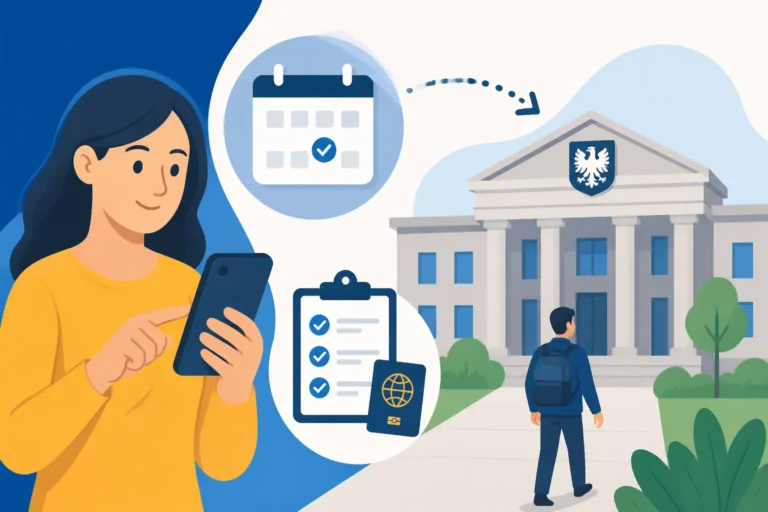
- Booking an Appointment: In many major cities like Warsaw, Krakow, or Wroclaw, you cannot simply walk in. You need an appointment, which can be notoriously difficult to secure. Online booking systems often open at specific, ungodly hours, and slots disappear within seconds. Be persistent, refresh frequently, and be ready to click fast. This process alone can add weeks, if not months, to your timeline. A dedicated guide on How to Book an Appointment at the Urząd Wojewódzki for Immigration might be invaluable.
- The Submission: On the day of your appointment, be early. Bring every single document (originals and copies). The official will review your application. If everything is in order, they will stamp your passport with an "application received" stamp (pieczątka). This stamp is crucial; it legalizes your stay in Poland while your application is being processed, even if your current visa expires. Without it, you could risk overstaying.
- Biometrics: At some point during or after submission, you will be called for fingerprinting. This is standard procedure for the Karta Pobytu.
- The "Marriage Interview": This isn't always a formal interview, but officials do check the authenticity of your marriage. They might ask you questions about your spouse (date of birth, favourite colour, where you met), your shared life, and your future plans. They might even separate you and ask the same questions to your spouse. This is why having a "real" marriage and being able to genuinely talk about your life together is important. They are looking for inconsistencies that might indicate a marriage of convenience.
Waiting, Waiting, and More Waiting: Navigating the Bureaucracy
And so, the waiting game begins. The official processing time for a temporary residence permit is usually around 60-90 days, but any expat in Poland will tell you this is often a fantasy. Realistically, prepare for 6 months, 9 months, or even over a year, especially in larger cities with high application volumes.
- "Uzupełnienie Braków": The dreaded "request for additional documents." This is incredibly common. They might ask for something you've already submitted, or something entirely new and unexpected. Respond promptly, with certified translations if needed, and make sure to send it via registered mail or submit it in person with proof of delivery. Each request for additional documents further extends the processing time.
- Online Status Checks: Some Urząd Wojewódzki offices offer an online portal where you can check the status of your application. This can be a small comfort, but often the status updates are minimal, if at all.
- Temporary Stay: While your passport is stamped, you are legally allowed to stay in Poland. However, this stamp does not grant you free travel in the Schengen area outside of Poland. For international travel, you might need a separate visa or have to wait for your Karta Pobytu to be issued. It's essential to understand Understanding Schengen Rules and the 90/180 Limit for Poland.
- Delays: If your application takes longer than the statutory period, you can write formal letters of reminder (ponaglenie) to the Urząd. While these don't always speed things up dramatically, they officially register your dissatisfaction and can sometimes nudge your application forward.
Life with a Karta Pobytu Based on Marriage
Congratulations! After what likely felt like an eternity, you’ve received your shiny new Karta Pobytu. This little plastic card is your ticket to legally living and working in Poland. But what exactly does it entail?
Rights and Responsibilities of Your New Status
Your Karta Pobytu (temporary residence permit) based on marriage usually grants you the following:
- Legal Stay: You are legally permitted to reside in Poland for the duration of your card's validity, typically 2-3 years.
- Work Rights: In most cases, a Karta Pobytu granted on the basis of marriage automatically includes the right to work in Poland without needing a separate work permit. This is a significant advantage. The card itself will have an annotation "dostęp do rynku pracy" (access to the labour market).
- Schengen Travel: With your Karta Pobytu and a valid passport, you can travel freely within the Schengen Area for up to 90 days in any 180-day period.
- Access to Public Services: You’ll have access to public healthcare (if you're insured through NFZ), social services, and education, just like any other resident.
However, with rights come responsibilities:
- Inform the Urząd: You are legally obliged to inform the Urząd Wojewódzki within 15 days if there are any significant changes to your situation, such as a change of address, employer (if your permit was tied to employment), or, crucially, a change in your marital status.
- Carry Your Documents: Always carry your Karta Pobytu and passport, especially when travelling, as police or border guards may request them.
Renewal and Path to Permanent Residence
Your temporary Karta Pobytu will have an expiry date, and you'll need to apply for its renewal well in advance – usually at least 60-90 days before it expires. The renewal process is similar to the initial application, requiring updated documents, proof of continued stable income, accommodation, and an ongoing marriage.
The good news is that living in Poland on a temporary residence permit based on marriage to a Polish citizen can put you on a pathway to permanent residence (Pobyt Stały). After a certain period, typically three years of continuous residence in Poland based on your marriage, you may be eligible to apply for Permanent Residence in Poland: The Complete Pathway. This status offers much greater stability and usually doesn’t need frequent renewal. The requirements for permanent residence are more stringent and often include demonstrating stable financial means, proof of accommodation, and sometimes a certified B1 level Polish language certificate. For details on this, you might explore Understanding the Polish Language Requirement for Citizenship.
Practical Considerations for Daily Life
Beyond the legalities, having a residence permit means you can finally start building your life in Poland.
- Integration: Learning Polish is undoubtedly the best way to integrate and will make daily life immeasurably easier, from shopping to doctor's visits. Consider enrolling in Learning Polish: A Complete Guide to Language Courses and Levels.
- Healthcare: As a resident, you'll have access to the public healthcare system (NFZ) if properly insured, or you can continue with private options. For a deep dive, check out The Complete Guide to Healthcare in Poland for Expats (2027).
- Banking: Opening a Polish bank account is much simpler with a Karta Pobytu. Most major banks like PKO BP, Santander, or mBank have expat-friendly services. This is covered in detail in The Expat Guide to Opening a Bank Account in Poland.
Common Pitfalls and Expat Advice
Having navigated the Polish immigration system myself, I can tell you there are plenty of traps for the unwary. Learning from others' mistakes can save you significant time, stress, and money.
Avoiding Common Mistakes
- Incomplete Documentation: This is the number one cause of delays. Do not submit an application with missing documents. Double-check, triple-check, and then ask your spouse to check again.
- Not Getting Certified Translations: Regular translations, even if accurate, are not accepted. They must be done by a tłumacz przysięgły (sworn translator). This detail is often overlooked by newcomers.
- Missing Deadlines: Whether it's for submitting additional documents or renewing your permit, missing a deadline can have serious consequences, up to and including refusal of your application or deportation.
- Underestimating Processing Times: The official timelines are rarely met. Plan for delays, don't make critical travel plans based on official estimates, and try not to let the waiting get to you too much.
- Not Preparing for the "Marriage Interview": Don't take it lightly. Ensure you and your spouse are on the same page about your relationship history and details. The Urząd is looking for consistency and genuine connections.
Essential Tips for a Smoother Journey
- Start Early, Seriously Early: The moment you decide to move, start researching and gathering documents. Bureaucracy moves at its own pace, which is often glacial.
- Be Meticulously Organized: Create folders for everything, keep digital copies, and maintain a log of every document submitted, every interaction, and every date. A single misplaced paper can cost you months.
- Learn Basic Polish Phrases: While Urząd staff might speak some English, knowing basic phrases like "dzień dobry" (good day), "proszę" (please), "dziękuję" (thank you), and "przepraszam" (excuse me/sorry) will go a long way in showing respect and can sometimes smooth interactions.
- Consider Professional Help: If your situation is complex, or you simply can’t face the bureaucracy alone, consider hiring an immigration lawyer or a consultant specializing in residence permits for foreigners. While an added expense, it can be invaluable for peace of mind and ensuring correctness.
- Maintain Open Communication with Your Polish Spouse or Resident Partner: This process is a team effort. They will be your primary contact point with Polish officialdom and will often need to gather documents on their end.
- Keep Copies of Everything: Before submitting anything, make a copy for your records. Get proof of postage if mailing documents, and always ask for a confirmation stamp if submitting in person. This provides you with crucial evidence should anything go missing in the system.
Applying for a residence permit based on marriage in Poland is undoubtedly a test of patience and resilience. But with diligent preparation, a clear understanding of the process, and a good dose of expat camaraderie (you'll find lots of support in online expat groups!), you'll eventually hold that cherished Karta Pobytu in your hand, ready to truly begin your life together in Poland.
Residence Permit Based on Marriage: Document Comparison
| Document Category | Marriage to Polish Citizen | Marriage to Foreign Resident | Notes |
|---|---|---|---|
| Application Form | Completed temporary residence permit application (2 copies) | Completed temporary residence permit application (2 copies) | Must be filled in Polish, no blanks. |
| Travel Document | Valid passport/travel document (original + photocopies) | Valid passport/travel document (original + photocopies) | Valid for at least the permit duration. |
| Photos | 4 biometric photos (3.5×4.5 cm) | 4 biometric photos (3.5×4.5 cm) | Must meet strict biometric standards. |
| Marriage Proof | Polish marriage certificate (akt małżeństwa) or registered foreign one | Polish marriage certificate (akt małżeństwa) or registered foreign one | Foreign certificates require apostille/legalization and sworn translation. |
| Sponsor's ID/Residence | Polish citizen's ID (dowód osobisty) | Foreign spouse's Karta Pobytu (original + photocopies) | Sponsor must already have stable residency. |
| Proof of Income | Polish spouse's employment contract, PIT, bank statements | Foreign spouse's employment contract, PIT, bank statements | Demonstrates financial capacity to support both. Thresholds vary by region. |
| Proof of Accommodation | Rental agreement, deed of ownership, owner's declaration | Rental agreement, deed of ownership, owner's declaration | Must prove adequate living space for both individuals. |
| Health Insurance | Proof of NFZ coverage (e.g., from ZUS) or private insurance | Proof of NFZ coverage (e.g., from ZUS) or private insurance | Mandatory. Private options like Cigna Global are accepted. |
| Application Fee Proof | Confirmation of payment for application & Karta Pobytu | Confirmation of payment for application & Karta Pobytu | Keep original payment receipt. |
| Translations | Sworn translations for non-Polish documents | Sworn translations for non-Polish documents | Essential for all foreign-language documents. |
| Sponsor's Declaration | N/A | Signed declaration from foreign spouse confirming marriage/support | Often required to confirm the authenticity of the marriage and commitment to support. |
| Criminal Record Check | May be requested (depending on country of origin/Urząd) | May be requested (depending on country of origin/Urząd) | If requested, typically from your home country or country of last residence. |
Disclaimer
The information provided in this guide is for general informational purposes only and does not constitute legal advice. While we strive to keep the information up-to-date and accurate, Polish immigration laws and procedures are subject to frequent changes and interpretations by different Urząd Wojewódzki offices. It is always recommended to consult the official websites of the Polish government, the Urząd Wojewódzki responsible for your place of residence, or a qualified immigration lawyer for the most current and specific advice regarding your individual situation. Relying solely on general information may not be sufficient for your specific legal needs.