What Is the Labour Market Test for a Polish Work Permit?
Navigating the labyrinthine world of Polish immigration can often feel like a never-ending quest, especially when it comes to securing the right to work. One of the most common stumbling blocks for non-EU citizens seeking employment here is the infamous Labour Market Test, or as it's known in Polish, the Test Rynku Pracy. It's a requirement that can add considerable time and stress to the work permit application process, leaving many expats and their prospective employers scratching their heads. This guide will walk you through exactly what this test entails, when it applies, and how to successfully navigate its complexities.
What Exactly Is the Labour Market Test (Test Rynku Pracy)?
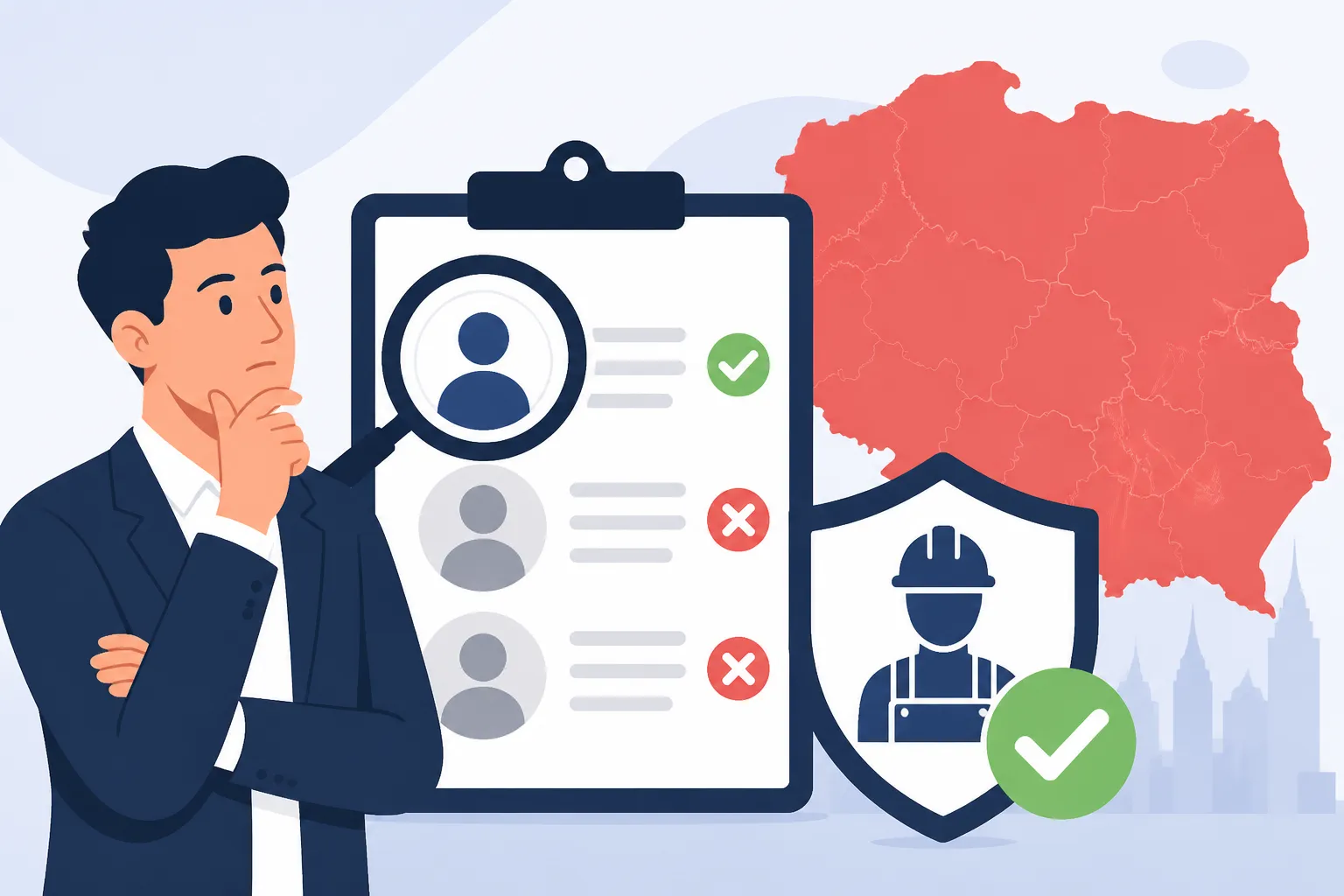
Let's cut right to the chase: the Labour Market Test is essentially a bureaucratic hurdle designed to protect the Polish labour market. Before a Polish employer can hire a non-EU/EEA citizen, they generally need to prove that no Polish or other EU/EEA citizen is available or suitable to fill that specific job vacancy. It’s a mechanism to ensure that local workers are given priority, which, while understandable from a national perspective, can be a real headache for international talent and the companies trying to hire them.
The Purpose Behind the Test
The underlying philosophy of the Test Rynku Pracy is straightforward: prevent foreign workers from taking jobs that could be filled by Poles or other EU citizens. The Polish government, through its labour offices, wants to ensure that hiring an expat is a last resort, not a first choice, to fill a position. This means your potential employer must demonstrate a genuine need to hire outside the EU, after making a reasonable effort to find a suitable candidate within the domestic and EU labour pool. It's not about your qualifications as much as it is about proving a gap in the local market that only you can fill. This is a significant source of frustration for many, as it often feels like an unnecessary delay when a perfect candidate (you!) is already identified.
How It's Conducted by Local Labour Offices
The Labour Market Test process begins with your prospective employer. They are the ones who have to initiate it, not you. They apply to the local Powiatowy Urząd Pracy (County Labour Office) relevant to the job's location. For example, if the job is in Warsaw, they'd go to the Warsaw County Labour Office. The employer submits a job offer outlining the position's requirements, responsibilities, and salary. The labour office then scrutinizes this offer, primarily to ensure it aligns with standard market conditions and isn't designed to be so niche that only a specific foreigner would qualify.
Once the job offer is registered, the labour office typically advertises the position for a set period, usually 14-21 days. During this time, they actively search their database of unemployed individuals and promote the vacancy to see if any Polish or EU citizens meet the criteria. If, after this period, no suitable candidates are found, or if those found decline the offer, the labour office issues an "opinion" (opinia starosty). This opinion states that the local labour market cannot meet the employer's needs, thereby giving the green light for the employer to proceed with your work permit application. It's important to remember that the labour office isn't just looking for any candidate; they're looking for someone who genuinely matches the advertised skills and experience. If a Polish national applies and meets the minimum requirements, even if your employer prefers you, they might still be denied.
When Is the Labour Market Test Not Required?
While the Labour Market Test is the default for many non-EU citizens, thankfully, there are several key exemptions that can significantly streamline the work permit process. Knowing these can save your employer a lot of time and hassle. It's worth discussing these possibilities with your employer right from the start.
Exemptions Based on Nationality and Residency
First and foremost, citizens of the EU, EEA (European Economic Area – Iceland, Liechtenstein, Norway), and Switzerland are generally exempt from needing a work permit in Poland, and therefore, the Labour Market Test. They have the right to work freely within Poland. This is why many expats from Western Europe find the administrative aspects of living here much simpler.
Beyond that, certain categories of non-EU citizens may also be exempt:
- Permanent Residents: If you already hold a permanent residence permit (Pobyt Stały) in Poland, you typically don't need a work permit.
- EU Long-Term Resident Status: Those with EU long-term resident status, granted after five years of continuous legal residence in Poland or another EU country, are also usually exempt.
- Family Members: Spouses and children of Polish citizens or those with permanent residence may also be exempt through family reunification rules. For more details on this, you might want to read about the nuances of applying for residence based on marriage to a Polish citizen.
- Blue Card Holders: While it's still a specific type of work permit, the EU Blue Card is designed for highly qualified workers. Once you have a Blue Card, the renewal process might be simpler, or you might have certain flexibilities regarding future employment.
- Holders of a Pole's Card (Karta Polaka): Individuals holding a Karta Polaka, which confirms their Polish heritage, are also usually exempt from work permit requirements.
These exemptions are crucial because they mean a direct path to employment without the bureaucratic detour of advertising the job.
Exemptions for Specific Professions and Qualifications
Poland recognizes that some sectors face chronic labour shortages or require highly specialized skills. To attract talent in these areas, the Labour Market Test can be waived for certain professions. These "shortage occupations" are typically identified by regional governors (Voivodes) based on labour market analyses. For instance, in recent years, IT specialists, engineers in various fields, certain medical professionals, and highly specialized tradespeople have often appeared on these lists.
It’s not a universal list, however. Each Voivodeship (province) publishes its own list of professions for which the Test Rynku Pracy may be waived within their region. This means a software developer might be exempt in Warsaw but not in a different, less industrialized region. Your employer needs to check the specific, up-to-date list for the region where you’ll be working. This is where getting help from an immigration specialist or HR department that deals with foreigners regularly can be invaluable. They'll have their finger on the pulse of these dynamic lists. Also, if you’re a graduate of a Polish university, especially in specific fields like IT or engineering, you might also find yourself eligible for certain waivers.
Exemptions for Strategic Investments
Another significant exemption exists for foreign nationals working for companies that are considered to be making a "strategic investment" in the Polish economy. This typically applies to large international companies establishing significant operations in Poland, creating a substantial number of jobs, or investing heavily in specific industries deemed vital for national development.
For an employer to qualify for this exemption, they need to apply for a special declaration or certificate from the relevant government ministry, usually the Ministry of Economy or the Ministry of Development and Technology. This certification confirms that their investment is indeed strategic. Once granted, their non-EU employees can apply for work permits without undergoing the Labour Market Test. This category is less common for individual expats but is a major pathway for global corporations relocating staff or setting up new hubs in Poland. It's a way for Poland to signal its openness to foreign capital and high-impact businesses, understanding that attracting such investment often means bringing in specialized talent from abroad.
The Step-by-Step Process of the Labour Market Test
Understanding the sequence of events can help both you and your employer manage expectations and prepare for each stage. It's not the fastest process, but knowing the steps demystifies it considerably.
Employer's Initial Application to the Labour Office
This is where the journey truly begins. Your employer, after identifying you as the chosen candidate, will gather all necessary documentation related to the job. This usually includes:
- Job Offer Details: A detailed description of the position, including job title, responsibilities, required qualifications, type of contract (e.g., Umowa o Pracę), proposed gross salary, and working hours. This needs to accurately reflect the actual job you'll be doing.
- Employer's Documentation: Proof of the company's legal status (e.g., NIP, REGON numbers), often an excerpt from the National Court Register (KRS), and any other relevant business registration documents.
- Your CV/Qualifications: While not directly for your permit at this stage, the labour office will compare the advertised job requirements against your qualifications.
- Application Form: A specific application form from the Powiatowy Urząd Pracy outlining the request for the Labour Market Test.
Once these documents are compiled, the employer submits them to the appropriate local labour office. It's crucial that the job description is accurate and not overly restrictive, as the labour office needs to genuinely attempt to find a local candidate. An overly tailored job description might be flagged as an attempt to circumvent the test. It also means that if your employer tries to hire you for, say, an "IT Specialist" role, but the description is incredibly specific to your niche, they might run into issues. Be patient here; this initial stage can take a few days for the labour office to process the application and begin the advertising period.
The Verification and Issuance of the Starosta's Opinion
After the employer's application is accepted, the labour office (specifically, the Starosta, or county head, acting through the labour office) embarks on the verification phase. As mentioned, this involves advertising the position for a minimum of 14 days, though it can extend to 21 days or more, depending on the role and local regulations. During this time, they will:
- Search their internal database for registered unemployed individuals with matching skills.
- Publicly advertise the vacancy through various channels, potentially including the labour office's website, national job portals, or even local newspapers, depending on the nature of the job.
The labour office will then assess any applications received from Polish or EU/EEA citizens. They'll evaluate if these candidates meet the requirements outlined in the job offer. If no suitable candidates are identified, or if the employer genuinely interviews and rejects suitable local candidates for legitimate, documented reasons (which must be carefully explained to the labour office), then the Starosta issues the positive opinion. This opinion confirms that there are no suitable candidates available in the local market to fill the position. This is the golden ticket for your employer to proceed with the actual work permit application. Without this positive opinion, the work permit cannot typically be issued.
This stage is often the most anxiety-inducing part of the entire process, as its outcome is largely out of your or your employer's direct control. The waiting period can be frustrating, especially if you're eager to start your new life in Poland. Many expats find resources like Sirelo invaluable during this waiting period, as they help manage other aspects of their relocation to Poland, from moving logistics to finding housing.
What Happens After the Opinion Is Issued
Once the positive opinia starosty is issued, your employer can finally proceed with the actual work permit application (Zezwolenie na Pracę). The opinia starosty is a mandatory attachment to this application. The work permit application, along with other required documents (like your passport copy, health insurance proof – perhaps from a reputable provider like Cigna Global, employment contract draft, and the employer's business documents), is submitted to the Voivodeship Office (Urząd Wojewódzki), not the labour office.
It's a critical distinction: the labour office handles the Labour Market Test, while the Voivodeship Office handles the work permit and residence permit applications. The work permit is then granted for a specific period, usually between one to three years, and is tied to a specific employer and position. If you change employers or significantly change your job role, a new work permit (and potentially a new Labour Market Test) might be required. Once you have your work permit, you can then apply for a Temporary Residence Permit (Karta Pobytu) based on employment, which is often a combined "Single Permit" application. This entire chain of events highlights why understanding the process from the get-go is so important for working in Poland as a foreigner. For those trying to figure out how to get a work permit (Zezwolenie na Pracę) in Poland, this test is often the very first hurdle.
Common Challenges and Tips for Expats
Even with a clear understanding, the Labour Market Test can throw some curveballs. Having lived through the Polish bureaucracy myself, I can tell you that patience and meticulous preparation are your best friends.
Navigating Bureaucracy and Delays
The biggest challenge for most expats and their employers is undoubtedly the bureaucracy and the inevitable delays. Official processing times are often aspirational, and real-world experience can vary wildly. It's not uncommon for the Labour Market Test, followed by the work permit and then the residence permit, to take several months, sometimes even longer than half a year, especially in major cities like Warsaw or Krakow due to the sheer volume of applications.
- Patience is a virtue: Seriously, take a deep breath. Expect things to take longer than you anticipate.
- Constant communication: Your employer should maintain regular contact with the Powiatowy Urząd Pracy to check on the status of the opinia starosty. Don't be afraid to gently prod (or have your employer do so).
- Understand the "why": Knowing that the delays aren't personal but a systemic issue can help manage frustration.
This is a marathon, not a sprint. If you're coming to Poland from a country where administrative processes are swift, this can be a real culture shock.
Ensuring Your Employer Has the Right Information
Your employer is your advocate in this process, and their thoroughness directly impacts your success. It's absolutely crucial that they are well-versed in the requirements and are prepared to handle the process correctly. Many Polish companies are experienced in hiring foreign nationals, especially in sectors like IT, but smaller businesses might be doing it for the first time.
- Clear Job Description: Ensure the job description provided to the labour office is accurate, comprehensive, and aligns with your actual qualifications and the employer's needs. Vague descriptions or descriptions that don't match your profile can lead to rejections or requests for clarification.
- Documentation: Your employer needs to be meticulous with all documentation, both for their company and for your details. Missing even a single stamp or signature can send the application back to square one.
- Stay Informed: While your employer handles the heavy lifting, it doesn't hurt for you to be aware of the process. You can gently remind them of next steps or provide requested documents promptly. Don't be a backseat driver, but be an informed passenger.
Consider if your employer is seeking a Single Permit (Jednolite Zezwolenie) in Poland, as this combines the work and residence permit application, which can be more efficient once the labour market test is cleared.
Tips for a Smoother Process
To make this journey as smooth as possible, a proactive approach is always best.
- Start Early: If you know you're moving to Poland for work, initiate discussions about the work permit and Labour Market Test as soon as possible. The earlier your employer starts the process, the better. This is especially true if you are trying to understand how to get a temporary residence permit (Karta Pobytu) in Poland, as the work permit is often a prerequisite.
- Check Exemptions: Always double-check if your nationality, profession, or the nature of your employer's business qualifies for an exemption from the Labour Market Test. This can save months of waiting. This often involves looking at roles in high-demand sectors, like those listed in How to Find English-Speaking Jobs in Poland.
- Professional Help: For complex cases or employers new to the process, engaging with an immigration lawyer or a consultancy specializing in Polish work permits can be a wise investment. They can navigate the nuances and ensure all paperwork is correctly submitted.
- Prepare Your Own Documents: While the employer handles the Labour Market Test, start getting your own documents in order for the subsequent work permit and residence permit applications. This includes translated and notarized copies of your academic qualifications, birth certificate, marriage certificate (if applicable), and ensuring your passport is valid for an extended period. Don't forget to understand What Health Insurance Do I Need for a Polish Residence Permit? as this is a non-negotiable requirement.
- Understanding Your Rights: Familiarize yourself with Polish employment law and worker rights. Once you have that work permit, you'll be signing an Umowa o Pracę (employment contract), and it's good to know your entitlements. For a deeper dive, check out our guide on Understanding Polish Employment Contracts and Worker Rights (2027).
Here's a quick overview of the Labour Market Test application scenarios:
| Scenario | Labour Market Test Required? | Initiator | Purpose | Typical Duration (Advertisement) | Subsequent Step |
|---|---|---|---|---|---|
| Non-EU Citizen, No Exemption | Yes | Employer (via Powiatowy Urząd Pracy) | Prove no Polish/EU citizen available for the job. | 14-21 days | Apply for Work Permit (Zezwolenie na Pracę) at Voivodeship Office with positive opinia starosty. |
| EU/EEA/Swiss Citizen | No | N/A | Free movement of labour. | N/A | Register residence (if staying > 3 months). |
| Non-EU Citizen, Skilled (e.g., IT) | Potentially No | Employer (checking Voivodeship lists) | Attract talent for shortage occupations. | N/A (if exempted) | Direct application for Work Permit (or Single Permit) at Voivodeship Office, citing exemption. |
| Non-EU Citizen, Strategic Inv. | No | Employer (via relevant Ministry) | Attract foreign investment and specialized personnel. | N/A (if certified) | Direct application for Work Permit (or Single Permit) at Voivodeship Office, citing strategic investment certificate. |
| Permanent Resident / EU Long-Term Resident | No | N/A | Right to work in Poland based on residence status. | N/A | N/A |
| Karta Polaka Holder | No | N/A | Special status recognizing Polish heritage. | N/A | N/A |
Remember, the goal is always to get that positive opinia starosty so you can move forward with your work permit application. Once that's done, you're well on your way to enjoying your new life and career in Poland. For a full picture of what to expect, delving into The Complete Guide to Working in Poland as a Foreigner (2027) is highly recommended. Don't forget to also consider how to register with the Urząd Wojewódzki for immigration appointments; it can save you a lot of time and stress.
Disclaimer
The information provided in this guide is intended for general informational purposes only and does not constitute legal, financial, or immigration advice. While we strive to keep the content up-to-date and accurate, Polish immigration laws and regulations are subject to frequent changes. It is highly recommended that you consult with a qualified immigration lawyer or the relevant Polish authorities (such as the Powiatowy Urząd Pracy or Urząd Wojewódzki) for advice specific to your individual situation. Reliance on any information in this guide is solely at your own risk.