How Do I Get a Visa to Move to Poland from India?
Dreaming of starting a new chapter in Poland from India is a wonderful aspiration, but let's be real: the journey to get there can feel less like a smooth flight and more like navigating a dense, bureaucratic jungle. Many expats before you, myself included, have faced the unique frustrations of the Polish immigration system. This guide is here to cut through the confusion and provide you with a comprehensive, realistic roadmap to securing your visa to move to Poland from India.
Understanding the Polish Visa Landscape for Indian Citizens
Before you even start packing your bags – or dreaming of pierogi – it's crucial to understand the different types of visas Poland offers. For anyone planning a long-term stay, whether for work, study, or family, a short-stay visa simply won't cut it. You need a national visa, and knowing the distinction is your first step to avoiding wasted time and effort.
Distinguishing Between Short-Stay Schengen and Long-Stay National Visas
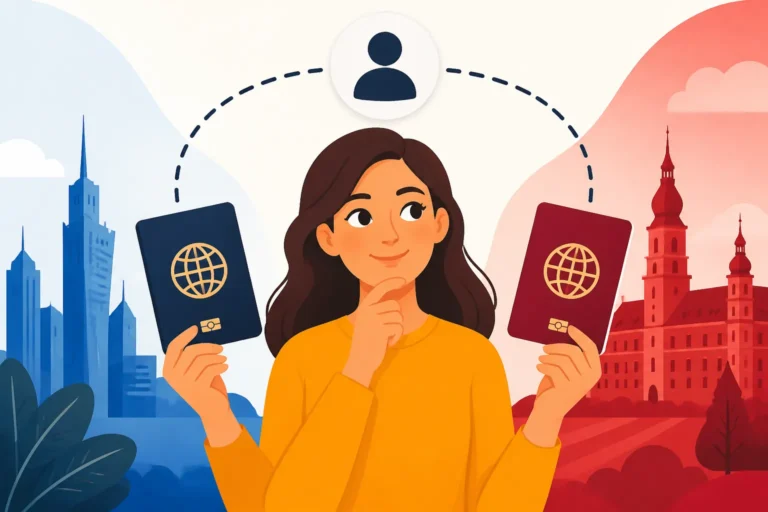
Let's clear this up right away. When people talk about a "Schengen visa," they're typically referring to a Type C short-stay visa. This visa is designed for brief visits – think tourism, visiting family, or short business trips. It allows you to stay in the Schengen Area (which includes Poland) for up to 90 days within any 180-day period. While it's great for holidays, it is absolutely not the visa you need if your intention is to move to Poland and establish residency. Trying to enter on a Schengen visa with the intention of staying long-term can lead to serious immigration issues down the line.
What you'll be aiming for is a Type D national visa. This is the long-stay visa that permits you to remain in Poland for more than 90 days, typically for a period of up to one year. This visa is your gateway to living, working, or studying in Poland. An added perk of having a Type D national visa is that it also grants you the right to travel within the entire Schengen Area for up to 90 days in any 180-day period, just like a Type C visa, but your primary purpose of stay remains in Poland. It’s like having a special pass that lets you travel locally while still focusing on your main adventure.
The Specific Visas Relevant for Moving to Poland
Moving to Poland from India means you'll almost certainly need one of the following national visa types. The specific one depends entirely on your primary reason for coming to the country.
If you're heading to Poland for a job, which is a very common route for Indian professionals, you'll be looking at a Work Visa (Type D). This visa category requires you to have a job offer from a Polish employer. Crucially, your employer in Poland must have obtained a work permit (called a Zezwolenie na pracę) for you, or in some cases, a declaration of intent to employ (Oświadczenie o zamiarze powierzenia wykonywania pracy). Without this crucial document from your Polish employer, your work visa application won't even get off the ground. The type of work permit will depend on your job and nationality, so it's essential for your employer to handle this correctly on their end.
For those planning to further their education, the Student Visa (Type D) is your path. To qualify for this visa, you'll need to demonstrate official admission to a recognized Polish educational institution – a university, college, or even certain language schools. Beyond the acceptance letter, you'll also need to prove you have sufficient funds to cover your tuition fees and living expenses throughout your studies. This is often where many applicants face hurdles, as the financial requirements can be quite specific and substantial.
If you have family members already legally residing in Poland and you wish to join them, the Family Reunification Visa (Type D) is the category for you. This often applies to spouses or minor children of Polish citizens or foreigners who hold a valid residence permit in Poland. The application process will involve proving your family relationship, and your family member in Poland will also need to meet certain income and accommodation requirements to sponsor your stay. This visa is about establishing family unity, which is a key principle in Polish immigration law.
Lastly, for entrepreneurs with ambitions to set up or manage a business in Poland, a Business Visa (Type D) might be applicable. This is typically one of the more complex visa categories, requiring a solid business plan, proof of investment, and often evidence that your business will contribute positively to the Polish economy. While less common for initial moves from India, it is a viable option for those with concrete business ventures. For highly skilled professionals, there's also the Blue Card (Niebieska Karta), which is an EU-wide permit for high-skilled employment, offering even greater benefits and flexibility once obtained, though it typically involves a slightly different initial application path.
Step-by-Step Application Process from India
The Polish visa application process, especially for a long-stay national visa from India, can feel like a daunting task. It requires meticulous attention to detail, patience, and a thorough understanding of the requirements. Missing even a single document or making a small error can lead to significant delays or even refusal. So, let's walk through it, piece by piece.
Gathering the Essential Documents (The Paper Chase Begins!)
This is often where the real challenge begins for many applicants. The Polish authorities are notoriously strict about documentation, and they want everything in perfect order. Consider creating a checklist and ticking off each item as you gather it, making sure it meets all the specific criteria.
First and foremost, your passport is your golden ticket. It must be valid for at least three months beyond your intended stay in Poland and should have at least two blank pages for the visa stamp. Don't overlook the blank page requirement – it's a common reason for application delays. You'll also need a duly filled and signed visa application form, which you'll typically complete online via the e-Konsulat system, then print out. Ensure all information matches your passport exactly. You'll also need specific photographs that meet Schengen standards – usually 3.5 x 4.5 cm, colour, against a white background, and taken recently.
Now, for the core of your application: Proof of Purpose of Stay. This is where your chosen visa type dictates what you need.
- For a work visa: You absolutely must have the original Zezwolenie na pracę (work permit) issued by the relevant Polish Voivodeship Office or, in some cases, an Oświadczenie o zamiarze powierzenia wykonywania pracy (declaration of intent to entrust work) if your job falls under simplified procedures. This is the most critical document. Your employer will also typically provide an invitation letter detailing your employment.
- For a student visa: An official acceptance letter from a Polish university or educational institution is paramount. You'll also need proof that you've paid tuition fees for at least the first semester or year, and sometimes evidence of your educational background, like diplomas and transcripts.
- For family reunification: You'll need official marriage certificates, birth certificates, and other documents proving your familial relationship. Your family member in Poland will also need to provide a copy of their valid residence permit (Karta Pobytu) or Polish passport, along with proof of their ability to support you financially and provide accommodation.
Beyond the specific purpose, everyone needs Proof of Accommodation. This could be a rental agreement for an apartment in Poland, a formal invitation letter from a host in Poland (stating they will provide accommodation), or confirmed hotel bookings for at least your initial days. The address provided here is crucial as it links to your intended place of residence.
Financial stability is key, so you'll need Proof of Sufficient Funds. This usually means recent bank statements (for the last 3-6 months), salary slips, an income tax return, or a formal sponsorship letter if someone else is supporting you. Poland has specific minimum funds required per month for living expenses (currently around 776 PLN per month for self-support, plus funds for travel). Be prepared to show funds significantly exceeding this minimum to demonstrate genuine self-sufficiency. This requirement is in place to ensure you won't become a burden on the Polish state.
Don't forget Travel Medical Insurance. This isn't just a suggestion; it's mandatory. Your insurance policy must cover medical emergencies, hospitalization, and repatriation with a minimum coverage of €30,000. It needs to be valid throughout your entire stay in the Schengen Area or for the duration of your visa. Many expats find robust international health insurance providers like Cigna Global to be excellent options, offering comprehensive coverage that meets these stringent requirements. It’s better to have good coverage than to risk a medical emergency abroad without adequate protection.
You'll also need a confirmed flight itinerary or booking. While you might not want to buy tickets outright until your visa is approved, many airlines or travel agents can provide a reservation confirmation without requiring immediate payment. Finally, compile any relevant education or work experience documents like your CV, diplomas, and professional certificates, especially for work visa applications where your qualifications are a key factor. Ensure all civil status documents, like your marriage certificate or birth certificates, are also ready if applicable.
A crucial point often overlooked by Indian applicants is the need for attestations, apostilles, and translations. Many documents issued in India will need to be apostilled by the Ministry of External Affairs and then translated into Polish (or sometimes English by a sworn translator in Poland) to be accepted by Polish authorities. This process can take time, so factor it into your schedule. For more insights on setting up your life there, check out our guide on The Complete Guide to Moving to Poland: Your First 90 Days (2027).
Submitting Your Application: Where and How
Once you've meticulously gathered every single document, the next hurdle is actually submitting your application. Unlike some countries where you apply directly at the embassy, Poland, like many European nations, often outsources this to official Visa Application Centres (VACs). For applicants from India, this typically means applying through VFS Global, which acts as an intermediary for the Polish Embassy and Consulates in India. They have centres in major cities like New Delhi, Mumbai, Bengaluru, Chennai, and Kolkata.
The process usually starts online. You'll need to fill out your application form on the e-Konsulat website, print it, and then book an appointment at a VFS Global centre. Let me tell you, booking an appointment can be fiercely competitive. Slots, especially in high-demand cities, get snatched up very quickly. My best advice is to start checking for appointments as soon as you have your employer's work permit or university acceptance letter. Be flexible with dates and times, and if possible, try different centres if one seems completely booked. Many expats have tales of refreshing the booking page repeatedly for days on end. Don't be discouraged; persistence is key here.
At your appointment, VFS Global will collect your documents, verify them against your checklist, and process your biometrics – this includes your fingerprints and a digital photograph. They'll also collect the visa fees. Be aware that visa fees are usually paid in Indian Rupees (INR) at the VFS Global centre, and there will be an additional service charge from VFS Global on top of the actual Polish visa fee. The fee for a national visa is typically around €80 (which translates to roughly INR 7,200, though this fluctuates with exchange rates). Check the official VFS Global or Polish Embassy website for the most current fees. Make sure to carry enough cash or know what payment methods are accepted at your specific centre.
The Interview and Waiting Game
While not all applicants are called for an interview, it is a possibility, especially if the Consular Officer requires further clarification on your application or your intentions. If you are called for an interview at the Embassy or Consulate, it’s not something to dread, but rather to prepare for. You might be asked about your purpose of stay, your ties to Poland, your educational or professional background, and sometimes even your intentions after your visa expires. Be honest, confident, and consistent with the information in your application. They are looking for genuine applicants with clear intentions.
Then comes the infamous waiting game. Processing times for national visas from India can vary significantly. While the official processing time might be stated as 15 working days, it's far more realistic to expect it to take several weeks, or even a couple of months, especially during peak application seasons. For complex cases or during periods of high demand, it's not unheard of for it to stretch to three months or more. This is perhaps the most frustrating part of the process, and it's essential to manage your expectations. Avoid making irreversible plans, like quitting your job or selling your property, until you have that visa stamp in your passport. Remember, the Polish bureaucracy doesn't operate on Indian time, so patience is a virtue you'll need in spades.
After Visa Approval: Preparing for Your Move to Poland
Congratulations, the visa is in your passport! This is a massive achievement, but it's not the end of your administrative journey. Now, the real preparation for moving to Poland begins. Having your visa means the Polish authorities have accepted your reason for coming, but there are still crucial steps to take both before and immediately after your arrival to ensure a smooth transition.
Initial Steps Upon Arrival
The first thing you'll do, usually within a specified timeframe, is to collect your visa from the VFS Global centre or, in some rare cases, the Consulate where you submitted your application. Double-check all the details on the visa sticker – your name, passport number, validity dates, and the number of entries – to ensure everything is correct. Any error could cause problems later.
When you finally land in Poland, you'll go through border control. This is typically straightforward. The border officer will check your passport and visa. Occasionally, they might ask a few questions about the purpose of your trip, your accommodation, or ask to see supporting documents like your work permit, university acceptance letter, or proof of funds. Have these documents easily accessible in your hand luggage, just in case.
Once you’re through, your first few weeks in Poland will be a whirlwind of excitement and practicalities. One of your immediate priorities should be to start looking for long-term accommodation if you haven't already secured it. Temporary solutions like Airbnbs or hostels are fine for the very short term, but you'll need a proper rental agreement for almost all further administrative steps. Another crucial step is applying for your PESEL number. This is a Polish national identification number, similar to an Aadhar card or Social Security number, and it's essential for almost everything from banking to healthcare. You can often apply for it when you register your residence or sometimes through your employer. For a deep dive into securing your ID, read up on How to Get Your PESEL Number and Why It Matters for Healthcare.
Finally, for most national visa holders, your Type D visa is just the initial entry document. If you plan to stay beyond its one-year validity, you will need to apply for a Temporary Residence Permit (Karta Pobytu) while you are still in Poland. This application is submitted to the Voivodeship Office (Urząd Wojewódzki) relevant to your place of residence. It's incredibly important to start this application well before your national visa expires. Trust me, you don't want to be in a situation where your visa is nearing its end, and you haven't even started the residence permit process. You can find detailed instructions in our guide on How to Apply for a Temporary Residence Permit (Karta Pobytu) in Poland.
Logistics and Settling In
Beyond the initial administrative hurdles, there’s the whole adventure of settling into a new country. Accommodation is often the biggest challenge. Finding a suitable apartment can be tricky, especially if you don't speak Polish. Websites, real estate agents (though they charge commission), and expat Facebook groups are good starting points. Understanding Polish rental contracts and tenant rights is also vital. Our comprehensive guide The Complete Guide to Renting an Apartment in Poland (2027) will walk you through what to expect.
Next up, banking. You'll need a Polish bank account for your salary, paying bills, and daily expenses. While some banks might allow you to open a basic account with just your passport and visa initially, having a PESEL number and proof of address will make the process much smoother. Many Polish banks are quite expat-friendly, and most offer online banking in English. To navigate this, check out The Expat Guide to Opening a Bank Account in Poland.
Understanding the healthcare system is also paramount. As an employed individual, you'll typically be enrolled in the public health insurance system (NFZ) through your employer, but it's important to understand how it works, how to find a family doctor, and when private options might be better. We have an extensive resource on The Complete Guide to Healthcare in Poland for Expats (2027) that covers all the bases.
And what about all your belongings? If you're planning on shipping your life over, using a reputable international moving company can save you a lot of headaches. Companies listed on platforms like Sirelo can help you compare services and find a reliable mover from India to Poland, ensuring your possessions arrive safely and with minimal fuss. Don't underestimate the logistics of international shipping; it's a world unto itself.
Finally, allow yourself time for cultural adaptation. Poland is a beautiful country with a rich history, but like any new place, it comes with its own customs, social norms, and ways of doing things. Be open, be patient, and embrace the experience. It's a journey, not a sprint.
Common Challenges and Pro Tips for Indian Applicants
Moving to a new country is exhilarating, but it's also fraught with challenges. For Indian citizens specifically, the Polish visa and immigration process presents unique hurdles. Understanding these common pitfalls and having some pro tips in your back pocket can make all the difference.
Navigating Bureaucracy and Language Barriers
Let's be blunt: Polish bureaucracy can feel like a labyrinth, even for seasoned expats. Forms are often only available in Polish, official communication can be terse and formal, and requirements can change or be interpreted differently by various officials. It's not uncommon to be asked for an additional document at a subsequent appointment, even if you were told everything was in order the first time. This isn't usually malice; it's just how the system works. Validate your frustration, but channel it into meticulous preparation.
While many younger Poles, especially in major cities, speak excellent English, the further you delve into official institutions like the Urząd Wojewódzki (Voivodeship Office) or some local government offices, the less likely you are to find English speakers. This creates a significant language barrier. My strongest advice is to try and learn some basic Polish phrases – even "Dzień dobry" (good morning) and "Dziękuję" (thank you) can go a long way. More importantly, consider hiring a professional translator or asking a trusted Polish-speaking friend or colleague to accompany you to appointments. Having someone who can explain things clearly in Polish and advocate on your behalf can be invaluable.
A single missing document, an uncertified copy, or an incorrectly translated paper can completely derail your application, sending you back to square one and prolonging the agonizing wait. Always, always, double-check every single document against the official requirements. Then check it again. Make multiple copies. Organize them clearly. It sounds obsessive, but it will save you headaches in the long run.
Visa Refusals and Appeals
No one wants to think about it, but visa refusals do happen. Understanding the common reasons for refusal can help you avoid them. These often include:
- Insufficient funds: Not proving adequate financial means for your stay.
- Fake or fraudulent documents: Any attempt to provide false information will lead to immediate refusal and can have long-term consequences for future visa applications.
- Unclear purpose of stay: If the consular officer isn't convinced about your genuine intent (e.g., suspected illegal immigration).
- Lack of strong ties to India: For some visas, especially those where intent to return is important, demonstrating strong ties to your home country can be crucial.
- Previous immigration violations: Any overstays or issues in other Schengen countries can negatively impact your application.
If your visa is refused, it’s not necessarily the end of the road. You generally have the right to appeal the decision. The refusal letter will usually state the reasons for the decision and outline the appeal process, including the deadline (often 14 days) and the authority to which you should appeal. The appeal must be submitted in writing, usually in Polish, and should address the specific reasons for the refusal, providing additional evidence or clarification. While it adds more stress and time, a well-prepared appeal can sometimes overturn an initial refusal. This is where being thoroughly honest and transparent from the very outset of your application is crucial.
Maintaining Legal Status
Once you're in Poland with your national visa, your immigration journey isn't over. It's absolutely critical to maintain your legal status throughout your stay. As mentioned, your Type D visa is usually valid for up to one year. If you intend to stay longer, you must apply for a Temporary Residence Permit (Karta Pobytu) well before your visa expires. This means starting the application process several months in advance, as processing times can be lengthy. Overstaying your visa, even by a single day, can lead to fines, deportation, and a ban from the Schengen Area, making it extremely difficult to return in the future.
Also, even with a national Type D visa, remember the 90/180 Schengen rule when you travel outside Poland within the Schengen Area. Your Polish national visa allows you to stay in Poland, but your travel to other Schengen countries is still subject to the 90 days in any 180-day period limit. This is a common point of confusion for expats, so keep it in mind if you're planning weekend trips to Germany, the Czech Republic, or other neighbouring countries. For a full breakdown, definitely consult Understanding Schengen Rules and the 90/180 Limit for Poland. Staying informed is your best defence against unintended legal troubles.
| Visa Type | Purpose | Duration | Key Requirements from India |
|---|---|---|---|
| Schengen Visa (Type C) | Tourism, Short Business, Family Visit | Up to 90 days in 180-day period | Passport, Proof of Funds, Travel Insurance, Itinerary, Letter of Invitation (if applicable) |
| National Visa (Type D) – Work | Employment in Poland | Up to 1 year (initial) | Work Permit (Zezwolenie na pracę), Job Offer, Passport, Funds, Accommodation, Travel Insurance |
| National Visa (Type D) – Study | Enrolment in Polish Educational Institution | Up to 1 year (initial) | Acceptance Letter, Proof of Tuition Payment, Passport, Funds, Accommodation, Travel Insurance |
| National Visa (Type D) – Family Reunification | Joining a family member in Poland | Up to 1 year (initial) | Proof of Relationship, Sponsor's Residence Permit/Citizenship, Sponsor's Funds/Accommodation, Passport, Travel Insurance |
| National Visa (Type D) – Business | Establishing/Running a Business | Up to 1 year (initial) | Business Plan, Proof of Funds/Investment, Passport, Accommodation, Travel Insurance |
Disclaimer
Please remember that immigration laws and visa requirements are subject to change. While every effort has been made to provide accurate and up-to-date information, this guide is for informational purposes only and does not constitute legal advice. It is always recommended to consult the official website of the Polish Embassy or Consulate in India or a qualified immigration lawyer for the most current and personalized advice regarding your specific situation.