Understanding Schengen Rules and the 90/180 Limit for Poland
Oh, the Schengen Area! It sounds so simple on paper, doesn't it? Just hop between countries, no internal borders, a paradise of free movement. But for us non-EU/EEA folks, it quickly becomes a tangled web, especially when you start trying to figure out how long you can actually stay in Poland without getting into hot water. This guide is going to untangle all that for you, diving deep into the infamous 90/180-day rule and shedding light on its real-world implications, so you can plan your time in Poland with confidence and avoid any unwelcome surprises from immigration officials.
The Schengen Area: More Than Just a Map
Let's start with the basics, because understanding the bigger picture is key to not making a rookie mistake. The Schengen Area isn't the same as the European Union, and that's a crucial distinction many newcomers to Poland often confuse. It's a vast zone that allows for borderless travel, and while it's fantastic for tourism, it comes with strict rules for those of us without an EU passport.
What Exactly is the Schengen Area?
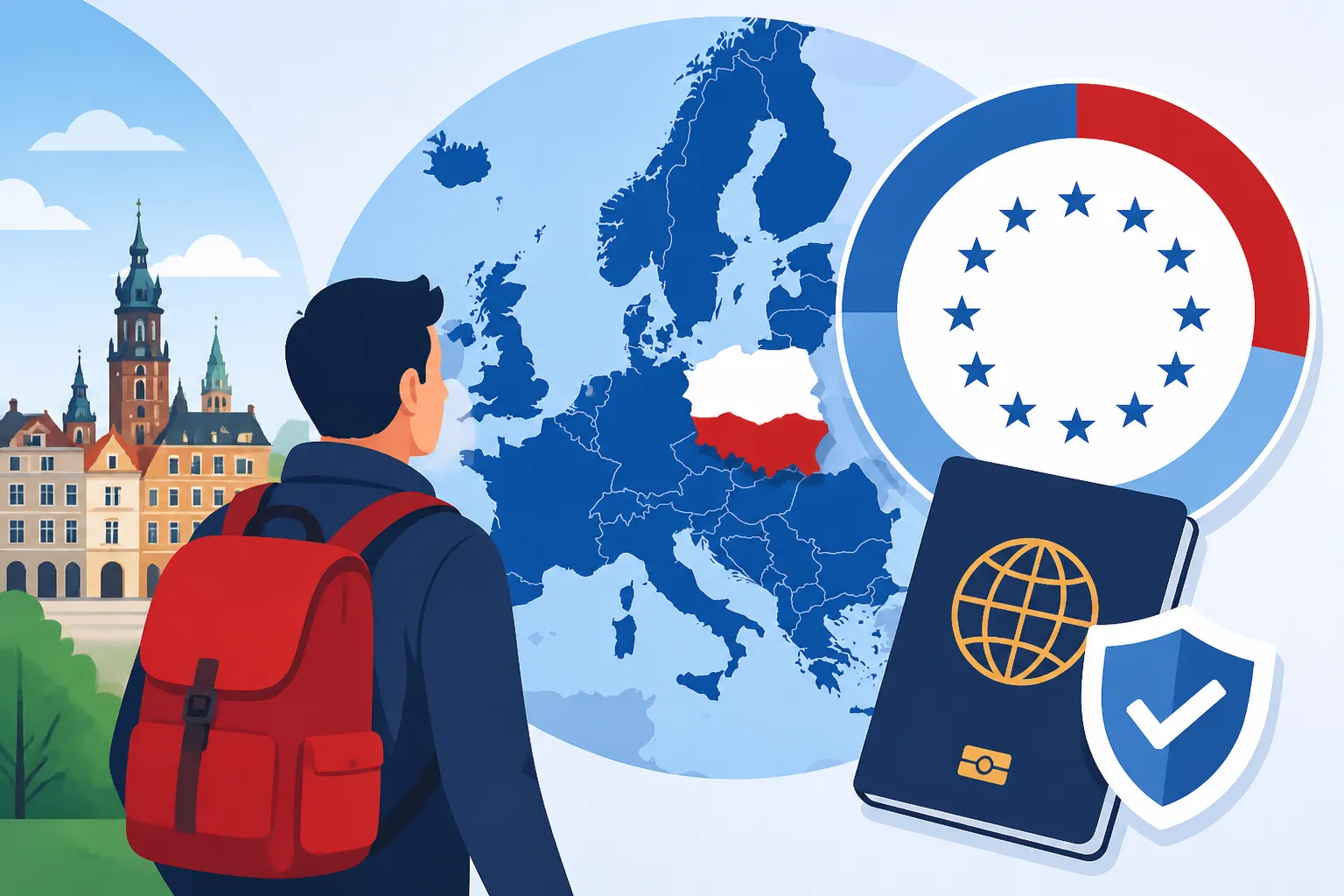
Imagine a giant, invisible bubble encompassing 27 European countries (23 EU member states plus Iceland, Liechtenstein, Norway, and Switzerland). Once you enter this bubble, you can travel freely between these countries without passport checks. It's a dream for exploring Europe, no doubt. Poland is firmly within this zone, meaning that once you've cleared immigration at Warsaw Chopin Airport or Krakow Balice, you're free to travel to Berlin, Paris, Rome, or Budapest without showing your passport again until you exit the Schengen Area entirely.
The whole point of it was to foster closer European integration and make life easier for citizens and businesses. However, for third-country nationals (that's most of us expats without an EU/EEA/Swiss passport), this freedom of movement is precisely why the "90/180-day rule" exists. Without it, people could theoretically enter one Schengen country and then effectively reside indefinitely across the entire bloc, bypassing national immigration laws. It's a common area for short visits, not a backdoor for permanent residence without proper visas and permits.
Poland's Role in the Schengen Zone
Poland is a full member of the Schengen Area, having joined back in 2007. This means that when you fly into Poland from outside the Schengen zone, you're going through a full Schengen border check. Your passport will be stamped, and that date marks your entry into the common area. From that moment, your clock starts ticking, regardless of whether you then decide to spend a week exploring the historic streets of Krakow or immediately hop on a train to Germany.
Because Poland shares land borders with non-Schengen countries like Ukraine, Belarus, and Russia (Kaliningrad Oblast), these are also external Schengen borders where stringent checks apply. Conversely, crossing into Germany, Czech Republic, Slovakia, or Lithuania from Poland is typically an open road, just like driving from one state to another in the US. This seamless travel is one of the biggest perks of living in Poland for those who want to explore the continent, but it also means that your time spent in any Schengen country counts towards your overall limit. You can't, for example, spend 90 days in Poland, then "reset" your clock by moving to France for another 90 days if you're under the 90/180 rule. It's a common misconception that catches many people out.
Deciphering the 90/180-Day Rule for Non-EU/EEA Citizens
This is where things often get complicated and frankly, a bit stressful. The 90/180-day rule is probably the most misunderstood aspect of Schengen for non-EU/EEA citizens, and getting it wrong can have serious consequences. Don't let the name confuse you; it's not as simple as "90 days here, 90 days there."
The Core of the Rule: How It Works
At its heart, the 90/180-day rule states that non-EU/EEA citizens are permitted to stay in the Schengen Area for a maximum of 90 days within any 180-day period. The key phrase here is "any 180-day period." This isn't a fixed calendar window. It's a rolling period. Every single day you are present in the Schengen Area, you look back 180 days from that point, and within that 180-day window, you must not have spent more than 90 days.
This rolling calculation is what trips most people up. It doesn't mean you get 90 days, leave for 90 days, and then get another 90 days. It means that on any given day, if you add up all your previous stays in the Schengen area within the preceding 180 days, that sum must not exceed 90 days. Border guards at external Schengen borders, like at major Polish airports, are trained to calculate this on the spot, so it’s imperative that you understand it thoroughly yourself. They'll look at your entry and exit stamps, and if you've been over, even by a day, you're in for a rough time.
Calculating Your Stay: It's Trickier Than You Think
Because of the rolling nature of the rule, manually calculating your remaining days can feel like trying to solve a complex puzzle, especially if you've had multiple entries and exits. Let's imagine a scenario: You enter Poland on January 1st and stay for 30 days. You then leave on January 31st. You come back on March 15th and stay for another 45 days. You then leave on April 29th. Now you want to re-enter in June. How many days do you have left?
This is where the rolling window becomes critical. When you try to re-enter in June, the border officer will look back 180 days from that specific June date. They will count every single day you were present in the Schengen Area within that 180-day retrospective period. It doesn't matter if your previous stays were in different Schengen countries; they all count.
The European Commission provides a handy Schengen calculator online, which is an absolute lifesaver. You input your past entry and exit dates, and it tells you how many days you've used and how many you have left. Always use such a tool, or keep a meticulous log, especially if you're approaching your limit or have a habit of short, frequent visits. Relying on guesswork or simple arithmetic is a recipe for disaster.
What Counts as a "Stay" Day?
This might seem obvious, but even this detail has implications. Any day, or part of a day, spent within the Schengen Area counts towards your 90-day limit. This means:
- Day of arrival: Counts as day one. Even if you arrive at 11:59 PM, it's a day.
- Day of departure: Counts as a day. Even if you leave at 12:01 AM, it's a day.
- Transit through a Schengen airport: If you disembark and go through passport control (even if just to catch another flight), those days count. If you remain in the international transit area of an airport without officially entering the Schengen zone, those days generally do not count, but this can be a grey area depending on the airport and your specific flight connections, so always confirm.
Essentially, if your passport gets stamped, or if you're required to officially enter the Schengen zone, those days are being tallied up. Keep an eye on those stamps in your passport; they're your official record. It might seem pedantic, but when you're on day 89 and trying to ensure you don't overstay, every hour counts, let alone every full day.
Common Pitfalls and Misconceptions Expats Face
Trust me, I've seen countless expats, tourists, and even business travellers stumble over these rules. It's easy to get caught up in the excitement of a new place like Poland, or the convenience of borderless travel, and overlook the intricacies of immigration law.
The "Reset Button" Myth
This is perhaps the biggest and most dangerous misconception out there: the idea that if you simply leave the Schengen Area, even for a day, your 90-day clock magically resets, and you get another fresh 90 days. This is absolutely false. The rule is "90 days within any 180-day period," remember? Leaving for a trip to, say, London (which is not in Schengen) or Albania (also not in Schengen) doesn't instantly give you another 90 days upon re-entry.
Let's illustrate: You arrive in Poland and stay for 80 days. You're nearing your limit. You decide to fly to Turkey for a week, thinking you'll come back and have another 90 days. When you return to Poland after a week, the border guard will look back 180 days from your new entry date. Within that 180-day window, you've still accumulated 80 days of stay. You only have 10 days left from your original 90-day allowance within that rolling 180-day window. After those 10 days, you must leave the Schengen Area and remain outside for a period that allows your total stay to fall below 90 days when viewed from any point in the next 180 days. Many people get deported or fined because they believed this "reset button" myth.
Different Schengen Visas and Their Nuances
While the 90/180 rule primarily applies to visa-free travellers and those on short-stay (Type C) Schengen visas, it's worth understanding the types. A Schengen Type C visa is issued for short stays of up to 90 days in any 180-day period. This is the common tourist or business visa. These visas can be single-entry, double-entry, or multiple-entry. A multiple-entry visa allows you to leave and re-enter the Schengen Area as many times as you like within its validity period, but always respecting that 90/180-day limit.
Some visas are specifically for airport transit (Type A), allowing you to pass through the international transit area of a Schengen airport without entering the country itself. These don't count towards your 90 days, but they are very specific and don't allow you to leave the airport. If you have to change airports or leave the transit area, you need a Type C visa or to be visa-exempt. The key here is to always double-check the exact conditions of your visa if you have one, as they can differ slightly based on your nationality and the purpose of your travel.
Overstaying: The Consequences You Don't Want
Overstaying your permitted time in the Schengen Area, even by a single day, is a serious immigration offence with a range of unpleasant consequences. You absolutely do not want to find yourself in this situation.
- Fines: You'll likely face substantial fines. The amount varies by country, but in Poland, it can be a significant sum.
- Deportation: You will be ordered to leave the country, potentially with immediate effect. This involves being escorted to an airport and put on the next available flight back to your home country, or the country of your last legal residence. This is not only embarrassing but can be very costly, as you'll often have to pay for the deportation flight yourself.
- Entry Bans: This is arguably the most severe consequence. Overstaying typically results in an entry ban from the entire Schengen Area for a period, often ranging from 1 to 5 years, or even longer for repeat offenders. This means no more holidays, no more business trips, and no chance of applying for a long-term visa or residence permit in any Schengen country during that ban period. Imagine trying to visit friends or family in Poland only to find you're blacklisted for years. It's a harsh reality, but it's very real.
Border guards are increasingly vigilant, and with shared databases across Schengen countries, your travel history is readily available to them. Don't risk it. If you're nearing your limit, make arrangements to leave.
When the 90/180 Rule Doesn't Apply (or is Different)
While the 90/180 rule is a major hurdle for many, it's important to understand that it doesn't apply to everyone, or in all circumstances. There are distinct categories of individuals and specific types of visas that operate outside this particular restriction, offering avenues for longer stays in Poland.
EU/EEA/Swiss Citizens and Their Freedoms
If you're lucky enough to hold a passport from an EU Member State, an EEA country (Iceland, Liechtenstein, Norway), or Switzerland, then the 90/180-day rule simply doesn't apply to you. You have the right to free movement and residence within the entire European Union. This means you can enter Poland and stay for as long as you like.
However, even for EU/EEA/Swiss citizens, there are administrative steps to take if you plan to stay for more than three months. While you don't need a visa or a residence permit in the traditional sense, you generally need to register your stay with the local authorities. In Poland, this often involves registering at the Urząd Wojewódzki (Voivodeship Office) to declare your presence and the basis of your stay (e.g., employment, study, sufficient funds). This is more of an administrative formality than an immigration hurdle, but it's crucial for legal residency and accessing public services. For a deeper dive into these specifics, you might find our guide on How to Register Residence as an EU Citizen in Poland very useful.
Long-Stay (National D) Visas and Residence Permits
This is the golden ticket for most non-EU/EEA expats who want to stay in Poland for more than 90 days. A National D Visa (Type D visa) is specifically designed for stays longer than 90 days but typically not exceeding one year. This visa allows you to enter Poland and reside there for the specified period. Crucially, while you're in Poland on a National D visa, that time does not count towards your 90/180-day Schengen limit. In fact, a National D visa also allows you to travel to other Schengen countries for up to 90 days within any 180-day period during its validity, provided you meet their entry conditions. It's like having a special passport within your passport.
Beyond the National D visa, the most common route for long-term residency in Poland is obtaining a Temporary Residence Permit (Karta Pobytu). This is a plastic ID card that serves as your proof of legal residence in Poland, often valid for one to three years, and can be renewed. When you have a Karta Pobytu, your time in Poland is considered legal residence, and it does not count against your Schengen short-stay limit. Holding a Karta Pobytu also grants you significant travel flexibility within the Schengen Area, allowing you to visit other Schengen countries for up to 90 days in any 180-day period.
If you are planning a more permanent move, understanding The Complete Guide to Polish Residence Permits for Expats (2027) is essential. It elaborates on the types of permits, such as those for work, study, or family reunification. Getting one is definitely an administrative marathon, not a sprint, involving stacks of documents, appointments at the Urząd Wojewódzki, and often a fair bit of waiting. But it's the legitimate path to long-term life in Poland.
Bilateral Agreements and Specific Exemptions
While less common, some countries have specific bilateral agreements with Schengen states that might slightly alter the 90/180 rule for their citizens. These are rare and very specific, usually pertaining to particular groups like diplomats or certain researchers. For the vast majority of tourists and expats, however, these exemptions will not apply. Always assume the standard 90/180-day rule applies to you unless you have explicit, documented proof from an official source (like the Polish Embassy or Consulate in your home country) stating otherwise. Relying on hearsay or vague online forums for such critical information is ill-advised.
Another area of exemption might include certain visa categories like the "Blue Card" for highly skilled workers, which facilitates long-term residence and easier movement within the EU for eligible professionals. However, even these are tied to specific long-stay residence permits, not the short-stay Schengen visa itself. For most intents and purposes, if you're not an EU/EEA/Swiss citizen and don't hold a Polish National D visa or Karta Pobytu, the 90/180 rule is your reality.
Strategic Planning for Longer Stays in Poland
So, you’ve tasted the pierogi, seen the castles, and now you want more than a 90-day fling with Poland. Great! But the jump from a short-term visit to a long-term stay requires careful planning and a good understanding of Polish immigration processes. It's not always straightforward, but it is entirely possible with the right approach.
Transitioning from a Short-Stay to a Long-Stay Visa
This is a critical point that causes a lot of confusion and anxiety. Generally speaking, it is highly advisable not to plan to apply for a long-stay visa or residence permit while you are in Poland on a short-stay visa or under visa-free status, especially if you are approaching your 90-day limit. While technically some categories of foreigners can apply for a temporary residence permit from within Poland, the processing times at the Urząd Wojewódzki are notoriously long. This means you could easily overstay your initial 90-day allowance while your application is still pending, leading to an irregular situation and potential penalties.
The safest and most recommended route for most non-EU/EEA citizens is to apply for your National D visa (e.g., a work visa, study visa, or family reunification visa) from your home country or country of legal residence before you enter Poland. This ensures you enter legally on the correct long-stay basis. Once you arrive in Poland with a valid D-type visa, you can then apply for your How to Get a Temporary Residence Permit (Karta Pobytu) in Poland (2027) before your D visa expires. This way, you maintain legal status throughout your stay. It's a smoother transition and avoids the immense stress of potentially overstaying or having your application rejected because you were in an irregular situation.
Understanding Your Visa Options for Poland
Poland offers various long-stay visa and residence permit categories, each designed for a specific purpose. Your best option depends entirely on why you want to stay longer.
- Work Visas/Permits: If you've landed a job with a Polish employer, they will typically need to initiate the work permit process for you. This then allows you to apply for a D-type work visa at a Polish consulate in your home country. For detailed guidance, our guide on The Expat Guide to Polish Work Visas and Permits (2027) is an excellent resource. You'll need an employer to sponsor you, and proving that there isn't a suitable Polish or EU candidate for the role (the labour market test) can sometimes be a hurdle.
- Student Visas/Permits: For those coming to study at a Polish university or educational institution, you'll need a student visa. Acceptance from a recognised institution is a prerequisite, along with proof of sufficient funds to support yourself.
- Family Reunification: If you have a family member (spouse, child) who is a Polish citizen or a legal resident, you may be eligible for a family reunification visa and subsequent residence permit.
- Self-Employment/Business: Poland has options for entrepreneurs and self-employed individuals to gain residence, often under the Jednoosobowa Działalność Gospodarcza (JDG) framework. This typically requires a solid business plan and proof of financial means to sustain your venture. This path often requires careful navigation of both immigration and tax laws.
- Blue Card: For highly skilled professionals, the EU Blue Card offers a streamlined route to residence and work permits, often with fewer hurdles than standard work permits.
Each of these categories has its own set of requirements, documents, and processing times. It’s crucial to thoroughly research the specific category that applies to your situation.
The Application Process: Navigating Polish Bureaucracy
Ah, Polish bureaucracy. It's a phrase that often elicits a sigh from seasoned expats, but with patience and preparation, it's navigable. The main point of contact for long-term residence permits will be the Urząd Wojewódzki (Voivodeship Office) in the region where you intend to reside.
The process for a Karta Pobytu typically involves:
- Gathering Documents: This is usually the most demanding part. You'll need everything from your passport, visa, proof of address (like your rental contract), proof of stable income (to show you can support yourself without becoming a burden on the state—see How Much Income Do I Need for a Polish Residence Permit in 2026?), health insurance (Health Insurance in Poland: Mandatory, Private and Subscription Options Explained is critical here), and documents proving the purpose of your stay (e.g., employment contract, university acceptance letter). All foreign documents often need to be officially translated into Polish by a sworn translator.
- Booking an Appointment: This can be challenging. Appointments at busy Urząd Wojewódzki offices, especially in major cities like Warsaw or Krakow, are often booked months in advance. Our guide on How to Book an Appointment at the Urząd Wojewódzki for Immigration offers practical tips. Be persistent!
- Submission and Biometrics: At your appointment, you'll submit your application, pay the fees, and have your fingerprints and photo taken for your Karta Pobytu.
- Waiting Period: This is where patience truly comes into play. Processing times can range from a few weeks to many months, or even over a year, depending on the office and the complexity of your case. During this time, you may receive a stamp in your passport indicating that your application is pending, which allows you to stay in Poland legally until a decision is made, even if your initial visa expires. However, this stamp typically does not allow you to leave and re-enter the Schengen Area.
Given the complexities and potential delays, many expats choose to engage immigration consultants or lawyers to help them navigate the process. This can be a worthwhile investment to ensure everything is done correctly and to minimise stress.
Practical Tips for Managing Your Schengen Stay
Staying on the right side of the Schengen rules, especially the 90/180 limit, requires diligence and good record-keeping. It's not something you want to leave to chance. Being organised now will save you a world of pain later.
Documenting Your Entry and Exit
Your passport is your primary record, but sometimes, mistakes happen, or stamps are missed. Always take a moment at immigration to ensure your passport is stamped correctly with the date of entry and exit. If a border guard forgets to stamp it, politely ask them to do so. In some cases, automated gates might not provide a physical stamp; in such situations, retaining your boarding passes (digital or physical) is crucial. These can serve as supplementary evidence of your movements.
I keep a digital folder with all my flight bookings and boarding passes, even long after the trip is over. It’s a good habit to have not just for immigration, but for any expense claims or travel insurance inquiries too. It’s better to have too much documentation than too little when dealing with official bodies like immigration.
Utilising Online Calculators and Tools
As mentioned before, the official Schengen calculator provided by the European Commission is your best friend. Bookmark it, use it regularly, and don't rely on your own mental arithmetic.
Here's how to use it effectively:
- Input all past entry and exit dates: Be meticulous. Every single time you crossed an external Schengen border, add the date.
- Understand the results: The calculator will tell you how many days you've spent in Schengen in the last 180 days, and how many days you have left. It can also project your earliest possible re-entry date after a full exit.
- Plan future trips: Use it to determine if your planned trips fit within your remaining allowance. This is particularly important for those with multiple short visits planned, or if you're trying to maximise your time without overstaying.
There are also various third-party apps and websites that offer similar functionality, but always verify their accuracy against the official EC calculator. Better safe than sorry!
Seeking Professional Advice
When in doubt, especially if your situation is complex (e.g., multiple nationalities, unique visa situations, previous overstays, or plans to transition to long-term residency), it is always best to seek advice from an immigration lawyer or a reputable immigration consultant specialising in Polish law. They can provide tailored advice based on your specific circumstances, help you navigate the intricacies of visa applications, and represent you if needed.
Trying to interpret complex legal texts yourself can lead to costly errors. A professional can offer clarity on specific visa requirements, help prepare your documentation, and guide you through the process of applying for a Karta Pobytu, ensuring you submit a complete and correct application to the Urząd Wojewódzki. Yes, it's an investment, but avoiding fines, deportation, or an entry ban is priceless. It's especially valuable when considering the move to Poland. For comprehensive relocation support, companies like Sirelo offer directories of movers and related services that can aid in your transition, potentially connecting you with professionals who can streamline the entire process.
Important Considerations for Travel Insurance and Health
Beyond the legalities of your stay, your well-being is paramount. For foreigners in Poland, particularly those on shorter stays, understanding health insurance and medical access is just as important as adhering to visa rules.
Why Travel Insurance is Non-Negotiable
For many nationalities, especially those requiring a Schengen visa, comprehensive travel health insurance is not just recommended, it's mandatory for visa approval. This insurance must cover emergency medical expenses, emergency hospital treatment, and repatriation for medical reasons or death, with a minimum coverage of €30,000 (or equivalent in Polish złoty).
Even if you're from a visa-exempt country, skipping travel insurance is a huge gamble. Accidents and illnesses don't discriminate. Imagine breaking an ankle while exploring the Tatra Mountains or getting a nasty stomach bug from trying too many new foods in Krakow. Without insurance, these unexpected medical bills can quickly skyrocket into thousands of euros. Poland has a good healthcare system, but private treatment, while faster, isn't cheap. Public healthcare requires proper registration with the NFZ, which isn't typically accessible for short-term visitors.
Make sure your travel insurance is valid for the entire duration of your intended stay, covers the entire Schengen Area, and provides sufficient coverage for any planned activities. Always read the fine print!
Health Coverage Beyond the 90 Days
If your plan is to extend your stay beyond the initial 90-day Schengen limit and transition to a long-term residence in Poland, your health coverage strategy needs to evolve. Standard travel insurance policies are usually for short trips and won't cut it for long-term residency.
Once you obtain a long-stay visa or a Karta Pobytu through employment, self-employment, or specific other categories, you will typically become eligible for the Polish National Health Fund (NFZ). This is Poland's public healthcare system, funded by mandatory health contributions (Składka Zdrowotna) deducted from your salary or paid as part of your ZUS contributions if you're self-employed. Our guide on The Complete Guide to Healthcare in Poland for Expats (2027) offers an exhaustive overview.
However, there might be gaps. For example, some D-type visa holders might need private insurance until they start working and become eligible for NFZ. Even with NFZ coverage, many expats opt for supplementary private health insurance. Companies like Cigna Global offer international private health insurance plans that can provide peace of mind, offering broader coverage, access to private clinics (which often have shorter waiting times and English-speaking staff), and potentially higher standards of care than some public facilities. This can be especially valuable during the initial transition period or if you prefer the flexibility and speed of private medical services in Poland. Understanding these options, including private medical subscriptions like Medicover or LUX MED, is critical.
A useful resource for understanding the complexities here is our article on Health Insurance in Poland: Mandatory, Private and Subscription Options Explained.
Moving Beyond Short Stays: Long-Term Relocation
If you've navigated the short-stay rules and are now dreaming of making Poland your long-term home, you're embarking on an exciting, yet complex journey. It's a move that involves a lot more than just packing your bags and hopping on a plane.
Planning Your Move to Poland
Relocating internationally is a mammoth task. It involves not just the immigration aspect, but also logistics, housing, finances, and cultural integration. Thinking about your move holistically from the outset will save you countless headaches.
Consider these key areas:
- Housing: Finding suitable long-term accommodation in Poland, whether renting or buying, requires research. You'll need proof of address for most administrative procedures, including your residence permit application. Our guide on The Complete Guide to Renting an Apartment in Poland (2027) is a great starting point.
- Finances: Setting up a Polish bank account is crucial. You'll need a reliable way to manage your money, pay bills, and receive salary payments. You might also need to prove sufficient funds for your residence permit.
- Logistics of Moving: Shipping your belongings, or deciding what to bring and what to leave, is a significant undertaking. International relocation services can be incredibly helpful here. Companies like Sirelo can assist you in finding reputable moving companies, comparing quotes, and providing resources for a smoother transition of your household goods. They understand the intricacies of international moves, including customs regulations, which can be a real headache.
- Integration: Learning basic Polish, understanding local customs, and connecting with other expats can make a huge difference in your overall experience. The first 90 days in a new country are always the most challenging but also the most crucial for setting up your new life, so check out The Complete Guide to Moving to Poland: Your First 90 Days (2027).
Legal Requirements for Long-Term Residence
Once you've secured your long-stay visa and entered Poland, the next big step is almost always applying for a Temporary Residence Permit (Karta Pobytu). This permit formalises your long-term status.
Key legal requirements you'll need to satisfy for a Karta Pobytu often include:
- PESEL Number: This is your national identification number in Poland, akin to a social security number. It's essential for virtually every administrative task, from healthcare to opening a bank account. Often, you can get your How to Get Your PESEL Number and Why It Matters for Healthcare as part of your residence permit application process, but sometimes you might need to apply for it separately at your local Urząd Gminy (commune office).
- Stable and Sufficient Income: As covered previously, you must demonstrate that you can support yourself financially in Poland.
- Health Insurance: Proof of comprehensive health insurance is mandatory.
- Proof of Accommodation: A rental contract (Umowa Najmu) or proof of property ownership is required.
- Purpose of Stay: You must clearly state and provide evidence for the reason you wish to reside in Poland (e.g., employment contract, university acceptance, marriage certificate).
The process requires meticulous preparation and attention to detail. Documents need to be correctly filled out, translated if necessary, and submitted in the right format. Our guide on How to Prepare Documents for a Karta Pobytu Application offers a comprehensive checklist to help you avoid common pitfalls. The journey to long-term residency in Poland might be filled with paperwork and waiting, but for those who are drawn to its vibrant culture, opportunities, and central European location, it's a worthwhile endeavour.
Disclaimer
The information provided in this guide is intended for general informational purposes only and does not constitute legal or professional advice. Immigration laws and regulations in Poland are complex and subject to change. While every effort has been made to ensure accuracy, the author and publisher disclaim any liability for errors or omissions. It is strongly recommended to consult with a qualified immigration lawyer or the official Polish authorities for advice tailored to your specific situation before making any decisions related to your visa, residency, or travel in Poland and the Schengen Area.