How to Book an Appointment at the Urząd Wojewódzki for Immigration
Ah, the infamous Urząd Wojewódzki! If you're an expat in Poland, you know that name strikes a particular chord, often accompanied by a sigh, a roll of the eyes, or even a shudder. It's where you go to navigate the labyrinthine world of residence permits, work permits, and all the bureaucratic hurdles that come with building a life here. Getting an appointment can feel like winning the lottery, but don't despair! This guide is here to walk you through the often-frustrating process of booking that elusive slot, offering practical tips and a healthy dose of solidarity from a fellow expat who’s been there, done that, and probably spilled coffee on a few important forms along the way.
Understanding the Urząd Wojewódzki – Your Gateway to Polish Residency
The Urząd Wojewódzki, or Voivodeship Office, is the regional arm of the Polish government responsible for a whole host of administrative tasks. For us expats, it's primarily the place where our immigration dreams and nightmares unfold. From getting your very first How to Apply for a Temporary Residence Permit (Karta Pobytu) in Poland to extending an existing one, or even seeking permanent residence, this is where you’ll spend countless hours waiting, wondering, and occasionally celebrating a small bureaucratic victory.
What Exactly is the Urząd Wojewódzki?
Think of the Urząd Wojewódzki as your primary contact point for most significant immigration matters. Each of Poland's 16 voivodeships (provinces) has one, with main offices typically located in the capital city of that region – like the Mazowiecki Urząd Wojewódzki in Warsaw, the Małopolski Urząd Wojewódzki in Krakow, or the Dolnośląski Urząd Wojewódzki in Wrocław. These offices handle applications for various types of residence permits, work permits, Polish citizenship applications, and even some aspects of international travel documents. They are the gatekeepers, the decision-makers, and, let's be honest, often the source of much expat anxiety.
The offices are structured into different departments, each dealing with specific types of applications. You'll hear terms like Wydział Spraw Cudzoziemców (Department for Foreigners' Affairs), which is your main destination. Navigating these departments can be tricky, as the specific requirements and even the booking systems can vary slightly from one voivodeship to another. The biggest challenge often isn't just knowing what to do, but how to do it, especially when instructions are solely in Polish and the queues stretch out the door.
Why is Booking an Appointment So Crucial (and Stressful)?
Unlike in some countries where you can simply walk into an immigration office with your documents, in Poland, for most substantial immigration applications, an appointment is non-negotiable. And boy, can it be stressful. Imagine trying to get tickets for a sold-out concert, but the tickets are for your legal right to stay in the country. That's often what booking an Urząd Wojewódzki appointment feels like.
The demand for appointments far outstrips availability. Thousands of foreigners are living and working in Poland, all needing to submit or extend permits. This high demand, combined with limited staff and a sometimes archaic booking system, means slots disappear in mere seconds. Missing a deadline because you couldn't book an appointment can have serious consequences for your legal status, adding a layer of intense pressure to what is already a nerve-wracking process. For instance, if you're trying to extend your residence permit, it’s critical to submit your new application before your current one expires. Without that appointment, you’re stuck. Many expats recount tales of countless late nights spent frantically refreshing the website, hoping to catch a glimpse of an open slot, only to see it vanish before their very eyes. It's a rite of passage, for better or worse, for nearly every foreigner living in Poland.
The Online Appointment System: A Digital Maze
For most major cities in Poland, the online booking system is the primary, if not sole, method for securing an appointment for immigration matters. It’s designed to streamline the process, but often feels more like a competitive sport.
Navigating the Official Websites (PUP and ZAZ)
Each Urząd Wojewódzki maintains its own online appointment portal, and they are not all created equal. For example, in Mazovia (Warsaw), you’ll typically be looking for the rejestracja wizyt section on the Mazowiecki Urząd Wojewódzki website. In Lesser Poland (Krakow), the Małopolski Urząd Wojewódzki has a similarly structured system, often linking to external platforms like e-kolejka or Zintegrowany System Rezerwacji Wizyt.
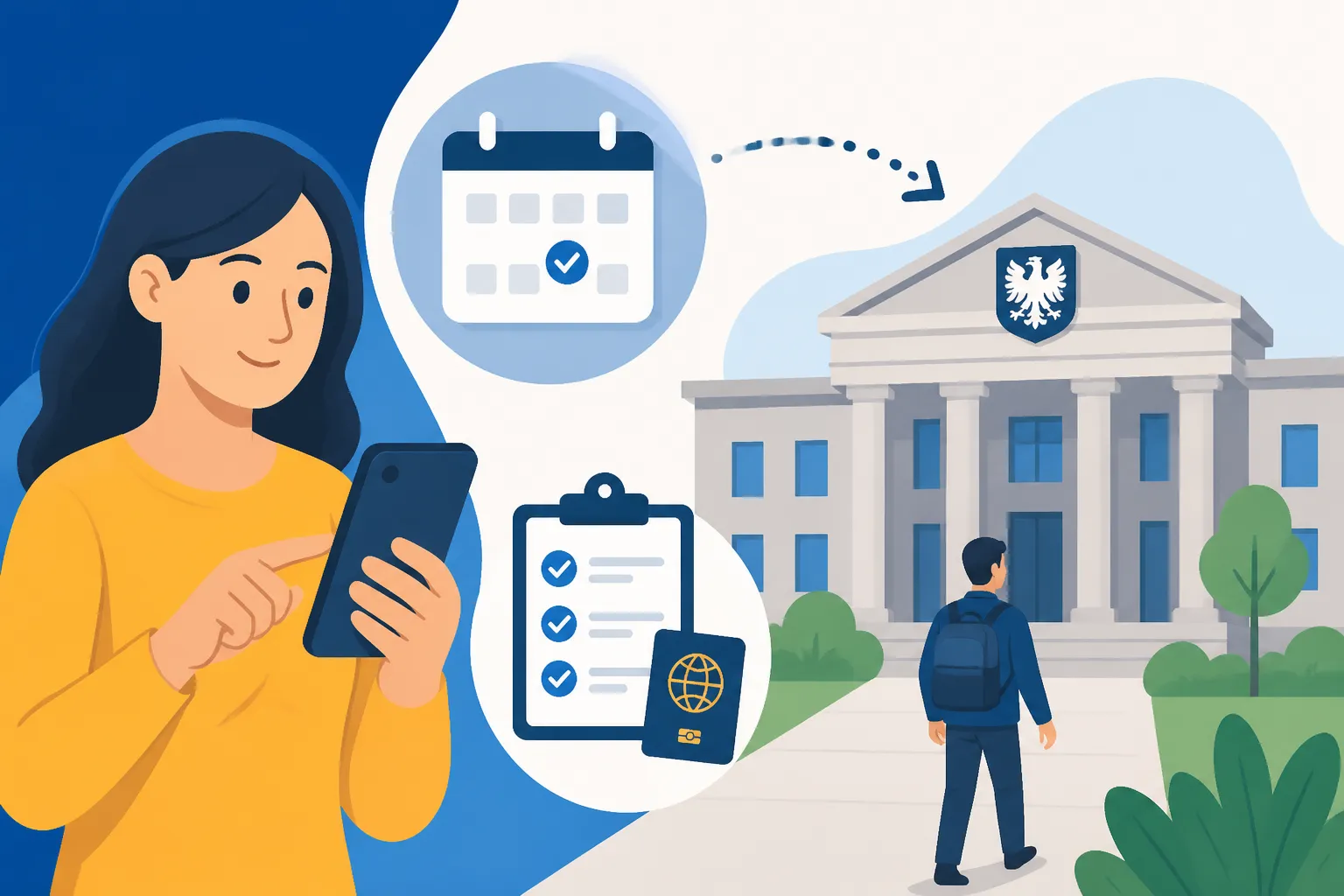
The common thread among these systems is that they are generally quite basic, often overloaded, and primarily in Polish. This is where your Polish language skills, or a good translation tool, will be put to the test. You'll typically need to select the type of matter you're dealing with (e.g., submission of temporary residence permit application, fingerprinting, collection of residence card), then choose a preferred date and time. The catch, of course, is that available slots are rare.
You might encounter different types of appointment systems: some are strictly time-based, releasing slots at a specific moment; others use a virtual queue system (similar to system kolejkowy online) that allows you to join a waiting list. Whichever system your local Urząd Wojewódzki uses, prepare for an exercise in patience and digital dexterity. The websites are notorious for lagging or crashing under high traffic, particularly when new slots are released, which only adds to the expat frustration. It truly feels like navigating a digital maze, with the prize being a tiny, fleeting moment of opportunity.
Strategies for Snagging a Slot – The Early Bird (or Night Owl) Gets the Worm
So, how do you beat the system? While there's no magic bullet, there are strategies that successful expats swear by. The most crucial factor is timing. Many Urząd Wojewódzki offices release new appointment slots at very specific, often unpredictable, times. Common times include midnight, early morning (e.g., 8:00 AM), or even random times during the workday. The best approach is to check the specific guidelines for your voivodeship's office, as they sometimes publish information on when slots are released. If not, expat forums and local Facebook groups are invaluable for gathering intelligence.
Here are some tried-and-true tactics:
- Be a Night Owl or Early Bird: Many swear by checking precisely at midnight or 8:00 AM on weekdays. Set alarms!
- Refresh, Refresh, Refresh: Once you're on the booking page, keep hitting that refresh button. Slots can appear and disappear in a blink.
- Multiple Devices: If possible, try on both your computer and phone simultaneously. Sometimes one loads faster than the other.
- Have Information Ready: Don't waste time typing. Have your full name, passport number, PESEL number (if you have one – if not, check out How to Get Your PESEL Number and Why It Matters for Healthcare), email, and phone number copied and ready to paste. Every second counts.
- Focus on Specific Departments: If you're applying for a How to Apply for a Polish Work Permit (Zezwolenie na Pracę), make sure you're looking for slots in the correct department, often labeled "Work Permits" or similar. Don't grab a general info desk slot by mistake!
- Patience and Persistence: This isn't a one-and-done task. You might need to try for days, even weeks, to get an appointment. Don't give up!
It's a gruelling process, but remember, every expat applying for a The Complete Guide to Polish Residence Permits for Expats (2027) or its extension has likely been through this digital battle.
The Traditional Route: In-Person Appointment Booking (If Available)
While the online system has become dominant, some Urząd Wojewódzki offices, particularly in smaller cities or for very specific, less complex matters, might still offer limited in-person appointment booking. However, for core immigration applications, this is becoming increasingly rare and usually only applies to picking up an already processed document or seeking general information.
The Queue and the Kiosk System
If you do find yourself in a situation where in-person booking is an option (or if you need to submit documents without a pre-booked slot, which is sometimes possible for supplementary documents), prepare for a physical queue. These queues can start forming well before opening hours. We're talking 5:00 AM or earlier, especially in larger cities like Warsaw or Krakow.
Once inside, you’ll typically encounter a biletomat, a ticket machine. This is where you select the type of service you need and receive a printed ticket with a number. There are usually different categories for tickets: some for submitting applications, some for collecting documents, others for general information. Make sure you select the correct one! Your number will then be called on a screen, often with a corresponding counter number. It’s important to pay attention, as the announcements are usually only in Polish. Missing your number means starting the whole process again.
The waiting times can be hours long. Bring a book, a fully charged phone, snacks, and a strong dose of mental resilience. It’s an exercise in patience that few administrative tasks elsewhere can rival. I remember one time in Wrocław, trying to pick up a document, I arrived at 7 AM for a 9 AM opening and still waited three hours. It's just the reality here.
When is In-Person an Option?
For significant immigration applications like a new Karta Pobytu, in-person booking is almost a relic of the past in major cities. The online system is pushed as the primary, if not sole, method. However, there are a few scenarios where you might still deal with the Urząd Wojewódzki in person without a pre-booked slot:
- Document Collection: Picking up your finished How to Get a Residence Card (Karta Pobytu) and Its Biometrics in Poland or other official letters. Sometimes you can walk in for this, or they have a separate, less congested system.
- Information Desk: If you have a very general question, some offices have an information point that might not require an appointment. Be prepared for a long wait and potentially limited English speakers.
- Submitting Supplementary Documents: After you've successfully submitted your main application (and biometric data), you might be asked to provide additional documents. Often, these can be dropped off at a designated area without a new appointment, or by taking a specific ticket from the biletomat. Always confirm this with the office, though.
- Emergency Cases (Rare): In extremely rare, documented emergency situations, the office might accommodate you, but this is not something to rely on.
Always check the specific website of your local Urząd Wojewódzki for the most up-to-date information on their booking policies, as they can change. It saves you a wasted trip and unnecessary frustration.
Preparing for Your Appointment Booking Attempt
Before you even start the frantic refreshing of the Urząd Wojewódzki website or prepare for an early morning queue, you need to have your ducks in a row. Being unprepared for the booking itself can mean missing a slot you fought hard to get.
Essential Information You'll Need
When booking an online appointment, the system will typically ask for a few key pieces of information to identify you and the nature of your visit. Having these ready to type or, even better, copy-paste, is crucial given how quickly slots vanish.
Here’s what you’ll almost certainly need:
- Your Full Name: As it appears on your passport or national ID.
- Passport/Travel Document Number: The unique identifier of your primary travel document.
- PESEL Number (if applicable): If you've been in Poland for a while, you should have one. This is your personal identification number, and it's essential for countless administrative tasks. If you don't have one, some applications might still proceed with just your passport, but it's always easier with a PESEL.
- Contact Information: This usually includes your email address and a Polish phone number. The confirmation of your appointment, and any potential changes, will be sent here.
- Type of Matter: You’ll need to specify what you’re coming for. Is it for the initial submission of a How to Apply for a Temporary Residence Permit (Karta Pobytu) in Poland application? Are you providing additional documents? Or perhaps collecting your card? Be precise, as picking the wrong category can invalidate your appointment.
- Your Date of Birth: A standard identification detail.
Having all this information typed out in a document on your desktop, ready to quickly copy and paste, will save precious seconds when that elusive appointment slot appears. Every millisecond counts in the Hunger Games of Polish immigration appointments!
Language Barriers and Assistance
Let's be real: the vast majority of official Polish government websites and booking systems are designed primarily for Polish speakers. While larger cities might have some English information available, the booking portal itself often doesn't. This can be a huge hurdle.
Here are some ways to bridge the language gap:
- Google Translate (or similar): Keep a tab open with Google Translate. You can paste snippets of text or even use the page translation feature, although it's not always perfect. Just be cautious with critical legal terms.
- Polish-Speaking Friend or Colleague: This is by far the best option. Ask a trusted Polish friend, colleague, or even your employer's HR department if they can help you navigate the booking process. Many expats rely on this assistance, and it's nothing to be ashamed of. We all help each other out!
- Relocation Services: If you've used a relocation service like Sirelo for your move to Poland, they often provide support or guidance for these initial administrative tasks, including booking appointments. It's part of making your transition smoother.
- Online Expat Groups: These communities are goldmines of information. Post a screenshot of the website you're stuck on, and chances are a fellow expat or a kind Pole will quickly translate or guide you.
Validating the frustration is key here: it is incredibly difficult and discouraging to deal with vital legal matters in a language you don't fully understand. Don't beat yourself up for struggling; it's a common challenge, and seeking help is a smart move.
What to Expect After Booking (The Wait and the Paperwork)
Congratulations! You've navigated the digital maze, fought off countless other eager applicants, and successfully booked your appointment. But the journey is far from over. This is Poland, after all.
Confirmation and What to Do Next
Once your appointment is booked, you should receive an email confirmation, sometimes also an SMS. This confirmation is gold. It will detail the date, time, location (often with a specific room or counter number), and the type of matter you're coming for.
Crucially, print this confirmation! Seriously, print it out. Have it handy when you arrive at the Urząd Wojewódzki. They will often ask for it, either at the entrance, at the information desk, or when your number is called. It’s your proof that you have a legitimate appointment.
Now for the next stage: the wait. Be prepared for a potentially long wait between booking your appointment and the actual date. For Karta Pobytu applications in high-demand regions like Mazowieckie (Warsaw), this wait can be weeks or even months. Yes, months. This is why booking early is absolutely critical. If your current visa or permit is expiring soon, this waiting period can be a source of immense stress. Thankfully, the date of submission is considered the date you applied for the appointment, provided you attend it, so you generally won't be considered an illegal overstayer if your current permit expires while you're waiting for your official submission date. But always consult official sources or legal counsel for specific situations. For a deeper dive, check out How Long Does It Take to Get a Karta Pobytu in Poland? for realistic timelines.
The Importance of Thorough Document Preparation
Having an appointment is just the first step. The actual submission day is when your detailed preparation truly pays off. The Urząd Wojewódzki is notorious for its strict adherence to document requirements. Missing even one tiny document or having an incorrect format can lead to your application being rejected on the spot or, at best, a request for supplementary documents, delaying the whole process even further.
Before your appointment, meticulously review the document checklist for your specific type of application. These lists are usually available on the Urząd Wojewódzki website. For example, if you are applying for a residence permit based on employment, you’ll need your passport, completed application forms, photos, proof of employment (an oświadczenie or zezwolenie na pracę from your employer), bank statements, proof of accommodation, and critically, proof of health insurance. Many expats opt for comprehensive private health insurance plans from providers like Cigna Global to ensure they meet the requirements and have good coverage. Don't forget the administrative fees (stamps and card issuance fees), which must be paid beforehand, and you must bring proof of payment.
Here are essential tips for document preparation:
- Originals and Copies: Always bring the original document and a clear photocopy of everything. They will inspect the original and keep the copy.
- Certified Translations: If any document is not in Polish, it often requires a certified translation by a sworn translator (tłumacz przysięgły). Do not skimp on this; a non-certified translation will be rejected.
- Photos: Ensure your photos meet the specific biometric requirements (size, background, expression).
- Order Matters: Sometimes, the order of documents matters. Try to arrange everything logically, perhaps in a folder.
- Check and Recheck: Go over the checklist multiple times. Ask an expat friend or a professional to review your documents if you're unsure. The "list of required documents" can vary subtly based on the type of permit and your individual situation. For instance, How to Prepare Documents for a Karta Pobytu Application outlines the specifics. Remember, preparing all these documents, from your work permit details to your proof of accommodation and health insurance, is a heavy lift, but it's vital for a smooth process.
Alternative Approaches and Support for Expats
Navigating the Polish immigration system can be daunting, especially if you’re new to the country, don’t speak Polish, or have a complex case. Thankfully, you don't always have to go it alone.
Using Agencies or Legal Professionals
For many expats, particularly those on demanding work schedules or with families, the sheer volume of paperwork and the stress of the Urząd Wojewódzki system can be overwhelming. This is where professional help comes in. Immigration agencies and legal firms specializing in foreign affairs can offer invaluable assistance.
Pros of using an agency or lawyer:
- Expertise: They know the ins and outs of Polish immigration law, including all the latest changes and regional peculiarities. They can advise you on the correct type of permit, the exact documents needed for, say, How to Apply for Family Reunification in Poland, and even How to Extend Your Temporary Residence Permit in Poland.
- Language Barrier Overcome: They handle all communication in Polish, translating documents and liaising directly with the Urząd Wojewódzki on your behalf.
- Time-Saving: They can often take on the burden of preparing documents, filling out forms, and sometimes even managing the appointment booking (though some offices still require the applicant to book personally, the agency can guide you).
- Peace of Mind: Knowing that an expert is handling your case can significantly reduce stress and the fear of making a costly mistake.
Cons:
- Cost: This service comes with a price tag, which can range from a few hundred to several thousand złoty, depending on the complexity of your case and the agency.
- Finding a Reputable Service: It’s crucial to find a reputable and trustworthy agency or lawyer. Ask for recommendations in expat groups or from your employer.
When is it worth it?
If your case is complex (e.g., you're self-employed, have multiple family members, or a unique work situation), if you have limited Polish language skills, or if your time is simply too valuable to spend hours wrestling with bureaucracy, the investment in professional help can be well worth it. Many international companies use such agencies to support their expat employees, and if your company uses a relocation service, they might have partners who can assist with immigration as part of your overall relocation package. Companies like Sirelo, while primarily a moving platform, can often point you towards comprehensive relocation packages that include such assistance.
Connecting with Other Expats
One of the most powerful tools in an expat's arsenal is the expat community itself. Thousands of people have gone through, or are currently going through, the exact same challenges as you.
- Facebook Groups: Search for "Expats in Warsaw," "Krakow Expats," or similar groups for your city. These groups are incredibly active and filled with people willing to share advice, vent frustrations, and even celebrate small victories. You'll find real-time updates on when Urząd Wojewódzki slots are released, tips on what documents they're currently being picky about, and recommendations for sworn translators or lawyers.
- Online Forums: Websites dedicated to expats in Poland often have forums where specific questions can be asked and answered.
- Meetups: Attending expat meetups (when possible) can connect you with people who can offer firsthand advice and moral support.
The feeling of "you're not alone" is incredibly validating when dealing with the Polish administrative system. There’s a shared understanding of the hurdles, the waiting, the rejections, and the ultimate triumph of receiving that coveted Karta Pobytu. From advice on What Health Insurance Do I Need for a Polish Residence Permit to understanding the intricacies of Understanding the Single Permit (Jednolite Zezwolenie) in Poland, the expat community is often your most reliable, and cheapest, source of up-to-date information and emotional support.
Comparison of Appointment Booking Methods
| Feature | Online Booking | In-Person Booking (Limited Availability) | Using an Agency/Lawyer |
|---|---|---|---|
| Availability | Primary method for most key immigration matters | Rare for main applications; mostly for info/document pick-up | They handle the booking or guide you through it |
| Convenience | High (from home) if you can secure a slot | Low (requires early arrival, long waits) | High (they do the legwork) |
| Language Barrier | Significant (website often in Polish only) | Significant (staff often Polish-only, announcements) | Minimal (they communicate for you) |
| Speed of Booking | Can be instantaneous if lucky, but slots vanish quickly | Slow (physical queue, wait for number) | Depends on their process and Urząd availability |
| Stress Level | High (frantic refreshing, competition) | High (long waits, uncertainty, language) | Low (peace of mind, expert guidance) |
| Cost | Free | Free | Significant (service fees apply) |
| Best For | Tech-savvy, persistent individuals with some Polish knowledge | Rare situations, quick inquiries, some document drop-offs | Complex cases, busy individuals, language barriers |
Ultimately, booking an appointment at the Urząd Wojewódzki for your immigration matters in Poland is a challenging but necessary step. Equip yourself with patience, persistence, and a good support network, and you'll get there. Every stamp in your passport is a testament to your resilience.
Disclaimer
The information provided in this guide is for general informational purposes only and does not constitute legal advice. Immigration laws and procedures in Poland can change frequently and vary by individual circumstances and specific Urząd Wojewódzki office. While we strive to provide accurate and up-to-date information, it is essential to consult the official website of your relevant Urząd Wojewódzki or seek advice from a qualified legal professional for your specific situation. We are not responsible for any errors or omissions, or for the results obtained from the use of this information.