How to Extend Your Temporary Residence Permit in Poland
Living in Poland as an expat is an adventure, but let's be honest, the administrative hurdles can feel like navigating a particularly thorny forest, especially when it comes to immigration. If you've successfully secured your first Temporary Residence Permit (Karta Pobytu), you know the relief that comes with it. But that relief is often short-lived, quickly replaced by the looming question: "How on earth do I extend this thing?" This guide is here to cut through the confusion and give you a realistic, step-by-step walkthrough of extending your temporary residence permit in Poland, based on years of expat experience and the current realities of the Polish bureaucracy.
Understanding the Karta Pobytu Extension
When you first received your Karta Pobytu, it likely felt like winning a lottery after months of paperwork and waiting. But for many, especially those planning a long-term future in Poland, it's just the first step in a longer journey. Extending this permit is a crucial administrative process that ensures your continuous legal stay in the country. It's not just a formality; it's a testament to your ongoing commitment and compliance with Polish immigration laws.
Why Extending is Crucial for Expats
Think of your Karta Pobytu as your golden ticket to truly living in Poland. It’s what allows you to work legally, travel freely within the Schengen Area, access public services, and generally build a life here without constant worry. When that permit is nearing its expiration, the clock starts ticking, and the anxiety can set in. Failing to extend it on time, or incorrectly, can lead to serious consequences, from losing your legal right to work to facing deportation. It's a high-stakes game, and understanding its importance is the first step in approaching the process with the necessary diligence.
This isn't just about avoiding trouble; it's about continuity. Imagine having to stop work, pull your kids out of school, or put your life on hold because your legal status is suddenly in question. The extension process, while daunting, is your safeguard against such disruptions. It reaffirms your right to reside here, demonstrating that your reasons for staying (work, study, family, business) are still valid and that you continue to meet the requirements set by the Polish government. It's a fresh lease on your Polish life.
Types of Temporary Residence Permits and Their Impact on Extension
The good news is, generally, if you received a Karta Pobytu, you're usually eligible to extend it, provided your circumstances haven't drastically changed. However, the specific type of temporary residence permit you hold will heavily influence the documents and requirements for its extension. For example, if your initial permit was based on employment, you'll need a new work permit or a declaration from your employer, an updated employment contract, and proof of income. If it was for study, expect to provide confirmation of continued enrollment and proof of funds.
Permits issued for family reunification will require documentation proving the ongoing relationship and the legal status of your Polish or resident spouse/partner. Business owners, particularly those operating a Jednoosobowa Działalność Gospodarcza (JDG), will face a detailed scrutiny of their business activities, profitability, and tax payments. The type of permit you have dictates the evidence you'll need to gather. Understanding your specific permit category is paramount to knowing exactly what documents to prepare, as this will prevent delays and frustration down the line. You can find more comprehensive details about the initial application in our guide on how to apply for a temporary residence permit (Karta Pobytu) in Poland.
The Concept of "Legal Stay" During Application
This is one of the most reassuring, yet often misunderstood, aspects of the Polish immigration system. If you submit a complete application for extending your temporary residence permit before your current Karta Pobytu expires, your stay in Poland is considered legal until a decision is made on your new application. This is absolutely critical. It means you don't suddenly become an "illegal alien" the day your card expires, as long as your application was submitted properly and on time.
When you submit your application at the Urząd Wojewódzki, they will stamp your passport. This stamp is your proof of legal stay while your application is processed. It allows you to continue working, studying, and living in Poland without interruption. However, it's important to remember that this stamp generally does not allow you to travel outside of Poland and re-enter the Schengen Area. If you plan to travel internationally during this period, you might need a separate visa or risk being denied re-entry. Always double-check with the Urząd or seek legal advice if international travel is necessary during the waiting period.
When and Where to Apply for Extension
Timing is everything in Polish bureaucracy. Seriously, it's like a finely tuned (or sometimes frustratingly slow-moving) clock. Missing deadlines can set you back significantly, so marking your calendar is non-negotiable.
Adhering to the Strict Application Deadlines
The general rule of thumb for extending your Karta Pobytu is to apply no later than the last day of your current permit's validity. However, here's the expat secret: don't wait until the last minute! The Urząd Wojewódzki advises applying at least 30 days before your current permit expires. Why? Because assembling all the necessary documents, translating them, getting them notarized, and booking an appointment can take weeks, if not months. Imagine the panic of realizing a crucial document is missing just days before your deadline.
Many veteran expats will tell you to start gathering your documents and attempting to book an appointment even 90 days before the expiration date. This gives you ample buffer time for any unexpected delays, missing paperwork, or booking difficulties. Remember, if your application is submitted after your current Karta Pobytu expires, even by a single day, you lose the protection of the "legal stay" stamp, and you might face serious complications, including deportation or having to leave Poland and apply for a new visa from your home country.
Navigating the Urząd Wojewódzki Voivodeship Office
The Urząd Wojewódzki is your destination for all things residence permit related. Each voivodeship (region) has its own office, typically located in the capital city of that region (e.g., Mazowiecki Urząd Wojewódzki in Warsaw, Małopolski Urząd Wojewódzki in Krakow, Dolnośląski Urząd Wojewódzki in Wrocław). This is where you'll submit your application, attend biometrics appointments, and eventually pick up your new Karta Pobytu.
Be prepared for potentially long queues, varying levels of English proficiency among staff, and processes that can feel less than intuitive. It’s highly advisable to visit the specific website of your regional Urząd Wojewódzki to check their current operating hours, specific document requirements (as these can vary slightly by region), and appointment booking procedures. Websites like Mazowiecki Urząd Wojewódzki often have dedicated sections for foreigners, sometimes even with English translations, which can be a lifesaver.
Initial Steps: Online Portal or Paperwork?
While the physical submission of documents is still a reality, many Urzęds now utilize online portals for initial application setup or appointment booking. For example, some regions might require you to fill out an application form online, print it, and then bring it with supporting documents to your appointment. Other regions may use an online system for booking appointments, but you'll still need to bring all your paperwork in person. It's rarely a fully digital process from start to finish.
Always check your specific Urząd's guidelines. Don't assume. A common mistake is filling out a generic application form found online, only to discover your specific Urząd uses a slightly different version or has an entirely online form you need to complete. This is where attention to detail is crucial. Our guide on how to book an Urząd Wojewódzki appointment for your Karta Pobytu offers detailed strategies for tackling this often-frustrating step.
Key Documents for Your Application
Ah, the paperwork. This is often where expats truly feel the weight of Polish bureaucracy. The list can seem endless, and the precision required for each document is legendary. But fear not, with a systematic approach, you can conquer the document mountain.
The Core Document Checklist
While the exact list of documents can vary based on your specific situation (work, study, family, etc.), there's a core set that almost everyone needs. This typically includes:
- Application Form (Wniosek): Filled out correctly, in Polish, and signed. Print multiple copies, just in case.
- Valid Passport/Travel Document: The original and photocopies of all relevant pages (bio-data, visas, stamps).
- Passport-Sized Photos: Usually 4 copies, meeting specific biometric requirements (white background, looking straight, no head covering unless for religious reasons, etc.).
- Proof of Payment of Stamp Duty (Opłata Skarbowa): This is a fee for the application itself, paid to the city or municipal office, not the Urząd Wojewódzki. The amount varies depending on the type of permit.
- Proof of Address (Zameldowanie): A crucial document demonstrating where you live. This could be your rental agreement (umowa najmu) or a certificate of meldunek. More on this in our article: How Do I Prove Accommodation for a Polish Residence Permit?
- Health Insurance: Proof of comprehensive health insurance coverage. This is where private providers like Cigna Global can be a real game-changer for expats, offering plans tailored to international living, or you'll need proof of your NFZ coverage.
- Proof of Stable and Regular Income: Bank statements, employment contracts, tax declarations, or scholarship confirmations.
It’s always a good idea to have both original documents and at least two sets of photocopies. Even if they only ask for one set, having spares can save you a trip back.
Proving Financial Stability and Accommodation
This is often where applicants stumble. The Polish authorities want to be sure you can support yourself without becoming a burden on the state. For employees, this usually means providing your employment contract (umowa o pracę), salary slips (paski płacy) for the past few months, and bank statements showing regular income deposits. If you're self-employed, prepare your tax declarations (PIT), invoices, and detailed bank statements demonstrating the profitability and activity of your business. The required minimum income varies, but it needs to be enough to cover your basic living expenses. Our guide on How Do I Prove My Income for a Polish Residence Permit? dives deeper into this.
As for accommodation, you need to prove you have a stable place to live. This most commonly involves your rental agreement (umowa najmu) for your apartment. Ensure it's current, covers the period of your requested permit, and is properly signed. If you own property, you'll need proof of ownership. If you're staying with friends or family, they might need to provide a declaration of hospitality and proof of their ownership or rental agreement. It's not enough to just say you have a place; you need the paper trail to back it up.
Health Insurance and Other Supporting Evidence
Comprehensive health insurance is not just a good idea; it's a legal requirement for your temporary residence permit extension. For many employed expats, this is covered by the National Health Fund (NFZ) through their employment contributions. In this case, you'll need a certificate from ZUS (Zakład Ubezpieczeń Społecznych) confirming your health insurance contributions, or a copy of your current ZUS RCA report.
However, if you're not covered by NFZ (e.g., self-employed on certain tax schemes, students without NFZ coverage, or those opting for private care), you'll need private health insurance. Options like Cigna Global offer extensive coverage that meets the requirements for residence permits and provides peace of mind with English-speaking services and international coverage. Always ensure your private policy covers emergency medical treatment and repatriation. Our article on what health insurance do I need for a Polish residence permit? provides a detailed overview.
Beyond these core documents, specific circumstances will require additional evidence. Students need an enrollment certificate from their university. Family members need marriage certificates, birth certificates, and proof of their relation to the primary permit holder. Business owners need company registration documents, tax clearances, and financial statements. Always check the specific annexes required for your particular type of permit on the Urząd Wojewódzki website.
The Application Process: Step-by-Step
You’ve gathered your documents, possibly after weeks of chasing papers and translations. Now comes the moment of truth: submitting your application. This stage is often fraught with long waits and moments of anxiety, but knowing what to expect can ease some of the tension.
Securing Your Appointment and Submission
This can often be the most challenging part of the entire process. Most Urząd Wojewódzki offices require you to book an appointment to submit your documents, especially in larger cities like Warsaw, Krakow, or Gdansk. These appointments can be notoriously difficult to get, often requiring you to check the booking portal religiously, sometimes in the middle of the night, as slots are released. Some offices might still operate on a first-come, first-served basis for specific submission types, but this is becoming less common for Karta Pobytu applications.
Once you have your appointment, or if you're lucky enough to walk in, ensure you arrive well-prepared with all your documents, originals, and photocopies. A slight oversight can lead to your application being rejected for incompleteness, meaning you'll have to start the booking process all over again. The official will review your documents. If everything appears to be in order, they will accept your application and, crucially, stamp your passport. This stamp is your temporary proof of legal stay while your application is under review.
The Biometric Data Collection Phase
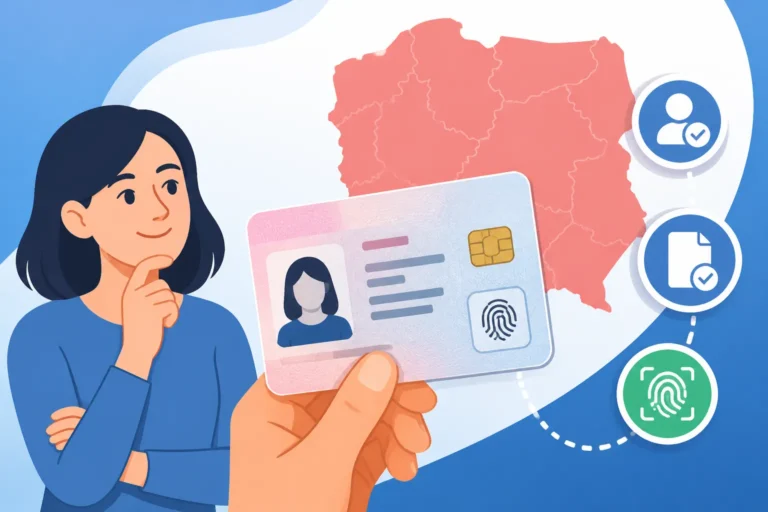
After your application is accepted, you’ll typically be directed to another desk, or scheduled for a separate appointment, for biometric data collection. This involves having your fingerprints scanned and your photograph taken. This biometric data is then stored on your Karta Pobytu chip, making it a secure and tamper-proof identification document.
The biometric process itself is usually quick and straightforward, provided your application has already been accepted. Ensure your hands are clean and free of cuts or injuries that might impede fingerprint scanning. The photo taken will be the one that appears on your physical Karta Pobytu, so a quick check in the mirror before your appointment isn't a bad idea! Once your biometrics are collected, you've done your part for now, and the waiting game truly begins.
The "Stamp" and What It Means for Your Stay
The stamp in your passport, often appearing on page 1 of your passport or on one of the empty visa pages, is incredibly important. It indicates that you have submitted a timely and complete application for a temporary residence permit and that your stay in Poland is considered legal from the date of application until a final decision is made. This means you can continue to work, study, and reside in Poland without issues, even if your previous Karta Pobytu has expired.
However, as mentioned earlier, this stamp does not permit you to travel outside of Poland and re-enter the Schengen Area. If you leave Poland, you might not be allowed back in without a valid visa or a new residence permit. This can be a huge inconvenience for expats with family abroad or work that requires international travel. Always clarify your travel eligibility with the Urząd directly if you have critical travel plans during the processing period. If your travel plans are unavoidable, you might need to explore options for a special temporary visa or simply plan to stay put until your new card arrives.
Common Pitfalls and How to Avoid Them
The journey to extending your Karta Pobytu is rarely without its bumps. From bewildering paperwork to communication challenges, expats frequently encounter obstacles. Being forewarned is being forearmed.
Overcoming Language Barriers and Bureaucracy
Polish bureaucracy can be intimidating, especially if your Polish language skills aren't yet fluent. While some Urząd staff might speak English, it's not a guarantee, and formal communication will almost always be in Polish. This is where services like those offered by relocation specialists or immigration lawyers come in handy. They can help you understand forms, translate documents, and even accompany you to appointments.
Alternatively, consider bringing a Polish-speaking friend or colleague who is familiar with administrative procedures. Even if you understand Polish well, having someone to clarify nuanced legal or administrative terms can be invaluable. It's not about being helpless; it's about navigating a complex system in a language that might not be your native tongue, where every word matters. The key is to never assume and always seek clear explanations, preferably in writing if possible.
The Nightmare of Missing or Incorrect Documents
This is perhaps the most common reason for application delays or outright rejections. The Urząd Wojewódzki is notoriously strict about complete and accurate documentation. A missing signature, an expired passport copy, an incorrectly dated form, or insufficient proof of funds can all lead to delays. They will send you a formal letter (usually in Polish, by post) requesting the missing documents or clarifications, giving you a set deadline (often 7 to 14 days).
To avoid this, create a checklist based on the official requirements for your specific type of permit extension. Double-check every single document before your appointment. If you're unsure about any requirement, call the Urząd or consult with an expert beforehand. It's far better to over-prepare than to under-prepare. Keep digital copies of everything, and maintain a physical folder dedicated to your Karta Pobytu application. Companies like Sirelo, though primarily for initial moves, can remind you how crucial thorough documentation management is for any administrative process abroad.
Dealing with Delays and Communication Blackouts
The processing times for Karta Pobytu extensions can vary wildly, from a few months to over a year, depending on the Urząd's workload and the complexity of your case. Unfortunately, communication from the Urząd can be sparse, leading to anxious waiting periods. Don't expect regular updates unless they specifically request additional information.
While waiting, you can often check the status of your application online using a unique case number provided at submission. If you don't hear anything for a prolonged period (e.g., 3-4 months after submission), you can try writing a formal inquiry letter (again, in Polish) or attempting to call the Urząd's information line. Be prepared for potential hold times and the need for persistence. Remember the stamp in your passport ensures your legal stay during this time, so try not to panic, but also be proactive in tracking your application.
Life During the Waiting Period
Once your application is submitted and your passport is stamped, you enter the waiting period. This can be a time of uncertainty, but understanding its implications for your daily life is key to maintaining peace of mind.
Travel Considerations with a Pending Application
As reiterated, the stamp in your passport confirming a pending application for a temporary residence permit extension typically does not allow you to travel outside of Poland and re-enter the Schengen Area. While it grants you legal stay within Poland, it's not a Schengen visa or a valid travel document for re-entry. Airlines might deny you boarding, or border control outside of Poland might refuse your re-entry.
If international travel is absolutely unavoidable, you might be able to apply for a temporary travel document or a special visa from the Urząd or local consulate, but this is not guaranteed and requires careful planning and additional bureaucratic steps. For most expats, the safest bet is to postpone any non-essential international travel until you receive your new physical Karta Pobytu. This can be tough, especially during holidays or family emergencies, but it's the reality of the situation.
Maintaining Legal Employment and Status
The good news is that with your passport stamped, you are fully entitled to continue your employment or studies in Poland. Your employer should recognize this stamp as proof of your legal right to work. There’s no need to take unpaid leave or worry about losing your job due to an expired permit. This continuity is one of the primary benefits of submitting your extension application on time.
For employers, this means they can continue to employ you without fear of legal repercussions. For the self-employed (JDG owners), you can continue operating your business. However, it's wise to carry a copy of your application submission confirmation and passport stamp with you, especially if you foresee any situation where you might need to prove your legal status (e.g., opening a new bank account, signing a new rental agreement, though a PESEL number is usually the primary ID for these). Understanding how to set up an Internetowe Konto Pacjenta (IKP) Patient Account can also be important, as this digital platform can often reflect your health insurance status, which is tied to your legal employment.
Monitoring Your Application Status and Staying Informed
While direct communication from the Urząd is often limited, you are not entirely in the dark. Many Urzęds provide an online portal where you can check the status of your application using a unique case number. This portal might tell you if your application is "in progress," "awaiting a decision," or if "documents have been requested." While vague, it offers some reassurance that your file is moving through the system.
It's also a good idea to stay connected with expat communities online, as fellow residents often share their experiences, processing times, and tips for dealing with specific Urzęds. While individual cases vary, these communities can provide a sense of solidarity and sometimes offer practical advice. If you haven't heard anything for an exceptionally long time and the online status hasn't changed, a formal written inquiry (zapytanie o stan sprawy) can sometimes prompt a response. Keep all correspondence, both sent and received, neatly organized. The waiting game can test your patience, but being informed and organized will significantly reduce stress.
| Document Category | Examples for Karta Pobytu Extension | Key Considerations |
|---|---|---|
| Identity & Application | Application form (Wniosek) | Fill in Polish, accurately, and sign. Use the correct, updated form from your specific Urząd's website. |
| Passport/Travel Document | Original and photocopies of all relevant pages. Ensure validity extends beyond the requested permit period. | |
| Passport-sized photos (4x) | Biometric, white background, recent (within 6 months). | |
| Financial Proof | Employment contract (Umowa o pracę) | Current and valid, stating your position and salary. |
| Salary slips / Bank statements | Recent months, demonstrating stable and sufficient income to cover living costs. For self-employed, tax declarations (PIT) and business bank statements. | |
| Accommodation | Rental agreement (Umowa najmu) | Current, signed, and registered. Must cover the period of the requested permit. If staying with family/friends, a declaration from them and proof of their legal title to the property. |
| Zameldowanie (Residence registration) | Official certificate of residence registration. Essential proof of address. More details in our guide on registering your residence (Zameldowanie) in Poland. | |
| Health Insurance | ZUS declaration or Private Insurance Policy | Proof of NFZ coverage via ZUS (e.g., ZUS RCA report, ZUS RMUA) or a comprehensive private health insurance policy like those from Cigna Global, valid for the entire permit duration. |
| Purpose of Stay | New Work Permit (Zezwolenie na pracę) | If extending based on employment, often a new work permit or a declaration of intent to employ (oświadczenie o powierzeniu wykonywania pracy cudzoziemcowi) is required from your employer. |
| University enrollment confirmation | For students, a current letter from your educational institution confirming your active enrollment and studies. | |
| Marriage/Birth Certificates | For family reunification, official documents proving your relationship to the Polish citizen or resident, translated and apostilled if from abroad. | |
| Business registration & financial statements | For business owners, updated company registration (e.g., CEIDG extract for JDG), tax documents, and evidence of profitable business activity. This can be complex, often requiring professional accounting assistance. Details in our guide on understanding residence for self-employment (JDG) in Poland. | |
| Fees & Other | Proof of stamp duty payment (Opłata skarbowa) | Payment confirmation for the administrative fee. |
| Translations | Any documents not in Polish (e.g., foreign marriage certificates) must be translated by a sworn translator (tłumacz przysięgły). |
Disclaimer
The information provided in this article is intended for general guidance only and does not constitute legal advice. Immigration laws and procedures in Poland can be complex and are subject to change. It is always recommended to consult with the official Urząd Wojewódzki website, relevant government institutions, or a qualified immigration lawyer for advice tailored to your specific situation. While we strive to provide accurate and up-to-date information, we cannot guarantee its completeness or applicability to every individual case.