Can I Get Polish Citizenship If My Grandparent Was Polish?
Navigating the labyrinthine world of Polish immigration and citizenship can feel like trying to solve a Rubik's Cube blindfolded, especially when you're looking to connect with your roots. Many expats arrive in Poland or ponder a move, only to discover a grandparent or great-grandparent who once called this land home, sparking the question: "Can I claim Polish citizenship through them?" This guide is here to shed light on whether your ancestral ties, specifically a Polish grandparent, can indeed pave your way to becoming a Polish citizen, dissecting the rules and helping you understand the sometimes-complex path ahead.
Understanding Polish Citizenship by Descent
Poland operates primarily on the principle of jus sanguinis, which is Latin for "right of blood." This means that Polish citizenship is generally inherited from a parent who was a Polish citizen at the time of your birth, regardless of where you were born. It's a fundamental concept that differentiates it from jus soli (right of soil), which grants citizenship based on birth within a country's territory. For many, this offers a direct path to citizenship, but the details, as always, are where things get intricate.
The Principle of Jus Sanguinis (Right of Blood)
At its heart, jus sanguinis means that if your mother or father was a Polish citizen when you were born, then you are, by extension, also a Polish citizen. This chain of citizenship theoretically extends indefinitely back through generations, as long as the citizenship was never formally lost by any ancestor in the direct line. This is a crucial point, because even if your parent never lived in Poland, never spoke Polish, or never obtained a Polish passport, if they were legally a Polish citizen, you have a strong claim. The challenge often lies in proving this continuous chain of citizenship, especially when dealing with generations that lived through wars, shifting borders, and mass migrations. It's not just about having Polish blood, but about an unbroken legal lineage of citizenship.
For instance, imagine your mother was born in Poland in 1960 to Polish citizen parents. She then moved to Canada in 1980 and had you in 1985. Even if she never applied for a Polish passport after leaving, and even if she naturalized as a Canadian citizen later, if she was still considered a Polish citizen at your birth, you would likely be eligible. The key is proving her Polish citizenship at that specific moment. This often involves delving into historical records, birth certificates, and old Polish passports or identity documents. The Polish government doesn't typically issue citizenship to you, rather it confirms your existing citizenship, provided the lineage is clear. This process is officially known as "Confirmation of Polish Citizenship."
The "Continuity of Citizenship" Principle: A Polish Twist
While jus sanguinis is the guiding star, Poland also has a critical "continuity of citizenship" principle that adds a layer of complexity. This principle dictates that for citizenship to pass down, none of your direct ancestors in the Polish line could have lost their Polish citizenship before you were born. And here's where things can get tricky with grandparents. Polish law, particularly historical statutes, contained specific clauses regarding how and when citizenship could be lost, often due to military service in a foreign army, acceptance of foreign public office, or naturalization in another country before certain dates.
One of the most significant dates to be aware of is January 19, 1951. The Polish Citizenship Act of 1920 (which was in effect for much of the 20th century) had different rules regarding loss of citizenship than the Act of 1951. For example, under the 1920 Act, many Polish citizens who naturalized in another country automatically lost their Polish citizenship, particularly if they were male and over 18. The 1951 Act was more restrictive regarding automatic loss, but still contained provisions. It's not just about whether your grandparent became a citizen of another country, but when they did it and under what law Poland recognized that loss. This is where researching historical migration patterns and legal frameworks becomes paramount.
For instance, if your grandfather left Poland in 1930 and naturalized as an American citizen in 1935, under the 1920 Act, he would likely have lost his Polish citizenship. If his child (your parent) was born after 1935, then your parent would not have inherited Polish citizenship from him, thereby breaking the chain to you. However, if he naturalized after 1951, the situation could be entirely different, as the new law might not have automatically stripped him of his Polish nationality. This is why understanding the specific dates and circumstances of your ancestors' lives is absolutely critical. This isn't a simple "yes or no" based on a name; it's a deep dive into legal history.
The Grandparent Connection: Does It Qualify?
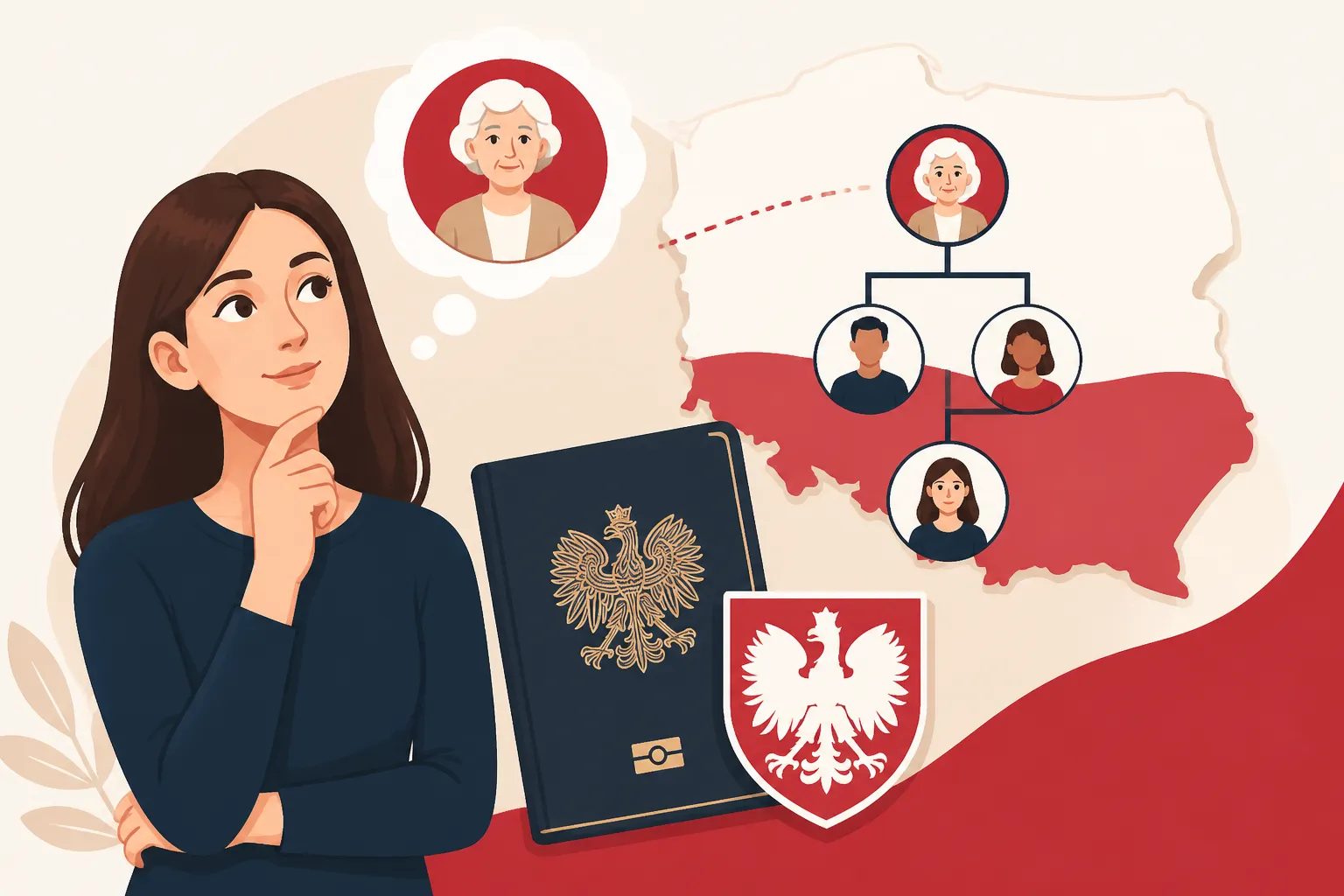
So, back to the core question: can your grandparent be the link to your Polish citizenship? The answer is a resounding sometimes. It's not the grandparent per se that matters, but whether they maintained their Polish citizenship up until your parent's birth. If your Polish grandparent was a Polish citizen when your parent was born, and your parent, in turn, was a Polish citizen when you were born, then yes, that grandparent is absolutely your key. The challenge often lies in those gaps in between, especially if your grandparent emigrated.
Unpacking the "Loss of Citizenship" Dates
The concept of "loss of citizenship" is where many claims for Polish citizenship by descent fall apart or become significantly more complicated. As mentioned, the Polish Citizenship Act of 1920 (which was in force until 1951) allowed for relatively easy loss of Polish citizenship, often by serving in a foreign military, accepting foreign government office, or obtaining foreign citizenship without retaining Polish citizenship. This was particularly true for adult males. A crucial aspect of this Act was Article 11, which stated that a Polish citizen who acquired foreign citizenship lost their Polish citizenship, unless special permission to retain it was granted. This means many Poles who emigrated before 1951 and naturalized elsewhere likely lost their Polish citizenship.
However, the Polish Citizenship Act of 1951 introduced different rules, making it harder to automatically lose Polish citizenship. Under this act, naturalization in a foreign country generally did not automatically result in loss of Polish citizenship unless the individual applied to renounce it or a specific governmental decree was issued. The current Polish Citizenship Act of 2009 largely continues this approach, making it difficult to involuntarily lose citizenship.
This means that the date your grandparent (or any ancestor in the direct line) naturalized in another country is paramount.
- If your grandparent naturalized before 19 January 1951: They likely lost their Polish citizenship, especially if they were an adult male. If their child (your parent) was born after this loss, the chain is broken.
- If your grandparent naturalized after 19 January 1951: They might have retained their Polish citizenship, even after becoming a citizen of another country, unless they formally renounced it. This is a much stronger scenario for a claim.
Consider your grandmother, who was born in Kraków in 1905. She moved to Argentina in 1925 and became an Argentine citizen in 1932. If your father was born in Argentina in 1935, then your grandmother had likely lost her Polish citizenship by 1932. Therefore, your father would not have inherited Polish citizenship from her, and consequently, neither would you. However, if she became an Argentine citizen in 1955, the situation would be different, and a claim would be much more viable, provided she hadn't formally renounced her Polish citizenship. This is where expert legal advice becomes invaluable, as the nuances of these laws and their application can be incredibly complex.
Specific Scenarios and Generations
Let's look at some specific scenarios to illustrate this further:
- Scenario 1: Grandparent Emigrated and Naturalized Pre-1951. This is often the trickiest. If your grandparent left Poland before World War II or shortly after and then became a citizen of another country (like the US, Canada, UK, Australia, etc.) prior to January 19, 1951, it's highly probable they lost their Polish citizenship. If your parent was born after this loss, then unfortunately, the chain of citizenship is broken, and you won't be able to claim citizenship through that line. It's a harsh reality for many with deep Polish roots but who fall into this historical legal loophole.
- Scenario 2: Grandparent Emigrated and Naturalized Post-1951. This is a much more promising scenario. If your grandparent became a citizen of another country after January 19, 1951, they likely retained their Polish citizenship. This means that your parent would have inherited Polish citizenship from them, and if your parent was a Polish citizen at the time of your birth, then you would also be a Polish citizen. This is a common path for those whose families left Poland during the Cold War era or later.
- Scenario 3: Grandparent Never Naturalized Elsewhere. Perhaps your grandparent lived abroad but never officially became a citizen of another country, or they only had a residence permit. In this case, assuming they were a Polish citizen upon leaving Poland, they would have continuously retained their Polish citizenship, passing it down to your parent, and then to you. This is the clearest path, but less common for those who spent many decades abroad.
- Scenario 4: Female Ancestors and Marriage. Historically, Polish law, like many others, had provisions where women could lose or gain citizenship through marriage. Before January 19, 1951, a Polish woman marrying a foreigner could lose her Polish citizenship, especially if she adopted her husband's citizenship. After this date, these provisions generally changed, and marriage itself did not automatically lead to loss of citizenship. This adds another layer of historical research if your Polish ancestor was female.
It's also important to note that the country your ancestors emigrated to matters. Some countries have citizenship laws that are more or less compatible with Polish retention rules. The complexities mean that simply having a Polish-sounding last name or knowing your grandmother was from Warsaw isn't enough; you need hard documentation and a clear understanding of the legal timeline.
The Application Process: Navigating the Mazes of Documentation
Once you've done your preliminary research and believe you have a viable claim through your Polish grandparent, the real work begins: gathering documents and formally applying for the "Confirmation of Polish Citizenship." This is a detailed and often time-consuming process that requires meticulous attention to detail and a fair bit of patience. It’s not uncommon for this journey to take a year or more, especially when dealing with international archives and administrative procedures.
Gathering Your Ancestral Documents
The cornerstone of your application is irrefutable documentary evidence that proves your direct lineage to a Polish citizen and that none of your ancestors in that line lost their Polish citizenship before the birth of the next generation. This means tracing your family tree with official records, not just family lore.
Here's a list of typical documents you'll need, starting with yourself and working backward:
-
Your Documents:
- Your full-form birth certificate (showing parents' names, dates, and places of birth).
- Your marriage certificate (if applicable).
- Copies of all your current and past passports/ID cards.
- Any naturalization certificates (if you naturalized as a citizen of your current country).
-
Your Parent's Documents:
- Your parent's full-form birth certificate (showing their parents' names, dates, and places of birth).
- Your parent's marriage certificate (if applicable).
- Any Polish documents they possessed (e.g., Polish birth certificate, old Polish passport, Polish ID card, military records).
- Any naturalization certificates if they became a citizen of another country. This is crucial for verifying the date of naturalization relative to the Polish citizenship laws.
-
Your Grandparent's Documents (The Polish Link):
- Your grandparent's full-form Polish birth certificate.
- Your grandparent's Polish marriage certificate (if applicable, especially if the Polish link is through marriage).
- Any Polish identity documents they held: old Polish passports, military service books, pre-war Polish identity cards, school records. These are gold!
- Documents proving their residence in Poland (e.g., zameldowanie records – residence registration).
- Any documents related to their emigration, such as passenger manifests or visa applications, which can sometimes indicate their nationality at the time.
- Crucially, if they naturalized elsewhere, the certificate of naturalization stating the exact date. If they served in a foreign army, proof of this service.
All foreign documents will need to be translated into Polish by a sworn (certified) translator in Poland. Some documents might also require an apostille or legalization, depending on the country of origin. This can be a painstaking process, often requiring communication with archives and government offices in multiple countries. Don't be surprised if you hit roadblocks; it's part of the expat adventure, right?
The Role of the Urząd Wojewódzki (Voivodeship Office) or Consulate
Once you've meticulously collected your dossier, the application for "Confirmation of Polish Citizenship" is submitted to the appropriate authority. If you reside in Poland, you'll typically submit it to the Voivodeship Office (Urząd Wojewódzki) in the region where you live. For those living outside of Poland, the application is submitted through the relevant Polish Consulate in your country of residence.
The Urząd Wojewódzki will review your application, cross-reference the documents with their internal records, and make a determination. This process involves a deep dive into Polish historical administrative law and records. They're looking for an unbroken chain of Polish citizenship that adheres to all the historical and current legal statutes. It's not a quick rubber-stamp; expect a thorough investigation. You can often track the progress of your application online via a system like the Urząd Wojewódzki's portal or through direct contact.
During this period, the office might request additional documents or clarifications. You'll need to be prepared to respond promptly and accurately. Having an English-speaking lawyer or consultant specializing in Polish citizenship by descent can be incredibly helpful here, as they can navigate the bureaucratic language and specific legal requirements. While this journey is certainly an investment in time and effort, the reward of connecting with your heritage and gaining EU citizenship can be immeasurable. Remember, services like Sirelo can assist with the logistics of moving if confirmation leads to your decision to relocate to Poland.
Common Challenges and Important Considerations
Pursuing Polish citizenship by descent is rarely a straightforward affair. Many applicants encounter obstacles that can test their patience and resolve. Being aware of these common challenges upfront can help you prepare and mitigate potential frustrations.
Language Barriers and Archival Research
One of the most significant hurdles for many non-Polish speakers is the language barrier. Official documents, correspondence from the Urząd Wojewódzki or consulates, and historical records are almost exclusively in Polish. While many officials in major cities might speak some English, it's not guaranteed, especially when dealing with older, more obscure archives. You'll need sworn translations for virtually all foreign documents you submit, and sometimes even for Polish documents that might be handwritten or use archaic language.
Beyond translations, the actual process of archival research can be daunting. You might need to contact regional archives (Archiwum Państwowe), civil registry offices (Urząd Stanu Cywilnego), church parishes, or even military archives in Poland to locate your grandparents' birth certificates, marriage records, or proof of residence. These offices may have specific procedures for foreign requests, and communicating your needs clearly in Polish is essential. Online genealogical resources and forums can be helpful, but direct official contact is often unavoidable. This is where the support of a local expert, who understands Polish bureaucracy and knows how to access these records, becomes invaluable. They can bridge the linguistic and procedural gaps, significantly speeding up the process and increasing your chances of success.
The Importance of Legal Assistance
While it is theoretically possible to apply for the confirmation of Polish citizenship on your own, the complex interplay of historical legislation, specific documentation requirements, and bureaucratic procedures makes professional legal assistance highly advisable. A specialized lawyer or citizenship consultant in Poland can:
- Assess your eligibility: They can review your family history and existing documents to provide a realistic assessment of your chances, highlighting potential pitfalls early on.
- Guide document gathering: They know exactly what documents are required, where to find them, and how to properly prepare them (translations, apostilles, etc.). They often have established contacts with archives.
- Prepare the application: They will draft the formal application in Polish, ensuring all legal requirements are met and presented correctly.
- Liaise with authorities: They can communicate directly with the Urząd Wojewódzki or consulate on your behalf, respond to requests for additional information, and track the progress of your application.
- Troubleshoot issues: If issues arise, such as missing documents or questions about an ancestor's loss of citizenship, they can provide legal arguments and solutions.
Think of it as navigating a complex legal landscape. While you could try to hike it alone with a basic map, a seasoned guide who knows every trail, every shortcut, and every potential danger will get you to your destination much more efficiently and safely. The investment in legal assistance often saves time, reduces stress, and increases the likelihood of a successful outcome. Additionally, consider how gaining Polish citizenship could impact your healthcare. As a Polish citizen, you'd be entitled to public healthcare, but many expats opt for private options like Cigna Global for more comprehensive or immediate care, even with public access.
| Scenario for Grandparent (G) | G's Naturalization Date Abroad | G's Loss of Polish Citizenship (Likely) | Parent (P) Born | Child (You) Eligibility | Key Consideration |
|---|---|---|---|---|---|
| G emigrates pre-1951 | Before Jan 19, 1951 | YES (under 1920 Act) | After G lost citizenship | NO | Chain broken by 1920 Act |
| G emigrates pre-1951 | Before Jan 19, 1951 | YES (under 1920 Act) | Before G lost citizenship | YES, if P didn't lose | P's own naturalization matters |
| G emigrates post-1951 | After Jan 19, 1951 | NO (unless formally renounced) | Anytime | YES | Dual citizenship generally allowed |
| G never naturalized | N/A (remained Polish citizen) | NO | Anytime | YES | Strongest claim, easiest proof |
This table provides a simplified overview. Each case is unique and subject to specific facts and historical legal interpretations.
Disclaimer
This article is for general informational purposes only and does not constitute professional advice. Laws, prices and regulations vary by location and change over time. Consult a qualified professional for guidance on your specific situation.