How to Get a Residence Card (Karta Pobytu) and Its Biometrics in Poland
Oh, the infamous Karta Pobytu! If you're new to Poland and navigating the labyrinthine halls of the Urząd Wojewódzki, you've likely heard whispers, or perhaps outright wails, about the process of getting your Polish residence card. It’s a rite of passage for many non-EU expats, filled with paperwork, patience tests, and that sometimes-mystifying biometrics appointment. This guide is here to cut through the confusion, offering you a realistic, empathetic roadmap to securing your Karta Pobytu and understanding the crucial biometrics step, so you can stop worrying and start truly settling into life in Poland.
Understanding the Karta Pobytu: Your Key to Living in Poland
Let’s be honest, Polish bureaucracy can feel like a riddle wrapped in an enigma, especially when you’re dealing with something as fundamental as your right to live here. The Karta Pobytu, or Residence Card, is one of those pivotal documents that will dictate much of your life as a long-term expat. It’s not just a fancy piece of plastic; it’s your primary form of identification, your proof of legal residence, and often your ticket to accessing many essential services.
What Exactly Is a Karta Pobytu?
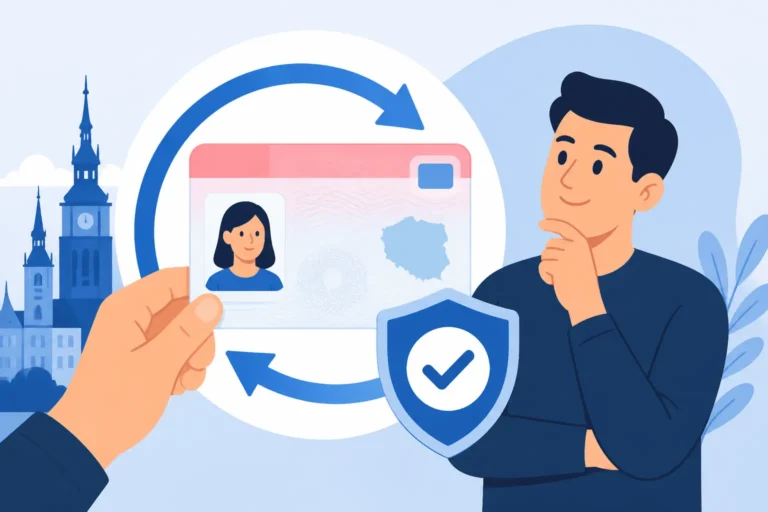
Think of the Karta Pobytu as your Polish ID card for non-EU/EEA citizens residing here for more than just a short visit. It's a physical document, a plastic card much like a driver's license, that contains your personal data, photo, and – crucially – your biometric information. This card serves several vital functions. It acts as official confirmation of your legal status to reside in Poland, specifies the grounds for your stay (e.g., work, study, family reunification), and shows the validity period of your permit.
Unlike a visa, which might get you into the country, the Karta Pobytu confirms your ongoing right to live here for an extended period. It replaces the need for a visa for re-entry into Poland and often facilitates travel within the Schengen Area. Depending on the type of permit it's issued under (temporary, permanent, EU long-term resident), its validity can range from one year up to ten years, though temporary permits usually require renewal much sooner. This card is literally the proof that you belong here, at least for now.
Who Needs a Karta Pobytu and Why?
If you're a non-EU/EEA citizen planning to reside in Poland for more than 90 days within a 180-day period, chances are, you'll need a Karta Pobytu. This includes individuals who come to Poland on a National (D-type) visa for work, study, or family purposes, and then wish to extend their stay beyond the visa's validity or simply formalize their long-term presence. For example, if you've landed a job, enrolled in a Polish university, or are joining a family member who is a Polish resident, this card is your next big step.
It’s absolutely indispensable for pretty much every aspect of administrative life here. Without it, you’ll find yourself hitting brick walls when trying to, for instance, open a bank account, register for public healthcare, sign a long-term rental agreement, or even just prove your identity during routine checks. Imagine trying to get your PESEL number without a solid basis for residence; it's a headache! The Karta Pobytu consolidates your legal status, making day-to-day life significantly smoother. Plus, it serves as crucial documentation if you ever decide to apply for Polish citizenship down the line. To dive deeper into the different types of permits that lead to this card, check out our guide on The Complete Guide to Polish Residence Permits for Expats (2027).
The Application Process: Navigating the Urząd Wojewódzki Maze
Alright, now that we understand what a Karta Pobytu is, let's talk about the rather infamous process of actually applying for one. This is where most expats experience their first true encounter with Polish bureaucracy, and it's often a test of patience, meticulousness, and sometimes, your sense of humor. Don't worry, you're not alone in feeling overwhelmed by the sheer volume of paperwork and the seemingly endless waiting times.
Gathering Your Mountain of Documents
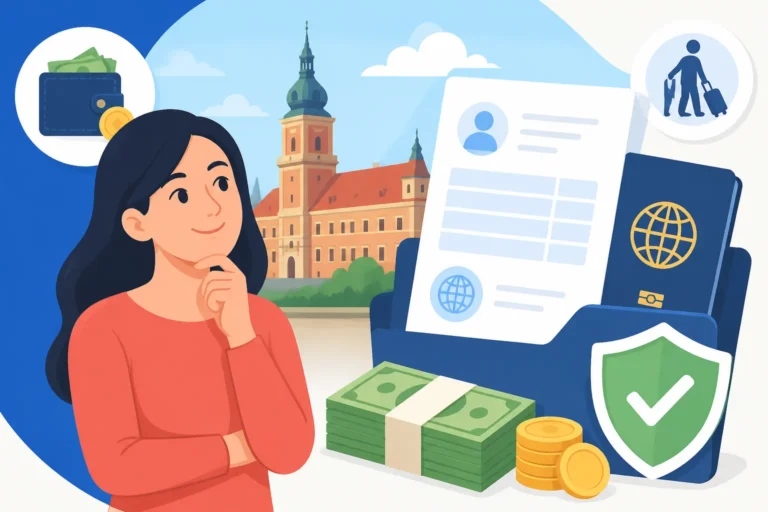
The first, and arguably most daunting, step is assembling your application dossier. The required documents will vary slightly depending on the basis of your stay (work, study, family, etc.), but there’s a core set you can always expect. You’ll need a valid passport, a completed application form (often available online but sometimes only at the office), several passport-sized photos, proof of sufficient funds to support yourself, proof of accommodation (a rental agreement or title deed), and proof of health insurance. Beyond this, you’ll need specific documents related to your purpose of stay: an employment contract and a work permit (or a declaration from your employer) for work permits, a university acceptance letter for students, or marriage certificates and your spouse's residence documents for family reunification.
The trick here, and I cannot stress this enough, is absolute precision. Every single document needs to be exactly what the Urząd Wojewódzki asks for. This often means certified Polish translations of any foreign documents, original copies, and frequently, photocopies of everything. Missing even one small detail, like a signature in the wrong place or a photo that doesn’t meet the exact specifications, can lead to your application being returned or delayed for months. It’s a frustrating exercise in papierologia (the Polish equivalent of paperwork overload), but attention to detail here will save you immense heartache later. When it comes to something as vital as health insurance, ensure your policy is robust and clearly states coverage in Poland. Providers like Cigna Global offer comprehensive plans that meet the requirements for residence permits, providing peace of mind during this often-stressful period. For a comprehensive list and detailed advice, make sure to read How to Prepare Documents for a Karta Pobytu Application.
Submitting Your Application: The Appointment Saga
Once your document pile is perfectly organised, the next hurdle is submitting it. This usually involves booking an appointment at the local Urząd Wojewódzki, the Voivodeship Office, which is notorious for being booked solid months in advance. Many offices have online booking portals, which can be a game of fast fingers the moment new slots open up. In larger cities like Warsaw or Krakow, securing an appointment can feel like winning the lottery. You might even find yourself checking the portal at odd hours, hoping for a cancellation. Some people still opt to simply show up at the office and wait for hours, hoping to get a 'ticket' to submit their documents, though this method is becoming increasingly rare and discouraged.
Whether you submit in person or via postal mail (a risky but sometimes necessary option if appointments are impossible), the critical moment is when your application is formally accepted. If you submit in person, the official will usually stamp your passport, indicating that your application for a temporary residence permit has been lodged. This stamp is incredibly important, as it legalizes your stay in Poland while your application is under review, even if your previous visa has expired. Hold onto that passport with the stamp as if it's gold! This stage is often the beginning of a long waiting period, but at least you know the process has officially begun. You can find more practical advice on this step in our guide: How to Book an Appointment at the Urząd Wojewódzki for Immigration.
The Crucial Biometrics Stage: Fingerprints and Photos
So, you've submitted your mountain of paperwork, secured that precious stamp in your passport, and now you're in the waiting game. But there's another crucial step that often causes a bit of confusion: the biometrics appointment. This isn't just about taking a pretty picture; it's a fundamental part of your identity verification and security checks within the Polish and wider Schengen systems.
What Are Biometrics and Why Are They Needed?
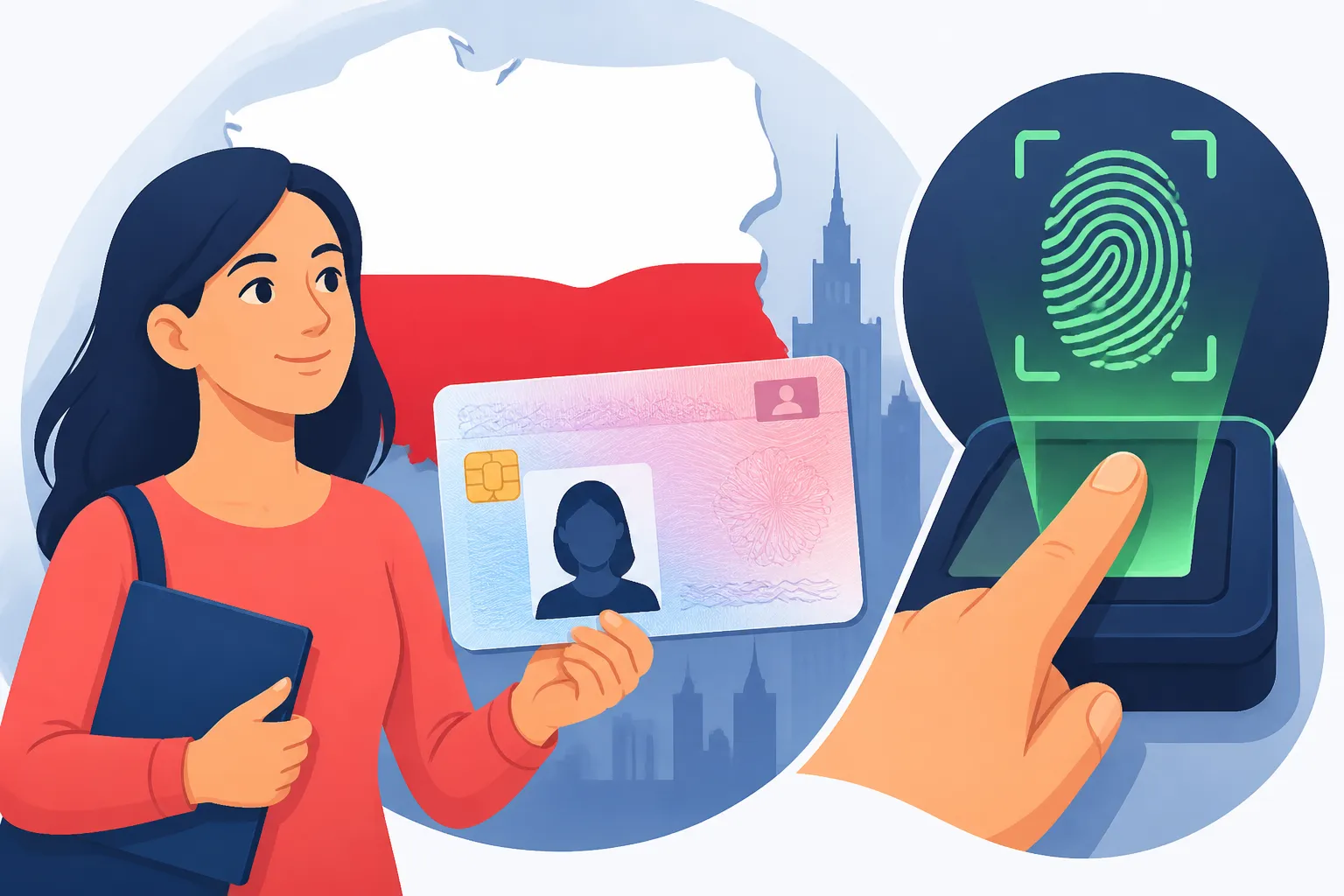
Biometrics, in the context of your Karta Pobytu, refer primarily to your fingerprints and a digital facial image. These unique biological characteristics are collected to establish a secure and undeniable link between you and your residence card. Essentially, they ensure that the person holding the card is indeed the person it was issued to, preventing identity fraud and enhancing overall security for both you and the system.
Poland, as a member of the European Union and the Schengen Area, integrates these biometric data points into a larger system. This means your fingerprints and photo can be used for border checks and identity verification across participating countries. It's a standard procedure designed to streamline international travel, while also providing an additional layer of security. You'll typically be notified by the Urząd Wojewódzki, often via mail, that your application has been reviewed, and it's time to provide your biometrics. Don't panic if this notification doesn't arrive immediately after you submit your initial application; it can take weeks or even months.
The Biometrics Appointment: What to Expect
When your biometrics notification arrives, it will usually specify a date, time, and location for your appointment. This will almost always be at the Urząd Wojewódzki where you submitted your application, usually in a dedicated room or section. Compared to the initial document submission, the biometrics appointment itself is remarkably quick and straightforward. You'll likely just need your passport and the notification letter.
Upon arrival, an officer will guide you through the process. Your fingerprints will be scanned digitally using a special device – typically all ten fingers. This usually involves placing each finger, and sometimes both thumbs simultaneously, onto a glass plate. It’s a clean and quick process, no ink involved! Following this, a digital photo of you will be taken. Make sure your hands are clean for the fingerprinting, and generally, avoid wearing head coverings (unless for religious reasons, in which case ensure your full face is visible) or heavy makeup that might obscure your facial features, to ensure a smooth capture of your facial image. Once these two steps are complete, you're usually done and can leave. It's often one of the least stressful parts of the entire application journey, a small glimmer of efficiency in an otherwise lengthy process. This key step in securing your card is detailed further in How to Get a Biometric Residence Card in Poland.
The Waiting Game and Decision: Patience is a Virtue
After you’ve submitted your documents and given your biometrics, you enter what is arguably the most challenging phase of the Karta Pobytu process: the long, often agonizing, wait. This isn't just a few weeks; it can be months, and sometimes, even over a year, depending on the workload of your specific Urząd Wojewódzki and the complexity of your case.
The Long Wait for Your Decision
Let's be real, the official processing times often bear little resemblance to reality. While the law might state a certain number of days, the practical experience for most expats involves a much longer duration. This prolonged waiting period can be a source of immense anxiety. You're left in limbo, often unable to make solid long-term plans, and constantly checking your mailbox or email for any sign of progress. This is particularly stressful if your previous visa has expired and you're relying solely on the stamp in your passport to legalise your stay.
Some Urzędy Wojewódzkie offer online status trackers, but these can be hit-or-miss, sometimes not updated for months. Don't be surprised if the status simply says "application registered" for an extended period. Calling the office often leads to generic responses, if you can even get through. My best advice here is to prepare for a marathon, not a sprint. Focus on the fact that your stay is legal thanks to that stamp, and try to divert your attention to other aspects of settling in. If the wait becomes truly excessive (e.g., beyond 6-9 months without any communication), you might consider sending a formal written inquiry (ponaglenie) to the office, or seeking legal advice, but generally, patience is the ultimate virtue here. For realistic timelines, check out What Is the Processing Time for a Karta Pobytu in Poland?.
Receiving the Decision (and What if it's Negative?)
Eventually, after what feels like an eternity, you will receive a decision. This usually comes in the form of a letter via registered mail. If the decision is positive – a resounding congratulations! – it means your application has been approved, and your Karta Pobytu will now be produced. This is the moment you've been dreaming of, the official confirmation that you are indeed a legal resident of Poland. The letter will usually outline the next steps for collecting your card.
However, it's also important to mentally prepare for the possibility of a negative decision. This can happen for various reasons: missing documents, insufficient funds, inconsistencies in your application, or simply not meeting certain criteria. A negative decision is incredibly disheartening, but it's not necessarily the end of the road. The decision letter must state the grounds for refusal and inform you of your right to appeal. You typically have 14 days from receiving the negative decision to lodge an appeal with the head of the Office for Foreigners in Warsaw, through the same Urząd Wojewódzki. If you find yourself in this unfortunate situation, it is highly advisable to seek legal counsel specializing in immigration law in Poland. An experienced lawyer can review your case, advise on the best course of action, and help you prepare a robust appeal. Dealing with an expired permit while waiting for a decision or an appeal can be complex; our guide What Happens If My Polish Residence Permit Expires? offers some insights into such scenarios.
Collecting Your Karta Pobytu: The Final Hurdle
You’ve survived the paperwork, endured the biometrics, and conquered the waiting game. Now, you’re just one step away from holding that precious Karta Pobytu in your hands. This final stage is usually the quickest and most satisfying, a true reward for your perseverance.
When and How You'll Be Notified
Once your positive decision has been issued and your card is physically ready, the Urząd Wojewódzki will notify you. This notification often arrives via SMS, email, or a letter sent to your registered address. The message will typically confirm that your Karta Pobytu is ready for collection and might specify the hours or days when cards are issued. The feeling of seeing that message pop up or finding that letter in your mailbox is truly exhilarating – it marks the imminent end of a long journey!
It's vital to ensure that the Urząd Wojewódzki has your correct and current contact details, especially your phone number and address, throughout the entire application process. Any change in your address, for example, could lead to delays in receiving this crucial notification, potentially prolonging your wait unnecessarily. If you've moved during the application process, remember to inform the office promptly to update your records. For tips on managing your relocation efficiently, including updates on address changes, platforms like Sirelo can offer useful guidance and connect you with services.
What to Bring for Collection and Activating Your Card
When you head to the Urząd Wojewódzki to collect your Karta Pobytu, make sure you bring your passport and, ideally, the decision letter you received. The officer will typically verify your identity against your passport and the details on the new card. This is a crucial moment: carefully check all the details on your Karta Pobytu before you leave the office. Ensure your name, surname, date of birth, and validity dates are all correct. Mistakes, though rare, can happen, and it's much easier to rectify them immediately than later on.
After verification, you'll be handed your brand-new Karta Pobytu. In some cases, depending on how modern your local Urząd is and the type of card you receive, there might be options for digital activation, often through the mObywatel app, which is Poland’s official mobile identity app. This allows you to carry a digital version of your ID on your phone. However, the physical card remains the primary, legally recognized document. With your Karta Pobytu in hand, you're officially a legal, documented resident of Poland. To understand more about collecting your card, refer to How Do I Get My Karta Pobytu After Approval?.
Living with Your Karta Pobytu: Rights and Responsibilities
Congratulations! You've successfully navigated the maze and now hold your Karta Pobytu. This little card is more than just an ID; it's your official welcome to long-term life in Poland, opening doors to many aspects of daily living that were previously complicated or inaccessible.
The Freedoms and Privileges it Unlocks
With your Karta Pobytu, you officially become a legal resident of Poland, granting you a host of freedoms and privileges that make life significantly easier. Firstly, it provides undeniable proof of your legal status, which is essential for things like formal employment, accessing the public healthcare system (NFZ), and utilising social security benefits if applicable. You can now confidently open bank accounts, sign long-term rental contracts, and register essential utilities in your own name, without the constant need for explaining your temporary status.
Beyond administrative tasks, your Karta Pobytu also facilitates travel. Depending on the type of permit it is associated with (e.g., temporary or permanent residence permit), it often allows you to travel visa-free within the Schengen Area for short periods, usually up to 90 days within any 180-day period. This means weekend trips to Berlin, Prague, or Vienna just became a whole lot simpler! It's a fundamental piece of documentation for truly embedding yourself into Polish society and enjoying the benefits that come with long-term residency. Even with public healthcare access, many expats opt for additional private medical insurance for faster access or specific treatments; Cigna Global is one of the many providers offering plans that can complement your NFZ coverage. Our guide Can I Travel in the Schengen Area on a Polish Residence Card? explains the travel implications in detail.
Keeping Your Karta Pobytu Valid and Up-to-Date
While receiving your Karta Pobytu is a huge milestone, it's not a "set it and forget it" situation. You have certain responsibilities to keep your status legal and your card valid. The most important one is to remember its expiry date. Most temporary residence permits are issued for a specific period (e.g., 1-3 years), and you must apply for a renewal well in advance of its expiration. Procrastinating on this can lead to serious legal issues, including losing your legal status to reside in Poland.
Furthermore, you are generally required to report any significant changes to your circumstances to the Urząd Wojewódzki that issued your permit. This includes changes to your address, employer, or marital status. While the exact notification requirements and deadlines can vary, it's always best to err on the side of caution and inform the authorities to avoid potential complications down the line. Moving house, for example, means updating your zameldowanie (registration of residence) and often, your residence permit details. If you're planning a move, either locally or internationally, resources like Sirelo can help you manage the logistics, ensuring your personal details are updated smoothly. Staying on top of these requirements ensures that your Karta Pobytu remains a reliable document and your life in Poland continues without a hitch. For a deep dive into renewals, see How Do I Renew My Polish Residence Card?.
| Document Category | Common Requirement for Karta Pobytu (Temporary Residence) |
|---|---|
| Personal ID | Valid passport (original + copies of all relevant pages) |
| Passport-sized photos (specific dimensions, quantity) | |
| Application | Completed Karta Pobytu application form |
| Proof of payment for stamp duty (opłata skarbowa) | |
| Purpose of Stay | Work: Work permit (or employer declaration), employment contract |
| Study: University acceptance letter, proof of student status | |
| Family: Marriage certificate, spouse's residence card/ID | |
| Financial | Bank statements, employment certificate, scholarship proof |
| Minimum funds vary; check current requirements | |
| Accommodation | Rental agreement (umowa najmu), title deed, declaration from host |
| Health Insurance | NFZ registration confirmation, private health insurance policy |
| Must cover full period of stay and essential medical care |
Disclaimer
Please remember that immigration laws and procedures in Poland can change frequently. While I strive to provide the most accurate and up-to-date information based on general knowledge and real-time searches, this guide is for informational purposes only and does not constitute legal advice. It is highly recommended to always consult the official website of the Urząd do Spraw Cudzoziemców (Office for Foreigners) or seek advice from a qualified immigration lawyer in Poland for your specific situation.