Can I Travel in the Schengen Area on a Polish Residence Card?
Ah, the Karta Pobytu! That little plastic card feels like a huge win after battling Polish bureaucracy, doesn't it? You’ve finally got your official residence permit, and suddenly, the whole of Europe feels like it's opening up. But hold your horses just a moment, because while your Polish Residence Card does unlock a lot of travel freedom, it doesn't quite mean you can roam everywhere without limits. This guide will walk you through exactly where you can travel, what rules apply, and how to avoid any awkward situations at the border, ensuring your European adventures are as smooth as possible.
Understanding Your Polish Residence Card: More Than Just a Local ID
For many expats, the Karta Pobytu, or Temporary Residence Card, is a beacon of stability after what can feel like an endless administrative marathon. It's the physical proof that you're legally allowed to live and work (or study, or whatever your purpose of stay) here in Poland. But its utility extends far beyond just proving your right to reside in your chosen Polish city; it's also a significant travel document within a specific geographical area.
What Exactly is a Karta Pobytu?
At its core, a Karta Pobytu is your Polish residence permit. It's a plastic card, much like a national ID card in other countries, issued by the Urząd Wojewódzki (Voivodeship Office) in your region. The process to get one, as you probably know, involves endless forms, appointments, and waiting periods. But once you have it, it’s not just a fancy ID; it's legally recognized proof of your identity and your status as a resident foreigner in Poland. This little card confirms your legal stay, meaning you're not just a tourist passing through, but someone with established rights and responsibilities here.
Beyond its administrative purpose within Poland, your Karta Pobytu is a crucial document for travel. It acts as a visa replacement for short stays in other countries that are part of the Schengen Area. This means that with your Polish residence card and your valid passport, you generally don't need to apply for a separate short-stay visa (like a Schengen visa) when visiting most of your European neighbours. It streamlines travel immensely, turning what could be a complex visa application process for each country into a simple border crossing. For detailed guidance on the application, check out our guide on how to apply for a temporary residence permit (Karta Pobytu) in Poland.
Key Information on Your Card
Take a close look at your Karta Pobytu. It contains vital information that border control officers will scrutinize, especially when you're traveling internationally. You'll find your personal details, your photo, and most importantly, the validity dates of your permit. This "valid until" date is critical – if your card is expired or about to expire, your travel rights are severely hampered. Always ensure your card is valid for at least three to six months beyond your planned return date, just as a general good practice, especially if you're travelling outside of Poland.
You'll also see the type of permit (e.g., "Pobyt Czasowy" for temporary residence, "Pobyt Stały" for permanent residence) and often, information about your right to work, if applicable. The biometric data embedded in the chip adds an extra layer of security and authenticity, making it a robust travel document. Understanding these details helps you confidently present your card and answer any questions from border officials. If you're wondering how long your permit lasts, you can find more information in our article: How Long Does a Polish Temporary Residence Permit Last?.
Navigating the Schengen Area with Your Karta Pobytu
The Schengen Area is a dream come true for many expats living in Poland. It allows for free movement across internal borders of participating European countries, effectively treating them as one territory for travel purposes. Your Polish Residence Card is the key that unlocks this freedom.
The Golden Ticket: Schengen Mobility
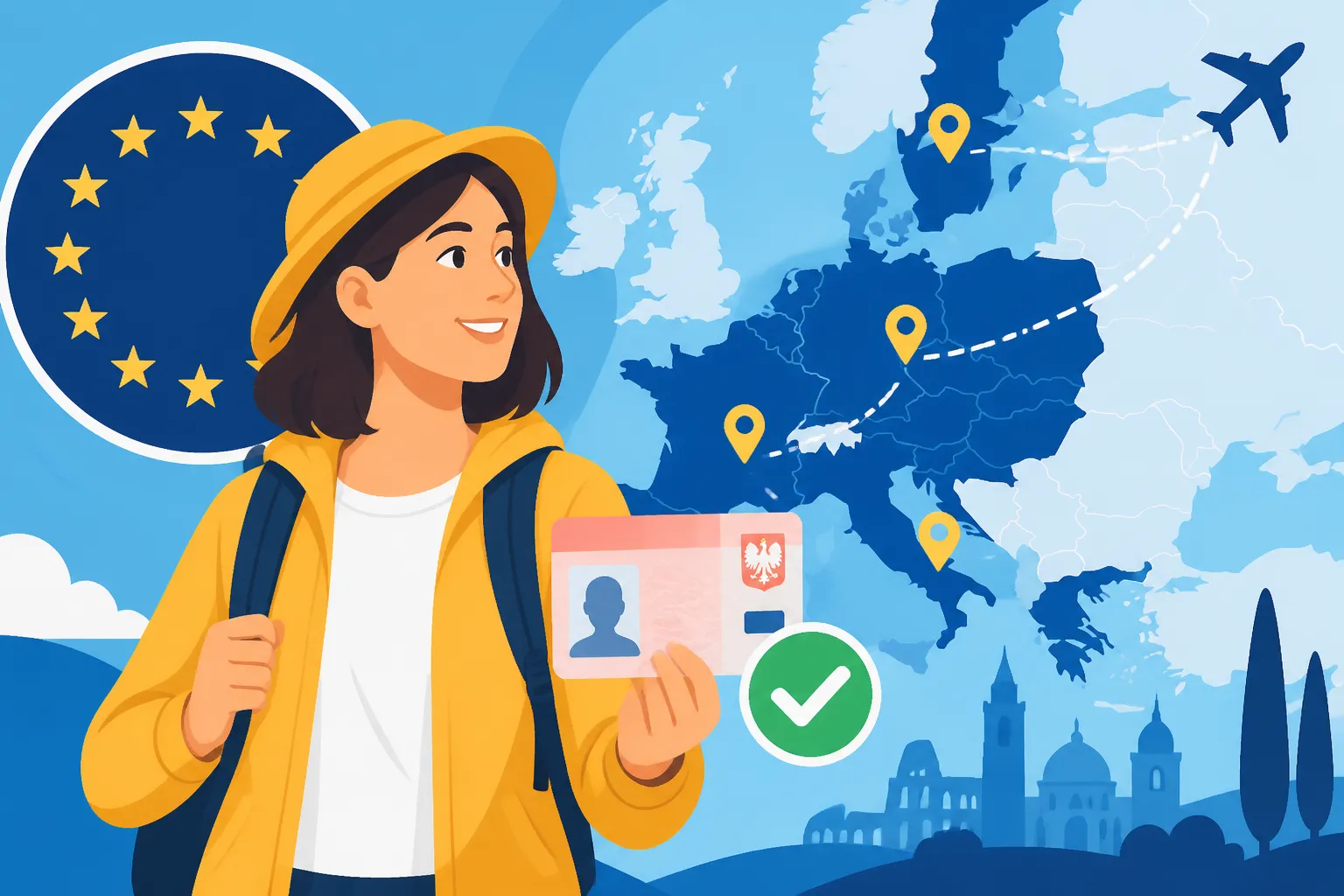
Yes, with a valid Polish Residence Card, you absolutely can travel to other Schengen countries for short stays without needing an additional visa. This means you can easily hop on a train to Berlin, fly to Paris, or drive to Prague, presenting only your passport and your Karta Pobytu at the border (though sometimes no physical border check will occur at all!). This is a massive perk of being a resident in a Schengen member state like Poland. The Schengen Area includes most EU countries, plus Iceland, Liechtenstein, Norway, and Switzerland.
This mobility is a huge relief, especially if you're used to applying for visas for every destination. Imagine you've been living and working in Wrocław for two years. Your Karta Pobytu is valid for another year. You decide to take a long weekend trip to Berlin, then a week-long holiday to Italy, and later a short visit to Prague. All these trips are within the Schengen Area. As long as the total time you spend outside of Poland but within other Schengen countries does not exceed 90 days within any 180-day period, you’re usually good to go. The clock starts ticking the moment you cross out of Poland into another Schengen state and resets only when you are back in Poland, or outside the Schengen zone entirely. It's truly a game-changer for spontaneous weekend getaways or exploring Europe during your holidays. For more on this, check out Understanding Schengen Rules and the 90/180 Limit for Poland.
Specifics of the 90/180 Rule for Non-EU Residents
While your Karta Pobytu grants you visa-free travel within the Schengen Area, it's crucial to understand the "90/180-day rule." This rule dictates that you, as a non-EU/EEA/Swiss national, can stay in other Schengen countries for a maximum of 90 days within any 180-day period. This 90-day limit refers to cumulative stays outside of Poland (or the Schengen country that issued your long-term visa/residence permit). Your time spent in Poland with your Karta Pobytu does not count towards these 90 days.
This rule can be a bit tricky to calculate, but it's vital to get it right. It's a "rolling" 180-day period, meaning that for every day you are checking your stay, you look back 180 days to count your cumulative days in the Schengen Area (excluding Poland). Overstaying this 90-day limit can lead to serious consequences, including fines, deportation, and future entry bans to the Schengen Area. Therefore, always track your days carefully. A simple mental rule is: if you're traveling frequently across Schengen borders (excluding Poland), don't spend more than three months in total outside Poland within any six-month span.
Crossing Borders: What to Expect at the Controls
When traveling between Schengen countries, you might not always encounter a formal border check, especially if you're traveling by land within the EU. However, this doesn't mean you shouldn't be prepared. Always carry your valid passport and your Karta Pobytu with you, even if you're just popping over the border for an afternoon. If you're flying between Schengen countries, you will usually pass through airport security and may have your documents checked by airline staff, and potentially by immigration officers upon arrival, especially if your appearance or travel history raises any flags.
At an official border crossing (e.g., airports, or if temporary controls are in place), be ready to present both your passport and your Karta Pobytu. You might be asked about the purpose of your trip, how long you intend to stay, and possibly about your financial means. Answer truthfully and calmly. Remember, while your Karta Pobytu is your proof of residence in Poland, your passport remains your primary identity and nationality document. These two documents work hand-in-hand to confirm your right to enter and move within the Schengen Area.
It's also a good idea to have proof of your accommodation and return tickets ready, just in case. While not always requested, these can smooth over any potential questions. In the rare event of confusion or a language barrier, remain polite and cooperative. Remember, border guards are simply doing their job to maintain security and ensure compliance with immigration laws.
Beyond Schengen: Considerations for Broader Travel
While the Schengen Area opens up a vast swathe of Europe, it's not the entire world. Traveling beyond these 27 countries requires additional planning and an understanding of how your Polish Residence Card fits into the picture – or, more accurately, how it doesn't.
Traveling Outside the Schengen Zone
If you're planning a trip to a country outside the Schengen Area – like the UK, Ireland, Serbia, Ukraine, or even further afield to your home country – your Polish Residence Card generally loses its visa-exempting power. For these destinations, you'll typically need to check the specific visa requirements based on your nationality and the country you wish to visit. Your Karta Pobytu usually only facilitates re-entry into the Schengen Area (and specifically, Poland), but it doesn't grant you visa-free access to non-Schengen states.
For example, if you're an American living in Poland and want to visit the UK, you'd generally still travel visa-free based on your US passport, not your Karta Pobytu. If you're from a country that does require a visa for the UK, your Polish residence permit will likely not change that requirement, although it might strengthen your application as proof of stable residency. Always, always check the embassy or consulate website of your destination country well in advance. Planning such trips involves a separate set of considerations, including return logistics. If your travels take you far outside the Schengen area for an extended period, or if you're even contemplating a move back to your home country or another continent, thinking about logistics like shipping your belongings can be a headache. Services like Sirelo can help you compare moving companies and get quotes for international relocations, ensuring your possessions arrive safely wherever you land next.
What About My Home Country Passport?
Your passport from your country of origin is and always will be your most important international travel document. Your Karta Pobytu is essentially an annex to it for residency and Schengen travel purposes. When you leave the Schengen Area and then wish to return to Poland, you will primarily use your passport to exit and enter. Your Karta Pobytu then serves as proof of your legal right to re-enter Poland and reside there.
It's absolutely essential to ensure your passport is valid for at least six months beyond your intended return date from any international trip, especially if you're venturing outside Europe. Many countries won't even let you board a flight if your passport has less than six months' validity remaining. This is often a condition for visa applications too. Never travel with an expired or soon-to-expire passport, even if your Karta Pobytu is perfectly valid. Always carry both documents together, and consider making digital and physical copies to store separately, just in case.
Practical Tips and Common Pitfalls for Expat Travelers
Life in Poland as an expat comes with its unique set of challenges and triumphs, and travel is no different. To ensure your journeys are smooth and stress-free, here are a few practical tips and warnings about common pitfalls.
Always Carry Essential Documents
This might sound obvious, but you'd be surprised how often people forget. When traveling within the Schengen Area, always carry your physical passport and your Karta Pobytu. Don't rely on digital copies on your phone, and don't assume that just because there's no visible border check, you won't be asked for them. Random checks can happen at any time, especially on trains or buses. Losing these documents while abroad can be a nightmare to sort out, involving your embassy and the Polish authorities.
It’s also wise to keep physical and digital copies of both documents stored separately from your originals. Send copies to your email, save them on a cloud service, and leave a set with a trusted person back home. This small step can save you immense trouble if your originals are lost or stolen. Additionally, if you're traveling with family, ensure everyone has their relevant documents, especially if you've gone through the family reunification process for their residence permits.
Staying Informed About Visa Regulations
Immigration and travel regulations are dynamic. What's true today might change tomorrow due to political shifts, international agreements, or unforeseen circumstances. Never assume. Before any trip, always double-check the latest travel advice and visa requirements for your nationality to your destination country, even for Schengen states if you have any doubts. Official government websites (like those of the Polish Ministry of Foreign Affairs, or the destination country's embassy in Poland) are your best resources.
Relying on old forum posts or anecdotal advice from friends, while well-meaning, can lead to nasty surprises. Rules can vary based on your nationality, the type of Polish residence permit you hold (temporary vs. permanent residence in Poland), and the specific purpose of your travel. A quick check before booking your trip can save you from being denied boarding or entry.
Travel Insurance: A Non-Negotiable
While your Karta Pobytu facilitates travel, it doesn't automatically mean your Polish public health insurance (NFZ) will cover you seamlessly everywhere in the Schengen Area. While the European Health Insurance Card (EHIC) can offer some basic coverage for EU/EEA citizens, as a non-EU citizen with a Polish Karta Pobytu, your access to healthcare in other Schengen states on the same terms as locals can be limited or confusing. Even for EU citizens, EHIC usually only covers medically necessary treatment, not comprehensive care.
Before you jet off, seriously consider robust travel health insurance. For peace of mind, especially when traveling extensively, companies like Cigna Global offer comprehensive plans that cover medical emergencies across the Schengen area and beyond. This isn't just about covering hospital stays; it's about covering everything from a nasty ear infection to a broken leg, emergency dental care, or even medical repatriation if something truly serious happens. Don't let a medical emergency abroad turn your exciting trip into a financial disaster. An appropriate travel insurance policy is a small investment for massive peace of mind. For more on healthcare generally, you might find our guide to The Complete Guide to Healthcare in Poland for Expats (2026) useful, or specifically for insurance, Health Insurance in Poland: Mandatory, Private and Subscription Options Explained.
Here's a quick overview to clarify your travel rights within the Schengen Area:
| Document Held | Travel Rights within Schengen (Excluding Poland) | 90/180 Day Rule Applicability | Important Considerations |
|---|---|---|---|
| Polish Karta Pobytu | Visa-free short stays | YES | Max 90 days in any 180-day period. |
| Schengen Visa (Type C) | Short stays for specific purpose/duration | YES | Strict adherence to visa validity & days granted. |
| National Visa (Type D) | Allows transit, but generally not travel rights | YES | Primarily for entry to issuing country (e.g., Poland). |
| EU/EEA/Swiss Passport | Full freedom of movement | NO | No time limits for travel or residency in other EU states. |
| Non-Schengen Residence Permit | Requires separate Schengen Visa | N/A | Residence in e.g. UK doesn't grant Schengen access. |
Traveling with your Polish Residence Card is a fantastic benefit of living in Poland, opening up a continent of possibilities. Just remember to respect the rules, stay informed, and always carry your essential documents. Happy travels!
Disclaimer
The information provided in this guide is for general informational purposes only and does not constitute legal, financial, or immigration advice. While we strive to provide accurate and up-to-date information, regulations in Poland and the Schengen Area can change rapidly. It is always recommended to consult with the official Polish immigration authorities (Urząd Wojewódzki) or a qualified immigration lawyer for advice specific to your individual circumstances. We cannot be held responsible for any inaccuracies or consequences arising from the use of this information.