What Documents Prove Polish Descent for Citizenship?
Oh, the journey to connect with your roots and claim Polish citizenship through descent can feel like an emotional treasure hunt through dusty attics and bureaucratic labyrinths. It's a deeply personal quest, but one often fraught with the unique frustrations of dealing with historical records and administrative hurdles across borders. This guide is here to untangle that knot, walking you through the very specific documents you'll need to prove your Polish lineage and successfully claim your right to Polish citizenship.
Understanding Polish Citizenship by Descent: The Basics
Embarking on the path to Polish citizenship by descent, often referred to as "confirmation of Polish citizenship," is fundamentally different from naturalisation. This isn't about applying to become a new citizen; it's about proving that you are already a Polish citizen, or rather, that your ancestors passed down citizenship to you under Polish law, and you haven't lost it. It’s a recognition of a pre-existing legal status.
Who Qualifies for Citizenship by Descent?
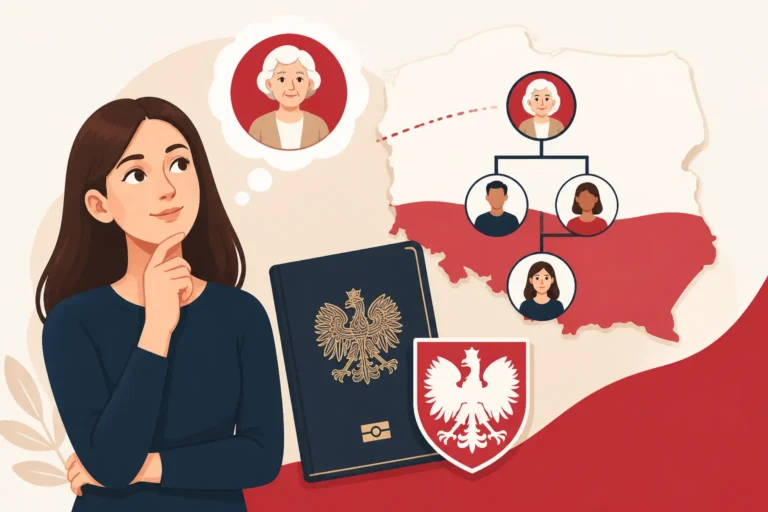
Poland operates on the principle of ius sanguinis, or "right of blood." This means citizenship is primarily passed down from parent to child, regardless of where the child was born. The crucial factor here isn't where you or your ancestors were born, but their legal nationality at the time of your birth and the births of your direct ascendants. Sounds simple, right? Well, the devil, as always, is in the historical details. The key periods to consider are linked to changes in Polish law:
- Pre-1920: Before Poland regained independence, the situation is complex, often relying on Russian, Austro-Hungarian, or German citizenship laws.
- 1920-1951: The 1920 Citizenship Act generally allowed transmission through paternal line for legitimate children and maternal line for illegitimate children. A common pitfall here is that many Poles who emigrated after World War I, particularly to the US or Canada, often acquired the citizenship of their new home country, which could have led to the automatic loss of their Polish citizenship under the then-current Polish law. If your ancestor acquired foreign citizenship before March 31, 1951, they might have lost their Polish citizenship. This is often the biggest hurdle.
- 1951-1962: The 1951 Citizenship Act, while still ius sanguinis, changed some of the rules regarding loss of citizenship, particularly for women marrying foreigners.
- Post-1962: The 1962 Citizenship Act, still largely in force today, made it much harder to lose Polish citizenship automatically. It essentially requires an explicit renunciation.
It’s paramount to understand that if any direct ancestor in your lineage lost their Polish citizenship before the birth of the next generation, the chain of descent is broken, and you won't qualify. This is where meticulous documentation becomes not just helpful, but absolutely essential. It’s not enough to feel Polish; you need to demonstrate it legally, step by painstaking step.
Why Proving Descent is Crucial
The Polish government, specifically the Voivodeship Office (Urząd Wojewódzki) and the Ministry of Interior and Administration, doesn't just take your word for it when you claim Polish ancestry. They require irrefutable evidence. Think of it like building a legal case, where every piece of paper is an exhibit. Each document serves to establish a link in the chain of your family's Polish nationality, demonstrating that citizenship was never lost by any of your direct ancestors who were born after the critical dates and under Polish jurisdiction.
The burden of proof lies entirely with you, the applicant. This means you need to collect, translate, and often legalise documents that might be decades, or even a century, old. It's not uncommon for families to have moved multiple times, for names to have been changed at various borders, or for records to have been destroyed during wars. The state won't do the heavy lifting for you, which can be a real source of frustration, especially if you're trying to do this from abroad. This is also why understanding the process for How to Apply for Polish Citizenship by Descent (Obywatelstwo) is so important, as it outlines the administrative side of this demanding process.
The Cornerstone Documents: What You Absolutely Need
When you’re trying to prove a historical fact like citizenship status across generations, you’re essentially recreating a legal family tree using official paper trails. There are certain documents that are non-negotiable – the absolute bedrock of your application. Without these, your claim will struggle to get off the ground.
Birth Certificates and Marriage Certificates
These are the absolute fundamental building blocks. You'll need:
- Your full birth certificate: This document establishes your legal existence and parentage.
- Your parents' full birth and marriage certificates: These prove their legal union (if applicable) and lineage to your grandparents.
- Your grandparents' full birth and marriage certificates: This continues the chain to your great-grandparents.
- Your great-grandparents' (and so on) full birth and marriage certificates: This is where the core Polish link needs to be established.
The key here is "full" certificates, often called odpis zupełny in Poland, not just short extracts. They contain more detailed information, including parents' names and places of birth, which are vital for establishing the lineage. Ideally, you want Polish versions of these documents for your Polish ancestors. If these individuals were born or married in Poland, their birth and marriage certificates, issued by a Polish Civil Registry Office (Urząd Stanu Cywilnego or USC), are gold. If your ancestors emigrated and then had children or married abroad, you'll need the foreign equivalents, properly translated and apostilled (we'll get to that). The chain must be unbroken, linking back to an ancestor who was undeniably a Polish citizen under Polish law.
Let’s say your great-grandfather was born in Poland in 1890, moved to the US in 1910, and your grandfather was born in the US in 1915. You'd need your great-grandfather’s Polish birth certificate to show his origin, and your grandfather's US birth certificate to show the link to him. Then your father's, and then yours. Each link must be present.
Identity Documents
Beyond birth and marriage, official identity documents from your Polish ancestors are critical, especially those proving their nationality. These often show citizenship or nationality directly, or at least strong ties to the Polish state. Look for:
- Old Polish passports: This is often the strongest piece of evidence, as passports are direct proof of nationality. Any passport issued by the Polish authorities for your ancestors before they emigrated is incredibly valuable.
- Polish military service books: These documents confirm military service for Poland, inherently linked to citizenship.
- Pre-war Polish ID cards (dowód osobisty): Similar to passports, these explicitly state Polish nationality.
- Voting records or certificates of nationality: Any official document from Polish authorities explicitly stating their Polish citizenship.
These documents are crucial for demonstrating that your ancestor actually held Polish citizenship, and didn't lose it before the next generation was born. For instance, if your great-grandfather emigrated to the US and became a naturalised US citizen before 1951, and you can only find his US naturalisation papers but no evidence he retained Polish citizenship, the chain is likely broken. This is often where the application founders, as many Poles did lose their citizenship upon naturalising elsewhere before March 31, 1951. You need proof that your ancestor remained a Polish citizen according to Polish law, even if they lived abroad.
Proof of Residence and Emigration
Sometimes, it’s not just about proving they were Polish, but about demonstrating when and how they left Poland, and what their status was before and after.
- Documents showing residence in Poland before emigration: Old census records, municipal registration books (księgi meldunkowe), land deeds, or school records can confirm their presence and status in Poland.
- Emigration papers: Documents related to their departure from Poland, such as passenger manifests (though these often just show destination, not citizenship status), or exit visas. The crucial element here is to show that they left Poland as a Polish citizen and did not lose that citizenship upon emigration or before the next generation. If your ancestor left Poland and naturalised in another country after March 31, 1951, generally their Polish citizenship would not have been automatically lost, and the chain may be intact. However, if this naturalisation happened before that date, you'll need to demonstrate that they didn't, in fact, lose their Polish citizenship according to the laws of the time. This is a complex area, and it's always advisable to consult with specialists in Polish citizenship law.
Secondary and Supplementary Evidence: Strengthening Your Claim
While the cornerstone documents are non-negotiable, often historical records are incomplete or ambiguous. This is where secondary and supplementary evidence comes into play. These documents might not directly prove citizenship, but they build a stronger case, providing context and supporting the claim that your ancestors lived as Poles and were recognised as such.
School and University Records
Records from Polish educational institutions can be incredibly helpful. If your ancestor attended primary school (szkoła podstawowa), gymnasium, or university in Poland, their school records can provide details that corroborate their presence and identity.
- Report cards (świadectwa szkolne): These often list names, birth dates, and places of residence.
- Diplomas (dyplomy): For higher education, these can be formal proofs of study within the Polish system.
- Enrollment registers: Older archives might hold detailed registers that document attendance.
These documents don’t directly state citizenship, but they prove residence, use of the Polish language, and engagement with Polish society. They paint a picture of an individual living and being educated within the Polish state, which implicitly supports a claim of Polish nationality. It's often another piece of the puzzle to prove continuous ties to Poland before emigration, if that is part of your family's story.
Church and Parish Records
For generations that predate comprehensive civil registry systems, church records are often the most detailed and sometimes the only available source of vital information. Poland has a long history of religious observance, and many births, marriages, and deaths were meticulously recorded by parish priests.
- Baptismal certificates (metryki chrztu): These are essentially birth records for individuals born before civil registration became mandatory or widespread. They typically include the child's name, birth date, parents' names, and godparents.
- Confirmation records: While less common for citizenship purposes, they can occasionally provide additional details.
- Marriage records (metryki ślubu): Similar to civil marriage certificates, these are crucial for establishing marital links and the lineage.
- Burial records (metryki pogrzebu): These can confirm death dates and sometimes places of origin.
These records are particularly valuable for ancestors from the late 19th and early 20th centuries. You'll often find these archived in local parishes or diocesan archives in Poland. They are considered official documents in Poland for historical purposes and are often accepted as proof of birth and lineage where civil records are unavailable or incomplete. Searching these archives can be a daunting task, especially if you're unfamiliar with Polish administrative divisions or the language.
Employment and Military Records
These types of documents can further solidify your ancestors' ties to Poland, demonstrating their contribution to the nation's economy or defense.
- Polish work books (książeczki pracy): These were official documents detailing an individual's employment history in Poland. They often include personal details, job titles, and employers.
- Trade union memberships: Membership cards or records from Polish trade unions can show professional engagement within Poland.
- Military service records: As mentioned under identity documents, these are strong indicators of citizenship. For instance, if your ancestor served in the Polish Army after 1918, it’s a very good sign they were considered a Polish national.
These records, much like school records, provide a glimpse into the daily life and civic engagement of your ancestors within Poland. They confirm not only their presence but also their integration into the fabric of Polish society. This evidence supports the narrative that they were recognized and functioned as Polish citizens.
Other Official Documents
Sometimes, you need to dig deeper into less obvious sources. Any official document that directly or indirectly speaks to your ancestor's Polish nationality or their permanent residence in Poland can be useful.
- Old censuses: While often general, they can place your ancestors in a specific location at a specific time in Poland.
- Property deeds or land registry documents (księgi wieczyste): Ownership of property in Poland can be an indicator of long-term ties.
- Court records: Any participation in legal proceedings in Poland can show their status as a resident or citizen.
- Voter registration lists: For periods where Poles could vote, these lists would include Polish citizens.
- Police records (from pre-war Poland): Less common, but any administrative records kept by the authorities.
The key to all these supplementary documents is their ability to corroborate and strengthen the primary evidence. They help fill in gaps, provide context, and demonstrate a consistent pattern of Polish identity and connection to the Polish state. The more comprehensive your collection of documents, the stronger your overall case for proving your Polish descent for citizenship. Gathering these can be a monumental task, and you might find yourself needing assistance from services that specialize in genealogical research or document retrieval in Poland. You'll also want to understand the broader context of different citizenship routes, as explained in Polish Citizenship: Routes Through Residence, Descent and Naturalisation (2027).
Navigating the Bureaucracy: Practical Steps and Common Pitfalls
Once you’ve embarked on this quest to gather all your ancestral documents, you’ll quickly realise that the actual papers are only half the battle. Dealing with bureaucracy, translations, and the occasional brick wall can be incredibly frustrating. Believe me, I’ve been there, staring blankly at forms written entirely in Polish, wondering if I'd ever figure it out.
Official Translations and Apostille/Legalisation
This is a critical step that often trips people up. Any document not originally issued in Polish will need to be officially translated. And by "officially," I mean a sworn (certified) translator in Poland or a Polish consular officer abroad. You cannot just use a friend who speaks Polish. The translation must be done by a translator registered with the Polish Ministry of Justice.
Furthermore, many foreign documents will require an apostille or legalisation. What's the difference?
- Apostille: If your document was issued in a country that is a signatory to the Hague Apostille Convention, you simply need to get an apostille stamp from the designated authority in that country. This single stamp certifies the authenticity of the document and the signature of the official who issued it, making it valid in other signatory countries (like Poland).
- Legalisation: If the issuing country is not a signatory to the Hague Convention, you'll need a more complex "legalisation" process. This usually involves getting the document certified by the foreign ministry of the issuing country, and then further certified by the Polish embassy or consulate in that country.
Failing to properly translate or legalise documents will result in your application being rejected, sending you back to square one. It’s an added expense and a time-consuming step, but absolutely non-negotiable. This is similar to the thoroughness required when you're preparing documents for other official processes, such as a How to Prepare Documents for a Karta Pobytu Application.
Where to Search for Documents
Finding these historical documents can feel like detective work, and often, it is. Here are the main places you'll likely be searching:
- Polish Civil Registry Offices (Urząd Stanu Cywilnego – USC): For birth, marriage, and death certificates from the last century or so, the local USC where the event occurred is your primary point of contact. If you don't know the exact location, you might need to do some genealogical research first.
- State Archives (Archiwa Państwowe): For older civil records (often pre-dating the local USC systems) and many other types of official documents like property deeds, military records, or school registers, the regional state archives in Poland are invaluable. For example, if your family came from Krakow, you'd check the State Archive in Krakow.
- Church Archives: For very old records, particularly pre-1900, many vital records were kept by parishes. Diocesan archives or even individual parish offices can be sources for baptismal, marriage, and burial records.
- Family Members: Don't underestimate the power of your relatives! Old photo albums, letters, family Bibles, or even just stories can sometimes point you to hidden documents or crucial details.
- Local Polish Community Groups Abroad: In countries with large Polish diasporas (like the US, Canada, UK, Australia), local Polish clubs, churches, or historical societies might hold records or have members who can offer guidance based on their own experiences.
This search can be incredibly time-consuming, and if you're not in Poland, you might consider engaging a professional genealogist or a legal firm specializing in Polish citizenship to assist you. They have the expertise and the local contacts to navigate these archives more efficiently. It's a huge undertaking, especially if you're dealing with ancestors from a small village that no longer exists in its original form due to historical border changes.
The Challenge of Gaps and Discrepancies
The reality of dealing with historical documents, especially from a country that has endured multiple wars and border shifts, is that perfect records are a rarity. You’ll almost certainly encounter gaps, inaccuracies, and discrepancies.
- Missing documents: Records might have been destroyed in fires, floods, or during wartime. Or they might simply be lost. This is where supplementary evidence becomes even more crucial. Can you find multiple pieces of indirect evidence that collectively paint a picture?
- Name changes: Expats often changed their names (or had them changed for them) upon arrival in a new country to sound more "local" or easier to pronounce. For example, "Kowalski" might become "Kovacs" or "Kowal." You'll need to demonstrate a clear link between the original Polish name and the later changed name. This often requires affidavits or official change-of-name documents from the country of emigration.
- Border shifts: Poland's borders have changed dramatically throughout history. Your ancestors might have been born in what was then part of the Russian Empire, Austria-Hungary, or Germany, but in a territory that is now unequivocally part of modern Poland. The citizenship laws of that time and region are critical.
- Inconsistencies: Dates might be off by a day or two, or places of birth might be slightly different on various documents. Explain these discrepancies clearly and provide as much supporting evidence as possible. For instance, if a birth date is listed as "January 1, 1900" on one document and "January 2, 1900" on another, you might need to find a third document or provide a declaration explaining the likely reason.
It’s these challenges that make the process so taxing. The Polish authorities are looking for clear, unambiguous proof. Any ambiguity on your part means more questions and delays, or even a rejection. It’s a journey of patience and persistence. Once your citizenship is confirmed, the administrative journey in Poland might continue, as you might eventually apply for a PESEL number, as outlined in How to Get Your PESEL Number and Why It Matters for Healthcare, and then even think about practicalities like setting up a Polish bank account, as discussed in The Expat Guide to Opening a Bank Account in Poland. And if you’re planning a move, companies like Sirelo can help simplify the logistics, and Cigna Global could be an option for private health insurance, supplementing the public system.
Here’s a quick overview of essential document categories:
| Document Category | Specific Examples | Purpose |
|---|---|---|
| Vital Records | Full Birth Certificate (your own, parents, grandparents, etc.) | Establishes biological lineage and birth details for each generation. |
| Full Marriage Certificate (parents, grandparents, etc.) | Proves legal marital status and links between generations, especially where lineage follows marriage. | |
| Identity/Nationality Proof | Polish Passport (old), Polish ID Card (Dowód Osobisty) | Direct evidence of Polish nationality held by the ancestor. |
| Polish Military Service Book, Voting Records | Indirect but strong indicators of engagement with and recognition by the Polish state as a citizen. | |
| Residence/Emigration Proof | Census Records, Księgi Meldunkowe (residence registers) | Confirms presence in Poland at specific times; crucial for dating emigration relative to citizenship laws. |
| Emigration papers (if available) | Helps establish the timeline of leaving Poland and potential acquisition of other citizenships. | |
| Supplementary Evidence | School Records, University Diplomas | Shows education within Polish system, supporting a claim of Polish identity and long-term residence. |
| Church Records (Baptismal, Marriage, Burial) | Vital for older generations where civil records are scarce; establishes lineage and dates. | |
| Employment Records, Trade Union Memberships | Demonstrates active participation in Polish economic or social life. | |
| Property Deeds, Court Records | Proof of legal and financial ties to Poland. |
This whole process can be overwhelming, I won't lie. It requires an incredible amount of patience, attention to detail, and often, a willingness to dig deep into historical records that might not be easily accessible. But for those who are driven to reconnect with their Polish heritage and gain citizenship, it's a profoundly rewarding journey. Remember, while this guide covers the documents, understanding the specific legal requirements, particularly around the crucial dates of citizenship law changes and loss of citizenship, is where the real complexity lies.
Disclaimer
Please remember that this guide provides general information based on common expat experiences and publicly available knowledge regarding Polish citizenship by descent. While I strive to offer accurate and helpful advice, immigration laws and procedures can change rapidly. This content should not be considered legal advice. Always consult with a qualified legal professional specializing in Polish immigration and citizenship law or the appropriate Polish government authorities for personalized guidance on your specific situation.