Family Reunification in Poland: A Complete Guide for Expats
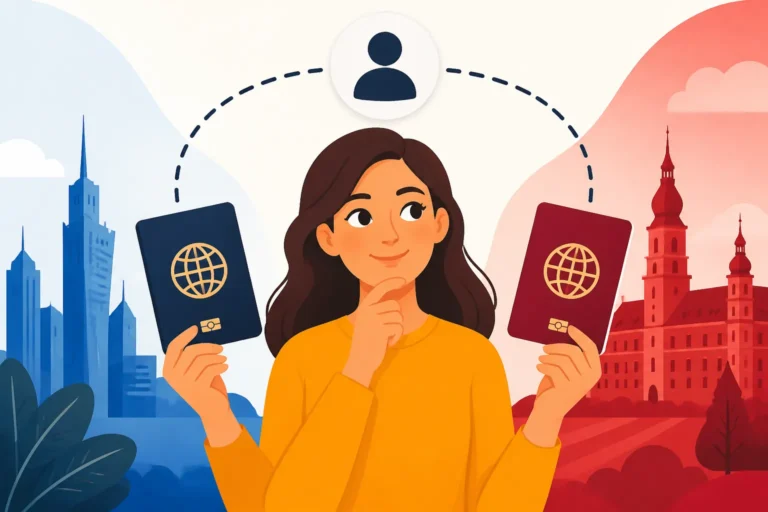
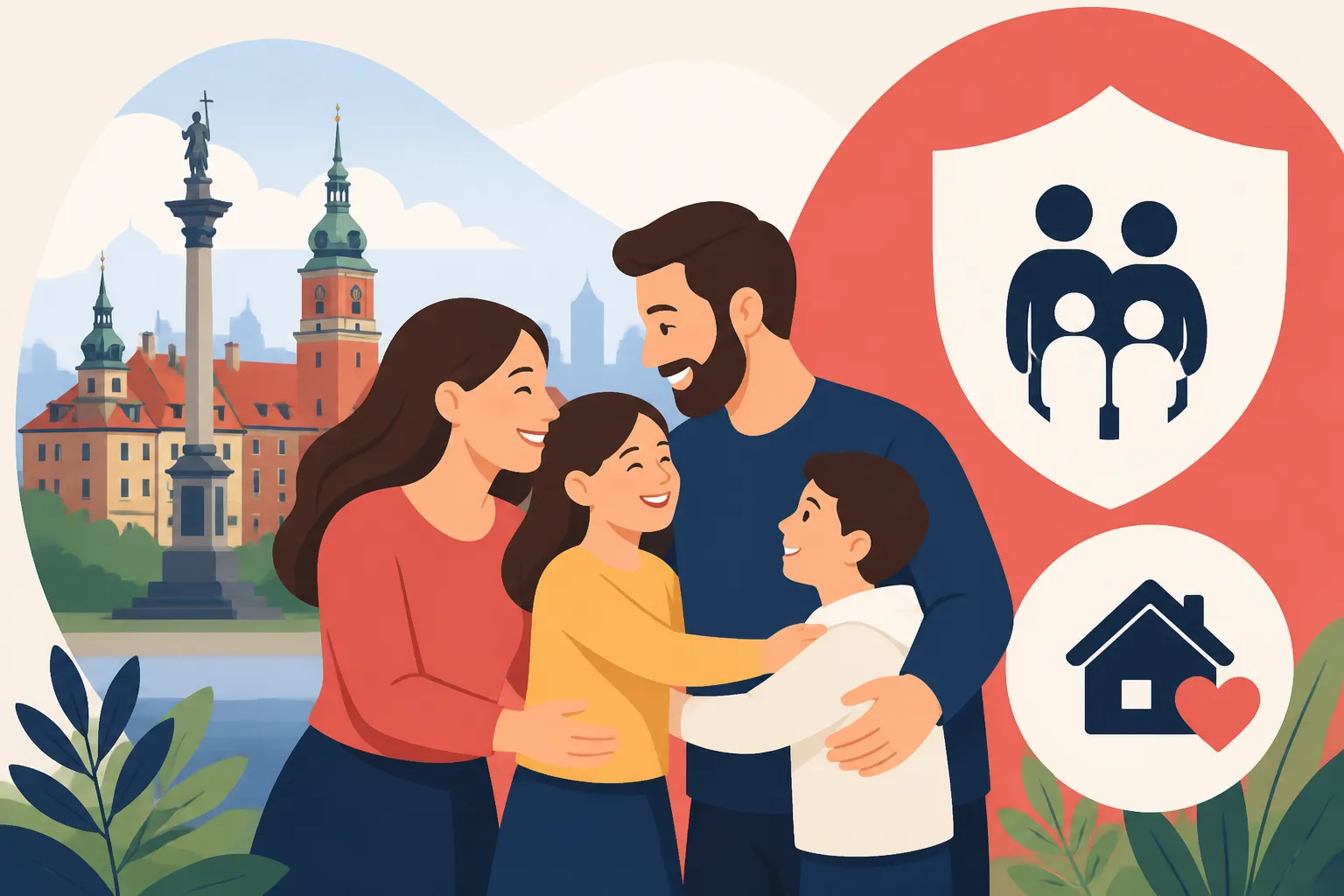
One of the hardest parts of expat life in Poland is the longing for loved ones left behind. The administrative maze of bringing your family over can feel like an impossible hurdle, fraught with jargon, endless paperwork, and the infamous Polish bureaucracy. This comprehensive guide will walk you through every step of the family reunification process in Poland, from understanding eligibility to navigating the dreaded Urząd Wojewódzki, helping you build your life together here.
Understanding Family Reunification in Poland: The Basics
It’s completely natural to want your family by your side when you’re building a new life, and Poland, like most countries, has pathways for family reunification. However, the exact route you take, and the hoops you’ll jump through, depend heavily on your own legal status in Poland and the nationality of your family members. This isn't a one-size-fits-all situation, and understanding the core principles from the get-go will save you a lot of headaches, trust me.
Who is Eligible to Apply as a Sponsor?
First things first, someone needs to be the "anchor" – the person already residing in Poland who wants to bring their family. This person is known as the sponsor, and their legal status is paramount. Generally, if you are a Polish citizen, you have the most straightforward path. You’re already home, after all!
For non-EU citizens, you need to hold a valid long-term residence permit in Poland, typically a Temporary Residence Permit (Karta Pobytu) or Permanent Residence Permit (Pobyt Stały). This permit needs to have been issued for a period of at least two years, with at least one year remaining before its expiry. For example, if you're on a two-year work Karta Pobytu and you’ve only got a few months left, the Urząd might be reluctant to start a new family reunification process without you first extending your own permit. It shows stability, which is what they're looking for.
Crucially, you must also be able to demonstrate that you have stable and regular income, and suitable accommodation for your entire family once they arrive. These aren't just suggestions; they are strict requirements that the Urząd will scrutinize very carefully. This means having an official job contract, being a registered freelancer with verifiable earnings, or owning a business that demonstrably provides you with enough funds. If you’re unsure about the nuances of your own permit, it's wise to review the specific conditions of your Karta Pobytu beforehand, as certain types of permits might have slightly different rules regarding family sponsorship.
Who Can Be Reunited: Eligible Family Members
Now, let's talk about who can actually join you. Poland's family reunification rules are quite specific, and it's important not to make assumptions. The primary beneficiaries of family reunification are generally:
- Spouses: Your legally married husband or wife. Proof of marriage is essential, and depending on where you got married, you might need to register your marriage in Poland first, or at least have an apostilled and sworn-translated marriage certificate. Poland does not currently recognize civil partnerships or same-sex marriages performed abroad for the purpose of family reunification in the same way it does traditional marriage.
- Minor Children: Your biological or legally adopted children who are under the age of 18. This includes children of your spouse, provided you have parental responsibility over them. Again, birth certificates and, if applicable, adoption papers are crucial, and they all need to be properly translated and legalized.
Bringing other family members, like adult dependent children, parents, or grandparents, is significantly more challenging and often only possible under very specific, exceptional circumstances, usually involving severe dependency due to health or disability, and proving that there is no one in their home country who can provide care. These cases are rare and require extensive documentation of dependency and financial support. Don't go into this expecting an easy ride for extended family; focus on your spouse and minor children first.
The Different Paths to Family Reunification
The path to family reunification isn't a single, well-trodden road. It branches out depending largely on whether the sponsoring individual (that's you!) is an EU/EEA/Swiss citizen or a non-EU citizen. The administrative burden, required documents, and even the type of residence document issued can differ quite significantly.
Reunification for Spouses and Minor Children of Non-EU Citizens Karta Pobytu
If you are a non-EU citizen holding a valid Karta Pobytu (Temporary Residence Permit) or Pobyt Stały (Permanent Residence Permit) in Poland, your family members will generally apply for their own Karta Pobytu based on family reunification. This process involves submitting an application, known as a Wniosek o udzielenie zezwolenia na pobyt czasowy w celu połączenia się z rodziną, to the local Urząd Wojewódzki (Provincial Office) that corresponds to your place of residence in Poland.
This application is typically initiated by you, the sponsor, on behalf of your family members. You'll need to gather a substantial dossier of documents, not just for them but also for yourself, to prove your eligibility as a sponsor. This includes your existing residence permit, proof of income, accommodation, and your relationship documents. Your family members might also be required to obtain a national visa (Type D) from a Polish consulate in their home country before coming to Poland, especially if they are from countries that require a visa for entry. Once in Poland, they can then submit their Karta Pobytu application. Sometimes, it’s possible for them to apply for a Karta Pobytu directly from Poland if they entered on a specific type of visa, but it’s always best to check the current regulations with the Polish consulate abroad or the Urząd directly to ensure there are no surprises.
The actual submission of the application usually requires an in-person appointment at the Urząd Wojewódzki. This can be a notoriously difficult step, with appointment slots often disappearing within minutes of being released online. Once the application is submitted, your family members will attend a biometrics appointment where their fingerprints and photos are taken. From there, it's a waiting game, which can sometimes be incredibly long and frustrating. For more detailed guidance on the general Karta Pobytu application process, you might find it helpful to read our guide on How to Apply for a Temporary Residence Permit (Karta Pobytu) in Poland.
Reunification for EU/EEA/Swiss Citizens' Family Members
For EU/EEA/Swiss citizens residing in Poland, the process for family reunification is often less complex, thank goodness. Your family members, especially spouses and minor children, typically have the right to reside with you under EU free movement laws. The main document they will apply for is a "Residence Card for a Family Member of an EU Citizen" (Karta pobytu członka rodziny obywatela UE), which is distinct from the Karta Pobytu for non-EU citizens, although it looks quite similar.
If your family members are themselves EU/EEA/Swiss citizens, they simply register their stay in Poland, much like you would. If they are non-EU citizens, they can enter Poland on a Schengen visa (if required for their nationality) or even visa-free, then apply for the "Residence Card for a Family Member of an EU Citizen" directly at the Urząd Wojewódzki. They do not usually need a national (Type D) visa beforehand, which simplifies things considerably.
The application involves submitting a slightly different set of forms and documents, primarily focused on proving your relationship and your economic activity or sufficient means of support in Poland. The emphasis is less on income thresholds and more on the fact that you, as the EU citizen, are exercising your treaty rights in Poland. The processing times for these applications are generally shorter than for non-EU Karta Pobytu applications, though still subject to the usual Urząd delays. Remember, you will also need to have proof of your own registration of stay in Poland for them to complete this process. For clarity on your own registration, check out our post on How to Register Residence as an EU Citizen in Poland.
Key Requirements and Documentation: Getting Your Ducks in a Row
This is where the rubber meets the road. Poland's authorities are meticulous when it comes to documentation. Skimping on details or forgetting a single document can lead to significant delays or even rejection. Think of it like building a case: you need irrefutable evidence for every claim you make.
Proving Stable and Regular Income
This requirement often catches expats off guard. The Polish authorities need to be absolutely sure that you can financially support your family without them becoming a burden on the state. "Stable and regular" means consistent income, not just a one-off payment. What’s considered "sufficient" can sometimes feel a bit like a moving target, but generally, it refers to an amount that covers basic living costs for your entire household.
As of recent regulations, the minimum monthly income often cited is around PLN 776 for a single person, and an additional PLN 600 per month for each family member in your household. So, for a family of three (you, your spouse, and one child), you’d need to show an income of at least PLN 776 + PLN 600 + PLN 600 = PLN 1976 per month. However, this is a minimum and applying with just this amount can be risky if your actual cost of living is higher. They also look at your ability to provide for accommodation, which means your rent or mortgage payments are also factored in.
You can prove income through various documents:
- Employment Contract (Umowa o Pracę): This is the gold standard. Provide your current contract, salary annexes, and recent bank statements showing regular salary payments.
- Self-Employment (Jednoosobowa Działalność Gospodarcza – JDG): If you're a freelancer or run your own business, you'll need to provide your business registration documents, tax declarations (like PIT-36/36L or CIT-8), invoices, and bank statements showing consistent income flow. It can be more complex to prove "stability" here, so having a good accounting record is key.
- Other Sources: Pension statements, investment income (with proof of regularity), or even rental income (if properly declared and taxed) can sometimes be considered, but usually, employment or self-employment income is preferred.
The bottom line is clarity and consistency. The more clearly you can demonstrate a reliable and sufficient financial stream, the smoother this part of the application will go.
Demonstrating Suitable Accommodation
Just as important as income is having a roof over your family's head. The Urząd needs assurance that your family won't be living in cramped, unsuitable conditions. "Suitable" generally means meeting certain minimum space requirements per person and being legally accessible to you.
Current guidelines in Poland often stipulate at least 7-8 square meters of living space per person in your household. This includes you and every family member you are bringing over. So, for our family of three, you'd need an apartment with at least 21-24 square meters of habitable space, excluding kitchen, bathroom, and hallways. While this might seem small, they are looking for a minimum standard, not a luxury villa!
Proof of accommodation can include:
- Rental Agreement (Umowa Najmu): A valid, active rental agreement (preferably najem okazjonalny which offers more protection to the landlord) in your name, explicitly stating the size of the apartment and its legal address. The duration of the lease should preferably cover at least the validity of the permit you are applying for. Make sure it's current and registered if necessary.
- Proof of Ownership (Akt Notarialny): If you own property in Poland, provide a copy of the notarized deed (akt notarialny) and a current Land and Mortgage Register excerpt (Księga Wieczysta).
- Accommodation Provided by Employer: In some cases, your employer might provide accommodation. You'll need an official letter from them detailing the address, size, and duration of the provision, along with proof of your employment.
- Guest Accommodation: If you are temporarily staying with friends or family, you'll generally need a formal declaration from the owner/tenant stating they agree to host your family, along with proof of their right to the property. This is usually accepted for initial stages or short stays, but a proper rental or ownership proof is almost always preferred for the long term.
Keep in mind that if you're planning a move, companies like Sirelo, which specialize in international removals, can be a great resource for managing your belongings. However, securing your physical accommodation should be your first priority.
Health Insurance: A Non-Negotiable
This is another area where there's absolutely no wiggle room. Every family member applying for a residence permit needs to have comprehensive health insurance coverage that is valid in Poland. This isn't just a recommendation; it's a legal requirement, and your application will be rejected without it.
You generally have two main options for health insurance:
- Public Health Insurance (NFZ): If you are employed in Poland, you (and your legally registered family members) are likely already covered by the National Health Fund (NFZ). If your family members will be joining you and you are the sponsor, you can apply to have them registered under your NFZ coverage once they are officially residing with you. This is usually the most cost-effective option for long-term residents. You can learn more about this in our article Registering with the NFZ in Poland: The Complete Expat Guide (2027).
- Private Health Insurance: If NFZ coverage isn't immediately available or preferred, you'll need to purchase private health insurance. This insurance must provide coverage comparable to the NFZ benefits, usually covering at least emergency care, hospital stays, and basic medical treatments for the entire duration of their requested permit. Many international providers offer plans specifically designed for expats, such as Cigna Global. When choosing a private plan, ensure it clearly states its validity in Poland and covers a sufficient range of medical services without extremely high deductibles.
Regardless of the option you choose, you'll need proof of coverage for each family member, usually in the form of an insurance policy document or an official NFZ declaration. The policy must clearly state the names of the insured individuals, the coverage period, and the scope of coverage. Do not underestimate this; it's one of the easiest reasons for an Urząd official to send your application back.
Essential Personal Documents and Translations
Beyond income, accommodation, and insurance, there's a pile of personal documents you'll need to prepare. And here's the kicker: many of them will need to be officially translated.
The core documents typically include:
- Valid Passports: Original and copies of all pages (including blank ones) of current passports for you (the sponsor) and all family members applying. Ensure they have sufficient validity remaining – typically at least a year beyond the expected permit expiry date.
- Birth Certificates: Original and copies for all children.
- Marriage Certificate: Original and copy for spouses. If you were married outside of Poland, you might need to have your marriage registered at the Polish civil registry office (Urząd Stanu Cywilnego) or, at minimum, present an apostilled certificate with a sworn translation.
- Previous Visas/Residence Permits: Copies of any previous Polish visas or residence permits for family members, if applicable.
- Photos: Recent passport-style photographs (usually 4-6 per person), meeting strict Polish biometric standards. This means white background, straight-on view, neutral expression, without head coverings (unless for religious reasons, with a signed declaration).
- Proof of Relationship: Beyond certificates, any other documents that clearly establish your relationship, such as shared utility bills (if applicable), family photos, or joint bank statements can sometimes be useful, especially if there are any doubts or if you're applying for adult dependents.
Sworn Translations (Tłumacz Przysięgły): This is paramount. Any document that is not in Polish (or English, sometimes) must be translated by a Polish sworn translator. This isn't just any translator; a sworn translator is officially certified by the Polish Ministry of Justice, and their translations carry legal weight. Do not use an unofficial translation service, Google Translate, or a friend who speaks Polish; the Urząd will reject it. Prices for sworn translations vary, but budget for this. You can find a list of sworn translators on the Ministry of Justice website.
Apostille/Legalisation: Depending on the country where your documents were issued, you might need an apostille (if your country is a signatory to the Hague Apostille Convention) or full legalisation (if not). This is a stamp or certificate that authenticates the origin of a public document. Check specific requirements for your country with the Polish consulate there.
The Application Process: Step-by-Step Navigation
You've gathered all your documents, triple-checked them, and perhaps even started dreaming of having your family finally reunited under one roof. Now comes the actual submission and the agonizing wait. This phase requires patience, meticulous attention to detail, and a thick skin.
Preparing the Application Form (Wniosek) and Attachments
The first tangible step is filling out the "Application for a Temporary Residence Permit for Family Reunification" (Wniosek o udzielenie zezwolenia na pobyt czasowy w celu połączenia się z rodziną). This form is typically available on the website of your local Urząd Wojewódzki. It’s usually multi-page, dense, and exclusively in Polish. Don't be shy about asking for help from a Polish speaker or a legal consultant if you're not confident in your Polish reading and writing skills. Even small errors can lead to delays.
Each family member applying will need their own separate form, even children. Ensure all sections are completed accurately, including details about your family members' personal data, the reason for their stay (family reunification), and information about you as the sponsor. Attach all the meticulously prepared documents we discussed earlier: photocopies of passports, birth/marriage certificates (with sworn translations and apostilles), proof of income, accommodation, and health insurance. Remember, for every official document you submit, you should have the original to show during your appointment and a clear photocopy to leave with the Urząd.
Finally, make sure the required biometric photographs are attached according to the guidelines. These are often slightly different from standard passport photos, so it's always best to get them done at a professional photo studio in Poland that is familiar with Karta Pobytu requirements. They'll know the exact dimensions and specifications.
Booking Your Appointment at the Urząd Wojewódzki
This step can be the most frustrating for many expats. The Urząd Wojewódzki (Provincial Office) is the administrative body responsible for processing residence permits, and booking an appointment for submission can feel like a competitive sport. In major cities like Warsaw, Krakow, or Wroclaw, online appointment slots often disappear within seconds of being released.
Most Urząd offices use an online booking system. You'll need to regularly check their website (often early in the morning on specific days) to snag a slot. It requires persistence and a bit of luck. Some offices also offer limited in-person queue tickets, but these often mean arriving hours before opening, even in the middle of the night. My advice? Don't lose hope. Keep checking online, or consider using an agency or legal firm that offers appointment booking as part of their services, though this comes at an additional cost.
Once you have an appointment, treat it like gold. Arrive early, with all your documents neatly organized. You'll present your application, show the original documents, and leave the photocopies. At this point, you'll also pay the application fee (opłata skarbowa). After submission, your family members will usually be directed to a separate counter or room for their biometrics appointment, where their fingerprints and photos for the Karta Pobytu will be taken. They will be given a stamp in their passport confirming the submission, which is very important for legal stay while waiting for the decision.
The Waiting Game and Potential Interviews
And now, for the part that tests everyone's patience: the wait. Officially, the Urząd has a legal timeframe to process applications (often 60-90 days), but in reality, especially for Karta Pobytu applications in major cities, these deadlines are rarely met. It's not uncommon for family reunification cases to take anywhere from 6 months to well over a year. The COVID-19 pandemic certainly exacerbated these delays, and many Urząd offices are still catching up.
During this waiting period, the Urząd might send you official letters (always in Polish!) requesting additional documents or clarifications. It's crucial to respond to these requests promptly and completely. Ignoring them is a surefire way to get your application rejected. In some cases, particularly if there are any doubts about the authenticity of the relationship or the dependency, your family members might be called for an interview. This is often to verify the details provided in the application and to ensure the relationship is genuine. Prepare for these by knowing the specifics of your application and your relationship history.
While waiting, it's tempting to call the Urząd every week. While persistent, sometimes polite inquiries might yield a little information, generally, it's a process of waiting. You can often check the status online if the Urząd provides such a service, but it’s often not updated in real-time. This is where you really need to channel your inner zen master.
Common Challenges and Pitfalls for Expats
Navigating the Polish immigration system for family reunification can feel like a never-ending obstacle course. As an expat who's been through various administrative battles here, I can tell you that understanding the common pitfalls upfront is half the battle.
Language Barriers and Bureaucracy
This is perhaps the biggest and most pervasive challenge. The entire process, from application forms to official letters and communication with Urząd officials, is predominantly in Polish. If your Polish isn't fluent, you’re instantly at a disadvantage. While some officials might speak a little English, you cannot rely on it, especially in smaller towns. The sheer volume of jargon and legalistic phrasing on the forms alone can be overwhelming.
The Polish bureaucratic system, while generally logical once you understand its internal workings, can feel incredibly opaque and rigid from the outside. There's little room for improvisation or cutting corners. Every step must be followed precisely, every document submitted exactly as requested. This rigidity, combined with the language barrier, leads to immense frustration. You might find yourself going back and forth, needing a sworn translation of a document, then getting an apostille for that document, only to find the original needs an apostille too! It’s enough to make you pull your hair out.
My strongest advice here is to invest in professional help if your Polish isn't strong. A trusted legal advisor specializing in immigration or an experienced relocation agency can be worth their weight in gold. They can help with translations, liaise with the Urząd on your behalf, and ensure all paperwork is precisely correct. While it’s an added cost, it can save you weeks or months of delays and immense stress.
Financial and Accommodation Scrutiny
I've touched on this already, but it bears repeating: the authorities will scrutinize your financial stability and living arrangements very closely. Insufficient funds or unsuitable accommodation are among the most common reasons for application rejection. They are looking for clear, unambiguous evidence that your family will not require public assistance.
- Financial Proof: Simply stating you have enough money isn't enough. You need concrete proof: bank statements showing consistent income, official employment contracts detailing your salary, tax returns, and, for self-employed individuals, detailed accounting records. Any gaps or inconsistencies will raise red flags. If your income fluctuates, you might need to show a longer history of earnings to demonstrate stability.
- Accommodation Proof: Ambiguity regarding your living situation is also a no-go. A formal rental contract with clear terms, sufficient space for all family members, and valid for the duration of the permit is essential. Informal arrangements, crowded living conditions, or short-term leases will likely be problematic. For example, if you rent a studio apartment and claim to be bringing your spouse and two children, the Urząd will immediately see this as insufficient space.
It’s advisable to have a buffer beyond the minimum income requirements if possible, to show you’re comfortably able to support your family. If your current accommodation is borderline, consider finding a larger place before applying, and get a new, long-term lease.
Long Processing Times and Communication Delays
The official processing times are often a fairytale. While legally, they should process applications within a certain period (e.g., 60-90 days), the reality in many Urząd offices, especially in high-demand cities, is much, much longer. Waiting 6-12 months, or even more, for a Karta Pobytu decision is not uncommon. This can be incredibly stressful, particularly if your family members are waiting abroad or their temporary visa in Poland is about to expire.
Communication from the Urząd can also be slow or non-existent. You might not receive updates for months, and phone lines are often busy or unhelpful. Any official correspondence will be sent via post to your registered address (which is why having proper zameldowanie or a reliable postal address is crucial), so it’s essential to check your mailbox regularly. These delays aren’t a sign of malice, but rather an overloaded system struggling with high demand.
The best way to handle this is to prepare for the long haul. Submit your application as early as possible. Keep copies of everything. If you have any critical deadlines (like an expiring temporary visa), ensure you've consulted with the Urząd or a legal professional about how to maintain legal stay while your application is pending. And try to cultivate patience – it's a marathon, not a sprint. Remember our guide on How Long Does It Take to Get a Karta Pobytu in Poland? might offer some realistic expectations.
After Approval: What Happens Next?
Congratulations, you’ve done it! After what might have felt like an eternity, you’ve received the coveted Decyzja (decision) approving your family’s residence permit. This is a huge milestone, but it’s not quite the end of the administrative journey. There are still a few steps to ensure everything is in order and to fully integrate your family into life in Poland.
Collecting Your Karta Pobytu and Biometrics
Once your family’s application is approved, you’ll receive an official letter informing you of the positive decision. This letter will usually contain instructions on how to pay the fee for the physical Karta Pobytu card itself (typically around PLN 100 for each card, PLN 50 for children under 16), and where and when to collect it. You'll need to make this payment to the municipal or provincial treasury account, and bring proof of payment when collecting the card.
Collecting the Karta Pobytu usually requires an in-person visit by the family member to the Urząd Wojewódzki where they submitted their application. It’s a moment of relief to finally hold that little plastic card, but it’s crucial to immediately double-check all the details on it: names, dates of birth, photo, validity dates, and the type of permit. Mistakes, while rare, can happen, and it's much easier to get them corrected immediately than months down the line. If there are any errors, point them out to the official at the counter; they will usually advise on the procedure for correction.
The Karta Pobytu serves as proof of legal residence in Poland and, for non-EU citizens, often as a travel document within the Schengen Area. It's a vital piece of identification, so make sure to keep it safe.
Integration and Life in Poland as a Reunited Family
With the Karta Pobytu in hand, your family is now officially residents of Poland. But that's just the start of their journey here! There are several other important administrative and practical steps to take to ensure a smooth transition and integration into Polish society.
- PESEL Number: This is a crucial national identification number, similar to a social security number. While your family members might have received a PESEL during the Karta Pobytu application if they were in Poland, sometimes it needs to be applied for separately. It’s essential for almost everything: opening a bank account, registering for healthcare, enrolling in school, and accessing other public services. Our guide on How to Get Your PESEL Number and Why It Matters for Healthcare is a must-read.
- Zameldowanie (Residence Registration): Even with a Karta Pobytu, your family needs to register their address. This is called zameldowanie and is mandatory for anyone residing in Poland for more than 30 days. It involves registering at the local Urząd Gminy or Urzad Miasta with your rental agreement or property deed and the Karta Pobytu. This is also key for confirming your address for various services. Check out Registering Your Residence (Zameldowanie) in Poland: The Complete Guide.
- Healthcare: If your family members are not yet covered by NFZ (e.g., if you had private insurance initially), now is the time to get them properly registered under your NFZ scheme if you're employed, or explore other long-term health insurance options. Ensuring they have access to medical care is paramount. You can find more information about understanding ZUS health contributions in Poland or how to register family members for health insurance in Poland.
- Education: If you have children, the next step is enrolling them in school or preschool. Poland has a robust public education system, but navigating it in a new language can be challenging. Many cities also offer international schools, though these come at a significant cost. Start researching schools in your area and their enrollment procedures well in advance. Our guide on Schools and Education in Poland: A Complete Guide for Expat Families can help.
- Bank Accounts: While you might already have one, your spouse might want their own Polish bank account. This simplifies daily finances and allows for easier payment of bills. Most banks are expat-friendly, but always check their specific requirements for foreigners.
Remember that integrating into a new culture takes time, patience, and effort from everyone. Encourage your family members to learn some basic Polish phrases, explore their new surroundings, and connect with other expats or local communities.
Extending or Changing Your Family Reunification Permit
Life in Poland is dynamic, and your family's circumstances might change, or their residence permits might approach expiry. Understanding how to extend their stay or transition to other permit types is crucial for continued legal residence.
Renewing a Temporary Residence Permit for Family Members
Just like your own Karta Pobytu, the temporary residence permit granted for family reunification has a validity period, typically 1 to 3 years. It is absolutely critical to apply for an extension before the current permit expires. The general recommendation is to apply at least 90 days before the expiry date, though some even suggest starting 4-6 months in advance due to potential delays.
The renewal process is very similar to the initial application. You will need to submit a new application form (wniosek), pay the relevant fees, and once again provide up-to-date documentation proving:
- Continued relationship: If the basis of the permit was marriage, you still need to be married.
- Your continued legal residence in Poland: Your own Karta Pobytu or Polish citizenship must still be valid.
- Sufficient and stable income: Updated proof of your financial means.
- Suitable accommodation: Current rental agreement or property deed.
- Valid health insurance: Ongoing coverage for all family members.
Any significant changes in your circumstances – a new job, a change of address, or a divorce – must be reported and will impact the renewal. For example, if you get divorced, your former spouse’s right to residence based on family reunification might be terminated, unless they can demonstrate independent grounds for residence (e.g., their own work permit). Children's permits are usually tied to a parent's legal status until they reach adulthood. Being proactive and meticulously documenting everything is your best strategy for a smooth renewal process. Our guide on How to Extend Your Temporary Residence Permit in Poland can provide broader insights.
Pathways to Permanent Residence and Beyond
While the initial permit for family reunification is temporary, it can be a stepping stone to more stable long-term residence in Poland. After a certain period of continuous legal residence, usually five years on various temporary permits, family members might become eligible to apply for:
- Permanent Residence Permit (Zezwolenie na pobyt stały): This grants an indefinite right to reside in Poland. For family members of Polish citizens, the requirements are often less stringent and the waiting period shorter (e.g., after 3 years of marriage and continuous residence). For family members of non-EU Karta Pobytu holders, it typically requires 5 years of continuous residence and often proof of stable income and accommodation, similar to the temporary permit.
- EU Long-Term Resident Status (Zezwolenie na pobyt rezydenta długoterminowego UE): This is similar to permanent residence but offers greater mobility rights within the EU. The main requirement is usually five years of continuous legal residence in Poland and stable income.
- Polish Citizenship: This is the ultimate goal for some. Pathways to Polish citizenship include naturalization after a long period of continuous residence (typically 3-10 years depending on the specific path and marital status with a Polish citizen), or by descent if family members have Polish roots. This usually involves demonstrating Polish language proficiency as well. You can explore this more in Polish Citizenship: Routes Through Residence, Descent and Naturalisation (2027).
Each of these pathways has its own distinct set of requirements, forms, and processing times, and often involves proving Polish language proficiency, particularly for permanent residence or citizenship. Planning ahead and keeping impeccable records of your family's residence history in Poland will be invaluable when pursuing these long-term goals.
| Document Type | Required for Spouse | Required for Minor Child | Specific Notes |
|---|---|---|---|
| Passport | Original + Copy | Original + Copy | All pages, valid minimum 1 year beyond requested permit expiry. |
| Application Form | Yes | Yes | Separate form for each family member, completed in Polish. |
| Biometric Photos | Yes (4-6) | Yes (4-6) | Specific dimensions and background as per Polish requirements. |
| Marriage Certificate | Yes | N/A | Original + Sworn Translation + Apostille/Legalisation (if applicable). |
| Birth Certificate | N/A | Yes | Original + Sworn Translation + Apostille/Legalisation (if applicable). |
| Proof of Income | Yes (Sponsor) | Yes (Sponsor) | Sponsor's employment contract, bank statements, tax declarations, showing sufficient, stable income for the entire family. |
| Proof of Accommodation | Yes (Sponsor) | Yes (Sponsor) | Sponsor's rental agreement or property deed, confirming sufficient space for all family members. |
| Health Insurance | Yes | Yes | Proof of NFZ coverage or valid private health insurance (e.g., from Cigna Global), covering stay in Poland. |
| Fee Payment | Yes | Yes | Proof of payment for the application fee (opłata skarbowa) and subsequently for the Karta Pobytu card itself. |
| Sponsor's Permit | Copy | Copy | Copy of the sponsor's valid Karta Pobytu, Pobyt Stały, or proof of Polish citizenship (dowód osobisty, paszport). |
| Visa History | Copy (if applicable) | Copy (if applicable) | Copies of previous Polish visas or Schengen visas, if any, proving legal entry and stay. |
| Parental Consent | N/A | Yes (if applicable) | If a minor child is traveling with only one parent, notarized consent from the other parent (with sworn translation) might be required, especially if the other parent is not joining in Poland. |
Disclaimer
The information provided in this guide is for general informational purposes only and does not constitute legal advice. While we strive to keep the information up-to-date and accurate, Polish immigration laws and procedures are subject to frequent changes. It is highly recommended to consult with a qualified immigration lawyer or specialist in Poland, or directly with the relevant Urząd Wojewódzki or Polish consulate, for advice tailored to your specific situation before making any decisions or submitting applications.