How Do I Get Residence in Poland as a Business Owner?
Moving to Poland as a business owner, eager to set up shop and carve out a new life, can feel like you're standing at the foot of Mount Everest with nothing but a pair of sneakers. The administrative hurdles, especially when it comes to securing your right to reside in this beautiful country while running your enterprise, can be incredibly daunting and frankly, quite frustrating. This guide is here to help you understand the process of obtaining a residence permit in Poland specifically as an entrepreneur, breaking down the requirements and steps into manageable, realistic pieces.
Navigating the Path to Residence as a Business Owner in Poland
For many expat entrepreneurs, the dream of running a successful business in Poland is often coupled with the necessity of obtaining a stable residence permit. This isn't just about having a place to live; it’s about establishing your legal footing, ensuring continuity for your business, and providing security for yourself and potentially your family. Unlike employed individuals, business owners face a unique set of criteria focused on the viability and benefit their enterprise brings to the Polish economy. It's a journey that demands patience, meticulous preparation, and a deep understanding of the local regulations.
The Ins and Outs of a Temporary Residence Permit for Business Activity
When you're looking to establish yourself long-term in Poland as an entrepreneur, the primary permit you'll be aiming for is the Temporary Residence Permit (Zezwolenie na pobyt czasowy) specifically issued for the purpose of conducting economic activity. This isn't a one-size-fits-all solution; it's tailored to individuals who are actively contributing to the Polish economy through their business ventures.
What Exactly is the "Karta Pobytu for Business"?
At its core, the Karta Pobytu (residence card) for business activity is a document that grants you the right to live in Poland for a set period, typically up to three years, based on your active involvement in an economic enterprise. This permit allows you to legally reside, travel within the Schengen Area, and focus on growing your business without constant visa worries. It acknowledges that you’re not just an individual living here, but an investor of time, capital, and innovation.
Crucially, this permit is often referred to as a "single permit" because it combines the authorization to reside with the authorization to conduct your specific business activity. This means you won't generally need a separate work permit if your residence is based on your own business. It simplifies things, but also means the requirements for both residence and business legitimacy are intertwined. Think of it as a comprehensive green light from the Polish authorities that says, "Yes, we welcome your entrepreneurial spirit here." For a broader understanding of Polish residence options, you might want to read The Complete Guide to Polish Residence Permits for Expats (2027).
Who is Eligible? Decoding the Requirements
Eligibility for this permit hinges on two main pillars: your personal circumstances and, more importantly, the demonstrable benefit and viability of your business. This isn't a permit for speculative ventures; Poland wants to see a genuine commitment and potential for positive economic impact.
Firstly, you need to prove your legal right to establish a business in Poland. This usually means registering a company, most commonly a Sole Proprietorship (Jednoosobowa Działalność Gospodarcza or JDG) if you're an EU/EEA/Switzerland citizen, or a limited liability company (Spółka z ograniczoną odpowiedzialnością or Sp. z o.o.) if you're from a non-EU country. If you're a non-EU citizen, you generally need to have a registered Polish company (like a Sp. z o.o.) that you either manage, are a board member of, or own shares in. Simply being a self-employed freelancer from a non-EU country without a registered capital company often doesn't cut it for this specific residence permit. For more on setting up your own venture, check out Self-Employment in Poland: The JDG (Sole Proprietorship) Guide for Foreigners.
Secondly, and this is where it gets tricky, your business must demonstrate a "stable and regular source of income" and/or "positive impact on the Polish economy". What does this actually mean? It's often interpreted as:
- Generating Significant Income: Your business must be profitable enough to support you and your family, without relying on social benefits. The specific amount isn't set in stone and can vary by Urząd Wojewódzki (Provincial Office), but generally, it needs to be above the minimum subsistence level and realistically reflect a successful business operation.
- Creating Jobs: If your company employs Polish citizens or foreigners legally residing in Poland, this is a huge plus. The more jobs, the better. Usually, employing at least two Polish citizens for at least one year (for a full-time position) is a strong indicator of economic benefit.
- Investing in the Economy: Proof of significant investments in Poland, beyond just your personal living costs, can also count. This could be purchasing property, significant equipment, or making other capital injections into your business.
- Paying Taxes: Demonstrating that your business contributes to the Polish tax system is fundamental.
The requirements can feel like moving goalposts, and indeed, different Urząd Wojewódzki offices across Poland might have slightly different expectations or interpretations. It’s vital to research the specific requirements of the Urząd Wojewódzki in your region, whether it's Warsaw, Krakow, or Gdansk.
Preparing Your Application: Documentation is Key
The success of your residence permit application hinges almost entirely on the quality and completeness of your documentation. This is not the time for guesswork or cutting corners. Every piece of paper tells a story, and yours needs to be compelling and perfectly aligned with the regulations.
The Paperwork Mountain: Essential Documents
Ah, the paperwork! It's legendary for a reason. You'll be providing a stack of documents, often translated into Polish by a sworn translator, that paint a full picture of your life and business. Here's a general list, but always double-check with your local Urząd Wojewódzki or consult an immigration specialist, as requirements can change:
- Application Form: The official Wniosek o udzielenie zezwolenia na pobyt czasowy form, filled out completely and accurately in Polish.
- Passport: A valid travel document, with at least two blank pages and validity extending beyond your requested permit duration. Copies of all pages with stamps and visas are usually required.
- Photos: Four recent, biometric passport-style photographs.
- Proof of Funds: Bank statements (Polish bank accounts are usually preferred, see How to Set Up a Business Bank Account in Poland), income statements, tax declarations (PIT forms if you’ve already filed in Poland). This is to show you can support yourself and your family.
- Proof of Accommodation: A rental agreement (umowa najmu), ownership deed, or zameldowanie (proof of registered address).
- Health Insurance: Proof of comprehensive health insurance. This could be through the public NFZ system (if you're employed by your own company and paying ZUS contributions, or if you're voluntarily insured) or a private policy. Companies like Cigna Global offer expat-specific private health insurance plans that are often accepted for residence permit applications. Make sure your coverage meets the minimum requirements. Learn more about What Health Insurance Do I Need for a Polish Residence Permit?.
- Business Registration Documents:
- For a Sp. z o.o.: Company registration from the National Court Register (KRS), articles of association, shareholder agreement, and proof of share capital.
- For a JDG (if applicable to your nationality): CEIDG registration.
- Tax Documentation: Confirmation of tax payments (e.g., ZUS contributions, CIT/PIT forms for your business), NIP (tax identification number), and REGON (statistical number).
- Business Plan: A detailed, realistic business plan outlining your activities, market analysis, financial projections, and how your business benefits Poland (e.g., job creation, investments, innovation).
- Financial Performance: Profit and loss statements, balance sheets, bank statements for your company's accounts, invoices, and contracts. If you've been operating, show historical data. If it's a new venture, detailed projections are key.
- Proof of Polish Economic Benefit: Employment contracts for your Polish staff (if any), evidence of significant investments, or specific market analysis showing your business fills a niche or contributes uniquely.
Remember, every document needs to be either in Polish or accompanied by a sworn translation. Missing or incorrect documents are the number one cause for delays, so take the time to prepare everything meticulously.
Crafting Your Business Plan: Proving Viability and Benefit
Your business plan isn't just a formality; it's your narrative. It's how you convince the Urząd Wojewódzki that your enterprise is not only legitimate but also a valuable addition to Poland. This document should be detailed and realistic, covering at least the next 2-3 years.
Key elements to include:
- Executive Summary: A concise overview of your business, its mission, and why it should be granted a residence permit.
- Company Description: Legal structure, industry, products/services, unique selling propositions.
- Market Analysis: Target market, competition, market size, and your strategy for growth in Poland.
- Management Team: Your qualifications and any key personnel.
- Operations Plan: How you deliver your products/services, physical location (if any), suppliers.
- Marketing and Sales Strategy: How you will reach customers in Poland.
- Financial Projections: Detailed profit and loss forecasts, cash flow statements, and balance sheets. Clearly show how you will meet the minimum income requirements for your personal sustenance and demonstrate business profitability.
- Proof of Economic Benefit: This is crucial. Detail how your business will contribute to the Polish economy. Will you hire Polish citizens? Will you export goods/services from Poland? Will you make significant capital investments? Will your business pay substantial taxes? Quantify these benefits as much as possible. For example, if you plan to hire, specify the number of positions and timeline.
The Urząd Wojewódczy will scrutinize this section heavily. They want to see that your business is not just a shell company but a thriving, contributing entity.
Securing Your Financial Footing: The Income Requirement
One of the trickiest parts of the application is demonstrating a stable and sufficient income. The Polish law states that you need "sufficient financial means to cover the costs of maintenance for yourself and dependent family members." While there isn't one universal number, current interpretations often lean towards having at least the minimum wage per person in your household, plus funds for accommodation.
For instance, if you are a single person, you might need to show proof of monthly income equivalent to Poland's current minimum wage (which changes yearly, so check current figures) after taxes and business expenses. If you have a spouse and two children, this amount multiplies. The income must be derived from your business activity, or at least supplemented by it, showing it's a sustainable source.
Example Scenario:
Let's say the current minimum wage is PLN 4,242 gross. After contributions, it might be around PLN 3,221 net. If you are a single applicant, you would need to demonstrate that your business generates at least this much net income for your personal living expenses, plus the cost of your accommodation (e.g., rent). So, if your rent is PLN 2,500, you'd need to show you have around PLN 5,721 (3221 + 2500) disposable income from your business each month. The Urząd will want to see that your business is genuinely capable of generating this. This is why clear financial statements and projections are absolutely non-negotiable.
| Requirement Area | Key Documentation Examples |
|---|---|
| Personal Identity | Valid Passport, Application Form, Biometric Photos |
| Residence | Rental Agreement, Property Deed, Zameldowanie confirmation |
| Financial Stability | Bank Statements (personal & business), Tax Declarations (PIT/CIT), P&L Statements, Invoices |
| Health Insurance | NFZ confirmation or Private Policy (e.g., Cigna Global plan) |
| Business Registration | KRS Extract (Sp. z o.o.), CEIDG Printout (JDG), Company Articles of Association |
| Business Activity Proof | Business Plan, Contracts, Invoices, Client Testimonials, Marketing Materials, Employee Contracts |
| Economic Benefit | Job Creation Proof, Investment Proof, Tax Payment Confirmations, Market Analysis |
The Application Journey: From Submission to Decision
Once your dossier is meticulously prepared, you embark on the administrative odyssey of submission and waiting. This phase requires patience, persistence, and often, a good sense of humor.
Booking Your Appointment at the Urząd Wojewódzki
The Urząd Wojewódzki (Provincial Office) is where all the magic – or sometimes, the bureaucratic nightmare – happens. You'll need to submit your application to the foreign affairs department (Wydział Spraw Cudzoziemców) of the Urząd Wojewódzki corresponding to your registered address in Poland.
Booking an appointment can be a challenge in itself, especially in larger cities like Warsaw or Krakow. Many offices now use online booking systems, which often require you to be quick on the trigger as slots fill up within minutes of becoming available. Some still allow walk-ins or mail submissions, but appointments are generally preferred to avoid long queues and ensure your documents are checked on the spot. For detailed guidance, see How to Book an Appointment at the Urząd Wojewódzki for Immigration.
It's common to hear stories of expats spending hours, even days, trying to secure a slot. Don't get discouraged! Persistence is key. If you can't book online, try calling their information line or even visiting the office early in the morning to ask about alternative submission methods.
The Submission and Interview Process
When you finally get your appointment, arrive early with all your original documents, plus copies. A case worker will review your application. They might ask questions, point out missing documents, or request additional information on the spot. This is your chance to clarify anything and make a good first impression. Even if your Polish isn't fluent, try to communicate clearly and respectfully. Having a Polish-speaking friend or a professional translator accompany you can be incredibly helpful.
Sometimes, a more formal interview will be scheduled later, especially if your business structure is complex or if the case worker needs more details about your operations. They might delve deeper into your business plan, asking about your market strategy, financial projections, or how you plan to attract clients. The goal is for them to verify the legitimacy and viability of your business and ensure you genuinely intend to conduct economic activity in Poland.
After successful submission, you’ll usually receive a stamp in your passport, confirming that your application has been formally lodged. This stamp, if you are a non-visa national or already on a valid visa, generally allows you to remain in Poland legally while your application is processed, even if your previous visa or legal stay expires. However, it does not allow you to travel outside of Poland without a valid visa if your original legal basis for stay has expired.
The Waiting Game: What to Expect Next
Once submitted, brace yourself for "the waiting game." Processing times vary wildly, from a few months to well over a year, depending on the Urząd Wojewódzki and the complexity of your case. During this time, the office might send you letters (in Polish, of course!) requesting additional documents or clarifications. These are called wezwania. Respond promptly and comprehensively to avoid further delays.
You can often check the status of your application online via the Urząd Wojewódzki's website, though the updates are not always real-time. Patience is not just a virtue here; it's a necessity. It’s also during this period that you might feel the most stress, wondering if all your hard work will pay off. Keep copies of everything you submit, and maintain detailed records of all communication. Remember, you can also set up your Internetowe Konto Pacjenta (IKP) Patient Account if you're covered by NFZ or private health insurance, which can be useful while you wait.
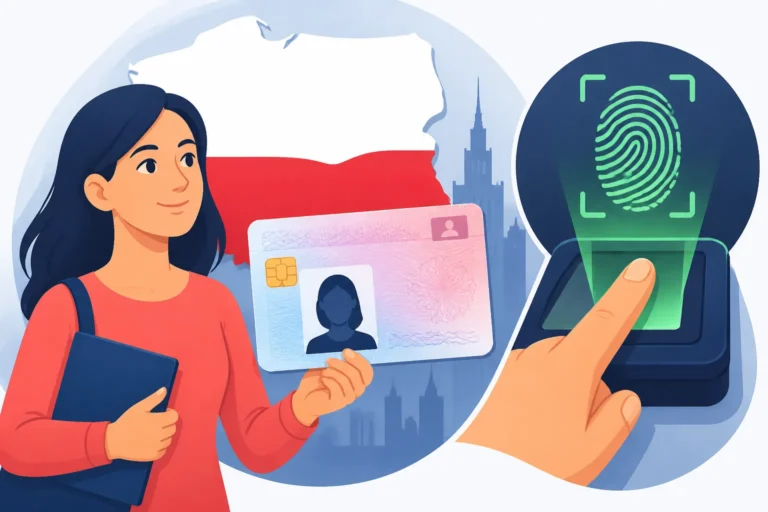
If all goes well, you’ll receive a decision letter (decyzja) approving your permit. Following this, you’ll be invited for biometric data collection (fingerprints and photo) to issue your Karta Pobytu. This is the moment when you finally hold proof of your legal residence in Poland as a business owner. Congratulations, you've climbed that mountain!
Living and Thriving as a Business Owner in Poland
Getting your residence permit is a huge milestone, but it's just the beginning. To truly thrive as an expat business owner in Poland, you need to understand your ongoing obligations and how to navigate daily life.
Meeting Ongoing Obligations and Renewing Your Permit
Your temporary residence permit isn't forever. It typically lasts for a maximum of three years, and you'll need to apply for its renewal well before it expires. The renewal process is similar to the initial application but will focus even more heavily on the actual performance of your business during your permit's validity. You'll need to demonstrate:
- Continued Viability: Has your business been profitable? Have you maintained or increased your economic contribution?
- Income Stability: Have you consistently met the income requirement to support yourself and your family?
- Compliance: Have you paid your taxes and ZUS contributions regularly and on time?
- Original Purpose: Are you still actively conducting the business activity you initially applied for?
It's a good practice to keep meticulous records of all your business activities, financial transactions, tax payments, and employee details from day one. This makes the renewal process much smoother. For an insight into the general renewal process, consider reading How to Renew Your Polish Residence Card.
The Polish government wants to see that you're a serious, long-term contributor, not just someone passing through. So, consistent growth, compliance, and commitment are key to successful renewals.
Healthcare and Other Essentials for Expat Entrepreneurs
As a business owner, ensuring you have proper healthcare coverage is paramount. If you run a Sole Proprietorship (JDG) or a Sp. z o.o. where you are an employee, you typically contribute to ZUS (Social Security Office), which includes public health insurance through the NFZ (Narodowy Fundusz Zdrowia). This provides access to the public healthcare system. Understanding ZUS Health Contributions (Składka Zdrowotna) in Poland is crucial.
However, many expats also opt for private health insurance or subscription plans (like those offered by Medicover or LUX MED) to avoid long waiting times for specialists and access English-speaking doctors. As mentioned, Cigna Global is one option for international health insurance that can give you peace of mind. Choosing between public and private healthcare is a significant decision.
Beyond healthcare, you'll need to consider other aspects of daily life:
- Moving Logistics: If you're relocating your entire life, companies like Sirelo can help coordinate international moves, taking some of the stress out of the logistical challenges of bringing your belongings to Poland.
- Banking: Having a local Polish bank account is essential for your business and personal finances.
- Language: While many business contexts in Poland are English-friendly, learning some Polish will significantly improve your daily life and business interactions.
- Networking: Connect with other expat entrepreneurs and local business communities. Organizations like the American Chamber of Commerce in Poland or local business groups can provide valuable support and contacts.
Embracing the Polish Business Environment
Poland offers a dynamic and growing market, particularly in sectors like IT, manufacturing, and services. The talent pool is strong, and the strategic location in Central Europe makes it attractive for businesses looking to expand. However, understanding the local business culture, legal framework, and consumer behavior is vital.
Be prepared for a bureaucracy that can, at times, feel slow and require significant documentation. Building relationships and understanding nuances are often as important as having a solid business plan. The good news is that Poland is increasingly welcoming to foreign investors and entrepreneurs, recognizing the value they bring. Your journey as a business owner in Poland is a blend of entrepreneurial drive and navigating a new administrative and cultural landscape. With thorough preparation and a resilient spirit, you can make it a rewarding experience.
Disclaimer
The information provided in this guide is for general informational purposes only and does not constitute legal, financial, or immigration advice. While we strive to keep the information up-to-date and correct, laws and regulations in Poland are subject to change. It is essential to consult with qualified legal and immigration professionals or directly with the relevant Polish authorities (e.g., Urząd Wojewódzki) for advice tailored to your specific situation before making any decisions related to residence permits or business activities.