How Do I Get an International School Place for My Child in Krakow?
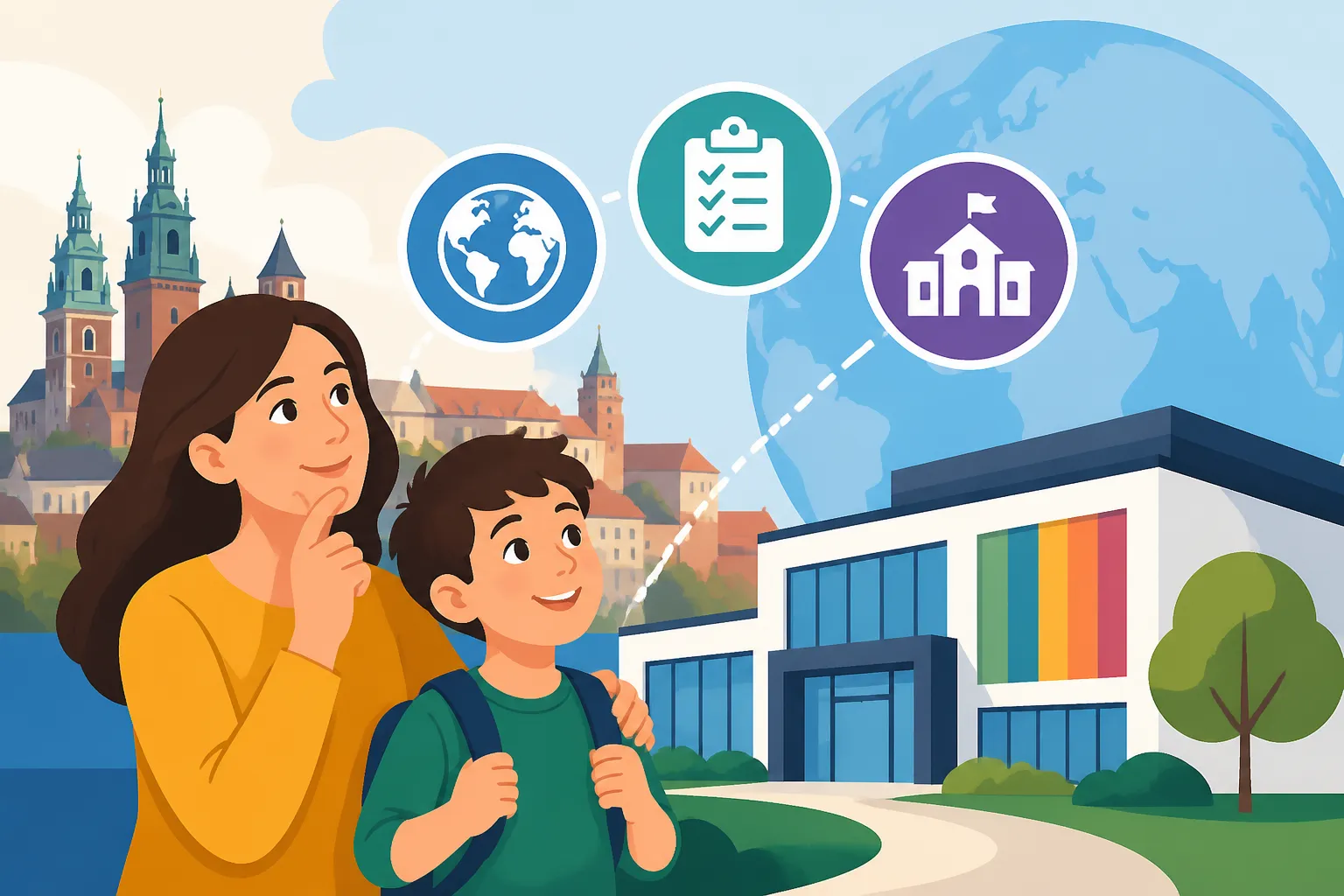
Navigating the educational system in a new country can feel like trying to solve a Rubik's Cube blindfolded, and finding the perfect international school for your child in Krakow is no exception. It’s a challenge many expat families face, juggling curricula, costs, and cultural transitions. This guide will walk you through the labyrinthine process, from understanding Krakow's diverse international school landscape to mastering the application process and managing the transition for your little ones.
Understanding Krakow's International School Landscape
Moving your family to a new country like Poland often comes with a huge question mark hanging over your head: "What about the kids' schooling?" For many expat parents, the familiarity and continuity offered by an international school are a lifesaeline, providing an educational environment that aligns with what they know or what their child needs for future transitions. Krakow, being a vibrant expat hub, thankfully offers a few excellent options, each with its own flavour and philosophy.
A Diverse Range of Curricula and Philosophies
When you start looking into international schools in Krakow, you'll quickly realise that "international" doesn't mean "one-size-fits-all." These schools often cater to different educational philosophies and curricula, designed to support students from various national backgrounds and prepare them for universities worldwide. You'll typically find options offering the International Baccalaureate (IB) Programme, a globally recognized framework known for fostering critical thinking and a holistic approach to learning. This is particularly appealing for families who anticipate further international moves, as the IB curriculum maintains consistency across different countries.
Then there are schools following national curricula, adapted for an international audience. For example, some might offer a British curriculum, culminating in IGCSEs and A-Levels, which are highly regarded for entry into UK universities and beyond. Others might lean towards an American curriculum, often with Advanced Placement (AP) courses, preparing students for US universities. The choice really depends on your child's learning style, your family's future educational plans, and whether you prefer a broad, inquiry-based approach or a more structured, subject-specific pathway. Each of these systems has its merits, and understanding the nuances is key to making an informed decision for your child's academic future.
Key International Schools in Krakow
Let's talk specifics because generic advice won't get you far when you're staring down a list of school websites. Krakow is home to several reputable international schools, each with its own character and community.
One of the most established is the International School of Krakow (ISK), often considered a top choice. Located a bit outside the city center, it offers a comprehensive American-style curriculum culminating in the International Baccalaureate Diploma Programme (IBDP) for older students. ISK caters to students from early years right through to high school, and its campus often boasts excellent facilities. Many expat families gravitate towards ISK due to its accreditation and long-standing reputation, creating a diverse student body.
Another prominent institution is the British International School of Cracow (BISC). As its name suggests, BISC primarily follows the English National Curriculum, leading to IGCSEs and A-Levels. It’s located closer to the city center and provides a more traditional British educational experience. For families planning to return to the UK or aiming for British universities, BISC often feels like a natural fit.
Then there’s the Krakow International School (KIS), which also offers an IB Primary Years Programme (PYP) and Middle Years Programme (MYP), and is known for its strong community feel and inclusive environment. While perhaps smaller than some of the other giants, KIS provides a nurturing atmosphere, often appealing to families who prefer a more intimate school setting.
Each of these schools has distinct admission processes, fee structures, and campus environments, so visiting (virtually or in person) and speaking to current parents is invaluable. Don’t just look at the academics; consider the school culture, extracurricular offerings, and how well it might integrate your child into a new social environment.
The Waiting List Reality and Early Planning
Here's a dose of reality that often catches new expat families off guard: international schools in Krakow, especially the most popular ones, operate with waiting lists. This isn't unique to Poland, of course, but it's particularly pronounced in cities with growing expat populations. You might be picturing a relaxed application process, only to find that spots for certain year groups, particularly in the younger grades or during peak relocation seasons (like summer for a September start), are incredibly competitive.
This means "early planning" isn't just a suggestion; it's a critical imperative. If you know you're moving to Krakow, even before your relocation is fully confirmed, it's wise to start contacting schools and understanding their application timelines. Some families even apply a year in advance! Waiting until the last minute can lead to immense stress, potentially forcing you to choose a school that isn't your first preference or, in extreme cases, delaying your child's start in an international setting. Be prepared for the possibility that your child might not get into your top choice immediately, and have backup plans, whether that means exploring other international schools, Polish private schools, or even homeschooling options temporarily. The administrative burden of moving to a new country like Poland, with all its paperwork for residence permits and the like, can easily distract you, so make school applications a priority from the get-go.
The Application Process: Step-by-Step Navigation
Once you've wrapped your head around the different school types and acknowledged the competition, it's time to dive into the application itself. This is where the real work begins, and being organised and proactive will save you a lot of headaches.
Initial Research and Contact
Before you even think about filling out forms, you need to do your homework. Start by thoroughly exploring the websites of the international schools you're interested in. Look for their mission statements, curriculum details, extracurricular activities, faculty profiles, and, crucially, their admissions sections. Many schools offer virtual tours or have open days, which are fantastic opportunities to get a feel for the environment without being physically present in Krakow.
Once you have a shortlist, make direct contact. Send an email to the admissions office introducing yourself, your family, your child's current grade level, and your anticipated relocation date. Ask about their current availability for your child's age group and request information on their specific application process and timelines. Don't be shy about asking questions regarding language support, special educational needs provisions, or anything else important to your family. The admissions teams at these schools are used to dealing with international families and can often provide valuable insights. This initial outreach is not just about gathering information; it's about making a positive first impression and showing genuine interest.
Gathering Essential Documents
This stage is all about paperwork, and trust me, you'll accumulate a lot of it during your move to Poland! International schools require a comprehensive set of documents to assess your child's academic history and ensure they can meet their educational needs. Typically, you'll need:
- Academic Transcripts/School Reports: Usually the last two to three years of your child's reports, preferably translated into English if they're in another language.
- Birth Certificate: A copy of your child's birth certificate.
- Passport Copies: Copies of your child's passport and often both parents' passports.
- Visa/Residence Permits: If applicable, copies of your child's and your Polish visa or Temporary Residence Permit (Karta Pobytu) in Poland. This demonstrates your legal right to reside in Poland.
- Immunisation/Vaccination Records: Proof of your child's vaccinations. Poland has a national vaccination schedule, and schools will need to ensure your child meets basic health requirements.
- Student Photo: A recent passport-sized photo of your child.
- Application Forms: The school's specific application forms, which can be extensive and require details about your child's interests, previous schools, and any special needs.
- PESEL Number: While not always required for the initial application, having a How to Get Your PESEL Number and Why It Matters for Healthcare will certainly be needed for official registration once accepted.
Start compiling these documents early. Translations can take time and money, so factor that into your planning. It’s always better to have everything ready than to be scrambling at the last minute, delaying your application.
Assessments, Interviews, and the Language Factor
Once your initial application and documents are submitted, most international schools will move to the assessment phase. This usually involves some form of academic testing for the student, tailored to their age and grade level. These aren't designed to be trick questions, but rather to gauge your child's current academic standing, identify any learning gaps, and ensure they can thrive in the school's challenging environment. For younger children, it might be more play-based observation, while older students will likely face tests in English, Math, and sometimes other subjects.
A critical aspect for many international schools is English proficiency. Even if the school doesn't explicitly state it, a good grasp of English is generally expected, as it's the primary language of instruction. If your child is still developing their English, don't despair – some schools offer English as an Additional Language (EAL) support programmes. Be honest about your child's English level during the application process so the school can determine if they have the resources to support them. In some cases, a separate English proficiency test might be administered.
Interviews are also a common part of the process. Your child might have an informal chat with a teacher or head of department, and parents will almost certainly have an interview with a member of the admissions team or a school principal. This is your chance to ask any remaining questions, express your family's values, and demonstrate your commitment to the school community. It's also an opportunity for the school to ensure that there’s a good fit between your family’s expectations and what they can offer.
Costs, Logistics, and Making the Transition Smooth
Let's face it, international education is an investment. Understanding the financial commitment and managing the practicalities around it is just as important as the application itself.
Tuition Fees, Registration, and Additional Costs
This is often the part that gives parents sticker shock, but it’s crucial to have a clear picture from the outset. International school fees in Krakow are significant, comparable to those in many Western European cities. You're not just paying for education; you're paying for smaller class sizes, specialised teachers, excellent facilities, and often a wealth of extracurricular opportunities.
Typically, you'll encounter several types of fees:
- Application Fee: A non-refundable fee paid when you submit your application.
- Registration/Enrolment Fee: A one-time, non-refundable fee paid upon acceptance to secure your child's place. This can be substantial.
- Tuition Fees: The main bulk of the cost, usually payable annually, bi-annually, or quarterly. These vary considerably by school and year group, often increasing with age.
- Capital Levy/Development Fund: Some schools charge a one-time or annual fee to contribute to facility development and maintenance. This might be mandatory or a voluntary donation.
- Extra-curricular Activities: While some basic clubs might be included, specialised activities, trips, and sports teams often incur additional costs.
- School Uniforms: Mandatory for many schools.
- School Bus/Transport: If your child uses the school's transport service, this will be an extra charge.
- Lunch Program: Most schools offer a paid lunch program.
- EAL Support: If your child requires English as an Additional Language support, there might be supplementary fees.
It’s imperative to request a full breakdown of all fees from the admissions office for the specific year group your child will be entering. Budgeting for these costs is a huge part of your Cost of Living in Poland for Expats (2026). For a more general understanding of the financial landscape, you might want to look into Understanding International Schools and Their Costs in Poland as well.
Beyond the Classroom: Settling into Krakow Life
Finding the right school is just one piece of the puzzle; settling your family into life in Krakow is the bigger picture. When choosing a school, consider its location relative to where you plan to live. Do you want to be within walking distance, or are you comfortable with a bus route or a longer drive? Krakow's public transport system is generally efficient, but daily commutes can eat into family time. Many expat families choose to live in neighbourhoods that offer easy access to their chosen school, creating mini-expat communities around these areas.
Think about the wider logistics of your move. If you’re bringing a lot of household items, including furniture or sentimental pieces, coordinating your move with a reliable international moving service like Sirelo can really ease the burden. They specialise in helping expats manage the logistics of relocating, from packing to customs, ensuring your belongings arrive safely and on time, which can be a huge relief when you’re simultaneously trying to get your kids settled.
Beyond school and housing, explore local clubs, sports facilities, and community groups. Many international schools have active Parent-Teacher Associations (PTAs) or parent groups that can be fantastic resources for meeting other expat families and getting local advice. Integrating into these communities can provide a much-needed support network, both for you and for your child as they forge new friendships outside of school.
Bridging the Gap: Supporting Your Child's Transition
The transition to a new school in a new country can be tough on kids, no matter how resilient they are. As parents, your role in supporting them through this period is invaluable. Before the move, talk openly with your child about what to expect. Show them pictures of the school, look up Krakow on a map, and share exciting aspects of Polish culture. Managing expectations is key; acknowledge that there might be bumps in the road, but reassure them that you'll navigate them together.
Once they start school, encourage them to talk about their day – the good, the bad, and the confusing. Listen actively to their concerns, whether it's about making friends, understanding a new teacher, or navigating a different school routine. Arrange playdates with classmates, if possible, to help them build social connections outside of school hours. For younger children, a comfort item or a familiar routine can make a big difference.
Academically, be prepared for some adjustment, especially if they are transitioning between different curricula. They might excel in some areas and find others challenging initially. Maintain open communication with their teachers to monitor their progress and address any issues promptly. Remember, international schools are well-versed in helping students from diverse backgrounds adapt, so lean on their expertise and support systems. Their goal, like yours, is a happy and successful transition for your child.
Common Challenges and Expert Tips for Expats
Let's be real, no move to a new country is ever entirely smooth sailing, and securing an international school place in Krakow has its unique set of challenges. Being forewarned is being forearmed.
Navigating Communication Barriers with Schools
While international schools generally pride themselves on having English-speaking staff, and indeed, many will be international themselves, sometimes nuances can get lost in translation, especially with administrative staff or when dealing with Polish-specific requirements. You might find yourself grappling with specific terminology or processes that are unfamiliar. Don't hesitate to ask for clarification, even if you feel like you're asking "silly questions." It's far better to understand everything thoroughly than to make assumptions that could lead to problems later.
Many schools employ admissions officers specifically tasked with supporting international families, so leverage their knowledge. They can often guide you through the more complex aspects of Polish requirements that might indirectly affect your child’s schooling, such as needing certain documents legalised or translated by a sworn translator. If you're really struggling, sometimes bringing a Polish-speaking friend or colleague to a meeting can be incredibly helpful, not just for translation but for cultural interpretation. Remember, the goal is clear communication, so be persistent and patient.
Securing Your Spot: Strategies for Success
Getting into your top-choice international school in Krakow can be highly competitive, so having a robust strategy is crucial. Don't put all your eggs in one basket; apply to a few schools that meet your criteria. This increases your chances and gives you options. As mentioned earlier, timing is everything – applying early is perhaps the single most impactful thing you can do. Many schools offer rolling admissions but prioritise applications received well in advance of the academic year.
Ensure your application is meticulously prepared. Double-check all forms for accuracy and completeness, and submit all required documents in the correct format. A sloppy application can reflect poorly on your attention to detail. During interviews, both yours and your child's, be authentic and enthusiastic. Highlight your child's strengths, interests, and how they would contribute positively to the school community. If your child has a particular talent or passion, gently mention it. Schools look for well-rounded students who will enrich their diverse environment. And critically, follow up politely after submitting your application or after interviews to reiterate your interest. A short, professional email can keep your family at the forefront of their minds.
Practical Tips for a Smooth Move and Settling In
Beyond the school application, there are countless other things to sort out when moving to Poland. Having your mobile connectivity sorted from day one is a small but mighty detail that makes a world of difference. Trying to navigate a new city, manage school runs, and coordinate with movers without reliable internet access on your phone is a recipe for stress. Consider getting an eSIM from a provider like Airalo before you even land. It allows you to have mobile data as soon as you step off the plane, letting you use maps, translate, and communicate without hunting for a local SIM card immediately. This small step ensures you're connected and ready to tackle the larger tasks.
Remember to register your residence (zameldowanie) as soon as possible, as this is often required for various administrative processes, including eventual school registration. Explore the neighbourhoods around your chosen school options to get a feel for the local amenities, parks, and other family-friendly resources. Connect with other expat parents through online forums or social media groups in Krakow – they are a goldmine of practical advice, from where to find a good pediatrician to which grocery stores stock your favourite international foods. The expat community in Krakow is vibrant and supportive, and tapping into it will help both you and your children feel at home sooner.
Comparing International Schools in Krakow
To give you a clearer picture, here's a brief comparison of some of the key international schools in Krakow. Please note that tuition fees are approximate annual ranges for a primary school year and can change frequently, so always verify directly with the school.
| School Name | Curriculum | Age Range | Estimated Annual Tuition (Primary) | Location (General) | Key Features |
|---|---|---|---|---|---|
| International School of Krakow (ISK) | American, IB PYP, MYP, DP | 3-18 years | ~€12,000 – €18,000 | Near Wieliczka (south of city) | Long-established, large campus, diverse student body, strong sports |
| British International School of Cracow (BISC) | English National Curriculum, IGCSE, A-Levels | 3-18 years | ~€10,000 – €15,000 | Bronowice (west of city) | UK focus, strong academic reputation, often smaller class sizes |
| Krakow International School (KIS) | IB PYP, MYP, Polish Matura | 3-18 years | ~€8,000 – €12,000 | Podgórze (south-east of city) | Inclusive environment, Polish curriculum option, community feel |
Note: These figures are indicative and should be confirmed directly with the respective schools. Fees typically increase for secondary education.
Disclaimer
The information provided in this guide is for general informational purposes only and does not constitute professional advice. While we strive to ensure accuracy and timeliness, school policies, fees, and application processes can change frequently. We strongly recommend contacting the international schools directly for the most current and specific information relevant to your child's application. Always seek professional advice for legal, financial, or immigration matters when relocating to Poland.