Understanding International Schools and Their Costs in Poland
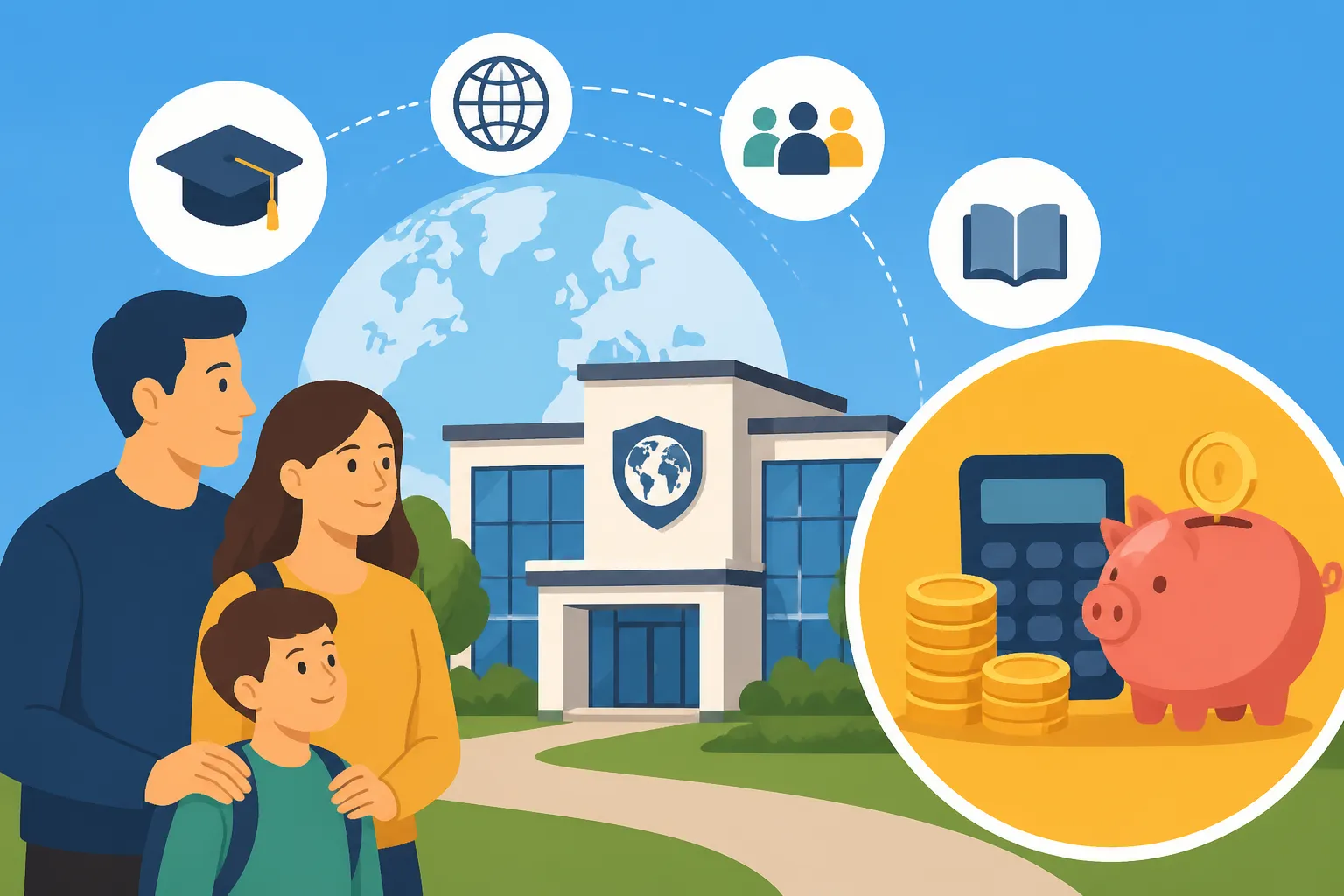
One of the biggest worries for any expat parent landing in Poland isn't just navigating the urząd or figuring out the public transport; it's finding the right educational path for their children. The thought of plunging your kids into a new school system, especially one where Polish isn't their first language, can be incredibly daunting. This guide is here to walk you through the world of international schools in Poland, helping you understand what they offer, what they cost, and whether they're the right fit for your family.
Why International Schools Become the Go-To for Expat Families
Let's be real, when you move to a new country like Poland, your kids are already dealing with a massive upheaval. New friends, new sights, new smells – and often, a completely new language. This is where international schools often step in as a beacon of familiarity and stability, providing an environment that caters specifically to children from diverse backgrounds.
Bridging the Language Barrier
The most obvious, and often most pressing, reason for choosing an international school is the language. While Polish schools are fantastic for integration and immersion, they operate primarily in Polish. For many expat children, especially those moving mid-school year or older students, the language barrier can be an insurmountable obstacle to academic success and social integration. International schools, on the other hand, typically conduct their lessons in English, German, French, or another widely spoken language, immediately easing that transition.
Imagine your child, already feeling a bit out of place, trying to grasp complex math or history concepts in a language they barely understand. It's a recipe for frustration and falling behind. International schools remove this stress, allowing them to focus on learning rather than constantly translating. They often have dedicated English as an Additional Language (EAL) support programs, or similar, that help non-native speakers catch up without feeling singled out. This ensures that while they are adapting to a new country, their academic progress isn't stalled, and they can continue to thrive.
Familiar Curricula and Global Recognition
Beyond language, the curriculum is a huge factor. Many expat families know they might move again, perhaps back home or to another country entirely. The last thing you want is for your child to finish a school year in Poland only to find their qualifications aren't recognized elsewhere, or they've missed key learning milestones. International schools address this by offering globally recognized curricula such as the International Baccalaureate (IB), British Curriculum (IGCSE, A-Levels), or American Diploma programs.
This continuity is invaluable. If your child has been studying the British Curriculum in Dubai, they can pick up right where they left off in a British International School in Warsaw. This smooth transition makes university applications far simpler down the line, as these diplomas are understood and respected by institutions worldwide. Plus, if your child plans to attend university in their home country, having a curriculum that aligns with those standards can give them a significant advantage. This also means that teachers are often internationally experienced, bringing a diverse pedagogical approach and understanding of global educational standards that can be truly beneficial.
Fostering a Diverse Expat Community
Moving to a new country can be isolating, not just for adults, but for kids too. International schools naturally become hubs for expat families, creating a ready-made community. Your children will be surrounded by peers who are also navigating life in Poland as foreigners, sharing similar experiences, challenges, and cultural backgrounds. This can be incredibly comforting and helps build strong friendships based on mutual understanding.
Parents often find this community just as valuable. School events, parent-teacher associations, and even just waiting at the school gates become opportunities to connect with other expat parents. These connections can be a lifeline, providing a network for sharing advice, support, and even social outings. It’s not just about academics; it's about helping your entire family feel settled and supported in their new Polish home. While you're buzzing around checking out schools and sorting out all the logistics, staying connected with a reliable mobile data plan is key. I remember relying heavily on my phone for maps, translation apps, and constant communication. Services like Airalo, offering eSIMs, can be a real lifesaver, ensuring you're always online without the hassle of local SIM cards right away.
Navigating the Different Types of International Schools in Poland
Poland boasts a good selection of international schools, especially in larger cities like Warsaw, Krakow, and Gdansk. However, they're not all the same. Each school often aligns with a specific national educational system or an international framework, and understanding these differences is crucial for choosing the right fit for your child.
The International Baccalaureate (IB) System
The International Baccalaureate (IB) program is widely regarded for its rigorous, inquiry-based approach to learning. It's less about rote memorization and more about critical thinking, problem-solving, and developing a global perspective. The IB offers four distinct programs:
- Primary Years Programme (PYP): For students aged 3-12, focusing on holistic child development and inquiry-based learning.
- Middle Years Programme (MYP): For students aged 11-16, providing a framework for academic challenge and life skills.
- Diploma Programme (DP): For students aged 16-19, a challenging pre-university course leading to highly valued qualifications.
- Career-related Programme (CP): For students aged 16-19, combining academic study with career-related learning.
Many international schools in Poland, such as the International School of Warsaw or the American School of Warsaw, offer the IB Diploma Programme, which is highly respected by universities worldwide. The curriculum encourages students to think independently and to take responsibility for their own learning, preparing them not just for university, but for global citizenship. However, the IB's comprehensive nature means it can be demanding, requiring a good level of self-discipline and academic aptitude. It's often favored by families who value a broad education and may move frequently between countries, as its global standard offers excellent continuity.
British and American Curricula
For families from the UK or US, or those who prefer a more traditional curriculum, many international schools offer British or American educational programs.
- British Curriculum: Schools following the British system, like the British International School of Warsaw or the Cracow International School, typically offer the English National Curriculum, leading to IGCSEs (International General Certificate of Secondary Education) at age 16 and A-Levels (Advanced Levels) at age 18. This system is well-structured, with clear benchmarks and subject-specific depth. IGCSEs are globally recognized and often seen as a strong foundation for further academic study, while A-Levels provide specialized knowledge for university applications, particularly in the UK and Commonwealth countries. These schools often have a familiar structure, including school houses, uniforms, and a strong emphasis on pastoral care, which can make the transition easier for British expat children.
- American Curriculum: Schools offering an American curriculum, such as the American School of Warsaw, typically follow a K-12 (Kindergarten to 12th grade) system, culminating in a US high school diploma. These schools often emphasize a broader range of subjects and extracurricular activities, with a strong focus on college preparatory courses. Advanced Placement (AP) courses are frequently offered, allowing students to earn college credit while still in high school. The American system often has a more flexible approach, encouraging student choice and fostering a diverse skill set, appealing to families seeking a holistic educational experience with an eye towards US universities.
The choice between these curricula often comes down to your child's previous schooling, your long-term plans, and the university systems you are targeting. It's worth diving deep into each school's specific offerings, as even within a curriculum type, there can be variations.
Other National Systems and Hybrid Approaches
While British, American, and IB schools are the most common, you'll also find schools catering to other nationalities, particularly in larger cities. For example, there are French schools (like the Lycée Français de Varsovie), German schools, and even Japanese schools. These institutions often follow their respective national curricula, taught in the native language, making them ideal for families who plan to return to their home country or want their children to maintain strong ties to their national education system and culture.
Some schools might also offer a hybrid approach, perhaps combining elements of one national curriculum with parts of the IB program, or offering both IGCSEs and the IB Diploma. This can provide a wider range of options and cater to very specific needs. For example, a school might offer the IB Primary Years Programme but then transition to the British Secondary Curriculum. Always check the school's specific accreditation and curriculum details. Understanding these distinctions is key to ensuring academic continuity and aligning with your family's future educational goals.
The Nitty-Gritty: Costs of International Education in Poland
Now, for the part that makes many expat parents wince: the cost. International schools in Poland are, without a doubt, a significant financial investment. They offer high-quality education, smaller class sizes, excellent facilities, and often a broader range of extracurricular activities, but this comes at a price. Don't go into this expecting public school fees; we're talking about figures that can rival private university tuition in some countries.
Tuition Fees: The Big Number
Tuition fees are the primary expense, and they vary considerably depending on the school's reputation, location (Warsaw schools generally being the priciest), the age of the child, and the curriculum offered. Generally, the younger the child, the lower the tuition, with fees progressively increasing as they move into middle and high school. You can typically expect annual tuition fees to range anywhere from 30,000 PLN to 80,000 PLN (approximately 7,000 EUR to 18,500 EUR), and sometimes even higher for the most elite institutions in Warsaw.
For instance, a prestigious international school in Warsaw might charge around 45,000 PLN annually for a primary student, jumping to 75,000 PLN or more for a high school student enrolled in the IB Diploma Programme. In Krakow or Gdansk, you might find slightly lower rates, but still substantial. These figures often don't include a whole host of other compulsory and optional fees, so it’s crucial to get a comprehensive breakdown directly from each school. Don't be shy about asking for an all-inclusive cost estimate!
Beyond Tuition: Registration, Application, and Other Fees
Oh, if only it were just tuition! International schools love their fees, and they come in many forms. It’s a bit like peeling an onion, with layers of costs you need to be aware of.
- Application Fee: This is a non-refundable fee paid simply to submit your child's application. It can range from 500 PLN to 1,500 PLN (approx. 115 EUR to 350 EUR). Think of it as the price of admission to even be considered.
- Registration Fee/Enrollment Fee: Once your child is accepted, you'll usually pay a one-time, non-refundable registration or enrollment fee to secure their place. This is often a heftier sum, sometimes as much as 5,000 PLN to 15,000 PLN (approx. 1,150 EUR to 3,500 EUR). It's important to clarify if this is a one-time fee per child or an annual re-enrollment fee.
- Capital Levy/Development Fee: Some schools charge an annual or one-time capital levy or development fee, which goes towards maintaining and improving school facilities. This can be anywhere from 2,000 PLN to 10,000 PLN (approx. 460 EUR to 2,300 EUR). This is a common charge to help fund the impressive facilities these schools often boast.
- Curriculum/Exam Fees: If your child is undertaking specific programs like the IB Diploma or IGCSEs/A-Levels, there will be additional fees for external examinations, textbooks, and sometimes even specific course materials. These can add several thousand PLN per year.
- Uniforms: Most international schools require uniforms, which you'll need to purchase, often from a specific supplier, adding another few hundred to a couple of thousand PLN depending on how many items you need and how quickly your children grow!
- Technology Fees: With increasing reliance on digital learning, some schools have separate technology fees to cover devices, software licenses, or IT support.
- Lunch and Transport: School lunches and transport services (school buses) are almost always optional extras, but they can significantly add to the monthly bill. Transport can cost anywhere from 500 PLN to 1,500 PLN per month (approx. 115 EUR to 350 EUR) depending on the distance, and school lunches often run a few hundred PLN monthly.
- Extracurricular Activities: While some basic clubs might be included, specialized activities like private music lessons, sports academies, or international school trips will incur additional costs.
Here's a simplified table to give you a clearer picture of potential annual costs beyond basic tuition:
| Fee Type | Typical Range (PLN) | Typical Range (EUR – approx.) | Frequency | Notes |
|---|---|---|---|---|
| Application Fee | 500 – 1,500 | 115 – 350 | One-time | Non-refundable, for application submission. |
| Registration/Enrollment Fee | 5,000 – 15,000 | 1,150 – 3,500 | One-time | Non-refundable, to secure a place. Some schools have annual re-enrollment fees. |
| Capital Levy/Development Fee | 2,000 – 10,000 | 460 – 2,300 | Annual | Towards school facilities and infrastructure. |
| Exam/Curriculum Fees | 1,000 – 5,000 | 230 – 1,150 | Annual | For IB/IGCSE/A-Level exams, specific program materials. |
| Uniforms (initial set) | 500 – 2,000 | 115 – 460 | One-time | Initial purchase, then replacement as needed. |
| School Bus (monthly) | 500 – 1,500 | 115 – 350 | Monthly | Optional, depending on route and distance. |
| School Lunch (monthly) | 200 – 500 | 45 – 115 | Monthly | Optional. |
| EAL/Learning Support | 3,000 – 10,000+ | 700 – 2,300+ | Annual | If required for additional language or learning needs. |
When you start adding these up, the total cost of educating a child at an international school in Poland can easily reach 60,000 PLN to 100,000 PLN (approx. 14,000 EUR to 23,000 EUR) or more per year. For families with multiple children, this quickly becomes a very substantial budget item. It's absolutely crucial to factor these costs into your overall The Complete Guide to Cost of Living in Poland for Expats (2026) planning.
The Application Process and Admission Requirements
So, you've crunched the numbers, decided on a curriculum, and picked a few potential schools. Great! Now comes the slightly less fun part: the application. While it's not as bureaucratic as some Polish urząd processes (thank goodness!), it still requires careful attention to detail and, importantly, timing.
Essential Documents for Admission
Each international school will have its own specific list of required documents, but there are common themes you can prepare for. Gathering these early can save you a lot of last-minute stress.
- Application Form: Usually completed online via the school’s website.
- Copies of Passports/ID Cards: For both the student and parents/legal guardians.
- Birth Certificate: A copy of the child's official birth certificate.
- Previous School Reports/Transcripts: This is critical. Schools will want to see your child's academic history, including grades, attendance records, and any behavioral notes, usually for the past two to three academic years. If these are not in English or Polish, you may need certified translations.
- Teacher Recommendations: Many schools require confidential reports or recommendation letters from current teachers, particularly for older students. The school will often provide a specific form for this.
- Vaccination Records: Proof of up-to-date vaccinations is typically required.
- Medical Records/Health Information: Any relevant medical history, allergies, or special health needs.
- Photos: Passport-style photographs of the student.
- Proof of Residence/Visa Status: Depending on your nationality and visa status, you might need to show The Complete Guide to Polish Residence Permits for Expats (2027) or How to Get Your PESEL Number and Why It Matters for Healthcare as part of your overall application package, or once accepted.
It's a good idea to create a checklist for each school and start collecting these documents well in advance. Remember that some official documents, like birth certificates or academic transcripts from certain countries, might require apostille stamps or legalization, which can take time.
Entrance Exams, Interviews, and Language Assessments
Unlike public schools, international schools often have selective admissions processes. It's not just about submitting documents; your child will likely need to demonstrate their academic capabilities and sometimes their language proficiency.
- Entrance Exams: For students entering primary grades onwards, most international schools administer their own entrance exams. These typically cover English (reading, writing, comprehension), mathematics, and sometimes non-verbal reasoning. The tests are designed to assess if your child can cope with the academic demands of the school and curriculum. Don't stress too much, but encourage your child to be well-rested and prepared.
- Interviews: Students, particularly those applying for middle or high school, may have an interview with a teacher or admissions officer. This is an opportunity for the school to gauge the student's personality, interests, and motivation, and for the student to ask questions. Parents might also have an interview, where they can discuss their expectations, their child's needs, and their family's commitment to the school's ethos.
- Language Assessments: If English is not your child's first language (and the primary language of instruction is English), they will undergo an English proficiency test. This helps the school determine if they need additional English as an Additional Language (EAL) support. Some schools may also require a language assessment for Polish, especially if they offer Polish as a subject.
The specific admission criteria and the weight given to each component will vary, so always check with the individual school. Don't be afraid to ask for sample questions or details about the assessment process.
Deadlines and Waiting Lists
This is where planning truly becomes paramount. International schools often have application deadlines, particularly for the most popular intakes (e.g., Kindergarten, Grade 1, or the start of a new curriculum phase). Many schools start accepting applications a year or more in advance, and places can fill up quickly.
- Early Application is Key: If you know you're moving to Poland and have a specific school in mind, apply as early as possible. This gives you the best chance of securing a spot.
- Rolling Admissions: Some schools operate on a rolling admissions basis, meaning they accept applications throughout the year as long as places are available. However, even with rolling admissions, popular grades can have waiting lists.
- Waiting Lists: It's common for popular international schools, especially in Warsaw, to have waiting lists. If your child is placed on one, ask about the typical waiting time and what your chances are. It's always a good idea to apply to a couple of alternative schools as a backup plan.
Missing a deadline can mean your child misses out on a place for the desired academic year. This is particularly stressful if your relocation is tied to a new job, where knowing your child's schooling is sorted is a huge relief. Beyond school choices, the sheer act of moving everything to a new country can be overwhelming. From packing up your entire life to shipping it across borders, a reliable moving service is non-negotiable. Platforms like Sirelo can help you compare quotes from international moving companies, making that part of the process a little less daunting, so you can focus more on getting your kids settled.
Beyond Academics: Extracurriculars and Community Life
International schools are about more than just textbooks and exams. They actively promote holistic development, offering a rich tapestry of extracurricular activities and fostering a vibrant community life that can be incredibly beneficial for expat children adjusting to their new surroundings.
A World of Extracurricular Opportunities
One of the significant advantages of international schools is the sheer breadth of their extracurricular programs. While How to Enrol Your Child in a Polish Public School might offer some after-school activities, international schools usually go above and beyond, providing opportunities that cater to a wide range of interests and talents.
- Sports: From football and basketball to swimming, tennis, and athletics, most international schools have robust sports programs, often with excellent facilities like large sports halls, swimming pools, and outdoor pitches. They frequently compete against other international schools in Poland and across Europe, giving students a chance to travel and represent their school.
- Arts and Music: Whether your child is a budding musician, artist, or actor, international schools offer a plethora of options. Drama clubs, school plays, choirs, orchestras, art clubs, and even photography or film clubs are common. Many provide individual music lessons for various instruments.
- Academic Clubs: Beyond the classroom, students can delve deeper into subjects with clubs like debating societies, Model United Nations (MUN), science clubs, robotics, coding, and chess. These foster critical thinking, teamwork, and intellectual curiosity.
- Community Service and Leadership: International schools often emphasize global citizenship and social responsibility. Students are encouraged to participate in community service projects, often supporting local Polish charities or international initiatives. Leadership opportunities, such as student council, prefect roles, and peer mentoring, are also prevalent, helping students develop essential life skills.
These activities are vital for personal growth, allowing children to discover new passions, develop leadership skills, and build confidence outside of academic pressure. They also provide another avenue for social integration, helping children forge friendships with shared interests.
Building a Support Network for Families
The community aspect of international schools extends far beyond the students. For expat parents, the school often becomes a central hub for their social life and support network.
- Parent-Teacher Associations (PTAs) and Parent Groups: Most international schools have active PTAs or similar parent organizations. These groups play a crucial role in fundraising, organizing school events, and providing a platform for parents to connect with each other and with the school administration. They can be an invaluable resource for new expat families, offering advice on everything from finding a good doctor to local Polish customs.
- School Events and Celebrations: Throughout the academic year, international schools host numerous events that celebrate their diverse community. These can include international food festivals, cultural evenings, Christmas bazaars, sports days, and parent workshops. These events are fantastic opportunities for families to socialize, experience different cultures, and feel a sense of belonging.
- Informal Networking: Just waiting at the school gates for pickup or dropping off your kids can lead to impromptu conversations and new friendships. Many expat parents find their closest friends in Poland through their children's school, creating a tight-knit community where support and shared experiences are common. From coordinating playdates to sharing tips on How to Find and Rent Long-Term Accommodation in Poland in specific neighborhoods, this informal network is a lifeline.
This strong sense of community can significantly ease the expat journey for the whole family, providing emotional support, practical advice, and a feeling of connection in a new country. It helps ensure that while your children are getting a world-class education, your family is also building a rich and fulfilling life in Poland.
Making the Decision: Pros and Cons for Expat Families
Choosing an international school is a big decision with significant implications for your child's education, your family's finances, and your overall expat experience in Poland. Let's weigh the advantages and disadvantages to help you make an informed choice.
The Clear Advantages
There are compelling reasons why many expat families opt for international schools, even with the hefty price tag.
- Academic Continuity and Global Portability: This is paramount for mobile expat families. As discussed, international curricula like IB, British, or American are recognized worldwide, making transitions between countries seamless and university applications straightforward, regardless of where your child eventually applies. This takes a huge weight off parents' minds when planning for future moves or higher education.
- Mother-Tongue Instruction and Multilingual Environment: For non-Polish speaking children, being taught in their native language (or English as a common international language) is a game-changer. It allows them to excel academically without the added burden of a language barrier. Furthermore, these schools often offer excellent language programs, including Polish as a foreign language, and expose children to a truly multilingual environment, celebrating different linguistic backgrounds.
- Culturally Diverse and Inclusive Environment: International schools are melting pots of cultures. Your child will interact with peers and teachers from dozens of different nationalities, fostering global awareness, empathy, and an understanding of diverse perspectives. This experience is invaluable for raising globally-minded individuals.
- Smaller Class Sizes and Individualized Attention: Generally, international schools boast smaller class sizes compared to public schools, allowing teachers to provide more individualized attention and cater to different learning styles. This can be particularly beneficial for children who might need extra support or those who thrive with more personalized guidance.
- Excellent Facilities and Resources: From state-of-the-art science labs and well-stocked libraries to impressive sports complexes and dedicated arts studios, international schools typically offer superior facilities and resources that enhance the learning experience and support a wide range of extracurricular activities.
- Strong Expat Community and Support Network: For both children and parents, the international school often becomes the heart of their social life in Poland. It provides a ready-made community of like-minded expat families, offering mutual support, friendship, and a sense of belonging during what can be a challenging transition.
The Considerations and Potential Downsides
It's not all sunshine and rainbows. There are legitimate concerns that expat families need to consider before committing to an international school.
- The Exorbitant Cost: Let's face it, the primary drawback is the cost. International school fees are a major financial commitment, potentially impacting your family's budget for housing, travel, and other lifestyle choices. For many, it's simply unaffordable without corporate sponsorship. You really need to consider if How Much Does Private Health Insurance Cost in Poland in 2026? and other major expenses can fit alongside school fees.
- Potential for a "Bubble" Effect: While the expat community is a huge positive, there's a risk of children (and families) existing within an "expat bubble," with limited interaction with local Polish culture and language. While schools often offer Polish language classes and cultural events, direct integration into local life might be less pronounced than if attending a public Polish school. This can sometimes hinder deeper cultural immersion.
- Intense Academic Pressure (for some curricula): While beneficial, highly academic programs like the IB Diploma can be incredibly demanding and stressful for some students. The workload, expectations, and high-stakes exams might not suit every child's learning style or personality, potentially leading to burnout or anxiety.
- Limited Availability Outside Major Cities: While Warsaw and Krakow have numerous international schools, options become very limited or non-existent in smaller cities and towns. If your job takes you to a less populated area of Poland, an international school might not be a viable option, forcing you to consider alternatives.
- Transition Challenges (still present): Even in an international school, moving to a new country is a big deal. Children still face the challenges of making new friends, adapting to new teaching styles, and navigating a new city. While the school environment aims to cushion this, it doesn't eliminate all transition hurdles.
Ultimately, the decision rests on your family's specific needs, your financial situation, your long-term plans, and your child's personality and academic profile. Carefully weighing these pros and cons, visiting schools, and speaking to other expat parents can help you make the best choice for your family's educational journey in Poland. If your company is sponsoring your relocation or a portion of your educational costs, then the decision becomes significantly easier, aligning well with securing a The Complete Guide to Working in Poland as a Foreigner (2027).
Disclaimer
The information provided in this guide is for general informational purposes only and does not constitute professional advice. While we strive to keep the information up-to-date and accurate, costs, regulations, and school policies in Poland can change frequently. Always verify specific details, including tuition fees, admission requirements, and curricula, directly with the international schools and relevant authorities. We recommend consulting with educational consultants or legal professionals for personalized advice.