How Do I Set Up Internet and Mobile Service in Poland?
Ah, the sweet relief of finally getting connected when you first land in a new country! I remember arriving in Poland, luggage in one hand, phone in the other, desperately trying to figure out how to call a taxi or just let my family know I’d landed. The struggle is real, my friends, and it’s a universal expat experience. This guide is here to walk you through the often-confusing maze of setting up your internet and mobile service in Poland, from getting that first SIM card to having blazing-fast fiber internet in your new home.
Getting Connected: Your Mobile Phone in Poland
Your mobile phone is your lifeline. It's not just for calls; it's for navigation, translation, banking, and pretty much everything else. Getting it sorted should be high on your priority list when you arrive in Poland.
Prepaid vs. Postpaid: Understanding the Polish Landscape
When it comes to mobile service in Poland, you essentially have two main options: prepaid (called na kartę) or postpaid (an abonament or contract). Each has its own set of advantages and hurdles, especially for newcomers.
-
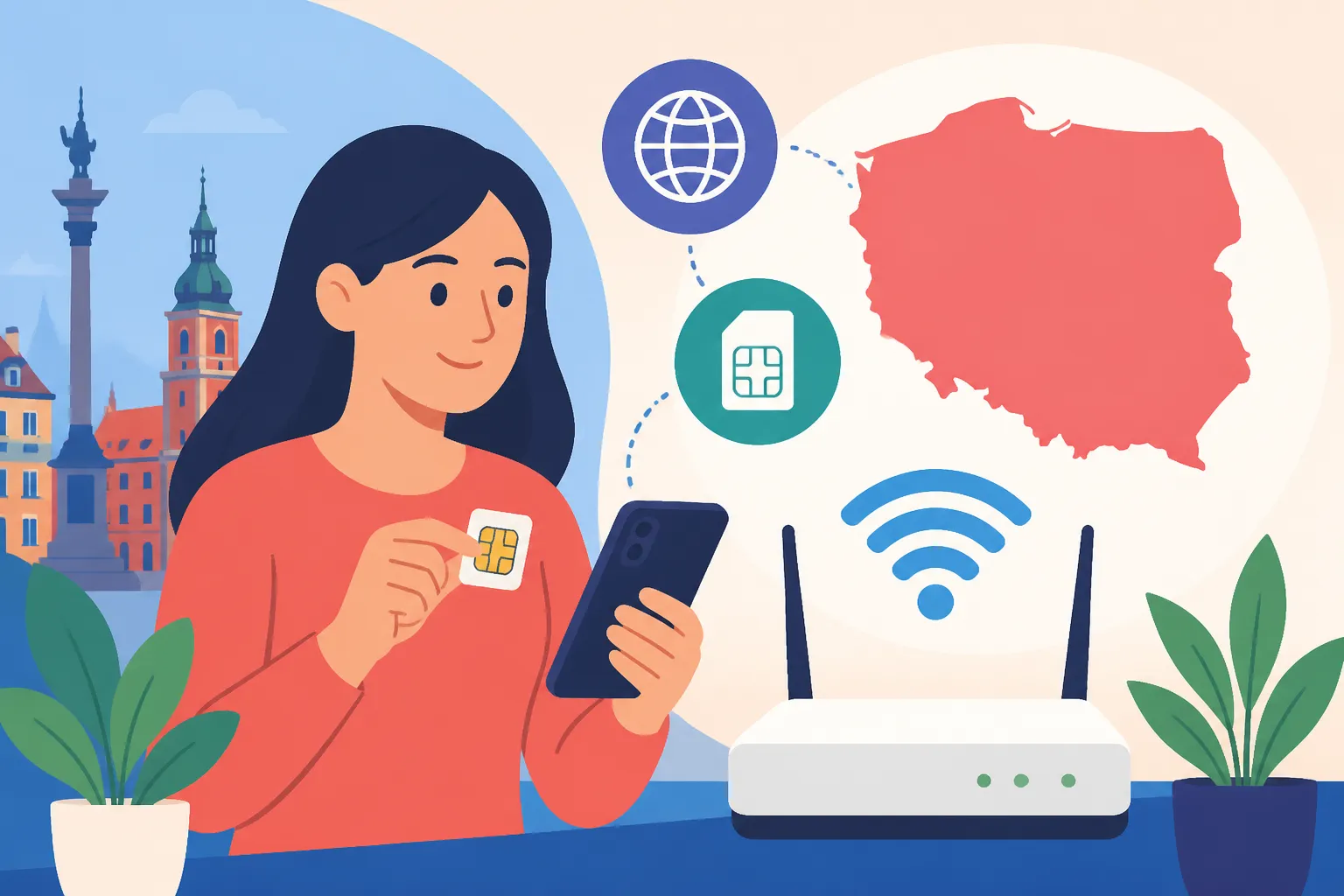
Prepaid (na kartę): This is often the easiest and quickest way to get connected when you first arrive. You buy a SIM card, top it up with credit (either for calls/SMS or data packages), and you’re good to go. The beauty of prepaid is its flexibility; no long-term commitments, no credit checks, and typically very easy to purchase. You can grab a SIM card at pretty much any kiosk (kioski), supermarket, electronics store, or even at the airport. Initially, you might just need your passport for identification, but remember, there's a legal requirement to register your prepaid SIM card with your personal details, including your PESEL number if you have one. For those first few days or weeks before you get your PESEL, a temporary SIM might be sufficient, but you won't be able to top it up or use it long-term without full registration. If you're looking for an immediate digital solution even before landing, an eSIM from providers like Airalo can be a lifesaver, providing instant data connectivity upon arrival, which is fantastic for those initial navigation and communication needs. It allows you to use your phone without immediately scrambling for a local physical SIM.
-
Postpaid (abonament): Once you're settled and have a PESEL number and ideally a Polish bank account, a postpaid plan becomes a much more attractive option. These plans usually offer better value for money, more generous data allowances, and often come with new phone deals. However, securing a postpaid contract requires more documentation. You'll typically need a valid ID (passport or residence card), your PESEL number, proof of address (like a rental agreement or a utility bill), and sometimes proof of income or a Polish bank account. Contracts are usually for 12 or 24 months, and early termination can incur hefty fees. If you're planning on staying in Poland for the long haul, this is usually the most cost-effective solution for your mobile needs, especially if you're looking for unlimited data or bundled services.
The Major Players: Who to Choose for Mobile Service
Poland has a competitive mobile market with several strong contenders, each offering a variety of plans and coverage. The main operators you'll encounter are:
- Orange: One of the largest and oldest telecommunications providers, Orange offers extensive coverage, good customer service (often with English-speaking support lines), and a range of prepaid and postpaid options, including bundles with home internet and TV. Their network is generally reliable, and they have numerous physical stores across the country.
- Play: Play has aggressively expanded its network and market share in recent years, becoming a very popular choice. They are known for competitive data plans and often target younger demographics. Play also offers converged services, having acquired UPC, meaning you can often get attractive mobile and home internet bundles.
- T-Mobile: Part of a global giant, T-Mobile Poland offers robust network coverage and a variety of plans, often with roaming benefits within the EU. They have a strong presence in cities and cater to both individual and business clients.
- Plus: Another long-standing player, Plus offers solid network performance, especially strong in some rural areas. They have a good reputation for customer service and offer various plans, including those with substantial data allowances and smart home integration.
Beyond these major four, you'll also find several Mobile Virtual Network Operators (MVNOs) like Virgin Mobile Polska (which often runs on Play's network), Heyah (T-Mobile's budget brand), and Nju Mobile (Orange's budget brand). These MVNOs often offer incredibly competitive prices, especially for data-heavy users, but might have slightly less comprehensive customer support or fewer physical locations.
The PESEL Requirement and Workarounds
Here's where it gets a bit tricky for new arrivals. Since 2017, all prepaid SIM cards in Poland must be registered to a specific individual. While you might initially purchase a SIM with just your passport, for full, long-term functionality and the ability to top it up reliably, you'll generally need a PESEL number.
A PESEL is your national identification number in Poland, and it's essential for pretty much all administrative tasks, including officially registering your SIM card. Without it, you might find your prepaid SIM becoming inactive after a certain period, or you won't be able to easily manage your account online or in person. Many expats experience frustration with this requirement when they first arrive.
If you don't have a PESEL yet, here are some common scenarios:
- Initial Purchase with Passport: Some kiosks or smaller shops might sell you a SIM and register it with just your passport for a short period. However, this is becoming less common and less reliable.
- Borrowing a PESEL (Not Recommended): Some desperate expats ask a Polish friend or employer to register a SIM card in their name using their PESEL. While this gets you connected, it ties your phone number to someone else's identity, which can cause issues down the line with ownership, data privacy, and legal accountability. I strongly advise against this.
- Temporary Connectivity with eSIMs: As mentioned earlier, options like Airalo provide data-only eSIMs that don't require local registration. This is a fantastic way to stay connected for your first few weeks while you're sorting out your PESEL and other paperwork.
- Expedited PESEL Application: The best long-term solution is to prioritize getting your PESEL number as soon as possible. It's linked to your residence registration (zameldowanie), so once you have a permanent address, you can typically apply for it. You can learn more about this process in our guide on How to Get Your PESEL Number and Why It Matters for Healthcare. Without it, even simple things like registering a bank account or signing many types of contracts can become a headache.
Bringing Your Home Online: Internet Options in Poland
Once your mobile is sorted, the next big step is getting reliable home internet. Whether you're working remotely, streaming movies, or just keeping in touch, a stable internet connection is non-negotiable for modern living.
Types of Home Internet: Fiber, Cable, DSL, and Mobile
Poland offers a good range of home internet technologies, and your choice will largely depend on your location and needs.
- Fiber Optic (Światłowód): If available at your address, fiber optic internet is almost always the best choice. It offers the fastest speeds (often symmetrical download and upload), incredible reliability, and low latency. Major cities like Warsaw, Krakow, and Wroclaw have extensive fiber networks, but availability can vary even within the same building. Providers like Orange and Play (via their UPC infrastructure) are leaders in fiber deployment. If you have the option, grab it.
- Cable Internet: Very common in apartment buildings, cable internet offers excellent speeds and reliability, usually a step down from fiber but still more than sufficient for most households. It's delivered via coaxial cables, often the same infrastructure used for cable TV. Play (UPC) and Vectra are significant players in the cable market.
- DSL (Digital Subscriber Line): This older technology uses traditional copper phone lines. While still available, it's generally slower and less reliable than fiber or cable. You might encounter DSL in older buildings or more rural areas where newer infrastructure hasn't reached yet. Orange is the primary provider of DSL services.
- Mobile Internet (Internet Domowy): For those in areas without fiber or cable, or for temporary living situations, mobile home internet can be a viable alternative. It uses the 4G or 5G mobile network, often with a dedicated router that receives a mobile signal. Speeds can vary greatly depending on network coverage and congestion in your area. All major mobile providers offer mobile home internet plans. It's flexible but can be prone to inconsistencies, especially during peak usage times.
Main Internet Service Providers: Which One to Pick?
The home internet market is also quite competitive, with several strong providers vying for your business.
- Play (formerly UPC): Following its acquisition of UPC, Play is a dominant force in home internet, particularly for cable and fiber. They offer very fast speeds, often with attractive bundles that include TV and mobile services. Their customer service has a growing number of English-speaking agents, which can be a huge relief.
- Orange: As Poland's largest telecom operator, Orange provides extensive fiber optic coverage in many urban areas, alongside DSL options. They have a reputation for stable service and offer comprehensive bundles.
- Vectra: Another major cable internet provider, Vectra is strong in many cities and offers competitive pricing, often bundling internet with cable TV.
- T-Mobile: While primarily a mobile provider, T-Mobile also offers home internet solutions, especially mobile home internet, and increasingly fiber in some areas, often leveraging existing infrastructure.
When choosing, always check what's available at your specific address. Websites of the major providers usually have a postcode checker, but sometimes a direct call or visit to a store will yield more accurate information about specific building connectivity. Our guide on How Do I Set Up Home Internet and TV in Poland? provides more in-depth details about these providers and their offerings.
Installation Hurdles and Contract Considerations
Setting up home internet in Poland, much like in many other countries, comes with its own set of administrative steps and potential waiting times.
- The Installation Process: Once you've chosen a provider and plan, a technician will need to visit your apartment to install the necessary equipment (router, optical network terminal for fiber, etc.). This usually requires you to be home. Scheduling can sometimes be tricky due to language barriers or limited time slots, and waiting times can range from a few days to a couple of weeks, especially in busy periods. Make sure you confirm the installation date and time clearly, and if possible, have a Polish-speaking friend help you with communication.
- Contract Lengths: Most home internet contracts are for 12 or 24 months. Be aware of the commitment period, as early termination usually involves penalties equal to the remaining monthly fees or a significant portion thereof. Before signing, ensure you understand the full terms, including any installation fees, equipment rental charges, and activation costs.
- Language Barrier: This is perhaps the biggest hurdle for many expats. While some providers offer English-speaking support lines, the sales representatives in physical stores or the installation technicians might not speak English fluently. Having a Polish-speaking friend or colleague with you during the sign-up process can save you a lot of headaches and prevent misunderstandings about your contract terms. Don't be afraid to ask for a copy of the contract in English, or at least a detailed summary if one is available. It's your right to fully understand what you're signing.
Bundling for Convenience and Savings
Many providers in Poland offer bundled services, combining mobile, home internet, and sometimes TV into one package. This can be a very attractive option for expats.
The Appeal of Package Deals (Internet, TV, Mobile)
Bundling your services can offer several significant advantages:
- Cost Savings: Often, you'll get a better overall price by purchasing multiple services from the same provider than by buying them separately. Providers want to keep you as a loyal customer, and bundles are a key way they do this. You might find promotions offering free months, discounted rates, or waived installation fees when you opt for a package deal.
- Simplified Billing: Instead of juggling multiple bills from different providers, you'll receive just one consolidated bill, making budgeting and payment much simpler. This is especially helpful when you're still getting used to Polish payment systems or setting up direct debits with your new Polish bank account. Speaking of which, our guide on The Expat Guide to Opening a Bank Account in Poland might be useful here!
- Convenience: Having all your services under one roof often means dealing with a single customer service point, which can streamline any inquiries or troubleshooting you might need. If you encounter an issue, you only have one company to call.
- Enhanced Features: Some bundles might include extra perks, like increased mobile data allowances when you're at home, cloud storage, or premium TV channels.
However, consider the trade-offs. While convenient, bundling can reduce your flexibility. If you're unhappy with one service, you might be locked into a contract for all of them. Always weigh the potential savings against the length of the commitment and your specific needs.
Navigating Customer Service in English
Let's be honest, dealing with customer service in a foreign language is never fun. In Poland, while English is increasingly common in major cities, it's not guaranteed, especially outside of specific expat-focused services.
- Dedicated English Lines: Some major providers, particularly Orange and Play (UPC), have dedicated English-speaking customer service lines or sections on their websites. These are invaluable resources, so always check their official sites or call their main numbers and ask for English assistance.
- In-Person Visits: When visiting a physical store, especially in larger cities, you have a better chance of finding a staff member who speaks English. If not, don't be shy about using a translation app on your phone, or better yet, bring a Polish-speaking friend along to help. Explaining complex technical issues or contract details through Google Translate can be an exercise in patience!
- Online Resources: Utilize online FAQs, chat services (if available in English), and expat forums. Often, other expats have faced similar issues and can offer advice or point you to helpful resources. Websites like Reddit's r/Poland often have active communities where people share their experiences.
Practical Tips and What to Expect
Moving to Poland involves a fair bit of administrative hoops. Getting connected is just one piece of the puzzle, but these practical tips can help smooth the process.
Essential Documents and Bureaucracy
Polish bureaucracy can be a labyrinth, but with the right documents and a dose of patience, you'll get there.
- Passport / Residence Card: Your primary identification document will be crucial for any contract signing or SIM card registration. If you have a Polish residence permit (Karta Pobytu), it's even better, as it shows your legal right to reside in Poland. Check out our The Complete Guide to Polish Residence Permits for Expats (2027) for details on that.
- PESEL Number: I cannot stress this enough – get your PESEL as soon as you can. It simplifies almost everything. For mobile contracts, home internet, banking, healthcare – it's your key. If you're just starting your journey to get one, our article on What Documents Do I Need to Get a PESEL in Poland? is a great place to begin.
- Proof of Address: For home internet, you'll usually need a rental agreement (umowa najmu) or property deed as proof of address. This helps providers confirm that you're an authorized resident at the installation location. If you're still searching for a place to live, our guide on How to Find and Rent Long-Term Accommodation in Poland offers some excellent advice.
Remember that administrative processes in Poland can take time. Don't expect instant gratification for everything. Plan ahead, gather your documents, and approach each interaction with a calm and persistent attitude.
Understanding Polish Contract Language and Fine Print
Polish legal and contractual language can be dense, even for natives. For non-Polish speakers, it's an entirely different beast.
- Get it Translated (or at least Summarized): If a provider cannot offer an English version of the contract, ask for a Polish-speaking friend to review the key terms and conditions with you. Pay particular attention to:
- Contract Duration: How long are you locked in?
- Monthly Fee: What's the exact amount, and are there any hidden fees or mandatory add-ons?
- Early Termination Fees: What are the penalties if you cancel before the contract ends?
- Included Services: What exactly is included (speed, data limits, international calls, TV channels)?
- Notice Period for Termination: How much notice do you need to give before ending the contract at its natural expiry?
- Mobywatel: While not directly related to contract language, the mObywatel app (Poland's e-government portal) can eventually become useful for managing some personal data or documents, so it's good to be aware of how Understanding mObywatel and e-Government Services in Poland works for future reference.
Never sign anything you don't fully understand. It's better to take a day or two to get clarity than to be stuck in a disadvantageous contract.
Initial Connectivity and Your First Days
When you first arrive, you might not have all the necessary documents to sign up for a long-term plan. This is where temporary solutions shine.
- Prepaid SIM for Starters: As mentioned, a basic prepaid SIM card from any of the major players (Orange, Play, T-Mobile, Plus) can get you online quickly. You can buy these at the airport, train stations, or kiosks. Remember to register it within a short timeframe. Our guide How Do I Get a Polish SIM Card as a New Arrival? provides more specific pointers for your immediate post-arrival needs.
- ESIMs: For many, an eSIM from a global provider like Airalo offers unparalleled convenience for initial data. You can buy and activate it digitally before you even land, ensuring you have internet access from the moment your plane touches down. This means you can use your maps, messaging apps, and translation tools without any local SIM card hassles.
- Public Wi-Fi: While not ideal for security or continuous use, public Wi-Fi is available in many cafes, shopping malls, and some public transport. It can be a good stop-gap for quick checks or emergencies.
When you're dealing with the initial chaos of moving, whether it's sorting out your new apartment or coordinating with removal services like those you might find through Sirelo, remember that securing your digital connection is just as crucial as unpacking your boxes. It’s the thread that keeps you connected to your old life and helps you integrate into your new one.
Here’s a quick overview of some popular mobile and internet providers to give you a clearer picture:
| Provider | Primary Services | Network Strengths | English Support Level | Key Considerations |
|---|---|---|---|---|
| Orange | Mobile, Fiber Internet, TV, DSL | Broadest mobile coverage, robust fiber | Good, dedicated lines | Established, reliable, good for bundles. |
| Play | Mobile, Cable/Fiber Internet, TV | Competitive data, growing fiber | Moderate to Good | Strong data offers, great for bundles after UPC acquisition. |
| T-Mobile | Mobile, Mobile Internet, Fiber Internet | Reliable network, good urban coverage | Moderate | Strong mobile, increasingly offering home internet. |
| Plus | Mobile, Mobile Internet, TV | Solid coverage, good bundles | Limited (mostly Polish) | Good for mobile internet solutions, strong in some regions. |
| Vectra | Cable Internet, TV, Mobile (MVNO) | Strong cable network in cities | Limited (mostly Polish) | Good speeds for cable, competitive TV bundles. |
Disclaimer
Please note that while I strive to provide accurate and up-to-date information, telecommunications services and regulations in Poland can change. The information provided here is for general guidance only and does not constitute professional advice. Always verify specific terms, conditions, and requirements directly with the service providers or relevant authorities. Prices and availability are subject to change.