How Do I Exchange My UK Driving Licence in Poland?
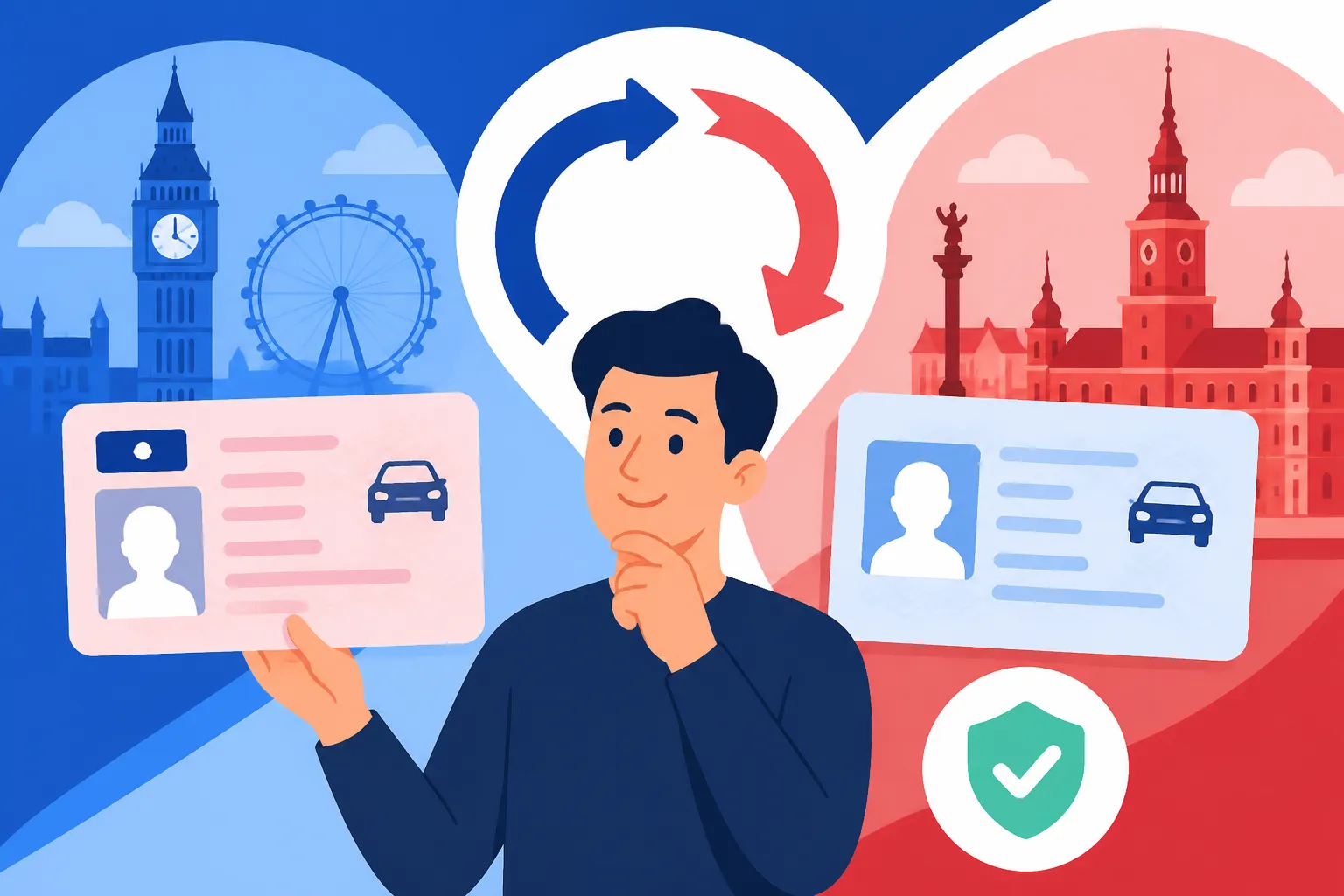
Moving to a new country like Poland comes with a dizzying array of administrative hurdles, and figuring out what to do with your UK driving licence after Brexit is often high on that list of anxieties. You're trying to settle in, find your way around, and suddenly you're faced with a bureaucratic maze just to legally drive. This guide is here to untangle that process, offering a realistic, step-by-step walkthrough for exchanging your UK driving licence for a Polish one.
The UK Driving Licence Post-Brexit in Poland: What Changed?
Ah, Brexit. For those of us who arrived in Poland before January 31, 2020, swapping an EU driving licence was often a straightforward, if still slightly bureaucratic, affair. You were an EU citizen, your licence was an EU licence, and there was a clear framework for mutual recognition. Those days, my friends, are a distant memory for our British counterparts. The UK is now considered a "third country" when it comes to driving licences, much like the USA, Canada, or Australia. This fundamental shift has introduced new rules and, inevitably, more paperwork.
Understanding the Shift from EU to Third-Country Status
Before Brexit, your UK licence was generally treated the same as a German or French one. You could use it indefinitely in Poland as long as it was valid. The agreement was simple: mutual recognition. However, with the UK's departure from the European Union, this arrangement ceased. The legal framework changed, and now, as a UK licence holder residing in Poland, you are subject to different regulations. It's a bit like trying to fit a square peg in a round hole when you're used to everything just slotting in.
The key thing to understand is the "185-day rule." Once you establish your normal residence in Poland, you have 185 days to exchange your UK driving licence for a Polish one. "Normal residence" isn't just about being physically present; it's where you genuinely live for at least 185 days in a calendar year due to personal and occupational ties, or just personal ties if you don't work. This is usually tied to getting your PESEL number, registering your address (zameldowanie), and generally becoming a proper resident. Ignoring this deadline can lead to complications, from fines to insurance woes, so it's best to get on top of it.
Why You Can't Just Keep Your UK Licence Forever
Many expats, understandably, try to postpone this particular piece of red tape. You might think, "Well, my UK licence is valid, and I've got my residence permit, what's the big deal?" The big deal is Polish law. After that 185-day mark of establishing residence, your UK licence is no longer legally recognized for driving in Poland. If you get pulled over by the police, you could face a fine for driving without a valid licence. It's not just a minor infraction; it can be treated quite seriously.
Beyond potential police encounters, there are significant insurance implications. Imagine being involved in an accident and your insurance provider discovering you were driving on an expired or non-compliant licence. They might refuse to cover damages, leaving you financially exposed to a huge degree. This is a risk no one wants to take, especially in a foreign country. So, while the process can seem daunting, the peace of mind and legal compliance that comes with a Polish licence are absolutely worth it. It’s an essential step in properly integrating your life here, just like registering your address or setting up your utilities.
The Step-by-Step Process for Exchanging Your UK Licence in Poland
Alright, let's get down to brass tacks. Exchanging your UK driving licence in Poland involves several distinct steps, each with its own set of requirements and potential headaches. It's a journey, not a sprint, and being prepared is half the battle.
Gathering Your Documentation: The Polish Paper Chase
The first, and often most frustrating, step is compiling all the necessary documents. Poland loves its paperwork, and getting everything precisely right is crucial to avoid delays. Here’s a rundown of what you’ll likely need:
- Application Form (Wniosek): This form is usually available at the Urząd Miasta (City Hall) or Starostwo Powiatowe (District Office) where you'll submit your application, or sometimes online. Make sure you get the correct one for exchanging a foreign driving licence.
- Proof of Identity: Your valid passport and your Polish residence permit (Karta Pobytu) or national visa are essential. Bring the originals and photocopies.
- Your UK Driving Licence: You'll need the original physical licence and usually a photocopy. This will be surrendered during the process.
- PESEL Number: This is your national identification number, vital for almost all administrative tasks in Poland. If you don't have one yet, you'll need to sort this out first. You can find comprehensive guidance on How to Get Your PESEL Number and Why It Matters for Healthcare.
- Proof of Address (Zameldowanie): You need to be officially registered at an address in Poland. This is crucial as your driving licence application will be handled by the office corresponding to your registered address. For a detailed explanation, check out Registering Your Residence (Zameldowanie) in Poland: The Complete Guide. A standard zaświadczenie o zameldowaniu (certificate of registration) will suffice.
- Medical Certificate (Orzeczenie Lekarskie): More on this in the next section, but you'll need a medical certificate from an authorized Polish doctor confirming you are fit to drive.
- Passport-style Photos: Usually, one or two current, high-quality biometric photos (35x45mm) are required. These are standard for official documents.
- Proof of Fee Payment: You'll need to pay an administrative fee, and you'll need the receipt.
Crucially, any documents that are not in Polish (like your UK driving licence, if they ask for a translation, though often they just take the original) may need to be translated by a sworn translator (tłumacz przysięgły). Do not skimp on this; standard translations are usually not accepted for official purposes. Always ask the specific urząd if a translation of your UK licence is needed. Some offices might just accept the original, but it's always better to be overprepared.
The Medical Examination: A Necessary Hurdle
Before you even think about submitting your application, you'll need to undergo a medical examination by a doctor specifically authorized to issue driving certificates. This isn't just a quick check-up with your family doctor; it's a specific assessment for driving fitness.
You'll need to find a "lekarz uprawniony do badań kierowców" (doctor authorized for driver examinations). Many private clinics or medical centres offer this service. You can often find them by searching online or asking in expat groups. Don't be shy about asking for recommendations! The exam typically covers your eyesight, hearing, general physical health, and a brief psychological assessment. It’s designed to ensure you don’t have any conditions that would impair your ability to drive safely.
The cost for this examination can vary, usually ranging from 150 PLN to 300 PLN. The certificate itself is valid for a specific period, so make sure you complete this step relatively close to when you plan to submit your licence application. While it might seem like an extra hoops to jump through, it's a standard requirement and fairly straightforward once you find the right doctor. You can learn more about finding medical services through resources like The Expat Guide to Finding a Family Doctor (Lekarz Rodzinny) in Poland, though remember this specific exam requires a specialist.
Submitting Your Application at the Urząd Miasta or Starostwo Powiatowe
Once you have all your documents and your medical certificate in hand, it’s time to head to the relevant administrative office. This will be the Urząd Miasta (City Hall) if you live in a larger city like Warsaw, Krakow, or Wroclaw, or the Starostwo Powiatowe (District Office) if you reside in a smaller town or a district outside a major city centre. The key is that it must be the office responsible for your zameldowanie (registered address).
Be prepared for the classic Polish bureaucracy experience: queues, potentially long waits, and staff who may or may not speak English fluently. It's often a good idea to book an appointment online if your urząd offers that option. Otherwise, arrive early, grab a number, and settle in. When your number is called, present all your meticulously prepared documents. The official will review everything, ask any clarifying questions (this is where a Polish-speaking friend or translation app like Airalo could be invaluable if your Polish isn't strong), and if all is in order, they will accept your application.
At this point, you will surrender your original UK driving licence. Yes, it’s a bit sad to part with it, but think of it as a rite of passage! You'll also be directed to pay the administrative fee, which is currently 100 PLN plus a small fee for the ewidencyjny (registry fee), usually around 0.50 PLN. This can typically be paid at a cashier window within the urząd or sometimes via bank transfer to a specific account number provided on the application form. Make sure you get a stamped confirmation of your application and payment receipt.
The Waiting Game and Temporary Solutions
After submitting everything, the dreaded waiting game begins. The processing time for a driving licence exchange can vary significantly, from a few weeks to several months, depending on the urząd's workload and efficiency. During this time, the Polish authorities will communicate with the UK's DVLA (Driver and Vehicle Licensing Agency) to verify your licence's validity and history. This inter-country communication is often what causes the longest delays.
So, what about driving while you wait? This is a bit of a grey area and causes a lot of anxiety for expats. Once you've surrendered your UK licence, you don't officially have a valid driving document in your possession. While the application is pending, you are technically in the process of getting a Polish licence. Some offices might issue a temporary permit (pozwolenie czasowe) if you specifically request it and demonstrate an urgent need, but this is not guaranteed and often depends on the specific urząd and the stage of your application. Realistically, many expats find themselves without a driving document for a period.
It's highly advisable to carry other forms of identification, like your passport and residence permit, during this waiting period. While you await your new Polish licence, avoid driving if you can, especially for long distances or international travel. If you absolutely must drive, be aware of the risks. Keep all your application documents and receipts with you, as they may help explain your situation to law enforcement, but they are not a substitute for a valid licence.
Practical Considerations and Potential Pitfalls
The process isn't just about ticking boxes; it's about navigating a foreign system. Being aware of the practicalities and common issues can save you a lot of grief.
The Language Barrier and Navigating Polish Bureaucracy
Let's be honest: Polish bureaucracy can be a beast, even for native speakers. For expats, the language barrier adds another layer of complexity. Official forms are exclusively in Polish, and while some urząd staff in major cities might speak English, it's far from guaranteed. You might encounter officials who are simply not equipped or willing to handle queries in English, which is understandable but incredibly frustrating when you're the one in need.
This is where your network becomes invaluable. If you have Polish friends or a partner, ask them to help you review forms, make phone calls, or even accompany you to the urząd. If not, consider hiring a local assistant or an expat-focused service that can help with administrative tasks. Don't underestimate the mental load of trying to understand complex legal jargon in a language you're still learning. Even simple Google Translate can be a lifesaver for quickly understanding documents, especially if you ensure your phone has a solid data connection, perhaps with an Airalo eSIM to avoid roaming charges. Patience, deep breaths, and a sense of humour will be your best friends.
Costs Involved and Budgeting for the Exchange
While the administrative fees themselves aren't exorbitant, the cumulative costs can add up. Here’s a breakdown of what you should budget for:
- Medical Examination: Expect to pay between 150 PLN and 300 PLN.
- Sworn Translations: If required, these can range from 80 PLN to 150 PLN per document, depending on length and complexity.
- Passport Photos: A set of biometric photos usually costs around 20 PLN to 40 PLN.
- Application Fee: This is a fixed fee of 100.50 PLN.
So, you're looking at a total cost ranging from approximately 350 PLN to 600 PLN, give or take. It's not a fortune, but it's an expense you need to factor into your budget.
What Happens to Your UK Licence and Driving History?
As mentioned, your original UK driving licence is surrendered to the Polish authorities. What happens next? The Polish urząd is legally obliged to send your old licence back to the issuing authority, which in this case is the DVLA in the UK. This is part of the international agreement to prevent individuals from holding multiple driving licences simultaneously.
Your driving history and any penalty points or endorsements are generally not transferred directly. However, if you have a serious driving offence recorded in the UK, it could potentially affect the Polish authorities' decision to issue you a new licence, as they verify the licence's validity. Once you have your shiny new Polish licence, you'll have a new licence number and typically a 10-year validity period (unless the medical certificate specifies a shorter duration). Remember to update your vehicle insurance with your new Polish licence details. For more information on navigating the broader driving landscape, you can consult guides like Understanding Motorway Tolls (e-Toll) and the Road System in Poland and How to Register a Vehicle (Rejestracja Pojazdu) in Poland.
Alternative Solutions if Exchange Isn't an Option (or you're not a resident yet)
For some, exchanging a licence might not be immediately feasible, or perhaps you're not yet a full-time resident. In such cases, there are alternatives, though they come with their own limitations:
- International Driving Permit (IDP): If you are still within your initial 185 days of residency or are visiting Poland as a tourist, an IDP can supplement your UK licence. It's essentially a translation of your existing licence and is internationally recognized. However, an IDP is not a standalone document and must always be carried with your valid UK driving licence. Crucially, it is not a substitute for exchanging your licence once you become a resident. It's a temporary measure for short-term visitors, and often only valid for one year.
- Taking a Polish Driving Test: This is truly the last resort and a significant undertaking. If for some reason your UK licence cannot be exchanged (which is rare for standard licences), or if you prefer to start fresh, you would need to go through the entire process of obtaining a Polish driving licence from scratch. This involves theoretical and practical tests, often in Polish, and can be both time-consuming and expensive. This isn't usually necessary for a standard UK licence holder, but it's an option if all else fails.
It's always better to comply with the exchange process. If you're moving your entire life, including personal belongings, with a service like Sirelo, then sorting out your driving licence early on is just another crucial step in that big relocation.
Here’s a quick summary of the key documents and estimated costs:
| Document/Service | Purpose | Estimated Cost (PLN) | Where to Obtain/Complete | Notes |
|---|---|---|---|---|
| Wniosek (Application Form) | Official request for licence exchange | Free | Urząd Miasta / Starostwo Powiatowe | Fill out accurately in Polish |
| Valid Passport & Residence Permit | Proof of identity and legal residency | N/A | Your existing documents | Bring originals & photocopies |
| UK Driving Licence | Original licence to be exchanged | N/A | Your existing licence | Will be surrendered |
| PESEL Number | National identification number | N/A | Urząd Gminy / Urząd Miasta | Essential for all administrative tasks |
| Proof of Address (Zameldowanie) | Official registration of your Polish address | N/A | Urząd Gminy / Urząd Miasta | Must be valid and current |
| Medical Certificate | Confirmation of fitness to drive | 150-300 | Authorized Medical Doctor (Lekarz Uprawniony) | Valid for a specific period (e.g., 5-15 years) |
| Biometric Photos (35x45mm) | For your new Polish licence | 20-40 | Photo studio (e.g., Fotojoker) / Photo booth | Current, high quality, light background |
| Application Fee | Administrative fee for licence exchange | 100.50 | Urząd cashier / Bank transfer | Keep receipt as proof of payment |
| Sworn Translations | For non-Polish documents (if required) | 80-150 per document | Sworn Translator (Tłumacz Przysięgły) | Always verify if needed with your specific Urząd |
Your New Polish Driving Licence: Freedom on the Road!
After all the waiting and bureaucratic hoops, the day will finally come when you can pick up your new Polish driving licence. It's a moment of triumph, signaling another step towards fully settling into your life in Poland.
Picking Up Your New Card and Staying Compliant
When your new licence is ready, you'll typically receive a notification. This might be an SMS, a letter, or you might be able to check the status online through your Internetowe Konto Pacjenta (IKP) or the obywatel.gov.pl portal. It's a good idea to set up your IKP account early, as it's becoming a central hub for many public services. You can get guidance on How to Set Up an Internetowe Konto Pacjenta (IKP) Patient Account to ensure you don't miss any notifications.
Once notified, you'll head back to the same urząd where you submitted your application, present your identity documents, and sign to confirm receipt of your new Polish licence. Take a moment to check all the details on the card – your name, date of birth, licence categories, and expiry date – are correct. With your new licence in hand, you are now officially and legally allowed to drive in Poland and across the entire European Economic Area!
Important Driving Rules and Regulations for Expats
While your licence is now Polish, the roads are still Polish, and it's essential to be aware of the local driving rules. These can sometimes differ significantly from what you're used to in the UK:
- Headlights: You must use low-beam headlights at all times, day or night, year-round. This is a common point of confusion for those from countries where daytime running lights are sufficient or headlights are only needed at night.
- Alcohol Limit: Poland has a strict zero-tolerance approach, with a blood alcohol limit of 0.2 per mille. Even a small amount of alcohol can put you over the limit and lead to severe penalties, including hefty fines, licence suspension, and even imprisonment.
- Speed Limits: These are generally: 50 km/h in urban areas (60 km/h between 11 PM and 5 AM), 90 km/h outside urban areas, 100 km/h on single carriageway expressways and dual carriageways, 120 km/h on dual carriageway expressways, and 140 km/h on motorways. Always watch for signs, as limits can change quickly.
- Winter Tyres: While not legally mandatory, winter tyres are highly recommended during the colder months (roughly November to March) due to challenging road conditions. Snow and ice are common, and having proper grip is crucial for safety.
- Seatbelts: Mandatory for all occupants, front and back seats.
- Emergency Triangle and Fire Extinguisher: It is mandatory to carry both an emergency warning triangle and a fire extinguisher in your vehicle at all times.
Knowing these rules will not only keep you safe but also help you avoid fines and unnecessary stress. For a broader understanding of driving in Poland, including more details on rules and vehicle registration, refer to Driving in Poland: Licences, Registration and Rules for Expats (2027).
Driving in Poland with a local licence gives you a sense of freedom and independence, allowing you to explore this beautiful country on your own terms. The process of exchanging your UK licence might test your patience, but once it's done, it's one less thing to worry about in your expat life.
Disclaimer
The information provided in this guide is for general informational purposes only and does not constitute legal or professional advice. While we strive to keep the information up-to-date and accurate, regulations and procedures in Poland can change rapidly. It is always recommended to consult with the official Polish authorities (such as the Urząd Miasta or Starostwo Powiatowe) or a qualified legal professional for the most current and specific advice regarding your individual situation. We do not assume any liability for actions taken based on the information contained herein.