Understanding Motorway Tolls (e-Toll) and the Road System in Poland
Navigating the road system in a new country can feel like a labyrinth, especially when you throw in unfamiliar rules, language barriers, and a seemingly complex digital toll system. For many expats and tourists in Poland, the idea of driving on motorways and dealing with tolls, particularly the notorious e-Toll system, can be a real source of anxiety. This guide is here to untangle the intricacies of Poland's road network, explaining exactly how motorway tolls work, how to pay them, and how to avoid those dreaded fines, ensuring your Polish driving experience is as smooth as possible.
The Polish Road Network: An Expat's Introduction
When you first arrive in Poland, you might notice the roads are generally in good condition, especially the major arteries connecting the big cities. But understanding which roads are which and, more importantly, who manages them and how you pay to use them, is absolutely key to avoiding headaches. It's not always as straightforward as it seems, and Polish infrastructure has undergone significant changes over the years.
Categorizing Polish Roads: From Motorways to Local Routes
Poland's road network is primarily divided into several categories, each serving a different purpose and with its own set of rules. At the top of the hierarchy are the motorways (autostrady, marked with an 'A'), followed by expressways (drogi ekspresowe, marked with an 'S'), national roads (drogi krajowe), voivodeship roads (drogi wojewódzkie), powiat roads (drogi powiatowe), and gminas roads (drogi gminne). Each type is distinguishable by its signposting and, usually, its general quality and speed limits.
Motorways (A) are designed for high-speed, long-distance travel, often connecting major cities or international borders. These are the roads where you'll most frequently encounter tolls. Expressways (S) are also multi-lane, fast roads but sometimes have at-grade intersections and slightly lower standards than full motorways, though they are usually free of charge. National roads, on the other hand, form the backbone of the non-motorway network, often passing directly through towns and villages, meaning lower speed limits and more traffic. Knowing these distinctions isn't just for general knowledge; it directly impacts how you plan your journey and budget for potential tolls.
For instance, if you're driving from Warsaw to Krakow, you'll predominantly be on an expressway (S7) which, for now, is generally toll-free. However, if your journey takes you onto the A4 motorway between Krakow and Katowice, you'll definitely be looking at a toll. It’s a common mistake for newcomers to assume all multi-lane roads are the same when it comes to tolls, leading to unpleasant surprises. Understanding these categories, much like understanding your options for private medical subscriptions in Poland, can save you a lot of hassle.
The Evolution of Polish Road Infrastructure and Tolls
Poland's road infrastructure has seen a dramatic transformation, especially since joining the European Union. Billions of euros have been invested, resulting in hundreds of kilometres of new motorways and expressways. This modernization has significantly improved travel times and safety across the country. However, with improved infrastructure often comes the need for funding, and that's where toll systems come into play.
Initially, some motorways used a traditional barrier-based toll system where you'd stop, take a ticket, and pay at an exit gate. While still existing on certain concessionaire-managed sections, the Polish government has largely transitioned to the electronic e-Toll system for state-managed motorways. This shift was intended to streamline traffic flow and reduce congestion, but for many expats, it introduced a new layer of complexity, moving from simple cash payments to mandatory app usage or specialized devices.
This evolution highlights why keeping up-to-date with road regulations is crucial. What might have been the norm a few years ago might be completely different today. It's a bit like trying to keep track of the latest changes to ZUS health contributions (Składka Zdrowotna) in Poland – constant vigilance is required! The move towards digitalization, while efficient for the system, often means a steeper learning curve for those not familiar with the local digital landscape.
Understanding the e-Toll System: Your Guide to Motorway Payments
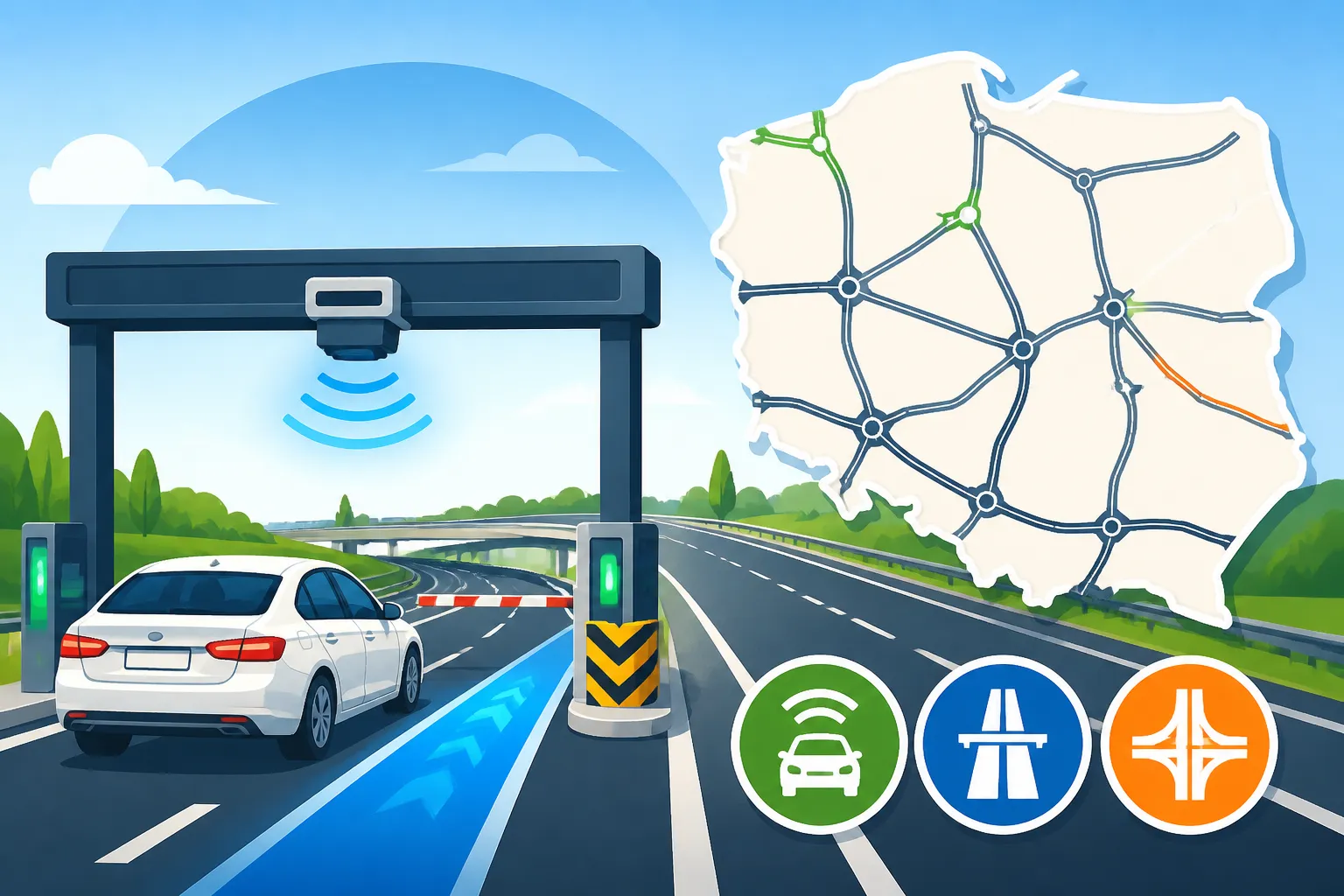
The e-Toll system is the official electronic toll collection system managed by the Polish government for specific sections of motorways. It's designed to be barrier-free, meaning no more stopping at toll gates on these particular roads. This is a game-changer if you're used to traditional toll booths, and frankly, it can be a bit confusing at first.
What is e-Toll and Who Needs It?
E-Toll is Poland's modern way of collecting tolls on state-managed motorways, such as sections of the A2 (Konin – Stryków) and A4 (Wrocław – Sośnica). Instead of physical barriers, the system uses satellite positioning technology to track vehicles and automatically charge tolls based on the distance travelled. It’s fundamentally different from older, manual systems you might encounter elsewhere.
This system is mandatory for all vehicles travelling on designated e-Toll sections, regardless of whether you're a local or a foreigner. This includes passenger cars (under 3.5 tonnes), motorcycles, and heavy goods vehicles. If you plan to drive your own car or a rental on these specific motorway segments, you must use the e-Toll system or face a hefty fine. There's no escaping it, and ignorance is rarely a valid excuse in the eyes of the law, which is a common expat frustration when dealing with various administrative hurdles in Poland.
It’s not just about compliance; it's also about convenience. Once you're set up, you simply drive, and the system handles the rest. This seamless experience, however, requires a bit of upfront effort, which we'll delve into in the following sections. Think of it like getting your PESEL number and understanding why it matters for healthcare; a crucial step to integrate smoothly.
How the e-Toll System Works for Personal Vehicles
For personal vehicles (passenger cars, motorcycles), the e-Toll system typically relies on either a mobile application or an on-board unit (OBU). Both methods communicate your vehicle's position to the system, allowing for accurate calculation of the toll. There are no physical toll booths to stop at; you simply enter and exit the toll section, and the system does the rest.
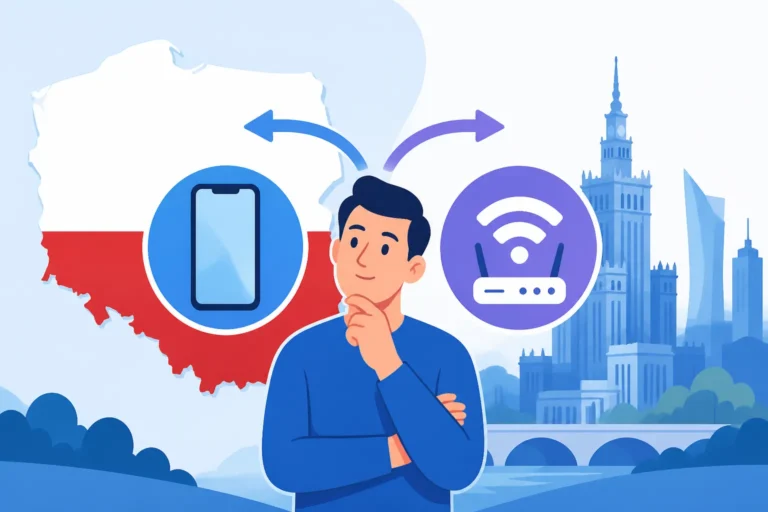
The primary method for most passenger car drivers is the official e-Toll PL mobile app, available on Android and iOS. You download it, register your vehicle, and top up your account. When you start your journey on an e-Toll section, you simply activate the app, and it begins tracking your route. Upon exiting, you stop the tracking. It’s a simple concept, but reliance on your phone's GPS and battery can be a concern for longer journeys, or if you're in an area with spotty mobile network coverage. Many expats find having a reliable data plan, perhaps through a global eSIM like Airalo, essential for consistent app functionality, especially when driving.
Alternatively, you can purchase an OBU (On-Board Unit) from designated points, though these are more commonly used by heavy vehicles or frequent travellers who prefer not to use their phone. These devices are mounted inside your car and transmit your location automatically. The key is to ensure your chosen method is activated and funded before you enter an e-Toll section. Failing to do so can lead to an immediate fine, often issued by monitoring vehicles.
Different Payment Methods for e-Toll
There are primarily three ways to pay for e-Toll, designed to offer flexibility, but each with its own setup requirements. Choosing the right one depends on how often you plan to use toll roads and your comfort level with technology.
First, and most common for occasional drivers, is the pre-paid account via the e-Toll PL app. You top up your account with a certain amount, and tolls are deducted as you drive. You can recharge your account online via the e-Toll customer portal, through the app itself, or at select customer service points. This method gives you control over your spending, but you need to remember to activate the app for each journey and ensure you have sufficient funds.
The second method is a post-paid account, which is more convenient for frequent users or businesses. With a post-paid account, tolls are accumulated and billed periodically, usually requiring a payment guarantee or direct debit setup. This eliminates the need for constant top-ups but requires a more comprehensive registration process and credit checks. For self-employed individuals (JDG owners) in Poland, this might be a more attractive option for business travel.
Finally, you can purchase an e-ticket (bilet autostradowy) before your journey. This is a simpler option for those who don't want to register a full e-Toll account or use the app. You buy a ticket for a specific route (e.g., from point A to point B on a given motorway section) for a specific vehicle and date. These tickets can be purchased online via the e-Toll website, through the official app (which acts as a purchase point for the e-ticket, rather than an active tracker), or at selected petrol stations. This is a great fallback for tourists or those making a one-off trip, but remember to buy it before you enter the toll section.
Navigating e-Toll: Registration, Accounts, and On-the-Go Payments
Getting set up with the e-Toll system can feel a bit daunting initially, especially when dealing with a new administrative platform in a foreign language. However, once you've gone through the steps, it becomes second nature. It's all about understanding the process and gathering the necessary details.
Registering for an e-Toll Account and Device Options
The first step is usually to create an e-Toll account. You can do this via the official e-Toll website (etoll.gov.pl) or directly through the e-Toll PL mobile app. The website offers a more comprehensive interface for registration. You'll need to provide details about yourself (name, address, contact information) and your vehicle(s) – including the registration number and vehicle category. Having your vehicle registration documents (dowód rejestracyjny) handy is crucial.
During registration, you'll choose your preferred method of toll collection. For personal vehicles, this means deciding between using the mobile app or purchasing an OBU. If you opt for the app, you simply download it from your app store and link it to your registered account. If you prefer an OBU, you'll need to purchase one from an authorized distributor (often found at larger petrol stations or customer service points) and then pair it with your account online. Think of it like deciding whether to rent an apartment with an agent or directly from the owner; both have pros and cons.
Once registered, you'll have access to your personal e-Toll account where you can manage your vehicles, check your balance, view your journeys, and top up funds. It’s a centralized hub for all your e-Toll related activities. The whole process is much easier if you already have a PESEL number and why it matters for healthcare, as this national identification number streamlines many administrative tasks in Poland.
Managing Your e-Toll Balance and Journeys
Keeping your e-Toll account funded is paramount. For pre-paid accounts, you can top up your balance online using a credit/debit card, bank transfer, or at an e-Toll customer service point. It’s vital to ensure you always have enough credit to cover your journeys, as an insufficient balance on an active journey can lead to fines. Many expats set up recurring payments or keep a healthy buffer to avoid last-minute stress.
The e-Toll system provides clear ways to track your past journeys and current balance through the customer portal or the app. This transparency allows you to review your expenses and ensure everything is accurate. If you’ve ever found yourself wondering about the cost of living in Poland for expats, knowing exactly how much you spend on tolls can help with budgeting. It’s also important to remember to stop the tracking in the app once you’ve exited a toll section; forgetting to do so can lead to overcharging or simply draining your battery unnecessarily.
For those using the e-ticket method, managing your journeys is simpler as each ticket is for a specific route and time. You don't manage a balance; you simply buy a new ticket for each toll journey. However, this means you need to remember to buy a ticket before you start your trip, which can be a point of stress if you're not planning far in advance.
Using the e-Toll App and Other Digital Solutions
The e-Toll PL app is designed to be user-friendly, but like any app, it has its quirks. Before you set off, ensure your phone is fully charged and that you have a stable internet connection. If you're frequently on the road, investing in a good car charger is a no-brainer. The app uses your phone's GPS, so make sure location services are enabled for the app. Many drivers choose to use a dedicated navigation app alongside the e-Toll app to ensure they stay on the correct route.
Beyond the app, Poland's digital government services are constantly evolving. The mObywatel app, for example, is becoming increasingly integrated into daily life, offering digital versions of documents like your driving licence and car registration. While not directly for e-Toll payments, understanding mObywatel and e-Government services in Poland can make other administrative tasks related to driving, such as proving vehicle ownership, much smoother. This move towards digital-first solutions reflects a broader trend in Poland.
For those without smartphones or who prefer a physical device, OBUs are the alternative. These devices are purchased once and then linked to your e-Toll account. They automatically transmit your location data, so you don't need to interact with an app while driving. This can be less distracting and more reliable if you frequently drive through areas with poor mobile signal. Choosing between the app and an OBU is a personal preference, but having a backup plan (like knowing where to buy an e-ticket) is always a good idea.
Other Toll Roads and Special Driving Zones in Poland
While the e-Toll system covers state-managed motorways, it's crucial to understand that not all toll roads in Poland operate under this system. Some sections are managed by private concessionaires, who have their own payment methods. This can be a significant source of confusion for expats, as you might find yourself switching between different payment systems within a single journey.
Concessionaire-Managed Motorways: A Different Beast
Certain sections of Poland's motorways, primarily parts of the A1 (Rusocin – Toruń) and A4 (Kraków – Katowice), are managed by private concessionaires. These sections operate independently of the national e-Toll system and typically use traditional barrier-based toll plazas. This means you will physically stop at a toll gate to pay.
For these concessionaire sections, you usually have the option to pay with cash (Polish zloty, sometimes euros but typically with poor exchange rates), credit/debit card, or through dedicated electronic toll collection systems specific to that concessionaire (like AmberGo for A1 or A4Go for A4). You can't use your e-Toll account or app for these roads, which catches many people off guard. Always look for clear signage indicating the payment methods accepted at these gates. Having cash (small denominations are best) and a reliable payment card ready is always a good idea, especially if you're on a road trip as part of your first 90 days moving to Poland.
It's vital to research your route in advance, especially for longer journeys that might span both state-managed e-Toll sections and concessionaire roads. Websites like Google Maps often show toll points, but they may not always distinguish between e-Toll and concessionaire tolls, so a quick check on the official motorway operator websites can save you a lot of hassle.
When and Where Else You Might Pay for Driving
Beyond motorways, there are very few other roads in Poland that levy tolls. Unlike some Western European countries with vignette systems for all national roads, Poland's system is generally focused on motorways. However, there are a few exceptions or situations where you might encounter specific charges.
Occasionally, you might find certain tunnels or bridges that require a small fee, though these are much rarer. More commonly, you'll encounter charges related to specific situations rather than the road itself. For example, if you're thinking about how to register a vehicle in Poland, you'll pay administrative fees. Similarly, if you choose to buy a used car in Poland as a foreigner, there are costs associated with its transfer and registration. These aren't 'tolls' in the traditional sense, but they are costs associated with driving.
It's also worth noting that while most expressways (S roads) are currently toll-free, this could change in the future as the network expands. The government can designate new sections for e-Toll, so it's always wise to stay informed through official channels or trusted expat forums.
Navigating City Driving and Parking Zones
Once you leave the motorways, city driving presents its own set of rules and potential costs, especially related to parking. Major Polish cities like Warsaw, Krakow, and Wroclaw operate paid parking zones (Strefa Płatnego Parkowania) in their city centres. These zones are clearly marked with signs, and you typically pay at a parking meter (parkomat) or via a mobile parking app.
Parking meters usually accept coins and sometimes cards. They are often multilingual, but having a few zloty coins on hand is always a safe bet. Mobile parking apps, such as SkyCash, Moje Miasto, or AnyPark, are extremely convenient, allowing you to pay for parking remotely and extend your time without returning to the meter. They often allow you to pay for exactly the time you need, down to the minute. Many expats find these apps indispensable for city excursions.
Beyond parking, cities in Poland do not currently have congestion charges or low-emission zones that would restrict access or levy charges based on vehicle type, unlike many Western European capitals. However, discussions about introducing such zones for environmental reasons are ongoing in some larger cities. Always check local city council websites for the most up-to-date information if you plan to drive frequently in urban areas.
Common Pitfalls, Fines, and Staying Compliant on Polish Roads
Let's be frank: the Polish road system, especially the e-Toll, can be confusing. It's easy to make a mistake, particularly if you're new to the country or only visiting temporarily. The key is to understand the potential pitfalls and, more importantly, how to avoid or rectify them.
Understanding Fines and Penalties for Non-Compliance
The most common penalty for not correctly using the e-Toll system is a fine for non-payment of the toll. If you drive on an e-Toll section without an active and funded account, or without a valid e-ticket, you are liable for a fine. These fines are not trivial; they can range from 500 PLN to 1,500 PLN, depending on the vehicle type and the specific violation. Enforcement is typically done through a network of cameras and mobile patrols that check vehicle registration plates.
The Polish National Revenue Administration (KAS) is responsible for collecting e-Toll, and they are quite efficient. If you receive a fine, it will usually be sent to the registered address of the vehicle owner (or the rental company if you're using a rental car). Ignoring these fines is not an option, as they will accrue interest and can eventually lead to more serious legal consequences, including debt collection procedures. This is similar to how serious other bureaucratic procedures can be, such as trying to get your foreign degree recognised in Poland – there are rules, and they need to be followed.
If you believe you have been wrongly fined, you have the right to appeal. The process usually involves submitting a written explanation and any supporting evidence (like proof of payment or account activity) to the KAS. However, this can be challenging if you don't speak Polish or understand the legal nuances. It's often easier to simply ensure you're compliant from the outset.
Essential Tips for Stress-Free Driving in Poland
To ensure a smooth driving experience, especially when dealing with tolls, here are some actionable tips:
First, always plan your route in advance using a reliable navigation app that can show you toll points. Google Maps and Yanosik (a popular Polish navigation app) are generally good. Cross-reference with the official e-Toll website if you're unsure about specific sections. Second, if you're using the e-Toll app, make it a habit to activate it before you enter any motorway. Treat it like putting on your seatbelt. Ensure your phone is charged and has a good signal. If you're on a long drive, consider topping up your mobile data beforehand, as connectivity can sometimes be an issue, and a reliable global data service can be very helpful.
Third, always have a small amount of cash (PLN, small denominations) and a valid credit/debit card on hand, especially when driving on concessionaire sections or for unexpected situations. Fourth, if you rent a car, clarify the toll situation with the rental company. Many rental companies offer their own e-Toll devices or include toll services, which can be a convenient (though sometimes pricier) option. They will often charge your card for any tolls or fines incurred.
Finally, stay calm and observe speed limits and road signs. Polish drivers can sometimes be assertive, especially in cities, but overall, it's a safe driving environment. Remember, driving in Poland: licences, registration and rules for expats (2026) covers a lot more than just tolls, so getting familiar with the general rules is also important.
What to Do If You're Confused or Have a Problem
Despite your best efforts, sometimes things go wrong. Perhaps your app crashed, your phone battery died, or you simply made a mistake and entered a toll section without activation. Don't panic. The best course of action is to rectify the situation as quickly as possible.
If you realize you've just driven through an e-Toll section without payment, you can often purchase a retrospective e-ticket for that specific section within 3 days of the journey. This can typically be done via the e-Toll website or app. This is a vital grace period that can save you from a fine. Always check the official e-Toll website for the exact conditions and timeframes for retrospective payments. If you're still within the 3-day window, this is your immediate priority.
If you receive a fine, don't ignore it. If you're confident it's a mistake, gather all your evidence and contact the KAS (Krajowa Administracja Skarbowa) to appeal. They usually have an English-speaking helpline or email for foreign drivers. If you're unsure, or the fine is legitimate, it's best to pay it promptly to avoid further charges. Consulting with a local, trusted Polish acquaintance or an expat advisory service like Sirelo could also provide invaluable assistance in navigating these official communications, just as they might help you understand the full process of moving to Poland. Remember, bureaucracy can be a challenge here, but there's often a way through it.
Comparative Overview of Polish Toll Systems
To summarize the often-confusing world of Polish tolls, here's a handy table outlining the key differences between the e-Toll system and the concessionaire-managed motorways. This should help you quickly identify what to expect and how to prepare.
| Feature | e-Toll (State-Managed Motorways) | Concessionaire Motorways (e.g., A1, A4 Kraków-Katowice) |
|---|---|---|
| System Name | e-Toll | Specific to concessionaire (e.g., AmberGO, A4Go) |
| Road Sections | A2 (Konin-Stryków), A4 (Wrocław-Sośnica) | A1 (Rusocin-Toruń), A4 (Kraków-Katowice) |
| Toll Gates | No physical gates (barrier-free) | Physical toll gates (stop and pay) |
| Payment Methods | e-Toll PL app (GPS), OBU, e-ticket (online/petrol) | Cash (PLN), credit/debit card, concessionaire's e-tags |
| Pre-payment | Account top-up required for app/OBU | Not applicable (pay at gate or specific e-tag account) |
| Post-payment | Available for registered business users | Available for specific concessionaire e-tag accounts |
| Enforcement | Cameras, mobile patrols | Physical gates, camera monitoring |
| Fines | Issued for non-compliance (e.g., no active payment) | Issued for trying to bypass gates or non-payment |
| Vehicle Types | All vehicles (passenger cars, motorcycles, heavy) | All vehicles (passenger cars, motorcycles, heavy) |
| Website | etoll.gov.pl | Respective concessionaire websites (e.g., autostradaa4.pl) |
This table clearly shows that you can't rely on one system for all toll roads. Being prepared for both scenarios is the best approach when driving across Poland.
Disclaimer
The information provided in this guide is intended for general informational purposes only and is subject to change. Road rules, toll systems, and payment methods in Poland can be updated by government or private entities at any time. While every effort has been made to ensure accuracy, this content does not constitute legal or professional advice. Always consult official government websites (such as etoll.gov.pl) and relevant concessionaire websites for the most current and authoritative information before travelling on Polish toll roads. Expat Life Poland is not responsible for any inaccuracies or outdated information.