How Do I Apply for a Karta Pobytu in Poland?
Alright, let's talk about the Karta Pobytu – that coveted little card that feels like the holy grail for many expats trying to make a life in Poland. Navigating the Polish immigration system can feel like trying to solve a Rubik's Cube blindfolded, full of twists, turns, and unexpected colors, leaving many foreigners feeling utterly overwhelmed. This guide is here to demystify the process of applying for your Temporary Residence Permit (Zezwolenie na pobyt czasowy), commonly known as the Karta Pobytu, giving you a realistic, step-by-step roadmap to get through it.
Understanding the Karta Pobytu: Your Key to Stability
When you first arrive in Poland, especially from outside the EU, you quickly realize that while a visa gets you in, a Karta Pobytu is what truly allows you to settle and build a life here. It's not just a fancy ID card; it's official recognition of your right to reside in Poland for a defined period, offering a degree of stability that a temporary visa simply can't.
The Legal Basis and Purpose of the Card
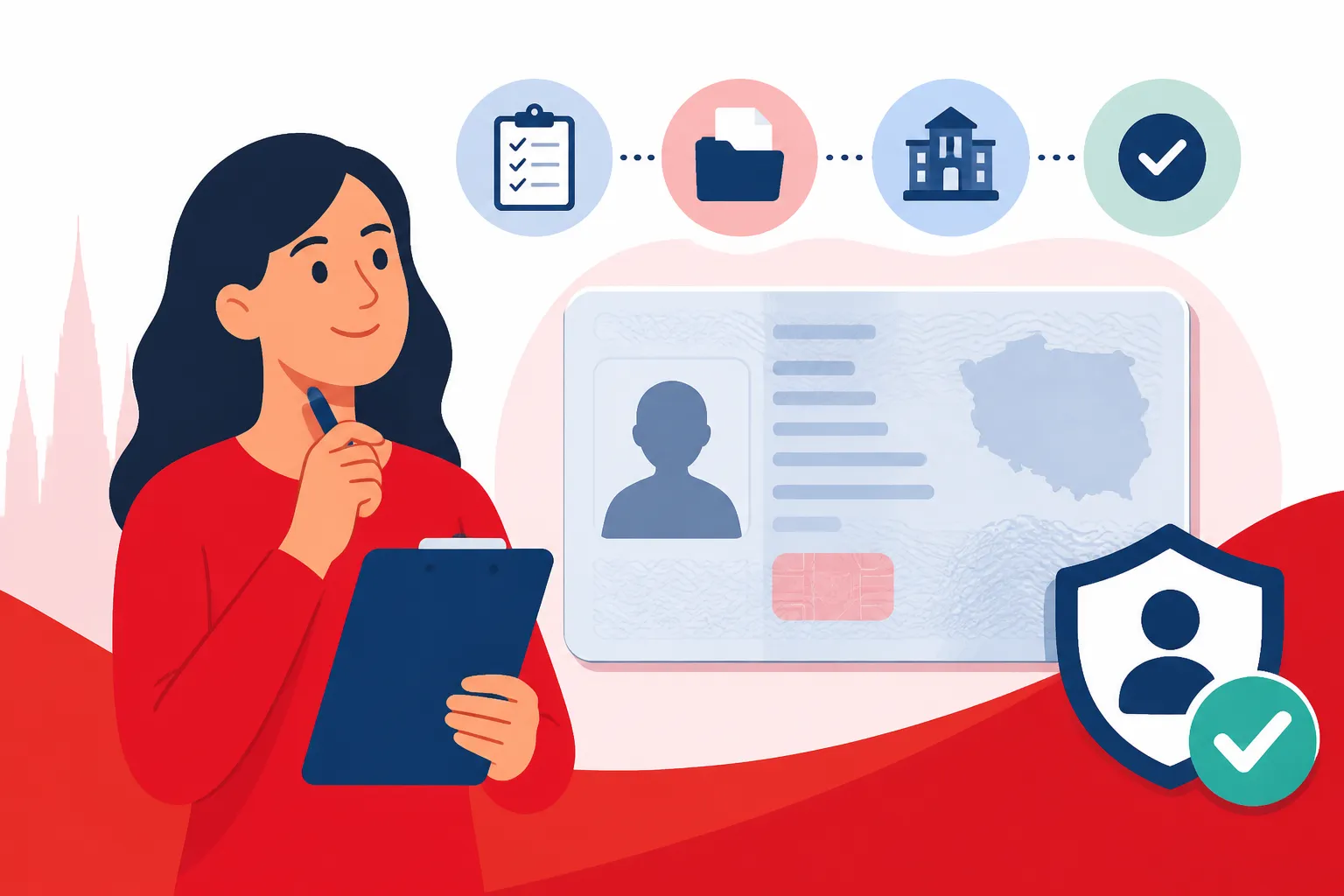
The Karta Pobytu, or Residence Card, is essentially a plastic document confirming your temporary residence permit in Poland. It’s issued by the local Voivodeship Office (Urząd Wojewódzki) and serves as proof of your legal stay, granting you certain rights within Polish territory. It includes your personal data, photo, fingerprints, and crucial details like your PESEL number (if you have one) and the basis for your stay (e.g., work, study, family reunification). This card is your primary identification document in Poland and also allows you to travel within the Schengen Area for up to 90 days in any 180-day period without needing a separate visa. It's crucial for everything from opening a bank account to accessing public services, as it definitively proves your legal status.
Why You Need a Karta Pobytu in Poland
Beyond proving your legal stay, securing a Karta Pobytu unlocks a whole new level of integration and convenience in Poland. Without it, you're constantly operating under temporary conditions, which can be incredibly stressful. Imagine trying to sort out utilities, sign a long-term rental agreement, or even just get a simple phone contract – many Polish institutions will look for this card as primary proof of your long-term commitment and legal status. For non-EU citizens, it's virtually impossible to live a stable life here without it. It's the step that transforms you from a transient visitor into a resident, albeit a temporary one. If you're planning to stay in Poland for more than a few months, especially for work or study, understanding How to Get a Temporary Residence Permit (Karta Pobytu) in Poland (2027) is absolutely essential.
Eligibility and Types of Karta Pobytu
The Polish government doesn't just hand out Karta Pobytu cards to anyone; you need a legitimate reason to stay. Generally, these reasons fall into categories like employment, education, family ties, or business activities. Each type has its own set of requirements and documentation, so it's vital to understand which category applies to you.
Temporary Residence for Work (Zezwolenie na pobyt czasowy i pracę)
This is by far the most common type of Karta Pobytu for expats in Poland. If you've landed a job with a Polish employer, they will typically initiate the process for your work permit. Once that's sorted, you can apply for the "Single Permit" (Jednolite Zezwolenie), which combines your right to work and reside in Poland. This permit is tied to your specific employer and position, meaning if you change jobs, you'll likely need to go through a new application process. Many companies are now quite familiar with this, especially in cities like Warsaw and Krakow, and will often assist with the paperwork. It’s a huge relief when you finally get that stamp of approval, because securing your Polish Work Permits for Foreign Workers (2026) is often the biggest hurdle.
Temporary Residence for Study (Zezwolenie na pobyt czasowy ze względu na studia)
For those pursuing higher education, Poland offers a fantastic academic landscape. Students enrolled in Polish universities or other educational institutions can apply for a student Karta Pobytu. The primary requirement here is proof of enrollment, sufficient funds to cover your living expenses and tuition, and comprehensive health insurance. This permit is usually granted for the duration of your studies, typically one year at a time, and can be renewed annually. It’s a great pathway for younger expats to experience Poland, allowing them to focus on their studies without constant visa worries. For more in-depth information, check out Understanding Residence Permits for Students in Poland.
Temporary Residence for Family Reunification (Zezwolenie na pobyt czasowy w celu połączenia się z rodziną)
If you're joining a family member who already holds a residence permit in Poland (or is a Polish citizen), you can apply for a Karta Pobytu based on family reunification. This applies to spouses, minor children, and in some cases, dependent parents. The process involves proving your relationship, demonstrating that the family member residing in Poland has stable income and accommodation to support you, and ensuring you have adequate health insurance. This is a compassionate route, but the documentation can be extensive and intrusive, asking for everything from marriage certificates to detailed income statements.
Temporary Residence for Business/Self-Employment (Zezwolenie na pobyt czasowy w celu prowadzenia działalności gospodarczej)
Poland is an increasingly attractive place for entrepreneurs. If you've started a business (like a Jednoosobowa Działalność Gospodarcza, or JDG) or are planning to invest in an existing one, you can apply for a Karta Pobytu based on your business activities. The challenge here is proving the viability and benefit of your business to the Polish economy. You'll need a solid business plan, demonstrate sufficient funds for investment and living, and show that your venture will generate income and potentially create jobs. This route can be more complex and scrutinized than others, requiring detailed financial projections and legal documents. It's often advisable to seek professional advice when going down this path. If this sounds like you, then reading Understanding Residence for Self-Employment (JDG) in Poland will be invaluable.
The Application Process: Step-by-Step
This is where the rubber meets the road. Applying for a Karta Pobytu can feel like an administrative marathon, not a sprint. Patience, meticulous organization, and a good sense of humor (or at least stoicism) are your best friends here. You’ll be dealing with the Urząd Wojewódzki, and let me tell you, it's an experience that tests even the most seasoned expat's resolve.
Gathering Your Documents: The Checklist
The absolute first step, and probably the most time-consuming, is assembling your documentation. The list can seem endless and daunting, and the exact requirements can vary slightly depending on your specific situation and even the voivodeship you're applying in. However, there’s a core set of documents you’ll always need.
Here’s a general checklist, but always consult the specific requirements of your local Urząd Wojewódzki:
- Application Form (Wniosek): Filled out in Polish, of course. These can usually be downloaded from the Urząd Wojewódzki website. Double-check every field; mistakes are a common reason for delays.
- Passport/Travel Document: Original and photocopies of all pages with stamps or visas.
- Photos: Typically 4 current biometric photos (35x45mm), meeting specific requirements (white background, looking straight ahead, no head coverings unless for religious reasons).
- Proof of Stable and Regular Income: This is crucial. Employment contract, bank statements, tax declarations, proof of scholarships, etc. The amount needed varies, but it must be sufficient to cover your living expenses and those of any dependents. This is a common sticking point, so getting your How Do I Prove My Income for a Polish Residence Permit? in order is key.
- Proof of Accommodation: Rental agreement (umowa najmu), ownership deed, or declaration from the person providing accommodation. Make sure it's properly registered. Read up on How Do I Prove Accommodation for a Polish Residence Permit? for more details.
- Health Insurance: Proof of valid health insurance covering the duration of your stay in Poland. This can be public (NFZ) or private. Many expats opt for private international health insurance like Cigna Global because it offers broader coverage and flexibility. This is non-negotiable, and understanding What Health Insurance Do I Need for a Polish Residence Permit? will save you headaches.
- PESEL Number: While not always mandatory for the initial application, having a PESEL number definitely speeds things up and is required for many aspects of life here. Get your How Do I Get a PESEL for My Residence Process? sorted as early as possible.
- Administrative Fee: Proof of payment for the application fee.
- Additional Documents specific to your basis of stay:
- Work: Employer's declaration, work permit (Zezwolenie na pracę) or declaration of entrustment (Oświadczenie o powierzeniu wykonywania pracy cudzoziemcowi), employment contract.
- Study: University acceptance letter, proof of tuition payment, student ID.
- Family Reunification: Marriage certificate, birth certificates (all apostilled/legalized and translated by a sworn translator if not in Polish or English).
- Business: Business registration documents, financial statements, business plan.
Remember, many foreign documents will need to be apostilled or legalized in your home country and then officially translated into Polish by a sworn translator (tłumacz przysięgły) here in Poland. Missing even one tiny detail or having an incorrectly translated document can lead to frustrating delays, or worse, rejection. This is where the real stress of relocating can hit, and why services like Sirelo, which help organize the moving process, can be invaluable even before you start this administrative maze. For a comprehensive list, you might find What Documents Do I Need for a Polish Residence Permit? extremely helpful.
Booking Your Urząd Wojewódzki Appointment
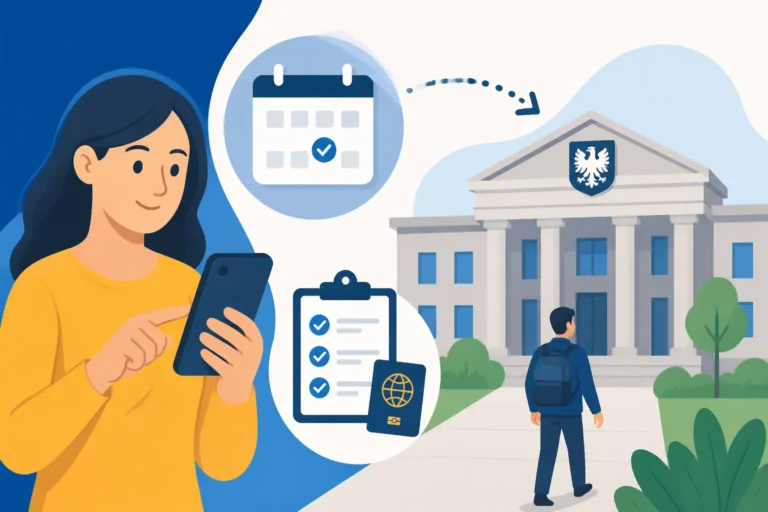
This part can feel like a Hunger Games-level competition for some. Appointments at the Urząd Wojewódzki, especially in larger cities like Warsaw, Krakow, or Wroclaw, are often scarce. Many offices utilize an online booking system, which requires vigilance and quick fingers. Some release new slots at specific times (e.g., midnight on the first day of the month), while others are more sporadic. Don’t get discouraged if you don’t get one immediately; keep trying.
When you finally secure that precious slot, make sure you know exactly what you’ve booked it for. Some appointments are just for submitting documents, others for fingerprinting, and some for general information. Be on time, bring all your documents (originals and copies), and be prepared for a potentially long wait, even with an appointment. For practical tips, check out How to Book an Appointment at the Urząd Wojewódzki for Immigration.
The Application Submission and Biometrics
On your appointment day, you'll submit your completed application form along with all the supporting documents. The case officer will review everything. This is a critical moment. They might ask for clarifications, additional documents, or point out errors. Try to remain calm and polite, even if you feel exasperated. They are often under immense pressure themselves.
Once your documents are accepted, you'll typically be directed to have your fingerprints taken. This is a standard biometric procedure for the Karta Pobytu. The fingerprints, along with your photo, will be stored on your residence card. After this, you should receive a stamp in your passport confirming that your application has been lodged. This stamp, importantly, allows you to legally stay in Poland while your application is being processed, even if your previous visa or temporary residence permit expires. This is a huge relief for many, as it ensures continuity of legal stay.
After Application: What to Expect
You've submitted everything, had your fingerprints taken, and received that all-important stamp in your passport. Now begins the waiting game. And believe me, it can be a long game.
Processing Times and Status Checks
This is probably the most common source of expat anxiety. The official processing time for a Karta Pobytu application is often stated as 60-90 days, but in reality, especially in larger cities with high volumes of applicants, it can stretch to 6 months, a year, or even longer. It’s not uncommon to hear stories of people waiting 18 months or more for their first Karta Pobytu. This can be incredibly frustrating, particularly when you need the card for various administrative tasks.
You might receive requests for additional documents during this period. These "wezwania" (requests) are usually sent via registered mail, so make sure your address is current and you're checking your mailbox diligently. Responding promptly is crucial to avoid further delays.
While there isn't always a real-time tracking system, some Urząd Wojewódzki offices offer online portals where you can check the general status of your application using your case number. Don't expect daily updates, but it can provide some peace of mind. Remember, the stamp in your passport confirms your legal stay during this waiting period, so don't panic if your old visa expires. If you’re wondering How Long Does It Take to Get a Karta Pobytu in Poland?, brace yourself for potentially significant wait times.
The Decision and Issuance of Your Karta Pobytu
Eventually, you will receive a decision letter (decyzja) in the mail. If it's a positive decision, congratulations! This letter will inform you that your Karta Pobytu has been approved and how to arrange its collection. There will likely be another small fee for the card itself.
Once you collect your physical Karta Pobytu, take a deep breath and celebrate. You’ve earned it! Check all the details on the card immediately to ensure accuracy. Mistakes can happen, and it's best to catch them early. The card will usually be valid for one to three years, depending on the basis of your stay. When it gets closer to expiration, you’ll need to apply to extend your temporary residence permit again. The process will be similar, but hopefully a little smoother since you’ll be a seasoned pro by then. Check out How to Get a Residence Card (Karta Pobytu) and Its Biometrics in Poland for specific details on collecting the card.
What If Your Application is Rejected?
While nobody wants to think about it, rejections do happen. Common reasons include insufficient documentation, failure to prove stable income or accommodation, or changes in your circumstances (e.g., losing your job while the application is pending).
If your application is rejected, don't despair immediately. You have the right to appeal the decision. The rejection letter will outline the reasons for denial and the procedure for appealing. Typically, you have 14 days from the date of receiving the decision to submit an appeal to the Head of the Office for Foreigners (Szef Urzędu do Spraw Cudzoziemców) in Warsaw, through your local Urząd Wojewódzki.
Appealing is a formal process, often requiring legal assistance to effectively address the stated reasons for rejection. It’s crucial to understand why your application was denied and to provide new evidence or arguments to counter those reasons. While an appeal is pending, you are generally allowed to remain in Poland, but it's wise to confirm this with legal counsel. It’s a stressful situation, but not necessarily the end of your time in Poland.
Important Considerations for a Smooth Application
Beyond the step-by-step process, a few additional points can make your Karta Pobytu journey a bit less bumpy.
Language Barrier and Assistance
Let's be real, dealing with Polish bureaucracy in a foreign language is tough. While some officials in larger cities might speak English, it's not a guarantee. If your Polish isn't up to snuff, consider bringing a Polish-speaking friend, colleague, or a professional translator to your appointment. Many legal and immigration firms also offer assistance with Karta Pobytu applications, which can be a lifeline for navigating the complexities and ensuring all documents are correctly prepared. This can save you a lot of time, stress, and potential rejection.
Staying Legally Compliant Throughout
The time between submitting your application and receiving your Karta Pobytu can be long, but the stamp in your passport generally allows you to legally remain in Poland during processing. However, it's important to understand the nuances of this. If you plan to leave and re-enter Poland or travel within the Schengen Area during this period, carrying your passport with the stamp and a copy of your application is essential. Always double-check current regulations, as rules can change. Do not overstay your previous visa or authorized stay without having the application stamp, as this can lead to serious issues.
Renewing Your Karta Pobytu
Remember, your Karta Pobytu is a temporary permit. Before it expires, you will need to apply for its extension. The general advice is to start this process well in advance, ideally 3-4 months before your current card's expiration date. The renewal process is very similar to the initial application, requiring updated documentation, proof of continued employment/study/family ties, and financial stability. Keep all your past documents organized, as they will likely be useful for subsequent applications. How to Extend Your Temporary Residence Permit in Poland is a useful read for when that time comes.
Key Documents Summary Table
To help you keep track of the critical documents, here’s a quick summary. Remember, this is a general guide, and your specific situation may require more.
| Document Category | Key Documents Required (General) | Purpose |
|---|---|---|
| Personal & ID | Application Form (Wniosek), Passport, Biometric Photos | Official request & identification |
| Financial Stability | Employment Contract, Bank Statements, Scholarship Proof | Demonstrate sufficient funds for living expenses |
| Accommodation | Rental Agreement, Ownership Deed, Landlord Declaration | Prove you have a place to live |
| Health Coverage | Health Insurance Policy (NFZ or Private) | Ensure access to medical care |
| Basis for Stay (Examples) | Work Permit, University Acceptance, Marriage/Birth Certificates, Business Registration | Justify your reason for residing in Poland (work, study, family, business) |
| Administrative | Proof of Fee Payment, PESEL (if applicable) | Official processing & identification number |
Getting your Karta Pobytu is a rite of passage for many expats in Poland. It’s a process that demands patience, precision, and perseverance. But once you have that little card in your hand, you'll feel a significant weight lifted, and you’ll truly start to feel settled in your new Polish home.
Disclaimer
The information provided in this guide is intended for general informational purposes only and does not constitute legal advice. While we strive to provide accurate and up-to-date information, immigration laws and procedures in Poland can change frequently and may vary based on individual circumstances and specific Voivodeship Office interpretations. It is highly recommended to consult with an immigration lawyer or the official Urząd Wojewódzki for personalized advice regarding your Karta Pobytu application. We cannot be held responsible for any outcomes resulting from the use of this information.