Can I Apply for a Residence Card While on a National Visa in Poland?
Navigating the Polish immigration system can feel like trying to solve a Rubik's Cube blindfolded, especially when you're trying to figure out your long-term legal stay. You’ve successfully landed here on a national visa – perhaps for work or study – and now the big question looms: can you seamlessly transition to a residence card (Karta Pobytu) without the hassle of leaving Poland? The good news is, for most people, the answer is a resounding yes. This comprehensive guide is here to untangle the complexities, walk you through the process, and help you apply for a residence card while on a national visa in Poland, all from the perspective of someone who's been there.
Understanding Your National Visa and the Path to a Karta Pobytu
When you first arrive in Poland, especially from a non-EU country, you likely do so on a National (Type D) visa. This visa is your gateway, granting you permission to enter and stay for a specific purpose, typically for more than 90 days within a 180-day period. But a visa, by its very nature, is a temporary solution. For anything beyond that initial period – for truly settling in, working long-term, or continuing your studies – you’ll need a residence permit, officially known as a Zezwolenie na pobyt czasowy (Temporary Residence Permit), which comes with the coveted plastic Karta Pobytu.
The Logic Behind In-Country Applications
Poland’s immigration framework is designed to facilitate the stay of individuals who contribute to its economy, education, or family life. Because national visas are often issued with a clear, long-term intent – whether it's full-time employment, an academic program, or family reunification – it makes perfect sense for the authorities to allow you to apply for a more permanent status without forcing you to exit and re-enter the country. Imagine the nightmare of having to fly back to your home country just to apply for another document, losing precious time and money!
This system saves both you and the Polish administration a lot of redundant effort. It acknowledges that your initial visa category (e.g., work, study, family) often aligns with the grounds for a temporary residence permit. So, if your reason for staying remains the same and you meet the criteria, you can absolutely make that application right here in Poland, at your local Urząd Wojewódzki (Voivodeship Office). This means less logistical stress for you, allowing you to focus on your life here rather than international travel plans to satisfy administrative hurdles.
National Visa vs. Residence Permit: Knowing the Difference
It's crucial to understand the distinction between your national visa and a residence permit. Your national visa (e.g., D-type work visa or student visa) is a sticker in your passport, valid for a defined period, usually up to one year. It's permission for entry and a legal stay for a specific, initial purpose. Think of it as your starter pack for life in Poland.
A Temporary Residence Permit, on the other hand, is a more robust, long-term document. It's often granted for periods ranging from one to three years and signifies your right to reside in Poland for an extended period based on your ongoing circumstances (employment, study, family, etc.). Once approved, you'll receive a physical Karta Pobytu, which is a biometric residence card. This card replaces your visa as your primary legal document for staying in Poland, and importantly, it allows you to travel freely within the Schengen Area without a separate visa. This is a game-changer for many expats who want to explore Europe. For a deeper dive into these crucial documents, check out our comprehensive guide, The Complete Guide to Polish Residence Permits for Expats (2027).
The Step-by-Step Application Process for Your Karta Pobytu
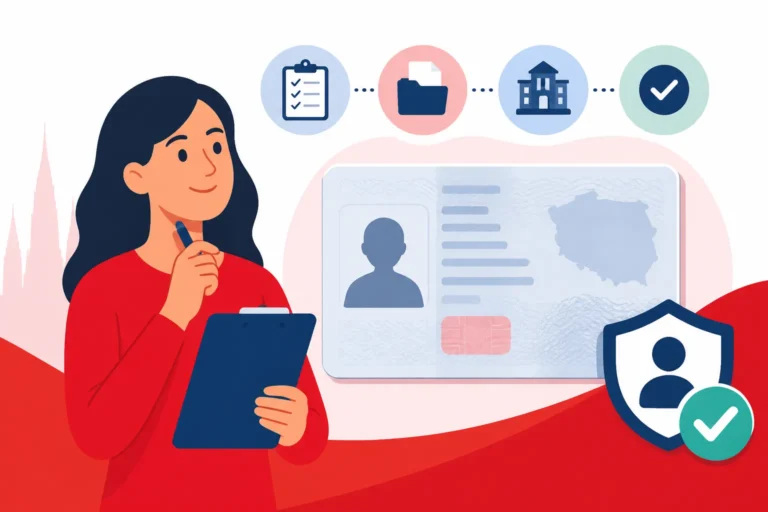
Alright, let's get down to the nitty-gritty. The process of applying for your Temporary Residence Permit (Karta Pobytu) while on a national visa is essentially the same as any other Karta Pobytu application, but with the added peace of mind that you're already in Poland. You'll primarily be dealing with the Urząd Wojewódzki that corresponds to your place of residence.
Gathering Your Arsenal of Documents
This is often the most time-consuming and frustrating part, so prepare yourself for some serious paperwork. The Polish administration loves its documents, and they need to be precise, complete, and often translated. Missing even one tiny piece can lead to delays or outright rejection. Here's a rundown of what you'll typically need, but always check the specific requirements for your Urząd Wojewódzki and your particular reason for applying (work, study, family, etc.):
- Application Form (Wniosek o udzielenie zezwolenia na pobyt czasowy): This form is the cornerstone of your application. It needs to be filled out meticulously, in Polish. You'll usually find it on the Urząd Wojewódzki website for your specific region (e.g., Mazowiecki Urząd Wojewódzki for Warsaw, Małopolski Urząd Wojewódzki for Krakow). Take your time, or better yet, get a Polish speaker to help you.
- Passport Copies: You'll need copies of all pages of your valid travel document, especially the biographical data page, your current national visa, and any entry/exit stamps. Make sure these are clear and legible. Always bring the original passport for verification!
- Passport Photos: Usually 4 recent, biometric photos (35x45mm), taken against a plain, light background, showing your entire face. No silly hats or sunglasses!
- Proof of Stable and Sufficient Income: This is a big one. For work-based permits, this means your employment contract (umowa o pracę) and recent payslips. For students, it's bank statements showing sufficient funds to cover your living costs without relying on public assistance, along with proof of university acceptance. The specific amount required can vary, so it's wise to check How Much Income Is Required for a Polish Residence Permit?.
- Proof of Accommodation: A valid rental agreement (umowa najmu) is standard. If you own property, the deed (akt notarialny) works. If you're staying with someone, they might need to provide a declaration of hospitality and proof of their own accommodation.
- Health Insurance: You absolutely need valid health insurance covering you for your entire intended stay. This can be public insurance (NFZ) if you're employed in Poland and contributing to ZUS, or private health insurance. For many expats, especially those waiting for NFZ coverage or seeking more comprehensive options, private providers are a popular choice. Companies like Cigna Global offer robust international health insurance plans that are recognized by Polish authorities and can give you peace of mind. To understand your options, have a look at our guide on Health Insurance in Poland: Mandatory, Private and Subscription Options Explained.
- PESEL Number: While not always strictly mandatory at the time of initial application, having a PESEL (personal identification number) simplifies almost every administrative task in Poland, including your residence permit application. If you don't have one yet, it's highly advisable to get one. Our article, How to Get Your PESEL Number and Why It Matters for Healthcare, provides all the details.
- Documents Specific to Your Purpose:
- Work: A valid work permit (Zezwolenie na pracę) or an oświadczenie o powierzeniu wykonywania pracy cudzoziemcowi (declaration of entrusting work to a foreigner) is often required, depending on your nationality and type of work.
- Study: University acceptance letter, proof of tuition payment, and student status confirmation.
- Family Reunification: Marriage certificate, birth certificates (for children), and your Polish spouse's or resident parent's Karta Pobytu.
- Receipt of Payment: There's an application fee, typically around 340 PLN for a temporary residence permit. You'll need to pay this to the Urząd Wojewódzki's bank account and attach the confirmation.
- Originals for Inspection: Always bring the original versions of all documents you submit as copies. The officials will want to verify them.
For a detailed list and advice on preparing these, refer to How to Prepare Documents for a Karta Pobytu Application.
Submitting Your Application at the Urząd Wojewódzki
Once your document folder is bulging and you've double-checked everything, it's time to submit.
- Book an Appointment: This is perhaps the biggest hurdle. Many Urząd Wojewódzki offices, especially in larger cities like Warsaw, Krakow, or Wroclaw, require pre-booked appointments, which can be notoriously difficult to get due to high demand. You often have to wake up early or be persistent with online booking systems. Some offices also have walk-in days, but these usually involve very long queues. Seriously, don't underestimate this step. Read How to Book an Appointment at the Urząd Wojewódzki for Immigration for expert tips.
- Submit Your Application: When your appointment day arrives, head to the Urząd with all your documents. A kind, empathetic official (or perhaps a very tired one) will review your application. If everything is in order, they will stamp your passport. This stamp, known as a pieczęć (seal), is vital. It legally certifies that your application for a temporary residence permit has been submitted on time and is pending, even if your national visa expires during the processing period. This means you remain legal in Poland!
- Biometrics: Usually, during the submission appointment or shortly after, you'll be called to provide your biometric data (fingerprints and digital photograph) for your future Karta Pobytu.
Crucial Timing: You must submit your application before your national visa expires. The date stamped in your passport by the Urząd Wojewódzki is what proves your legal stay while your application is processed.
Navigating the Waiting Period and Important Considerations
After the submission, you enter the dreaded "waiting game." This period can be a source of significant anxiety for expats, but understanding what to expect can ease some of that stress.
Legal Status During Processing
As mentioned, once your passport is stamped by the Urząd Wojewódzki confirming the submission of your Karta Pobytu application, you are legally allowed to remain in Poland, even if your national visa expires. This stamp is your golden ticket for staying in the country. However, there’s a major caveat: this stamp generally does not permit you to travel outside of Poland and re-enter the Schengen Area. If you leave the Schengen zone after your national visa has expired and while relying solely on the stamp, you risk being denied re-entry. You’ll only regain full travel freedom once you receive your physical Karta Pobytu. If you're pondering travel, it's worth checking Can I Travel in the Schengen Area on a Polish Residence Card? for future reference.
Potential Delays and How to Cope
Let's be realistic: the official processing time for a Temporary Residence Permit is often stated as 60-90 days, but for many expats, the actual waiting time can be significantly longer – sometimes six months, eight months, or even over a year, especially in major cities. This is due to the sheer volume of applications.
Here's how to manage the uncertainty:
- Patience is Key: Seriously, develop it. Panicking won't speed things up.
- Stay Informed: Some Urząd Wojewódzki offices offer online status checkers, but these aren't always real-time or completely accurate.
- Polite Follow-ups: If you haven't heard anything after the official processing time, you can try sending a polite inquiry via registered mail or email. However, avoid constant badgering, as it won't help your case and might just annoy the officials.
- Prepare for Requests for Additional Documents: It's common for the Urząd to request additional documents (wezwanie do uzupełnienia braków) during the processing. Respond promptly to these requests, as failing to do so can lead to your application being left unexamined.
Maintaining Your Eligibility and Updates
Life happens, and sometimes your circumstances change during the waiting period. If your reason for stay changes (e.g., you change jobs, your university program finishes, you move address), you must inform the Urząd Wojewódzki in writing. Failing to do so can jeopardize your application. Similarly, if you receive a new passport during this time, you should inform them and provide copies.
Summary of the Karta Pobytu Application Process from a National Visa
| Step | Action Required | Key Considerations for Expats |
|---|---|---|
| 1. Preparation | Gather all required documents. | Begin early! Ensure documents are valid, translated (if necessary), and complete. Double-check specific Urząd Wojewódzki requirements. |
| 2. Health Coverage | Secure comprehensive health insurance. | Critical. Consider options like NFZ or private insurers like Cigna Global. Ensure it covers your intended stay. |
| 3. Appointment | Book an appointment at your local Urząd Wojewódzki. | Can be challenging. Be persistent with online booking or prepare for long queues for walk-ins. |
| 4. Submission | Submit your application before your national visa expires. | Crucial deadline. Receive the passport stamp (pieczęć) for legal stay during processing. |
| 5. Biometrics | Provide fingerprints and photo. | Usually done during or shortly after submission. |
| 6. Waiting Period | Exercise patience and respond to any requests for additional documents. | Expect delays. You are legal to stay with the passport stamp, but international travel (outside Schengen) is not advised. |
| 7. Decision | Receive a decision letter. | Hopefully, a positive one! |
| 8. Card Issuance | Pay for the Karta Pobytu issuance fee and collect your card. | Pay the fee upon approval, then collect your physical Karta Pobytu. |
Common Pitfalls and Expert Tips for a Smooth Process
We all want a smooth ride, but bureaucratic processes rarely are. Here are some common traps expats fall into and how to avoid them, along with some seasoned advice.
The Language Barrier and Professional Help
Let's face it: Polish bureaucracy operates predominantly in Polish. While many officials in larger cities might speak some English, your application forms, supporting documents, and official correspondence will be in Polish. Misunderstandings are common, and a small error on a form can cause massive delays.
- Learn Basic Polish: Even a little goes a long way in showing good faith and understanding.
- Find a Polish-Speaking Friend/Colleague: If you have a trusted Polish friend or colleague, ask for their help in reviewing forms or attending appointments with you.
- Hire a Professional: For those who want to minimize stress and maximize their chances, consider hiring a legal advisor specializing in immigration or a professional translator. They can ensure your application is flawless and help with communication. While it's an added cost, it can save you significant headaches and time in the long run.
Comprehensive Health Coverage
We touched on this earlier, but it's worth emphasizing. Poland's healthcare system requires all legal residents to have health insurance. Your national visa might have required a basic travel insurance, but for a residence permit, you need comprehensive coverage.
- NFZ (National Health Fund): If you're employed in Poland, your employer will register you with ZUS, and a portion of your contributions goes towards NFZ, granting you access to public healthcare. This is often the most cost-effective solution for many. Learn more about Registering with the NFZ in Poland: The Complete Expat Guide (2027).
- Private Health Insurance: If you're self-employed, a student without an employer-provided plan, or simply prefer private care, a robust private health insurance policy is essential. Companies like Cigna Global are well-known among expats for providing international coverage that meets Polish immigration requirements. Private medical subscriptions, such as those offered by LUX MED or Medicover, are also popular additions to (or sometimes alternatives to) NFZ coverage for faster access to specialists and English-speaking doctors. You can explore Understanding Private Medical Subscriptions (Medicover, LUX MED) in Poland.
Ensure your chosen policy covers hospital stays, outpatient care, and emergencies for the entire period of your requested residence permit.
Planning Your Move and Logistics
While applying from within Poland reduces some relocation stress, the overall process of settling into a new country remains significant. Many aspects of your move tie into your immigration process. For instance, securing proper accommodation and understanding your lease agreement are crucial for your proof of address. When you're planning such a significant move, platforms like Sirelo can be incredibly useful for comparing quotes and finding reputable movers who understand the complexities of international relocations, ensuring your belongings arrive safely while you navigate the paperwork. Thinking about all the initial steps? Our guide, The Expat Guide to Moving to Poland from a Non-EU Country (2027), covers everything you need for those first crucial steps.
Remember, the goal is not just to get the Karta Pobytu but to build a stable life here. Approach the immigration process with diligence, patience, and a healthy dose of realism, and you'll be well on your way to a comfortable life in Poland.
Disclaimer
Please remember that immigration laws and procedures in Poland can change. While I strive to provide the most accurate and up-to-date information based on my personal experience and available resources, this guide should not be considered legal advice. It is always recommended to consult with a qualified immigration lawyer or the official Urząd Wojewódzki website for the latest regulations and personalized guidance concerning your specific situation.