Can I Use My EU Driving Licence Permanently in Poland?
One of the first things that pops into your head when you're settling into life in Poland, especially if you've brought your car or plan to get one, is 'What about my driving licence?' It’s a common worry, wondering if your existing documents will hold up in a new country. This guide is here to clear up the confusion surrounding EU driving licences and their validity here in Poland, offering practical insights and breaking down the bureaucratic maze for you.
The Simple Answer: Yes, for Most of Us EU Citizens!
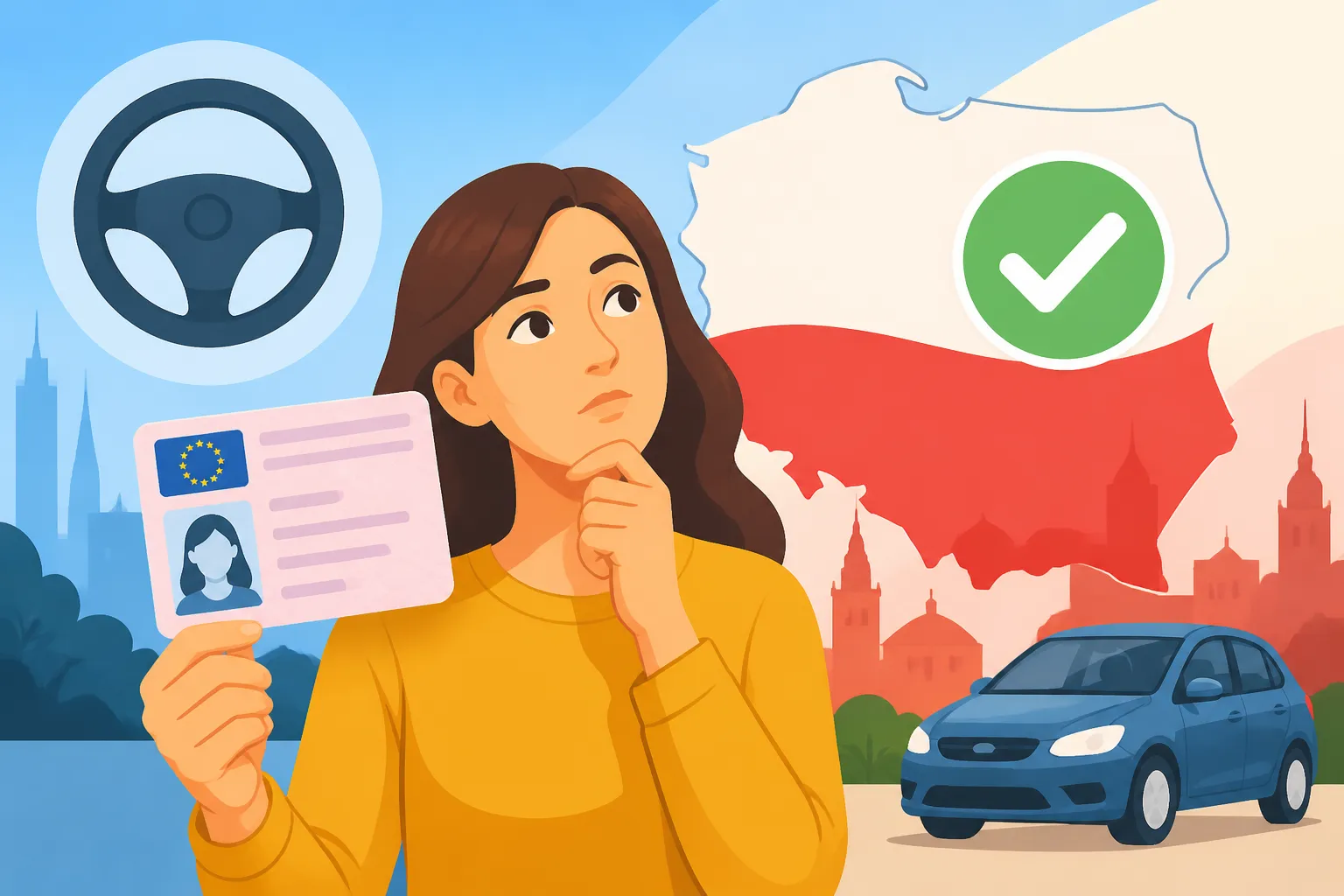
Let's cut right to the chase, because I know you've got a million other things on your mind: if you hold a valid driving licence issued by an EU or EEA (European Economic Area) member state, you absolutely can use it permanently in Poland. That's right, there's no mandatory requirement for you to exchange it for a Polish one, no expiry date after a certain number of months or years just for being an expat. This is one less piece of paperwork to stress over, thankfully!
Understanding the EU Driving Licence Framework
The whole point of the European Union, and the EEA by extension, is to facilitate the free movement of people, goods, services, and capital. This principle extends directly to driving licences. There's a common EU model for driving licences, standardised across all member states, which means that a licence issued in, say, Germany, France, or Ireland is automatically recognised and valid in Poland. It’s based on the principle of mutual recognition – if it’s valid there, it’s valid here.
This means your licence, regardless of where in the EU/EEA it was issued, allows you to drive legally in Poland under the same conditions as it would in your home country. You can rent cars, drive your own registered vehicle, and basically operate any class of vehicle for which your licence is valid. This is a massive relief for many of us, sparing us the headache of immediate exchange procedures upon arrival. You can breathe easy knowing that your existing licence is perfectly fine for your daily commute or those weekend trips across Poland.
No Need to Exchange… Unless You Want To
So, the good news is you don't have to exchange it. Your EU/EEA licence is valid here for as long as it's valid in the country that issued it. If your licence expires, you’ll generally need to renew it in the country where you reside, which, if you're permanently in Poland, would mean exchanging it for a Polish one at that point. But until then, you're good.
However, just because it’s not legally required doesn't mean there aren't situations where you might consider exchanging it. Polish authorities, especially outside of the major expat hubs, might sometimes be unfamiliar with the nuances of foreign documents. While legally they should recognise it, sometimes having a Polish document can simply make life a little smoother when dealing with the local bureaucracy, police, or even proving your identity for other administrative tasks. We’ll dive into those scenarios next, because sometimes taking an extra step can actually save you a lot of hassle down the line.
When You Might Want to Exchange Your EU Licence for a Polish One
While your EU driving licence is legally valid in Poland, there are practical reasons and specific circumstances where exchanging it for a Polish one might just make your life a lot easier, or even become a necessity. As expats, we often find that what’s legally black and white can sometimes be a bit grey in day-to-day interactions.
Practical Benefits: Local ID and Bureaucracy Ease
One of the most compelling reasons to consider swapping your EU licence for a Polish one isn't about legal necessity, but about practical convenience. Think about it: when you present your Polish driving licence, it’s instantly recognisable to any Polish official, police officer, or private entity. This can drastically reduce the amount of time you spend explaining foreign documents, especially outside of the larger, more international cities like Warsaw or Krakow.
For instance, when you're trying to prove your identity, open a bank account, or even deal with certain types of customer service, a Polish driving licence, particularly one that includes your PESEL number, can act as a universally accepted form of identification. While your passport or a Polish Residence Permit for Expats are excellent forms of ID, having a driving licence that's locally issued can sometimes just streamline things. Some service providers, even landlords, might prefer a Polish ID for their records, making it easier to secure that rental contract (Umowa Najmu) or set up utilities in your Polish home. It eliminates any potential for misunderstanding or undue scrutiny, simply because it’s a document they see every day.
Dealing with Lost, Stolen, or Expired Licences
This is where the "no need to exchange" rule gets a little more complex. What happens if your original EU licence gets lost, stolen, or expires while you're living permanently in Poland? Well, in most cases, you cannot simply go back to your home country's issuing authority and request a replacement or renewal if you are no longer a resident there. EU regulations generally state that you must renew or replace your driving licence in the country where you have your "normal residence" (i.e., where you live for at least 185 days a year).
If you are a permanent resident in Poland and your EU licence is lost, stolen, or expired, you would then need to apply for a Polish driving licence. This essentially means you'll be going through an exchange process, albeit under slightly different circumstances. Instead of just "wanting" to exchange it, you "need" to. The process will involve providing documentation of your original licence (if available), proof of identity, residency, and potentially a medical examination. It’s definitely easier to be proactive than to deal with the stress of a missing or expired licence when you're already settled here.
Changes to Medical Requirements or Categories
Sometimes, an exchange might be triggered by changes in your own health or driving entitlements. If you develop a medical condition that requires a specific driving restriction or regular medical reviews, the Polish authorities might require you to exchange your licence so that these conditions can be accurately reflected and monitored under Polish law. This is particularly relevant for professional drivers or those with specific licence categories, where more stringent medical checks are common.
Moreover, if there are any changes to the categories of vehicles you are entitled to drive, or if your original licence had specific codes or restrictions that need to be updated or clarified under Polish regulations, an exchange might be recommended. While the EU system aims for harmonisation, slight variations in medical assessment or specific codes can sometimes make an exchange beneficial for clarity and full compliance with local rules. It's always best to be clear on what your licence permits, especially if your driving needs evolve.
The Exchange Process: If You Decide to Go for It
Alright, so you’ve weighed the pros and cons, and you've decided that exchanging your EU driving licence for a Polish one is the way to go. Perhaps your old licence is expiring soon, or maybe you just want the ease of a local document. Whatever your reason, navigating Polish bureaucracy can feel like a labyrinth, but with a bit of guidance, it's totally manageable.
Step-by-Step Guide to Exchanging Your EU Licence
The process isn't overly complicated, but it does require patience and attention to detail. You'll need to head to your local Urząd Miasta (City Office) or Starostwo Powiatowe (District Office), specifically the Department of Communications (Wydział Komunikacji) in your place of residence.
-
Gather Your Documents: This is crucial. You'll typically need:
- Your original EU/EEA driving licence (they will keep this).
- A completed application form (Wniosek o wydanie prawa jazdy), which you can usually download from the office's website or get there.
- Proof of identity (your passport or Polish Residence Permit).
- Proof of residence in Poland (e.g., your zameldowanie – residence registration, or a rental agreement if you don't have zameldowanie yet). Documents like your rental contract after you sign a rental contract (Umowa Najmu) in Poland or utility bills can also serve as proof.
- A recent passport-style photograph (35x45mm).
- A medical certificate from a Polish doctor. Yes, even if you’re exchanging, you’ll need a local doctor to certify you’re fit to drive. This usually costs around 200 PLN.
- Proof of payment for the licence fee (currently around 100 PLN).
- A copy of your PESEL number. If you don't have one, you'll need to apply for one, as it's essential for virtually all administrative tasks in Poland, including healthcare and taxes. For more on this, check out How to Get Your PESEL Number and Why It Matters for Healthcare.
-
Submit Your Application: Present all your documents at the Wydział Komunikacji. Be prepared for a wait, especially in larger cities. It’s always best to try and book an appointment if possible, to avoid hours in queues. Remember, being polite and having all your documents organised can make a huge difference.
-
Verification Process: The Polish authorities will then verify your original licence with the issuing authority in your home country. This is often the longest part of the process, as it depends on how quickly they respond.
What to Expect: Costs, Waiting Times, and Temporary Documents
The costs involved are relatively minimal: the medical examination fee (around 200 PLN) and the licence issuance fee (around 100 PLN). The biggest cost, frankly, is often your time and patience.
Waiting times can vary wildly. While legally they should process applications within 30 days after receiving all necessary documents and verification from the foreign authority, I’ve heard countless stories from fellow expats where it took anywhere from a few weeks to several months. The verification step is usually the bottleneck. During this waiting period, you might be issued a temporary permit (pozwolenie czasowe) that allows you to drive legally in Poland while your new licence is being prepared. Always ask for this if it’s not offered automatically!
Once your licence is ready, you'll receive an SMS or an email notification, and you can pick it up at the same office where you applied. Your old EU licence will be retained by the Polish authorities.
Common Pitfalls and How to Avoid Them
The most common pitfalls include incomplete documentation and long waiting times for verification. To avoid these, ensure every single document is in order before you even step foot in the office. Double-check photo requirements, make sure your proof of address is current, and get that medical certificate done beforehand.
Another tip: don't wait until the last minute, especially if your current licence is close to expiry. Start the process well in advance to account for potential delays. Also, remember that officials might not always speak English, so consider bringing a Polish-speaking friend or using a translation app for crucial appointments. While you can usually find English-speaking staff in larger urzędy, it's not guaranteed. If you're looking for more general information on Driving in Poland: Licences, Registration and Rules for Expats (2027), that guide has a lot more useful tips.
Driving in Poland with Your EU Licence: What Else to Know
Whether you decide to keep your original EU licence or go through the exchange process for a Polish one, there are a few other essential aspects of driving in Poland that every expat needs to be aware of. It's not just about the licence itself; it's about the whole picture of being a responsible driver in a new country.
Insurance, Vehicle Registration, and Road Rules
First and foremost, car insurance is mandatory in Poland. You must have at least Third-Party Liability (OC – Odpowiedzialność Cywilna) insurance for any vehicle you own and drive. If you're bringing your car from another EU country, you'll need to ensure its registration is valid in Poland if you plan to stay long-term. Generally, if you reside in Poland for more than six months, you’re expected to register your vehicle (Rejestracja Pojazdu) in Poland and get Polish licence plates. Don't forget the annual vehicle inspection (Przegląd Techniczny) either, it's a regular requirement for all vehicles.
Beyond that, familiarise yourself with Polish road rules. While many are similar to other EU countries, there can be subtle differences. For example, headlights are mandatory 24/7, year-round, and the alcohol limit is stricter than in some other countries (0.2 permille). Always obey speed limits, which vary depending on the type of road and time of day, and be aware of pedestrian crossings – pedestrians often have priority. Staying updated on local traffic laws is essential for your safety and to avoid fines.
Digital Documents and the mObywatel App
Poland has embraced digital solutions, and this includes driving documents. The mObywatel application, which you can read more about in Understanding mObywatel and e-Government Services in Poland, is a fantastic tool for expats. Once you have a Polish PESEL number and a trusted profile (profil zaufany), you can access your digital driving licence (mPrawo Jazdy) and vehicle registration (mPojazd) directly on your smartphone.
This means you don't always need to carry your physical documents, as police officers can accept the digital versions during routine checks. It's incredibly convenient and one of those modern conveniences that actually makes expat life a little bit easier. Just make sure your phone is charged! Companies like Airalo can help you stay connected with an eSIM, ensuring you always have access to your mObywatel app even when you're out and about.
Staying Informed on Polish Driving Regulations
The administrative landscape in Poland can change, and sometimes quickly. New laws, updated regulations, or changes in fees can pop up, affecting everything from vehicle registration to licence requirements. It's a good idea to periodically check official government websites (like gov.pl or the website of your local Urząd Miasta) for the latest information.
Joining expat forums or online communities for Poland can also be a valuable resource. Fellow expats are often the first to share updates or warn others about changes in procedures. While I aim to provide the most current information, staying proactive in your own research is key to a smooth driving experience in Poland. When you're thinking about moving your entire life, even little details like this matter, and services like Sirelo can assist with the logistics of relocation, ensuring you're free to focus on these important local details.
| Feature | Keeping Your EU/EEA Licence | Exchanging for a Polish Licence |
|---|---|---|
| Legal Validity | Fully legal and valid in Poland for as long as it's valid in the issuing country. | Fully legal and valid, recognized as a Polish national document. |
| Mandatory Exchange | No, not mandatory unless it expires, is lost/stolen, or residency changes. | Yes, if your original expires, is lost/stolen, or you prefer a local document. |
| ID Acceptance | Generally accepted, but may require explanation or additional ID (e.g., passport) in some situations. | Universally accepted as a standard Polish identification document. |
| Replacement/Renewal | Must generally be done in Poland if you are a permanent resident here. | Replaced/renewed directly via Polish authorities. |
| Bureaucracy Ease | Potentially more questions/scrutiny in smaller towns or with less experienced officials. | Smoother interactions with authorities, police, and private entities. |
| Process Time | No initial process. | Weeks to several months for verification and issuance. |
| Costs | None (until replacement/renewal is needed). | Medical exam fee ( |
| Required Documents | Just your valid EU/EEA licence. | Original licence, photo, medical certificate, PESEL, proof of residence, application form. |
Disclaimer
Please remember that while I strive to provide the most accurate and up-to-date information based on current regulations and typical expat experiences in Poland, rules and procedures can change. The information in this guide is for general informational purposes only and does not constitute legal advice. Always verify specific requirements with the relevant Polish authorities (e.g., Urząd Miasta / Starostwo Powiatowe, Polish Embassy/Consulate) or consult with a legal professional for personalised advice regarding your individual situation.