What Is the Emergency Phone Number in Poland?
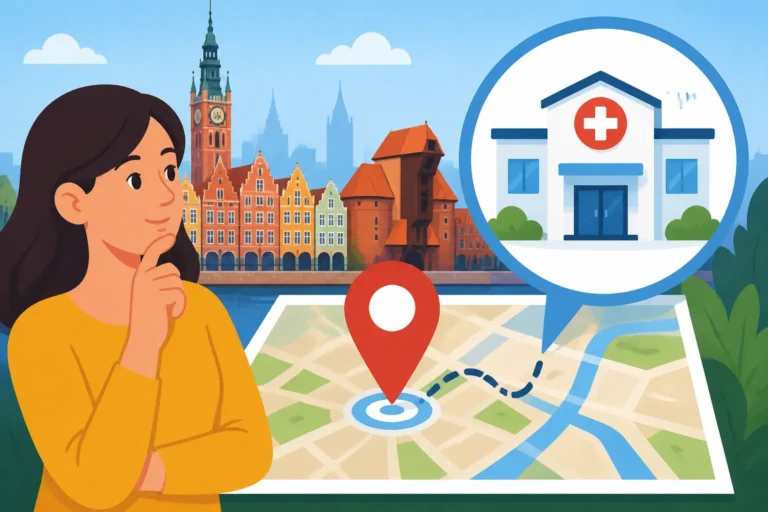
Imagine standing on a cobblestone street in Krakow or a busy intersection in Warsaw when a medical crisis strikes. The panic of not knowing who to call, or fearing a language barrier with dispatchers, can make a scary situation feel paralyzing. This guide explains the essential emergency phone numbers in Poland, how to communicate effectively during a crisis, and what to expect from the Polish rescue services.
The Universal European Emergency Number 112 in Poland
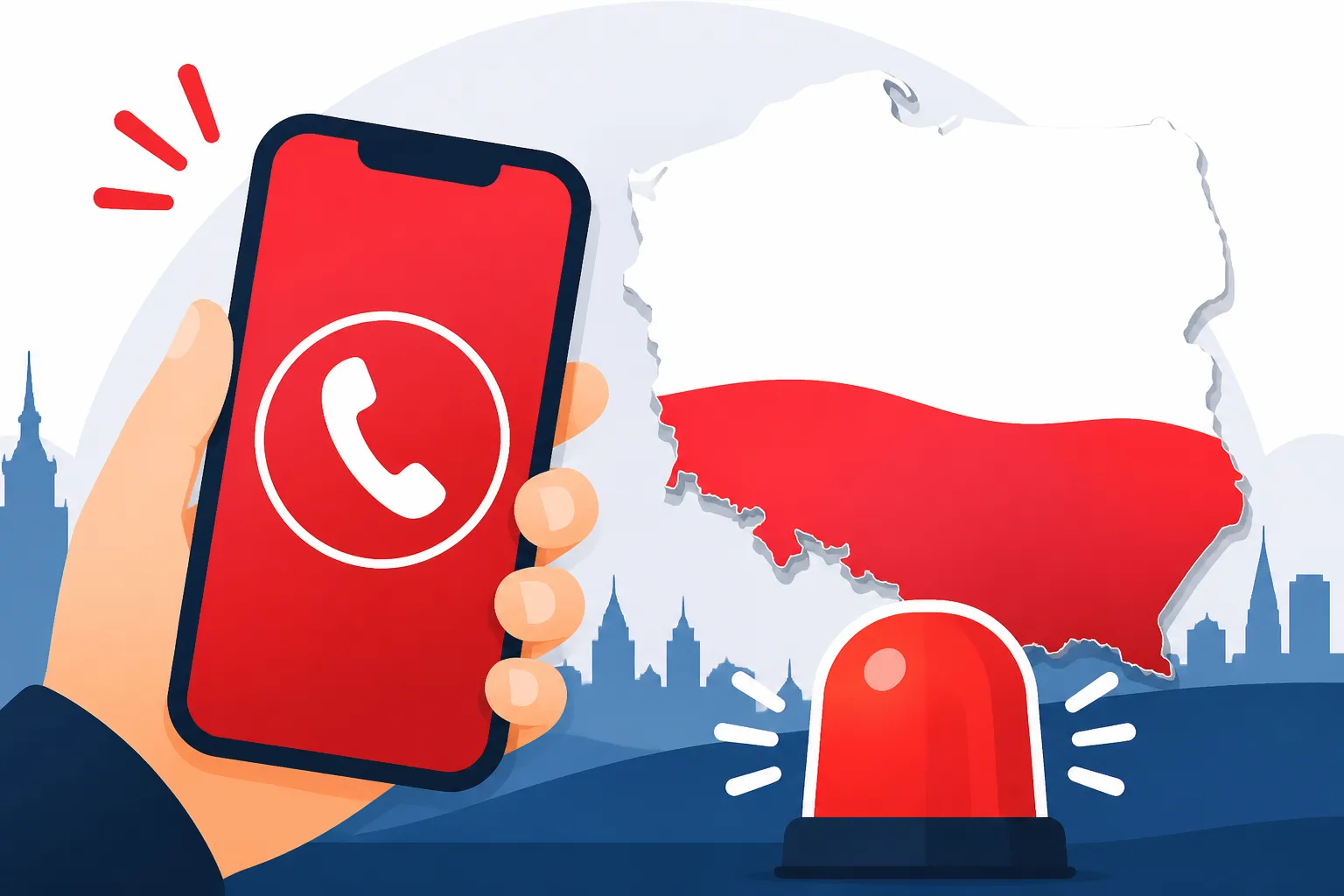
When you are in a state of shock, your brain rarely wants to remember a list of different digits. This is why the 112 number is your absolute lifeline. In Poland, 112 serves as the primary emergency portal that connects you to the Centrum Powiadamiania Ratunkowego (Emergency Notification Center). This center acts as a centralized hub where operators are trained to coordinate between the police, the fire department, and the medical rescue services.
If you are an expat or a tourist who doesn't speak fluent Polish, 112 is statistically your best bet. While many local dispatchers on the direct lines (like 999) are increasingly proficient in English, 112 operators are specifically prepared to handle international calls and can often route you to an English-speaking specialist or use translation protocols. For digital nomads or those just arriving, having a backup like SafetyWing can provide an extra layer of mental security, knowing that your travel medical insurance is ready to handle the aftermath of such a call.
How the 112 Dispatch System Functions
When you dial 112 from a mobile phone or a landline in Poland, the call is free of charge and works even if your SIM card is blocked or, in many cases, if you don't have a SIM card in the phone at all. The operator will first ask for the nature of the emergency. It is vital to stay on the line. I have seen many newcomers hang up once they hear Polish, assuming they’ve reached the wrong place. Don't do that. Wait for the operator to acknowledge you.
The operator’s job is to filter out non-emergency calls and gather the "four Ws": What is happening, Where is it happening, Who is involved, and What is the status of the victims. In Poland, the 112 system is highly integrated with GPS tracking, but you should still be ready to provide a specific address or a landmark, especially in dense urban areas like Wrocław or Gdańsk.
Language Barriers and the 112 Operator
One of the biggest fears for foreigners is the "language wall." If you find yourself unable to explain the situation in Polish, state clearly and slowly: "English, please." Most 112 centers in major Polish cities have someone on shift who can communicate in English, German, or occasionally Russian/Ukrainian. If you are in a very remote village in the Bieszczady mountains, the proficiency might be lower, so learning a few basic phrases like "Wypadek" (Accident) or "Karetka" (Ambulance) can be a literal lifesaver.
Even if the operator's English is rudimentary, they are trained to follow a script. Stay calm and speak in short, declarative sentences. For those who are still navigating the transition to local life, Emergency Medical Care in Poland: What Every Expat Needs to Know provides a deeper look into what happens once the operator dispatches help to your location.
Specific Polish Emergency Numbers 999, 998, and 997
While 112 is the universal standard, Poland still maintains its legacy three-digit emergency numbers. You will see these plastered on the sides of ambulances, fire trucks, and police cars. For many locals, dialing these numbers is second nature because it skips the "general" operator and goes directly to the specific service's dispatcher.
Knowing when to use 999 instead of 112 can sometimes save precious seconds in a life-or-death medical situation. If you are certain that you only need medical help—such as for a suspected heart attack or a severe allergic reaction—dialing 999 puts you in direct contact with the medical dispatch center. This is often faster because the dispatcher there is usually a trained paramedic or nurse who can give you immediate medical instructions over the phone while the ambulance is en route.
999: The Direct Line for Medical Emergencies
The number 999 is dedicated solely to the Ratownictwo Medyczne (Emergency Medical Services). When you call this number, you are bypassing the general 112 queue. In my experience living here, the 999 dispatchers are incredibly efficient, but they are also very direct. They will want to know if the person is breathing and conscious.
If you are calling for someone else, try to have their PESEL number or passport ready, though they will never deny life-saving care if you don't have it. If you are a traveler, SafetyWing is often a great companion here as it covers unexpected medical emergencies that might arise from these 999 calls. For those interested in the financial side of these calls, you might want to check How Much Does an Ambulance (Karetka) Cost in Poland? to understand how billing works for foreigners.
998 and 997: Fire and Police
The number 998 connects you to the Straż Pożarna (Fire Brigade). In Poland, the fire department does much more than just put out fires; they are the primary responders for chemical spills, car extractions after a crash, and even certain types of storm damage. If you see a gas leak or someone trapped, 998 is the direct route.
The number 997 is for the Policja (Police). Use this for crimes in progress, reporting a theft, or a traffic accident where there is a dispute or a significant blockage. However, if there are injuries in a car crash, most people default back to 112 so the operator can send both 999 (medical) and 997 (police) simultaneously.
| Number | Service | Best Used When |
|---|---|---|
| 112 | Universal Emergency | You are unsure who to call or need multiple services. Best for English speakers. |
| 999 | Ambulance (Pogotowie) | Life-threatening medical crises, unconsciousness, severe bleeding. |
| 998 | Fire Brigade (Straż) | Fires, gas leaks, trapped persons, natural disasters. |
| 997 | Police (Policja) | Crimes, accidents, immediate security threats. |
| 986 | City Guard (Straż Miejska) | Non-life-threatening public order issues, parking, noise complaints. |
What Happens When the Ambulance Arrives
Once you have placed the call to 999 or 112, the "Karetka" (ambulance) will be dispatched. In Poland, there are two main types of emergency medical teams: "P" teams (Podstawowy) which consist of paramedics and/or nurses, and "S" teams (Specjalistyczny) which include a physician. You don't get to choose which one comes; the dispatcher decides based on the severity of your report.
When the team arrives, they will stabilize the patient on-site. If the situation is critical, they will transport the patient to the nearest "SOR" (Szpitalny Oddział Ratunkowy), which is the Emergency Room. It is a common misconception among expats that you can ask to be taken to a fancy private clinic like Medicover or LUX MED during a 999 emergency. The public system dictates that you go to the nearest state facility equipped to handle your specific trauma.
The Role of the SOR and Hospitalization
The SOR is often a high-pressure environment. When you arrive by ambulance, you skip the "waiting room" queue to some extent, but you will still be triaged. If your condition is not life-threatening, you might wait several hours as more critical patients are brought in. This is where Understanding Hospital Care at a Szpital in Poland becomes essential reading to manage your expectations about the public hospital experience.
If you are an EU citizen, having your EHIC card is vital during these moments. For non-EU residents, your insurance details (like your SafetyWing policy) will be requested by the hospital administration later. They won't deny you emergency care based on insurance, but they will certainly bill you or your provider afterward.
After the Emergency: Documentation and the IKP
After the initial crisis is over, the paperwork begins. If you are registered in the Polish system, the doctors will upload your visit details to the What Is the IKP and How Do I Use It in Poland? system. This "Internetowe Konto Pacjenta" is where all your e-prescriptions and referrals will live. If you don't have a PESEL yet, the hospital will issue paper documentation, which you must keep for your insurance claims.
Non-Emergency Situations: When NOT to Call 112
One of the most common mistakes foreigners make in Poland is calling an ambulance for a high fever, a nasty flu, or a minor sprain. In Poland, calling 999 for a non-emergency can actually result in a significant fine (mandat) if the paramedics deem the call "unjustified." The emergency system is strictly for life-and-death situations or sudden health deterioration that prevents the patient from moving.
If you are sick but it’s not an emergency, you should use the "Nocna i Świąteczna Opieka Zdrowotna" (Night and Holiday Healthcare). These are clinics that operate from 6:00 PM to 8:00 AM on weekdays and 24 hours a day on weekends and holidays.
Utilizing Night and Holiday Clinics (NiŚOZ)
If you have a child with a 39-degree fever at midnight, don't call 112. Instead, find the nearest NiŚOZ station. These are often located within or next to hospitals but are separate from the SOR (Emergency Room). You don't need an appointment; you simply show up, present your ID or insurance, and wait for a GP to see you.
This service is covered by your NFZ contributions. If you are self-employed, understanding How Much Is the ZUS Health Contribution for the Self-Employed? will help you realize that you are already paying for this access. For those without public insurance, these visits are relatively affordable out-of-pocket, or you can use your private travel insurance.
Teleplatforma Pierwszego Kontaktu (TPK)
Poland also offers a national health helpdesk called the TPK. By calling 800 137 200 (outside of regular clinic hours), you can speak to a consultant, nurse, or doctor over the phone. They can even issue e-prescriptions or e-sick leaves (L4) if the situation warrants it. This is an incredible resource for expats who are unsure if their situation requires a hospital visit. For a full breakdown of these non-emergency options, see How Do I See a Doctor Outside of Business Hours in Poland?.
Costs, Insurance, and the Foreigner’s Experience
One of the first questions expats ask is, "Is this going to cost me a fortune?" The answer depends entirely on your insurance status. If you are working legally in Poland or are a dependent of someone who is, you are covered by the NFZ. In this case, the ambulance, the SOR visit, and any subsequent emergency surgery are free at the point of service.
However, if you are a tourist or a non-EU citizen without valid insurance, the costs can add up. While the prices in Poland are lower than in the US, they can still be a shock. This is why many veteran expats recommend a hybrid approach. Even if you have public insurance, a private medical subscription or a policy like SafetyWing can help cover the gaps, especially for things like medical evacuation or repatriation which the NFZ does not cover.
Public vs. Private: The Emergency Divide
It is important to understand that private medical centers in Poland, such as Medicover, LUX MED, or Enel-med, generally do not run emergency rooms or ambulance services that respond to 112/999 calls. If you have a private subscription, it is fantastic for specialist appointments and blood tests, but for a heart attack, the public system is the only game in town.
You can read more about this distinction in Public vs Private Healthcare in Poland: Which Should Expats Choose?. Essentially, the public system "owns" the emergency space, and the private system "owns" the comfort and speed of elective care. In a crisis, you want the public Ratownictwo Medyczne.
Special Considerations for Tourists and EU Citizens
If you are just visiting, you need to know if Can Tourists Access Emergency Care in Poland for Free?. For EU citizens, the How to Use Your EHIC (EKUZ) Card in Poland as an EU Citizen provides reciprocal access to emergency services, meaning you are treated under the same financial conditions as a Polish citizen. If you forget your EHIC card, you will likely be billed, and you’ll have to seek reimbursement from your home country’s health office later.
For non-EU tourists, having a dedicated travel medical policy like SafetyWing is not just a good idea—it is often a visa requirement. When the hospital asks for "Ubezpieczenie" (Insurance), showing them a valid digital policy card from a recognized international provider can save you a lot of administrative headaches.
Important Secondary Emergency Numbers
While 112 and 999 are the "big" ones, there are several other numbers that might be useful depending on your specific situation. These are often used for technical emergencies or specific safety concerns that don't necessarily require a siren-blaring response but are still urgent.
- 991: Power Emergency (Pogotowie Energetyczne). Call this if there is a power outage in your entire neighborhood or if you see downed power lines.
- 992: Gas Emergency (Pogotowie Gazowe). If you smell gas in your apartment building, call this immediately after evacuating.
- 993: District Heating Emergency (Pogotowie Ciepłownicze). Crucial during the harsh Polish winters if your radiators suddenly go cold.
- 994: Water and Sewage Emergency (Pogotowie Wodno-Kanalizacyjne). For major water main bursts or sewage leaks in the street.
Knowing these numbers can prevent a minor household disaster from turning into a major crisis. Many expats live in older "Kamienica" buildings where the infrastructure can be temperamentally sensitive. Keeping a list of these numbers on your fridge is a classic "pro-expat" move.
Disclaimer
The information provided in this guide is for informational purposes only and does not constitute professional medical or legal advice. Emergency procedures and phone numbers in Poland may change, and while we strive to keep this information up to date, you should always verify with official government sources such as the NFZ or the Ministry of Health. In the event of a life-threatening emergency, always dial 112 or 999 immediately.