How Do I Get Polish Citizenship Through Naturalisation After Residence?
After years of navigating Poland's immigration maze, from securing your initial Karta Pobytu to renewing it multiple times, you've finally built a life here – a job, a home, maybe even a family. Now, you're looking at the ultimate step: becoming a Polish citizen through naturalisation. It's a significant milestone, but the path, as with many administrative processes in Poland, can feel less like a clear road and more like a winding forest trail. This guide will walk you through the journey of applying for Polish citizenship after establishing a long-term residence, detailing the requirements, the infamous paperwork, and what to realistically expect.
Understanding the Path to Polish Citizenship by Naturalisation
When you’ve spent a significant portion of your adult life in Poland, contributing to its society and economy, the idea of becoming a citizen feels like a natural progression. It’s not just about a passport; it’s about deeper roots, full rights, and no more worrying about residence permit renewals. The Polish legal system offers several routes to citizenship, but for most expats who have steadily built their lives here, naturalisation after residence is the most common and logical path.
This process falls under the authority of the President of Poland. Unlike some other countries where citizenship applications are handled at a more local level, becoming a Polish citizen through naturalisation requires a presidential decree. This means the decision is often highly discretionary, even if you meet all the formal requirements. It's not uncommon for the process to be lengthy and for additional documents or clarifications to be requested, sometimes multiple times. The sheer gravitas of a presidential decision means thorough scrutiny is applied to every applicant, making the wait particularly nerve-wracking for many.
It’s crucial to understand that naturalisation is generally reserved for individuals who can demonstrate genuine integration into Polish society. This isn't just about ticking boxes; it's about showing a real connection to the country, its culture, and its people. Your journey likely started with a temporary residence permit, maybe a work visa or a student visa, then perhaps moved on to something more stable like a permanent residence or even EU long-term resident status. Each step solidified your commitment to Poland, and the citizenship application is the culmination of that long-term dedication. This is where your history in Poland, your job, your language skills, and your social ties all come together to paint a picture of someone who genuinely belongs.
Key Requirements for Naturalisation After Residence
To even consider applying for Polish citizenship through naturalisation after residence, you need to meet a specific set of criteria. These aren't just suggestions; they are statutory requirements that must be demonstrably fulfilled. Don't underestimate any of these points – Polish authorities are meticulous, and any perceived gap can lead to delays or even a negative decision.
The Uninterrupted Stay: Years on Polish Soil
One of the most fundamental requirements is demonstrating a continuous period of residence in Poland. This isn't just about having a Karta Pobytu; it's about the type of residence permit you hold and the duration of your stay. The law specifies different periods based on your status:
- At least 3 years of uninterrupted stay in Poland based on a permanent residence permit (Pobyt Stały) or an EU long-term resident permit (Rezydent Długoterminowy UE), provided you have a stable and regular source of income and a legal title to occupy a dwelling. This is often the path for those married to a Polish citizen for at least 3 years.
- At least 10 years of uninterrupted stay in Poland, having held a permanent residence permit or EU long-term resident permit for at least 8 of those years, and fulfilling the same stable income and housing requirements. This path is less common for new arrivals but might apply to those who've been here for a very long time under various statuses before securing permanent residence.
- At least 2 years of uninterrupted stay in Poland for foreigners who have been married to a Polish citizen for at least 3 years, and who hold a permanent residence permit or an EU long-term resident permit. This is often the fastest route for those who've integrated through family ties.
- At least 2 years of uninterrupted stay in Poland on a permanent residence permit or EU long-term resident permit, for refugees.
The term "uninterrupted" has specific legal definitions, too. Generally, it means that no single absence from Poland should exceed 6 months, and the total duration of absences during the required period should not exceed 10 months. However, exceptions exist for compelling reasons like work assignments or medical treatment abroad, but these need to be well-documented and justified. It’s worth checking your travel history meticulously if you’re close to these thresholds.
For many, achieving Permanent Residence in Poland: The Complete Pathway (2027) or Understanding EU Long-Term Resident Status in Poland is the preceding monumental step that unlocks the naturalisation application. It’s a multi-year commitment, truly, and your administrative record needs to be spotless during this time.
Demonstrating a Stable and Regular Source of Livelihood
Poland wants to ensure that new citizens can support themselves and won't become a burden on the state. This means you need to prove you have a reliable and consistent income stream. This isn't about being rich; it's about demonstrating financial stability.
What counts as a "stable and regular source of livelihood"?
- Employment Contract (Umowa o Pracę): This is usually the strongest proof. Regular salary payments, a stable employer, and a long-term contract indicate stability. You'll need your employment contract, payslips, and annual tax returns (PIT forms). For a deeper dive into working in Poland, check out The Complete Guide to Working in Poland as a Foreigner (2027) and Understanding Income Tax (PIT) in Poland: The Full Expat Guide.
- Self-Employment (JDG): If you run your own business, you'll need to provide extensive documentation: your business registration, invoices, bank statements showing regular income, and your annual tax returns.
- Other Sources: Pension income, rental income from properties, or even regular income from a foreign source (if legally declared and taxed in Poland) can also be considered. However, unemployment benefits or social welfare are generally not considered a stable source of livelihood for citizenship purposes.
The authorities will look for consistency over the required period of residence. They want to see that this income isn't sporadic but genuinely forms the basis of your financial life in Poland. Make sure your tax declarations are always up-to-date and reflect your true income – The Complete Guide to Taxes in Poland for Expats (2027) can help you keep everything in order.
A Legal Title to Occupy a Dwelling
Just like with income, you need to prove you have a place to live legally in Poland. This means you can't just be couch-surfing or staying without formal arrangement.
Acceptable proofs include:
- Rental Contract (Umowa Najmu): A properly registered rental agreement is perfectly acceptable. It should be current and ideally cover a significant portion of your qualifying residency period.
- Property Ownership: If you own an apartment or house, the excerpt from the Land and Mortgage Register (Księga Wieczysta) or your purchase deed will serve as proof.
- Usufruct or Lending Agreement (Umowa Użyczenia): If you're living in a property owned by a family member or friend, a formal usufruct agreement (prawo użytkowania) or a lending agreement (umowa użyczenia) stating your right to reside there, along with proof of their ownership, can be used.
The key is that the dwelling must be located in Poland, and your right to occupy it must be legally recognised. They want to see that your "home" is genuinely here, not just a temporary stop.
The Polish Language Requirement: Not Just "Dzień Dobry"
This is often one of the biggest hurdles for many expats. To become a Polish citizen through naturalisation, you must demonstrate proficiency in the Polish language at a minimum B1 level (according to the Common European Framework of Reference for Languages – CEFR).
How to prove your B1 Polish language skills:
- State Certificate: The most common and widely accepted method is obtaining a state certificate confirming your B1 level. These exams are administered by institutions accredited by the Polish Ministry of Education. You'll need to register, take the exam (which includes reading, writing, listening, and speaking sections), and pass it. The exam dates are limited, and registration often closes months in advance, so plan ahead!
- Completion of a Polish School: If you completed a primary or secondary school in Poland (which might apply to children of expats), this can also serve as proof.
- Completion of Higher Education in Polish: Graduating from a Polish university with a degree taught in Polish is another valid form of proof.
If you've been putting off your Polish lessons, now is the time to get serious. It's not just a formality; it's a genuine expectation of integration. Many expats find great value in language courses to prepare. For more on this, check out Learning Polish: A Complete Guide to Language Courses and Levels. It's a challenging but ultimately rewarding part of integrating into Polish society, and the effort truly shows your commitment.
A Clean Record and Good Reputation
The Polish government will conduct background checks as part of your application. This means they'll look into your criminal record, both in Poland and potentially in your home country, and evaluate your general conduct. They're looking for individuals of "good reputation."
This typically involves:
- No criminal convictions: A clean criminal record is essential.
- Compliance with laws: This includes respecting Polish laws, paying your taxes (as outlined in guides like The Complete Guide to Taxes in Poland for Expats (2027)), and generally being a law-abiding resident.
- Integration and social behaviour: While less formally assessed, evidence of social integration and positive contributions to your community can indirectly support your application.
Any issues here can be a significant roadblock, so ensuring you have a clean slate is paramount.
The Application Process: Step-by-Step
Navigating the actual application for Polish citizenship is a meticulous process, demanding patience and attention to detail. It's not something you rush, and typically takes a good deal of preparation.
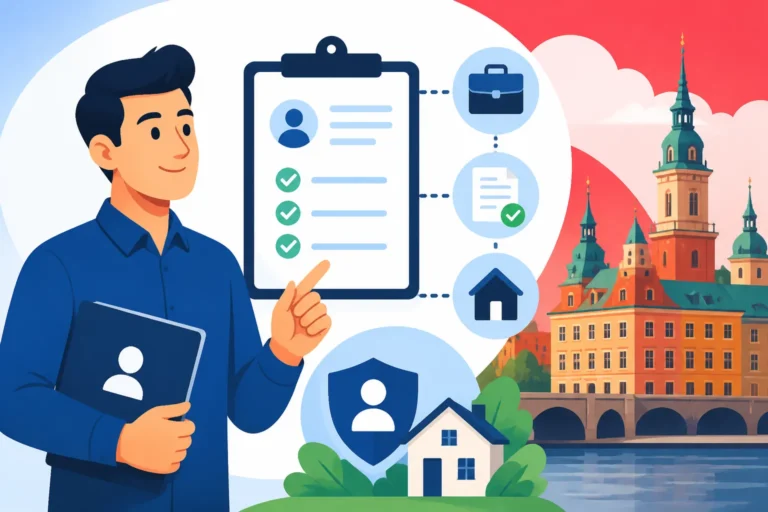
Step 1: Gathering All Necessary Documents
This is arguably the most time-consuming part. You'll need a comprehensive set of original documents and their certified copies, often translated into Polish by a sworn translator (tłumacz przysięgły).
Here's a list of typical documents, though always check the most current requirements on the official government website (Urząd Wojewódzki or Ministry of Interior and Administration):
- Application Form (Wniosek o nadanie obywatelstwa polskiego): Fill this out meticulously. Don't leave any blanks.
- Biometric Photographs: Recent, passport-style photos meeting Polish requirements.
- Your Karta Pobytu or Residence Card: Original and copy. For many, the journey to naturalisation began with How to Get a Temporary Residence Permit (Karta Pobytu) in Poland (2027), so this document is a testament to your long-term commitment.
- Birth Certificate: Full version, often with an apostille if from abroad, and a sworn translation.
- Marriage Certificate (if applicable): Full version, with apostille if from abroad, and a sworn translation.
- Children's Birth Certificates (if applicable): If you're applying for citizenship for your minor children along with yourself.
- Proof of Stable and Regular Income: As discussed above – employment contracts, bank statements, tax returns (PIT-37, PIT-36, etc.).
- Proof of Legal Title to Occupy a Dwelling: Rental agreement, ownership deed, or usufruct agreement.
- Polish Language Certificate: Your official B1 certificate.
- Comprehensive CV: Outlining your education, professional experience, and residence history in Poland.
- Declaration of Foreign Citizenship (if applicable): A statement about whether you possess or intend to renounce other citizenships (Poland allows dual citizenship, but some countries do not).
- Police Clearance Certificate: From your home country and any other country you've lived in for a significant period. You'll also need one from Poland (zaświadczenie o niekaralności).
- PESEL and NIP Number: Proof of these essential identifiers. If you haven't sorted this out, see How to Get a PESEL and NIP Number in Poland.
- Receipt of Application Fee Payment: There is a fee for the application, usually paid to the relevant Urząd Wojewódzki's bank account.
Pro-tip: When dealing with foreign documents, always check if an apostille is required and ensure the sworn translations are done by a Polish sworn translator. A regular translation won't cut it.
Step 2: Submitting Your Application
Once your mountain of paperwork is ready, you'll generally submit your application to one of two places:
- Urząd Wojewódzki: If you are currently residing in Poland, you submit your application to the Department for Citizens' Affairs and Foreigners (Wydział Spraw Obywatelskich i Cudzoziemców) of the appropriate Urząd Wojewódzki for your place of residence. You often need to book an appointment well in advance – How to Book an Appointment at the Urząd Wojewódzki for Immigration is a good resource for this.
- Polish Consulate Abroad: If you are living outside Poland but meet the residence requirements for naturalisation (e.g., married to a Polish citizen but living abroad with them), you can submit your application through a Polish Consulate in your country of residence.
It’s advisable to submit in person if possible, even if you’ve had a service like Sirelo help you with the initial relocation and settling-in. This allows you to hand over the originals and have someone from the Urząd check them against your copies immediately.
Step 3: The Interview (Potential)
While not always mandatory, especially for straightforward cases, you might be called for an interview. This is typically to clarify details in your application, assess your Polish language skills informally, and gauge your level of integration into Polish society. Be prepared to discuss your reasons for wanting Polish citizenship, your daily life in Poland, your work, and your understanding of Polish history and culture. It's a chance to show your genuine connection to the country.
Life After Applying: Waiting and What to Expect
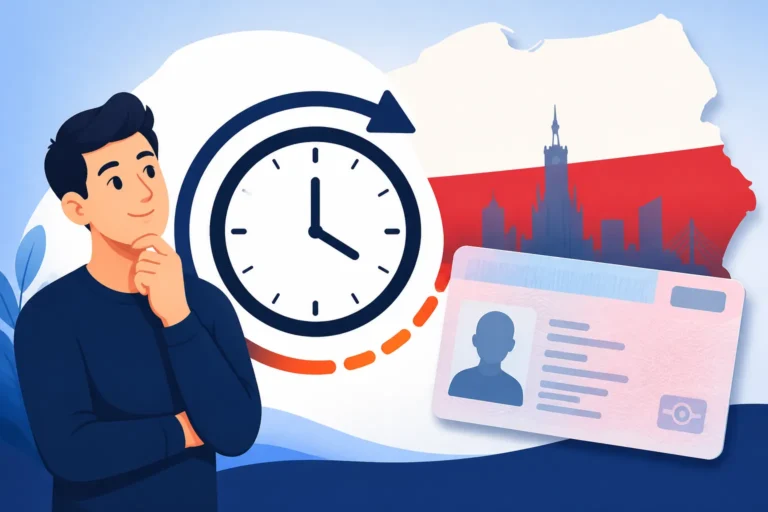
Once your application is submitted, the waiting game begins. And let me tell you, it can be a very long game.
The Long Wait: Patience is Key
Processing times for naturalisation applications can vary significantly, ranging from several months to a couple of years, sometimes even longer. This is partly due to the presidential nature of the decision and the thorough background checks involved. Don't expect a quick turnaround, and try not to call the office every other week – it won't speed things up.
During this time, the Urząd Wojewódzki or the Ministry of Interior and Administration (MSWiA) might contact you to request additional documents or clarifications. It's crucial to respond to these requests promptly and provide exactly what they ask for. If you change address or employment during this period, inform the authorities immediately. Throughout your long stay in Poland, ensuring you had proper health coverage, perhaps through an international provider like Cigna Global, was likely a priority. Similarly, maintaining continuous good standing is vital during the citizenship application wait.
The Decision: Presidential Decree
Once all checks are complete and your application has been processed, it will be forwarded to the President of Poland. The President then makes the final decision by issuing a decree (postanowienie o nadaniu obywatelstwa polskiego) or a refusal.
If your application is approved, you will receive an official document confirming the acquisition of Polish citizenship. This is the moment of truth, the culmination of your administrative odyssey!
What Happens Next: The Oath and Your New Identity
After receiving the presidential decree, there are a few final steps:
- Oath of Allegiance: You'll typically be invited to take an oath of allegiance to the Republic of Poland. This is a formal, often moving, ceremony where you declare your loyalty to the country.
- New Documents: Once you've officially become a citizen, you'll need to apply for a new Polish birth certificate (if you didn't have one already), a Polish ID card (dowód osobisty), and of course, your Polish passport. Your PESEL will remain the same, but your legal status changes fundamentally.
- Renunciation (if applicable): If your previous country's laws do not permit dual citizenship, you might need to initiate the process of renouncing your former citizenship after acquiring Polish citizenship. This is a complex matter, so ensure you understand the laws of both countries well in advance. Poland generally accepts dual citizenship, so you won't be forced to renounce your original citizenship by Polish law, but your home country might have different rules.
Becoming a Polish citizen through naturalisation after years of residence is a profound step. It’s a testament to your resilience in navigating a new country and its bureaucracy, and a commitment to making Poland your permanent home. It's a journey that demands preparation, patience, and a genuine desire to be part of the Polish nation.
Key Stages and Waiting Times for Polish Citizenship Naturalisation
| Stage of Application | Estimated Processing Time | Key Actions Required from Applicant |
|---|---|---|
| Document Gathering | 1-6 months | Collect originals, certified copies, sworn translations; obtain language certificate, police clearances. |
| Submission & Initial Review | 1-3 months | Submit application (Urząd Wojewódzki or Consulate), pay fee. Officers check formal completeness. |
| Background Checks & Clarifications | 6-18 months | Respond to requests for additional documents/information; attend potential interview. |
| Ministerial Review | 3-6 months | Application reviewed by Ministry of Interior and Administration (MSWiA). |
| Presidential Decision | 3-12 months | Final decision by the President of Poland. |
| Post-Decision (Oath, Documents) | 1-3 months | Attend oath ceremony; apply for Polish ID and passport. |
| Total Estimated Time | 18 months to 4+ years | Patience, persistence, and proactive responses are paramount. |
Note: These are estimated times and can vary greatly depending on individual circumstances, completeness of the application, and current administrative workloads.
Disclaimer
The information provided in this guide is for general informational purposes only and does not constitute legal advice. While we strive to offer accurate and up-to-date content, immigration laws and procedures in Poland are subject to change. It is highly recommended to consult directly with the relevant Polish authorities (Urząd Wojewódzki, Ministry of Interior and Administration) or a qualified immigration lawyer for advice specific to your individual situation before making any decisions related to your Polish citizenship application.