How Do I Apply for Residence Based on Running a Business in Poland?
Oh, the joys of setting up a business in a new country! If you're an expat entrepreneur dreaming of establishing your roots and your enterprise in Poland, you've likely already encountered the thrilling dance of Polish bureaucracy. Trying to secure a residence permit based on your business activity here can feel like navigating a maze blindfolded, but don't worry, you're not alone. This guide will walk you through the nitty-gritty of applying for a temporary residence permit – often referred to as a Karta Pobytu – when your primary reason for staying is running your own business. We'll break down the requirements, the infamous documentation pile, and what to expect on this unique journey.
Understanding the Business Residence Permit Landscape in Poland
When you decide to plant your flag in Poland not just as an employee, but as an entrepreneur, the path to legal residency takes a slightly different turn. It's not just about finding a job and getting a work permit; it's about demonstrating that your business is a legitimate, viable entity contributing to the Polish economy.
The 'Why' Behind This Specific Permit
Poland, like many other European nations, is keen to attract foreign investment and skilled entrepreneurs. They want innovators, job creators, and people who will contribute to the local economy. This specific residence permit for business activity, often tied to a Karta Pobytu, is designed precisely for that. It’s the Polish government's way of saying, "Show us you're serious about contributing here, and we'll give you a chance to build your dream." However, it’s crucial to understand that they're looking for genuine business activity, not just a shell company to get a permit. The authorities want to see that your business is truly operating, generating income, and ideally, paying taxes and perhaps even employing people. It’s a reciprocal relationship: you boost their economy, and they grant you the right to reside here.
Key Differences from Other Residence Permits
Unlike a traditional work permit (which is employer-sponsored and ties you to a specific job) or a student permit, a business-based residence permit puts the onus entirely on you, the entrepreneur. You are not reliant on a Polish employer to vouch for your stay. Instead, you need to prove that your own business venture is sufficient grounds for residency. This means you’ll be demonstrating the financial health and operational activity of your company rather than just presenting an employment contract. This also applies if you are self-employed as a sole trader, often referred to as a Jednoosobowa Działalność Gospodarcza (JDG). You're essentially applying for a temporary residence permit based on carrying out economic activity. If you're trying to understand the intricacies of setting up as a sole trader, you might find our guide on Understanding Residence for Self-Employment (JDG) in Poland incredibly helpful. It really dives deep into the differences and what it means for your residency.
Who Is This Permit For?
This permit is generally for non-EU/EEA citizens who have established, or are in the process of establishing, a business entity in Poland. This can be anything from a JDG (sole proprietorship) to a Spółka z o.o. (limited liability company). The key is demonstrating that your business activity is real and sustainable. This isn't a permit for speculative business ideas; it's for those with concrete plans and, ideally, initial investments or operational proof. The authorities will scrutinize your business plan, your financial projections, and whether you genuinely have the means to support yourself and your enterprise. They look for evidence of your economic activity, which means demonstrating income, expenses, and a clear path to profitability. If your business is merely registered on paper but shows no activity, or worse, consistently operates at a loss without a clear path to recovery, your application will likely hit a wall faster than you can say "Urząd Wojewódzki."
The Step-by-Step Application Process for Business Residence
Alright, let's get down to brass tacks. Applying for a residence permit is a marathon, not a sprint, and for business owners, there are extra hurdles to consider even before you fill out the first form.
Before You Apply: Setting Up Your Business Foundation
Before you even think about submitting a residency application, you absolutely must have your business ducks in a row. This means your business needs to be legally registered and active in Poland. Whether you opt for a Jednoosobowa Działalność Gospodarcza (JDG) as a sole proprietor or set up a Spółka z o.o. (limited liability company), this is your starting point. You'll need to obtain your NIP (Tax Identification Number) and REGON (National Business Register Number) – essential for any business operations here.
Many expats lean towards the JDG for its relative simplicity, especially in the early stages. If you’re considering this route, make sure to check out How to Register a JDG (Jednoosobowa Działalność Gospodarcza) in Poland for a comprehensive walkthrough. The authorities will expect to see proof of your business registration, a detailed business plan outlining your activities, projected income, and how your business contributes to Poland. This isn't just about registering a company; it's about having a solid, actionable plan that shows your commitment and potential.
Gathering Your Mountain of Documents
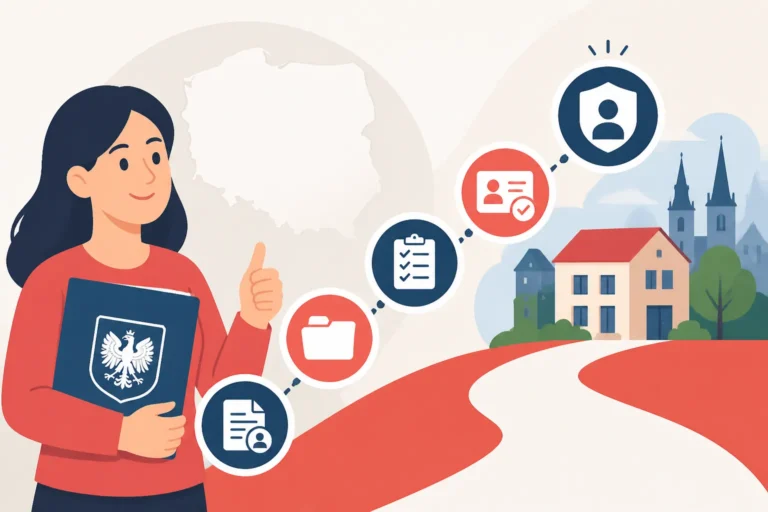
This is where the legendary Polish bureaucracy truly shines – or rather, blinds you with paperwork. The list of documents can be extensive, and missing even one tiny detail can send your application straight back to square one. You'll need original documents along with photocopies, and any foreign documents usually need to be apostilled or legalised, and then translated into Polish by a sworn translator. Do NOT skimp on this step; it's a make-or-break part of your application.
Here's a breakdown of the typical documents you'll need:
| Document Category | Specific Items Required | Notes for Expats |
|---|---|---|
| Personal Identity | Valid passport (all pages copied) | At least two blank pages, validity longer than permit requested. |
| Four recent passport-sized photos | Specific dimensions, neutral background. | |
| Completed application form (Wniosek) | Available at Urząd Wojewódzki or online. Fill thoroughly in Polish. | |
| Business Registration | Extract from KRS (for Sp. z o.o.) or CEIDG (for JDG) | Proof of active business registration. |
| NIP and REGON numbers | Essential identification for tax and statistics. | |
| Business plan | Detailed, realistic, showing market analysis, strategy, financial projections. | |
| Financial Viability | Bank statements (personal & business) | Showing sufficient funds for living expenses and business operations. |
| Proof of income (if applicable) | Previous tax returns, invoices, contracts. | |
| Evidence of investment in Poland (e.g., equipment purchase, office rent) | Demonstrates active business. | |
| Proof of health insurance | Mandatory. Consider international options like Cigna Global if you're not yet in the public system, as they offer comprehensive coverage often required for visas. Otherwise, NFZ registration. You can learn more about this in What Health Insurance Do I Need for a Polish Residence Permit?. | |
| Accommodation | Rental agreement, deed of ownership | Proof of a stable place to live in Poland. Our guide on How Do I Prove Accommodation for a Polish Residence Permit? has more details. |
| Administrative | PESEL number | While not always mandatory for the initial application, it becomes crucial for many aspects of life and business in Poland. Get it sorted if possible. You can find more info on How Do I Apply for a PESEL for My Residence Process?. |
| Confirmation of payment for the application | Usually a bank transfer slip. |
Remember, the Urząd Wojewódzki might ask for additional documents depending on your specific situation or the nature of your business. Always prepare more than you think you need!
Submitting Your Application and the Waiting Game
Once you have your colossal pile of perfectly translated and copied documents, it's time to submit. You'll generally need to book an appointment at your local Urząd Wojewódzki (Voivodeship Office). This can be a challenge in itself, as slots fill up quickly, especially in major cities like Warsaw or Krakow. Persistence is key! Our guide on How Do I Book an Urząd Wojewódzki Appointment for My Karta Pobytu? can give you some practical tips on this.
At your appointment, an officer will review your documents. Be prepared for questions, and if you're not fluent in Polish, bringing a trusted Polish-speaking friend or professional translator is highly advisable. You’ll also undergo biometric data collection (fingerprints). After submission, you enter the dreaded "waiting game." Processing times can vary wildly, from a few months to well over a year, depending on the volume of applications and the complexity of your case. You might receive official letters (we call them wezwania) requesting additional documents or clarifications. Respond promptly and meticulously!
Navigating the Challenges and Maintaining Your Status
Getting the initial permit is just one part of the journey. Keeping it, and eventually upgrading it, requires continued diligence and clear demonstration of your business's success in Poland.
Proving Your Business's Viability and Impact
This is perhaps the most critical aspect for a business residence permit. It’s not enough to simply register a company; you need to prove that it's active, viable, and ideally contributing positively to the Polish economy. The authorities want to see evidence that your business:
- Generates sufficient income: Not just to cover its own costs, but also to support your living expenses in Poland. They want to ensure you won't become a burden on the state.
- Pays taxes: This is a big one. Consistent tax payments (CIT for companies, PIT for JDG) are concrete proof of economic activity. Our guide on The Complete Guide to Taxes in Poland for Expats (2027) can shed light on this complex topic.
- Has a positive impact: This could mean creating jobs for Polish citizens, bringing innovative services, or exporting Polish goods. While not always a strict requirement for the first permit, it certainly strengthens your case for renewals and future long-term residency.
Be prepared to provide financial reports, bank statements showing transactions, invoices, contracts, and anything else that proves your business is more than just an idea. They're looking for substance, not just good intentions.
Renewing Your Permit and Pathways to Permanent Residence
Your initial business residence permit will likely be granted for a period of one to three years. As the expiry date looms, you’ll need to apply for an extension or a new permit. The good news is that if your business has been consistently active and profitable, and you’ve adhered to all regulations, the renewal process is generally smoother. You'll largely provide updated versions of the same documents, demonstrating continued business activity and financial stability.
After a continuous period of legal residence (typically five years) on temporary permits, you can then start exploring pathways to permanent residence. This is a significant step towards long-term stability in Poland. To qualify for How Long Must I Live in Poland to Get Permanent Residence?, you'll generally need to show a consistent and stable source of income, an active business, and often, some level of Polish language proficiency. Each successful business residence permit brings you one step closer to making Poland your permanent home.
Important Considerations for Business Expats
Beyond the paperwork, running a business in a new country comes with its own set of cultural and logistical challenges. Understanding Polish business etiquette, navigating local supplier networks, and building relationships are all crucial. From a practical standpoint, think about your entire relocation. Moving your household goods, setting up your life, and getting your business off the ground simultaneously can be overwhelming. Companies like Sirelo can be invaluable partners in managing the logistics of your move, freeing you up to focus on the essential aspects of your business and permit application.
Remember to stay on top of your Polish tax obligations, utilize the e-Urząd Skarbowy online tax portal, and consider getting professional accounting advice early on. Poland has a dynamic business environment, but it's one that rewards those who take the time to understand its nuances.
Common Pitfalls and How to Avoid Them
Even with the best intentions, it's easy to stumble through the application process. Let's look at some of the most common pitfalls expats encounter and how you can steer clear of them.
Insufficient Documentation and Financial Proof
This is, without a doubt, the number one reason for rejections or prolonged processing times. The Polish authorities are extremely meticulous. If a document is missing, improperly translated, or doesn't meet their specific criteria, your application will be delayed. It’s not personal; it’s just how the system operates. When it comes to financial proof, "sufficient funds" isn't a vague suggestion. You need to show enough money not just for your personal living costs, but crucially, for the operation and development of your business. A detailed and realistic business plan with solid financial projections, backed by bank statements that show healthy balances and active transactions, will significantly strengthen your case. Simply having a business registration and a few zlotys in an account won't cut it.
Lack of a Clear Business Plan or Activity
As mentioned earlier, merely registering a business in Poland is insufficient for a residence permit. The authorities are looking for genuine economic activity. If your business exists only on paper, or if you can't demonstrate real operations, income generation, or a clear strategy for growth and contribution to the Polish economy, your application will raise red flags. Be prepared to articulate your business model, your target market, your marketing strategy, and how you plan to sustain and grow your enterprise in Poland. This isn't just a formality; it's the core of your application. Provide evidence of actual work, even if it's early stage: client contracts, invoices issued, marketing materials, website, and so on.
Language Barriers and Bureaucracy
Let’s be honest, Polish bureaucracy can be daunting, even for native speakers. For expats, the language barrier often amplifies the frustration. Official correspondence from the Urząd Wojewódzki will almost always be in Polish, and misunderstandings can lead to costly delays or mistakes. Don't rely on Google Translate for official documents or communication. Investing in the services of a professional legal advisor or a trusted immigration consultant who specializes in expat business residency can be a game-changer. They can help you prepare your documents correctly, communicate effectively with the authorities, and navigate the system’s intricacies, potentially saving you months of headaches and uncertainty. Remember, this is a long-term investment in your future here, so professional help can be invaluable.
Disclaimer
Please remember that immigration laws and procedures in Poland can change. While this guide aims to provide up-to-date and accurate information based on general knowledge and current practices, it is not a substitute for professional legal advice. Always consult with a qualified immigration lawyer or specialist for advice tailored to your specific situation.