How Do I Get a Referral to a Hospital in Another City in Poland?
Finding your way through the Polish healthcare system can feel like navigating a labyrinth, especially when you need to see a specialist or get hospital care outside your immediate city. The bureaucracy alone is enough to make anyone want to throw their hands up, let alone when you're dealing with it in a foreign language while feeling unwell. This guide will meticulously walk you through the process of obtaining a hospital referral for treatment in a different Polish city, demystifying the steps and helping you prepare for common challenges.
Understanding the Referral System for Inter-City Care
Let's be honest, the Polish healthcare system, for all its merits, wasn't exactly designed with the international expat in mind. One of the core tenets of public healthcare here, managed by the Narodowy Fundusz Zdrowia (NFZ), is the skierowanie – a referral. This piece of paper, or increasingly, its digital equivalent, is your golden ticket to most specialist consultations, diagnostic tests, and hospital treatments. Without it, you're usually looking at private care, which isn't always feasible.
The concept itself isn't too complicated: your general practitioner (GP), known as a lekarz rodzinny or lekarz POZ (Podstawowa Opieka Zdrowotna), acts as the gatekeeper. They assess your condition and, if necessary, issue a referral to a specialist or for hospital admission. Where things get a bit murky for us expats is when that specialist or hospital isn't just down the road, but rather in a different city entirely. Many mistakenly believe the referral binds them to their local NFZ branch or specific clinics, but the truth is a bit more nuanced.
The Role of Your Lekarz POZ (Family Doctor)
Your lekarz POZ is genuinely the first and most critical point of contact for almost all your healthcare needs in Poland. Think of them as your primary advocate and navigator within the public system. When you're seeking care, whether it's for a persistent cough, a sprained ankle, or a more serious condition requiring specialist attention, your journey almost always begins here. You typically choose and register with a GP clinic (przychodnia) near your place of residence. If you're wondering how to get started, our detailed guide on The Expat Guide to Finding a Family Doctor (Lekarz Rodzinny) in Poland can certainly help.
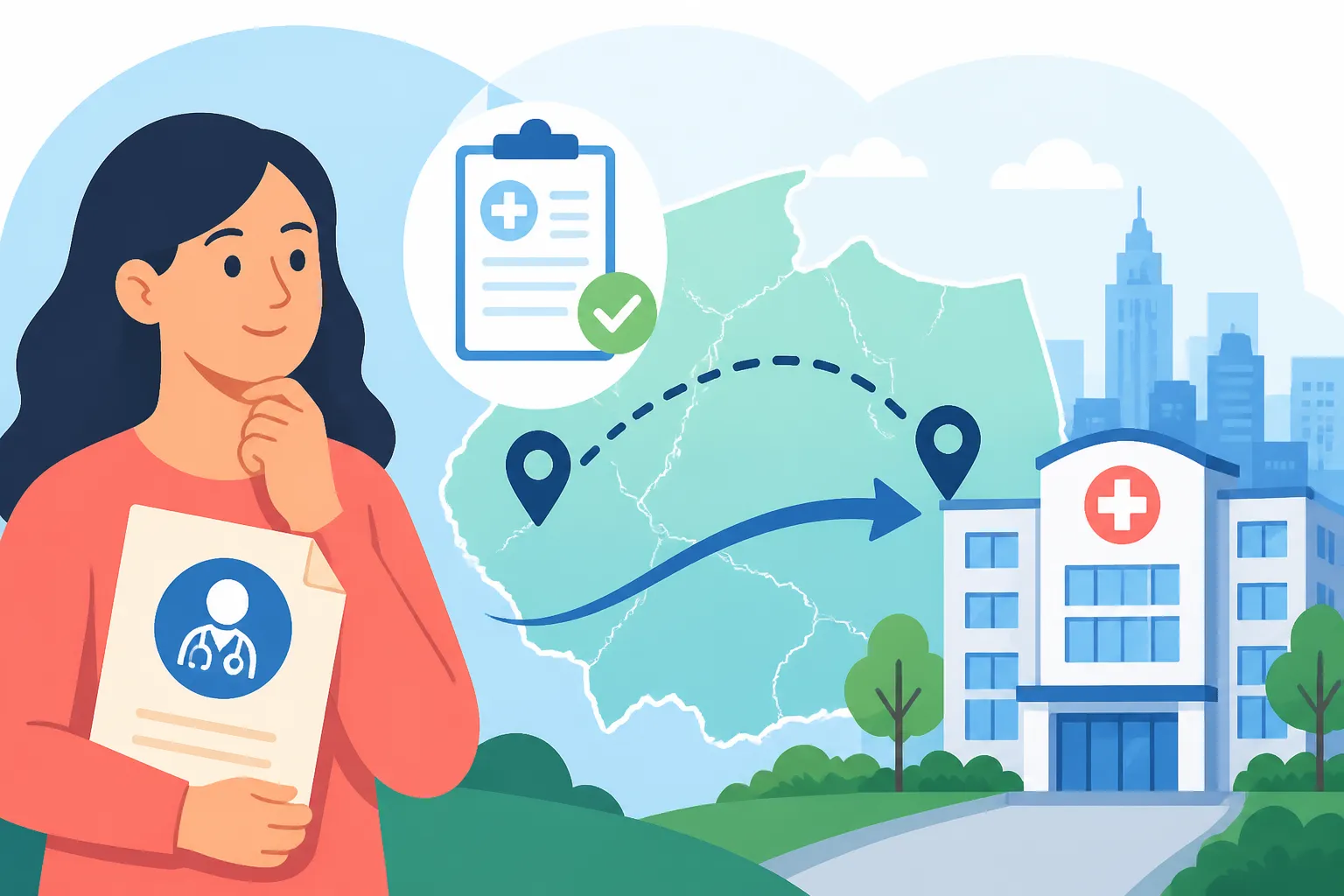
When you need a referral to a hospital in another city, the conversation must start with your current GP. They're the ones legally authorized to issue the skierowanie. It's not like you can just walk into any hospital in another city and demand to be seen for non-emergency issues. Your GP will assess your medical need, discuss the reasons why you believe care in another city is preferable (e.g., a specific specialist known for a rare condition, proximity to family support, or simply shorter waiting times you've identified), and then issue the appropriate referral.
Crucially, Poland has largely transitioned to an electronic referral system, known as e-skierowanie. This means your referral isn't a physical document you carry around. Instead, it's an electronic code, usually sent via SMS or accessible through your Internetowe Konto Pacjenta (IKP) Patient Account. This digital approach can make inter-city referrals smoother, as the code is universally valid across the NFZ system, regardless of where it was issued. However, the onus is still on you to find a hospital that will accept it and schedule an appointment. You can learn more about how e-Skierowanie (E-Referrals) Work for Specialists in Poland for a deeper dive.
Why a Referral to Another City Can Be Tricky
While an e-skierowanie is technically valid nationwide, getting a spot at a hospital in a different city can still present a unique set of challenges. It's not that the system prevents it, but rather that the practicalities often make it feel like an uphill battle. For instance, while a major hospital in Warsaw might have a specific neurology department you've heard good things about, their internal scheduling and patient load might heavily prioritize local residents or those referred from their immediate regional clinics.
Another tricky aspect is that hospitals, even within the NFZ system, operate with different contracts and specializations. A hospital might be fully contracted for cardiology but have limited NFZ funding for a less common procedure, leading to longer waits or even a refusal for certain services if you're not within their primary catchment area. It's not a hard-and-fast rule, but a reality you might encounter. This is where the concept of "NFZ contracts" comes into play – hospitals and clinics have agreements with the NFZ to provide specific services, and the scope can vary. Understanding how Poland's National Health Fund (NFZ) Works: A Full Overview is vital here.
Furthermore, communication barriers can exacerbate the perceived difficulty. Trying to explain your situation, ask about specific departmental waiting lists, and navigate the booking system over the phone, often in Polish, can be incredibly frustrating. This is where having a Polish-speaking friend, or even hiring a medical translator for the initial calls, can be invaluable. Even though the referral itself is technically mobile, the administrative hoops to jump through might make you wish you had just stayed put. However, don't despair – with a bit of persistence and the right strategy, it's absolutely doable.
Steps to Getting a Hospital Referral for a Different City
So, you've decided you need to seek hospital care or a specialist consultation outside your current city. Perhaps it's for a rare condition, a specific surgeon, or simply to escape the notorious waiting lists in your local area. Whatever the reason, here’s a step-by-step approach to make the process as smooth as possible.
Initial Consultation with Your Current GP
As we've covered, your journey begins with your assigned lekarz POZ. When you book your appointment, be prepared to clearly articulate why you believe seeking care in another city is necessary. Don't just say "I want to go to Krakow," but explain your rationale. Do you have family there who can offer support during treatment? Is there a particular hospital or specialist in Wrocław renowned for your specific condition? Have you heard that the waiting times for your required procedure are significantly shorter in Gdańsk?
Provide your GP with any research you've done. For example, if you've already identified a specific hospital or even a department, mention it. Your GP will then issue the e-skierowanie to the appropriate type of specialist or general hospital care. The referral itself typically doesn't specify a particular hospital, but rather the type of specialist or the nature of hospital care needed (e.g., "for orthopedic consultation," "for surgical evaluation"). The digital nature of the e-skierowanie means you’ll receive an SMS with a 4-digit code and your PESEL number, or you can find it in your IKP account. This code is what you'll use to register at the hospital in the target city.
It's crucial to ensure your GP understands that you intend to use this referral elsewhere. While the system is national, sometimes GPs might offer advice or even suggest local options first. Politely reiterate your preference, backed by your reasons. They are there to help you access care, and if you have a valid reason for looking further afield, they should support you. If you're a new expat, you might be still grappling with How to Register with the NFZ as a Foreigner in Poland, which is a prerequisite for having a GP.
Researching Hospitals and Specialists in the Target City
This is arguably the most time-consuming but crucial part of the process. Once you have your e-skierowanie (or the code), your next task is to identify a suitable hospital or clinic in the city you wish to visit that has an NFZ contract for the services you need and can accept your referral.
Start by searching for hospitals (szpital) or specialist clinics (poradnia specjalistyczna) in your target city. For example, if you're in Poznań and need a specialized heart clinic, you might research major hospitals like Szpital Kliniczny Przemienienia Pańskiego in Poznań or look towards larger cities. Websites like terminyleczenia.nfz.gov.pl are invaluable here. This is the NFZ's national "Waiting Times Information" portal (Informator o Terminach Leczenia). You can input the type of specialist or hospital department you need, the city, and it will show you available facilities, their current waiting lists (for NFZ-funded treatment), and contact details. This tool is a game-changer for finding shorter queues.
When researching, pay close attention to:
- NFZ contract: Does the specific department or clinic have a contract with the NFZ for the service you require? Most larger public hospitals do, but smaller, highly specialized clinics might have limited NFZ slots or operate primarily privately.
- Specialization: Ensure the hospital or clinic has the exact specialist or department you need. A general hospital might not have the niche expertise you're looking for.
- English-speaking staff: This is a big one for many of us. While not guaranteed, some larger city hospitals, especially in places like Warsaw, Krakow, or Gdańsk, may have more staff with English proficiency. Don't assume, but look for mentions on their websites or ask during your initial contact. This can be a huge relief, as explained in our guide on How to Find an English-Speaking Doctor in Poland.
Navigating the Appointment Booking Process
Once you've shortlisted a few potential hospitals or clinics, it's time to make contact. Remember, even with an e-skierowanie, you still need to book an appointment. This isn't an emergency situation, so expect to follow standard booking procedures.
- Contact the chosen facility: Call their registration desk (rejestracja) or use any online booking systems they might have. Be prepared to provide the 4-digit e-skierowanie code and your PESEL number.
- Confirm acceptance: Explicitly ask if they accept e-skierowanie for the specific service you need and if they have available NFZ slots. Don't be shy about asking about waiting times – sometimes the online tool is a good guide, but direct confirmation is best.
- Language barrier management: If you're not fluent in Polish, this is where the difficulty often intensifies.
- Polish friend: Enlist the help of a Polish-speaking friend or colleague to make the call for you.
- Translator: Consider hiring a professional medical translator for the initial booking call and potentially for the appointment itself, especially if it's a critical consultation.
- Online forms/email: Some larger hospitals might have online inquiry forms or email addresses where you can communicate in English. It might be slower, but it allows for clear, written communication.
- Documentation: On the day of your appointment, ensure you have all necessary documents: your ID (passport/residence card), PESEL number, proof of NFZ insurance (e.g., your insurance card or confirmation from your employer), and any relevant prior medical records or test results. Even though it's an e-skierowanie, having the code written down is still useful, just in case.
Remember that while your NFZ coverage is national, it's generally tied to your residence and employment in Poland. If you're travelling or waiting for your NFZ to be fully active, having a good travel insurance plan like SafetyWing can be a smart backup for unexpected medical needs while you're navigating the Polish system, especially if you're frequently moving between cities or countries.
Practical Considerations and Common Hurdles
Moving between cities for medical care isn't just about the referral itself; it involves logistical and administrative hurdles that can test even the most patient expat. Understanding these upfront can help you prepare better.
NFZ Contracts and Wait Times
While the NFZ aims to provide equitable access to healthcare across the country, the reality on the ground often involves varying levels of service and waiting times. Hospitals and clinics sign contracts with the NFZ, specifying the types and volumes of services they'll provide. This means that a highly specialized department in a university hospital in one city might have a shorter queue for a niche procedure than a more general hospital in another, simply due to its unique contract or capacity.
When researching, the Informator o Terminach Leczenia tool (as mentioned earlier) becomes your best friend. It provides estimated waiting times for various procedures and specialist appointments under the NFZ system. You might find that for a specific knee surgery, the waiting list in Szczecin is 6 months, while in Łódź, it's 3 months. This is exactly why looking beyond your local city can be beneficial. However, always double-check these estimates with the hospital directly, as they can change rapidly. Also, understand that a referral to a hospital (szpital) covers a broader scope, potentially including a stay, while a referral to a specialist clinic (poradnia specjalistyczna) is typically for outpatient consultations. This distinction is key when Understanding Hospital Care at a Szpital in Poland.
It's also worth noting the fundamental difference between Public vs Private Healthcare in Poland: Which Should Expats Choose?. If public waiting times are simply too long, or if you prefer the convenience of faster appointments and potentially English-speaking staff, going private is always an option. Many hospitals have both NFZ-contracted and private sections. In such cases, you wouldn't need a skierowanie, but you would pay out-of-pocket for all services. If you're in a situation where you're waiting for your NFZ coverage to kick in, or if you simply want a backup for private consultations, having international health insurance like SafetyWing can provide peace of mind.
| Factor to Consider | Public NFZ Hospital (Another City) | Private Clinic (Another City) |
|---|---|---|
| Referral Required | Yes (e-skierowanie from GP) | No |
| Cost | Covered by NFZ (free at point of service) | Full cost paid out-of-pocket |
| Waiting Times | Can vary significantly, potentially shorter in specific cities/clinics | Generally much shorter |
| Language | Primarily Polish; English-speaking staff not guaranteed | Higher likelihood of English-speaking staff |
| Flexibility | Limited by NFZ contracts and availability | More flexible appointment times and choice of specialists |
| Coverage | Comprehensive for medically necessary procedures | Dependent on private insurance policy, if any |
Communication and Documentation
One of the biggest frustrations for expats is the language barrier. While younger generations and staff in larger international cities often speak English, you cannot always rely on it, especially in smaller towns or less prominent hospitals. When dealing with something as sensitive as your health, miscommunication can have serious consequences.
- Bring a Polish speaker: If possible, always try to have a Polish-speaking friend, family member, or colleague assist you with phone calls and attend appointments. Their presence can make a world of difference in understanding complex medical information and bureaucratic procedures.
- Prepare key phrases: Even if you have limited Polish, learn essential medical terms and phrases related to your condition and questions. "Gdzie jest rejestracja?" (Where is registration?), "Mam e-skierowanie" (I have an e-referral), "Potrzebuję konsultacji" (I need a consultation).
- Organize your documents: Always carry your passport or residence card, your PESEL number, proof of NFZ insurance (e.g., your Karta Ubezpieczenia Zdrowotnego if you have one, or a printout of your ZUS RMUA report if employed), and any existing medical history. If your medical records are in English, it's highly recommended to have them translated into Polish by a sworn translator before your appointment, especially for significant medical conditions. This shows preparedness and facilitates the doctor's understanding.
- Utilize IKP: Your Internetowe Konto Pacjenta (IKP) is a powerful tool. It stores your e-skierowania, e-recepty (e-prescriptions), and often your medical history within the public system. Make sure you have it set up and know how to access it.
Emergency Situations vs. Planned Referrals
It’s crucial to distinguish between a planned specialist visit, which requires a referral, and an emergency situation. If you experience a sudden, life-threatening condition – a heart attack, severe injury, stroke symptoms – you absolutely do not need a referral to be admitted to the nearest hospital, regardless of the city. You can call the emergency number (112 or 999 for an ambulance) or present yourself directly at a hospital's emergency department (SOR – Szpitalny Oddział Ratunkowy). Our guide on Emergency Medical Care in Poland: What Every Expat Needs to Know explains this in detail.
For non-life-threatening but urgent issues that are not emergencies, such as a severe infection or sudden, intense pain, you can visit a night and holiday healthcare clinic (Nocna i Świąteczna Opieka Zdrowotna, often called NiŚOZ) which operates when GP clinics are closed. These also don't require a referral and can be found in most cities.
The referral process for another city, as described in this guide, applies strictly to planned medical interventions, specialist consultations, and non-emergency hospital admissions. It's about being proactive and strategic in seeking the best possible care within the NFZ system, wherever that care may be located in Poland.
Remember, navigating the Polish healthcare system, especially for inter-city referrals, takes patience and persistence. But with the right information and preparation, you can successfully access the care you need.
Disclaimer
Please note that while this guide aims to provide comprehensive and up-to-date information for expats in Poland, healthcare regulations and procedures can change. This content is for informational purposes only and does not constitute medical or legal advice. Always consult with a qualified healthcare professional or legal expert for advice tailored to your specific situation.