How Do I Prepare for an Urząd Wojewódzki Interview for My Permit?
The dreaded letter from the Urząd Wojewódzki arrives, confirming your Karta Pobytu application is being processed, and then, the curveball: an invitation for an interview. It's enough to send shivers down any expat's spine, especially when Polish bureaucracy already feels like navigating a labyrinth blindfolded. This guide is here to cut through the anxiety, preparing you not just for the questions, but for the entire experience, so you can face it with confidence.
Understanding the Purpose of the Interview
When you apply for a temporary or permanent residence permit in Poland, the idea of an interview can feel like an unexpected hurdle. You've already submitted a mountain of documents, filled out forms that seemed endless, and perhaps even waited for months. Why on earth do they need to talk to you in person? It's a completely valid frustration that many of us expats have shared.
Why the Interview Matters
Let's be honest, the Polish administrative system can often feel opaque, and an interview adds another layer of stress. However, from the perspective of the Urząd Wojewódzki, these interviews aren't always about trying to trip you up. Sometimes, they're genuinely about clarification. The officer reviewing your application might have questions about specific documents, discrepancies in dates, or simply want to verify your intentions and ties to Poland in person. It's their opportunity to put a face to the name on the forms and ensure that everything aligns with Polish immigration law.
For many applicants, especially those with straightforward employment or student situations, an interview might not even be required. But it's absolutely crucial not to assume this. Being prepared for an interview, even if it never materializes, means you've thoroughly reviewed your application and understand its weakest points, giving you peace of mind. Remember that the goal is to convince the officer that you meet all the requirements for the permit you're seeking, and sometimes, a face-to-face conversation is deemed necessary for them to make that assessment.
Common Reasons for an Interview Request
So, what might trigger an interview request? It's often not random, though it can feel that way. One of the most common reasons is simply missing documents or discrepancies in the information you've provided. Perhaps a date on your employment contract doesn't quite match a previous tax declaration, or the proof of funds doesn't seem to cover your stated living expenses adequately. These are red flags that an officer will want to clarify.
Another frequent cause is an unclear or complex purpose of stay. If you're applying for a permit based on self-employment (a JDG, for example), the officer might want to delve deeper into your business plan, client contracts, and financial projections to ensure your business is genuinely active and sustainable. Similarly, student applicants might be asked about their specific course of study, future plans, or how their funding is structured. Family reunification cases also often involve interviews to verify the authenticity of relationships, living arrangements, and financial support. Sometimes, it can be as simple as a specific officer preferring an interview to verify information, or your application falling into a category that requires a higher level of scrutiny, such as those involving sensitive data or complex work arrangements. Essentially, if anything in your application leaves room for doubt or further inquiry, an interview is a tool they might use to get those answers directly from you.
Essential Documents and Information to Prepare
Once you know an interview is on the horizon, the natural inclination is to panic. Don't. Instead, channel that energy into meticulous preparation. Think of it as a final exam where you already know most of the material, but you need to revise and be ready for anything.
Re-checking Your Application Documents
The absolute first step is to revisit every single document you submitted with your Karta Pobytu application. Seriously, pull out that thick folder (you did keep a copy of everything, right?). Go through it page by page. The interviewer will have your application in front of them, and they might point to any specific document and ask questions about it. You need to be intimately familiar with every piece of paper.
This means having all your original documents – passport, birth certificate, marriage certificate (if applicable), previous residence permits, and any educational diplomas – ready. Don't just bring the copies; the officer might want to see the originals for verification. Beyond that, gather all the core documents related to your permit type: your employment contract (Umowa o Pracę), a comprehensive breakdown of your ZUS health contributions, your proof of accommodation (Najem Okazjonalny or Umowa Najmu), and robust proof of funds (bank statements are key here). If you rely on private insurance, such as through Cigna Global, have all policy details at hand. It's often beneficial to bring more recent bank statements than those you initially submitted, just to show continuous financial stability. For those employed, it might even be useful to ask your employer for a current letter confirming your employment status and salary, even if you already submitted one with the initial application. Remember, the more organized and complete your documentation, the better the impression you'll make, and the less likely they are to perceive any gaps.
Supplementary Proof and Explanations
Beyond the documents you initially submitted, think about what else might strengthen your case or proactively answer potential questions. Have you been learning Polish? Bring a certificate from your language school. Are you actively participating in local community groups? Sometimes even small details can show your genuine integration into Polish society. For those working, bringing a recent payslip (pasek wynagrodzeń) can provide a very current snapshot of your income.
If you have anything that might look unusual in your application, prepare a clear, concise, and truthful explanation. Did you have a gap in employment? Was there a period when your income was lower? Did you change your address shortly after applying? Write down a brief, factual explanation for each point. For instance, if your bank balance fluctuates, be ready to explain the source of funds, perhaps showing recent transfers or a salary payment. Always bring certified translations (przysięgłe tłumaczenia) for any documents not originally in Polish, even if you're unsure if they'll be asked for again. It demonstrates thoroughness and foresight. Remember that the interview is a dynamic process, and being able to provide additional context or documentation on the spot can significantly streamline things. Familiarize yourself with the process of How to Apply for a Temporary Residence Permit (Karta Pobytu) in Poland and What Documents Do I Need for a Polish Residence Permit to ensure you haven't missed anything crucial.
Navigating the Interview Itself
The day of the interview can be nerve-wracking. You've done all the preparation, checked your documents a dozen times, and mentally rehearsed answers. Now it's time to put it all into practice. Knowing what to expect can significantly reduce your stress levels.
What to Expect on Interview Day
First things first, arrive early. Polish administrative offices, like the Urząd Wojewódzki, are notoriously busy, and sometimes queues can be long even with an appointment. Being stressed about running late is the last thing you need. Factor in travel time, finding parking (if you're driving), and potential security checks. Once you arrive, you'll likely have to check in, sometimes at a main reception, before being directed to a specific floor or waiting area. Be prepared for a wait, even if you have a scheduled time. Bring a book, some water, and patience. It's part of the experience, unfortunately.
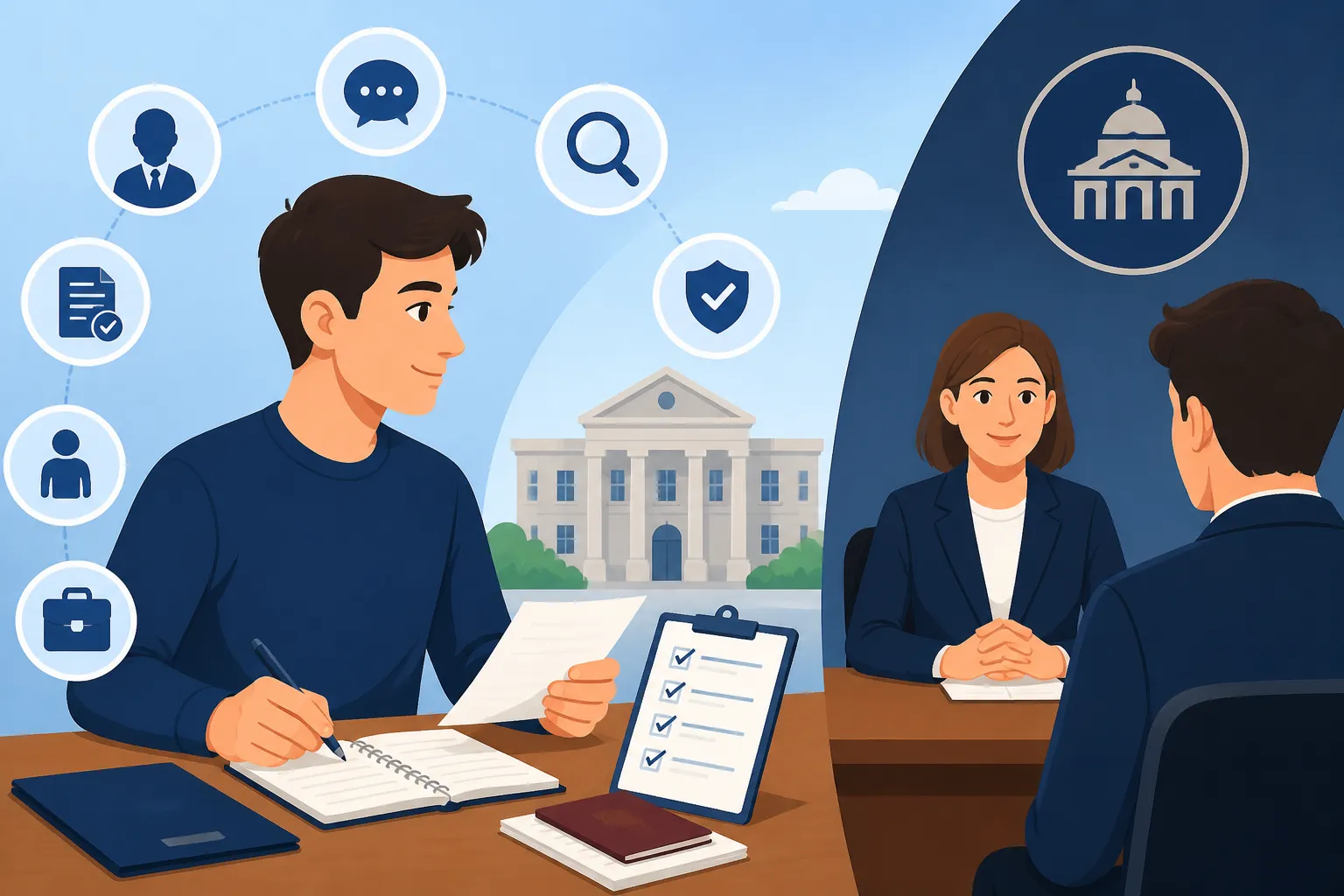
The interview itself typically takes place in a small, private office. The officer will usually have your application file in front of them. Their demeanor can vary widely; some are very friendly, others very formal. The key is to remain polite and respectful throughout, regardless of their approach. The interview is conducted in Polish. If you're not fluent, you have a few options: you can bring a trusted Polish-speaking friend or, ideally, a professional, certified translator. Do not underestimate the importance of clear communication. If you feel unsure about the question, politely ask for it to be repeated or rephrased. Remember, this is your chance to clarify any ambiguities, not to rush through the conversation. Knowing How to Book an Appointment at the Urząd Wojewódzki for Immigration can help you anticipate the initial booking process, but the actual interview requires a different kind of readiness.
Common Interview Questions and How to Answer
Interview questions generally revolve around verifying the information in your application and confirming your genuine intention to reside in Poland. They usually cover several key areas:
- Personal details: Expect basic questions to verify your identity – your full name, date and place of birth, parents' names, and current address. Make sure these match exactly what's in your passport and application.
- Purpose of stay: This is critical. Be precise and consistent with what you wrote in your application form. If you're here for work, know your company's full name, address, your specific job title, responsibilities, and how long you've been employed. If for study, state your university, faculty, and program details. For self-employment, outline your business activities, clients, and future plans. For family reunification, clearly articulate your relationship to your sponsor and shared living arrangements. Don't deviate from the narrative established in your documents.
- Financial stability: How do you support yourself in Poland? Be prepared to show recent bank statements or explain your income sources. The officer will want to ensure you won't become a burden on the state. This is where Understanding ZUS Health Contributions (Składka Zdrowotna) in Poland and solid employment proof becomes vital.
- Accommodation: Where do you live? Be ready to provide details from your rental contract, your landlord's information, and how long you plan to stay there. They might even ask about the size of your apartment or the number of people living there, especially for family cases.
- Ties to Poland: This is about showing genuine integration. Why Poland? What are your long-term plans? Do you have friends or family here? Have you made efforts to learn Polish or understand Polish culture? Your answers should reflect a commitment to building a life in Poland, not just using it as a stepping stone.
- Past travel and visa history: Be truthful about your previous entries and exits, especially within the Schengen Area. Any discrepancies here can raise serious concerns.
Always answer truthfully, clearly, and consistently with your application. If you don't know an answer, it's better to say so rather than guessing. Take your time, and don't feel rushed. You're allowed to ask for clarification if you don't understand a question. This interview is a verification process, and your calm, honest, and well-supported answers are your best assets.
Post-Interview Scenarios
Once the interview is over, you might feel a mix of relief and anxiety about what comes next. It's rare to get an immediate decision on your permit application, so don't expect it. The officer will usually conclude by stating that they have all the necessary information and will process your application.
Often, the interview might lead to further document requests (uzupełnienie braków). The officer might identify specific gaps or require additional clarification that you couldn't provide on the spot. If this happens, you'll usually receive a written request, often by post, outlining exactly what is needed and setting a deadline. It's crucial to respond promptly and provide the requested information. This is a common part of the process, so don't be discouraged if it happens.
Then comes the waiting period. This is arguably the most frustrating part of the Karta Pobytu process. It can range from a few weeks to several months, or even over a year in some busy Urzędy. This is where the patience you brought to the interview needs to extend for much longer. You can often check the status of your application online via the Urząd's portal, or you might receive updates by post. Knowing How Long Does It Take to Get a Karta Pobytu in Poland can help set realistic expectations. If your application is approved, you'll receive a decision letter (decyzja) and instructions on how to collect your biometric residence card. If, for some reason, your application is rejected, you have the right to appeal the decision within a specific timeframe, usually 14 days. This involves submitting a written appeal to the Head of the Urząd Wojewódzki through the same office that issued the initial refusal.
Practical Tips and Mindset for Success
An Urząd Wojewódzki interview, while intimidating, is a hurdle that many expats successfully clear. A significant part of that success comes down to preparation, but also to how you approach the situation mentally.
Language and Communication Strategies
Let's address the elephant in the room: the language barrier. If you're not fluent in Polish, this is where you need a solid strategy. While some officers might speak basic English, the interview is officially conducted in Polish. Bringing a trusted Polish-speaking friend is an option, but for maximum clarity and professionalism, especially if your case is complex (e.g., Understanding Residence for Self-Employment (JDG) in Poland), hiring a professional, certified translator is highly recommended. They understand the nuances of the language and the formality required, ensuring your answers are accurately conveyed and questions are precisely understood. It's an investment, but one that can significantly reduce miscommunication and stress.
Even if you bring a translator, learning some basic Polish phrases for polite greetings ("Dzień dobry," "Dziękuję bardzo," "Do widzenia") can go a long way in making a good impression. It shows respect for the culture and the process. During the interview, if you're unsure about a question, don't just guess or nod along. Politely ask for clarification: "Czy mógłby pan/pani powtórzyć pytanie?" (Could you please repeat the question?) or "Czy mógłby pan/pani to wyjaśnić?" (Could you please explain that?). Clear communication is key to avoiding misunderstandings that could potentially jeopardize your application.
Maintaining Composure and Professionalism
The administrative environment in Poland can be challenging, and it's easy to get frustrated. However, maintaining your composure and professionalism during the interview is paramount. Dress appropriately – business casual is usually a safe bet. Be polite, respectful, and answer questions calmly and directly. Avoid emotional outbursts or argumentative tones, even if you feel unjustly scrutinized. The officers are simply doing their job, and a cooperative attitude on your part will make the process smoother.
If you find yourself becoming overwhelmed, take a deep breath. It's okay to ask for a moment to collect your thoughts before answering a complex question. Remember that your goal is to present yourself as a responsible, law-abiding individual with legitimate reasons for residing in Poland. This interview is a formal procedure, and approaching it with a serious, respectful, and prepared mindset will serve you well. For additional support and information on the overall process, resources like Sirelo can connect you with international moving services that understand the intricacies of relocating to a new country like Poland, helping to alleviate some of the broader stress of your move.
Leveraging External Resources
Navigating the Polish immigration system can be incredibly complex, and sometimes, trying to do it all on your own can lead to mistakes and unnecessary delays. Don't be afraid to leverage external resources. Immigration consultants or legal advisors specializing in Polish immigration law can be invaluable, especially for complex cases like a How to Apply for Permanent Residence (Pobyt Stały) in Poland or if you've encountered previous issues. They can review your application, prepare you for potential questions, and even accompany you to the interview as a translator and advisor. While it's an added cost, the peace of mind and increased chance of success can be well worth it.
Furthermore, make sure you're fully up to date with related administrative necessities. For instance, have you secured your PESEL number? This unique identification number is fundamental to almost every administrative process in Poland, including healthcare and taxes, and the Urząd may ask about it. Read up on How to Get Your PESEL Number and Why It Matters for Healthcare to ensure you're on top of this. If you are considering private healthcare options to complement your public coverage or as a standalone solution, Understanding Private Health Insurance Plans in Poland and considering providers like Cigna Global, can also be beneficial, as proof of adequate health insurance is a mandatory requirement for most residence permits. Finally, stay informed about any changes in immigration law and processes, as these can evolve. Resources like the official Urząd Wojewódzki websites (though often only in Polish) and expat community forums can provide current insights and experiences from fellow foreigners.
Disclaimer
The information provided in this guide is intended for general informational purposes only and does not constitute legal advice. While we strive to provide accurate and up-to-date content, immigration laws and procedures in Poland can change frequently and vary by individual circumstances and specific Urząd Wojewódzki offices. We strongly recommend consulting with an official immigration advisor or legal professional for advice tailored to your specific situation before making any decisions. We are not liable for any actions taken based on the information provided herein.