Understanding Emergency Numbers and Ratownictwo Medyczne in Poland
Imagine waking up in the middle of the night in a quiet apartment in Wroclaw or Gdansk, clutching your chest or watching a loved one struggle to breathe. The sudden realization that you are in a foreign country, where the language feels like an impenetrable wall and the emergency protocols are different from home, can trigger a paralyzing wave of panic. This guide is designed to dismantle that fear, providing a step-by-step roadmap to the Polish emergency medical system, known as Ratownictwo Medyczne, so you can act decisively when every second counts.
The Universal 112 and Specific Emergency Numbers
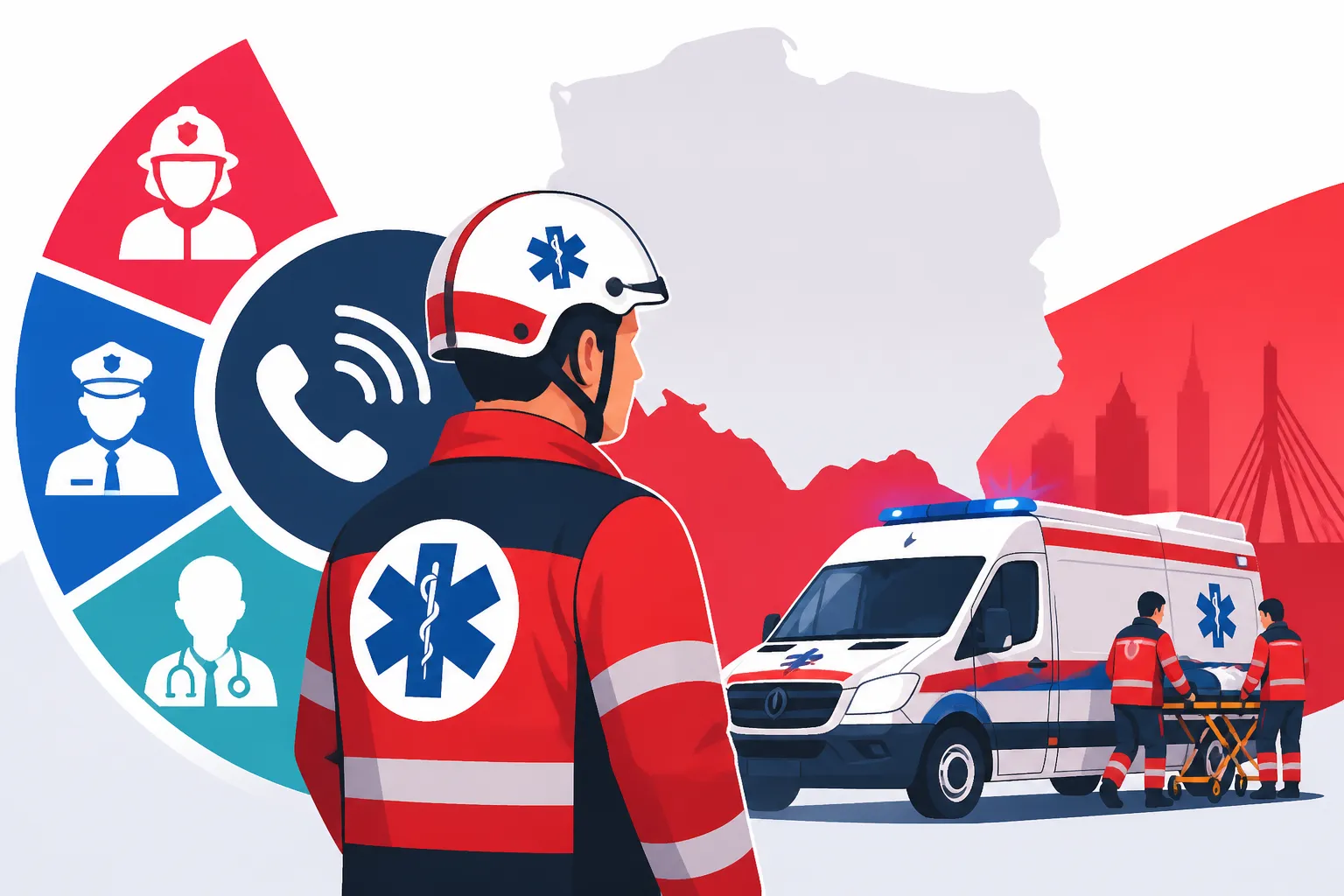
In Poland, the primary number most expats and tourists are told to memorize is 112. This is the European-wide emergency number, and while it is incredibly useful, there is a nuance to the Polish system that veterans here eventually learn. When you dial 112, you are connected to a general emergency dispatcher who then redirects your call to the specific service you need—police, fire, or ambulance. While the operators are highly trained, this redirection can sometimes take an extra minute. In a life-or-death situation, those sixty seconds feel like an eternity.
When to Dial 112 vs. 999
While 112 is the "catch-all" safety net, Poland maintains its legacy emergency numbers, and 999 is the direct line to the medical emergency dispatcher. If you are certain that you need an ambulance and medical intervention, dialing 999 often gets you to a medical professional faster than the general 112 line. This is a critical distinction for anyone living here long-term. If you are dealing with a fire, you would use 998, and for the police, it’s 997. However, the integration of these services into the 112 system means that if you forget everything else, 112 will still get you the help you need.
For many expats, the fear isn't just the number, but the voice on the other end. Most dispatchers in larger cities speak English, but in smaller towns, it can be a hit-or-miss situation. This is why having a clear understanding of Emergency Medical Care in Poland: What Every Expat Needs to Know is so vital. If you find yourself struggling to communicate, stay calm and use simple, direct words: "Medical emergency," "Ambulance," and your address. The system is designed to trace calls, but providing your location clearly is always the fastest route to assistance.
Specialized Support: Police 997 and Fire 998
There are moments when a medical emergency is actually a subset of a different crisis. For example, a car accident requires more than just a bandage; it requires the fire brigade (Straż Pożarna) to extract victims and the police (Policja) to manage traffic. While the 112 dispatcher will coordinate this for you, knowing 997 and 998 can be helpful if you are reporting a non-medical but dangerous situation.
As an expat, you might also encounter the Straż Miejska (City Guard). They are not the police in the traditional sense, but they handle local ordinances and public order. Their number is 986. While they won't be the ones performing CPR, they are often the first on the scene in city centers and can provide immediate assistance or call in the professional Ratownictwo Medyczne team. It’s also worth noting that for digital nomads or those traveling frequently, having a reliable plan like SafetyWing can provide an extra layer of peace of mind, knowing that your logistical needs are covered even if the local language leaves you feeling stranded.
Language Barriers and Non-Polish Speakers
The fear of not being understood is perhaps the biggest barrier for foreigners. Poland has made massive strides in recent years to ensure that emergency dispatchers have access to English-speaking staff. However, the stress of the moment can make even basic English hard to parse. A helpful tip I always give newcomers is to have their address written down in Polish on a piece of paper stuck to the fridge. In the heat of the moment, you might forget how to pronounce the "sz" and "cz" sounds in your street name.
If you are a tourist or a short-term resident, you might not have a PESEL number yet. While dispatchers might ask for it to pull up your records, do not let the lack of one stop you from calling. They will still send help. For those who are staying longer, understanding How to Get Your PESEL Number and Why It Matters for Healthcare will eventually make all medical interactions, including emergencies, much smoother because your data will be linked to the national system.
What is Ratownictwo Medyczne?
The term "Ratownictwo Medyczne" translates literally to Medical Rescue. It is a highly specialized branch of the Polish healthcare system dedicated to providing immediate aid in life-threatening situations. Unlike a standard doctor's visit, the rescue system is built for speed and stabilization. It is not a mobile clinic; it is a rapid-response unit designed to keep you alive until you reach a hospital.
The Structure of Polish Emergency Medical Services
The system is managed under the umbrella of the National Health Fund, or NFZ. This is the public body that oversees healthcare delivery in Poland. For those working here, How Poland's National Health Fund (NFZ) Works: A Full Overview provides the context of how this service is funded through your monthly contributions. The emergency rescue system operates 24/7, every day of the year. It consists of dispatch centers, ambulance teams, and hospital emergency departments.
When you see an ambulance screaming through the streets of Warsaw or Krakow, you are seeing a part of a massive, synchronized network. This network is staffed by doctors, nurses, and paramedics who are specifically trained in "rescue" medicine. They operate under strict protocols that dictate everything from how a call is triaged to which hospital a patient is taken to based on their specific condition (e.g., a dedicated cardiology center for heart attacks).
Types of Ambulances: S vs. P
Have you ever noticed the letters on the side of Polish ambulances? They aren't random. An ambulance marked with the letter "S" is a Specialist (Specjalistyczny) unit. This team typically includes at least three people, one of whom must be a physician, usually an anesthesiologist or an emergency medicine specialist. These units are sent to the most critical cases where advanced medical procedures, such as intubation or complex drug administration, might be needed on-site.
An ambulance marked with the letter "P" stands for Basic (Podstawowy). Don't let the name fool you—these are highly capable units staffed by at least two paramedics or emergency nurses. They are equipped to handle most life-threatening situations, from trauma to cardiac arrest. The paramedics in Poland are some of the most highly trained in Europe, often holding university degrees in emergency medicine. If you are visiting and using a service like SafetyWing, you can rest assured that the local public rescue teams are the ones who will respond, regardless of your insurance type, because in Poland, life-saving aid is a universal priority.
Ratownik Medyczny: The Role of the Paramedic
The Polish paramedic, or "Ratownik Medyczny," is the backbone of the system. They are often the first medical professionals you will interact with during a crisis. Their job is to stabilize you. This might involve setting up an IV, administering pain relief, or using a defibrillator. They have the authority to perform a wide range of life-saving interventions without a doctor present.
One thing that surprises many expats is the directness of Polish paramedics. They are focused, efficient, and often very blunt. This isn't rudeness; it’s the high-pressure nature of their job. They need clear answers to questions like "What happened?" and "What medications are you taking?" Knowing the names of your chronic conditions in Polish—or having them written down—is a lifesaver. This is especially true if you are navigating Public vs Private Healthcare in Poland: Which Should Expats Choose? because the emergency rescue system is strictly public, meaning the paramedics will follow NFZ protocols regardless of whether you have a private Medicover or LUX MED card in your pocket.
Calling for Help: The Dispatcher Interview
The moment you connect with an emergency dispatcher, a structured process begins. The dispatcher is not just a call-taker; they are a trained medical professional (often a nurse or paramedic themselves) who uses a specific software-driven interview to determine the severity of your situation. They are triaging you over the phone.
Essential Information You Must Provide
The first rule of calling 999 or 112 in Poland is to let the dispatcher lead the conversation. Do not hang up until they tell you to. They will ask for information in a specific order:
- The exact location: Street name, house number, apartment number, floor, and any access codes for the building.
- What is happening: Describe the symptoms clearly. "Chest pain," "unconscious," "heavy bleeding."
- Who is the victim: Name, age, and gender.
- Who is calling: Your name and phone number (so they can call back if the connection drops).
It is incredibly helpful to know the Polish word for your street and city. If you live in a complex with many buildings, describe landmarks. "The building near the Żabka" can be surprisingly effective. If you are an expat who has gone through the process of Registering Your Residence (Zameldowanie) in Poland: The Complete Guide, you likely already have a good grasp of your official address, which is exactly what the dispatcher needs.
Real-World Scenarios and Dispatcher Questions
The dispatcher will ask questions to determine if an ambulance is truly necessary. In Poland, the Ratownictwo Medyczne system is strictly for life-threatening emergencies. If you call because of a minor fever or a broken finger that isn't life-threatening, the dispatcher might refuse to send an ambulance and instead direct you to a local clinic. This can be shocking to foreigners from countries where ambulances are used more liberally.
Common questions include: "Is the person conscious?" "Are they breathing normally?" "Is there any history of heart disease?" If you are managing a chronic condition, make sure your The Expat Guide to Finding a Family Doctor (Lekarz Rodzinny) in Poland has updated your medical history in the system, though the dispatcher won't have time to look that up during the call. You must be the source of truth. If the dispatcher determines it is not an emergency, they will tell you to contact "Nocna i Świąteczna Opieka Zdrowotna" (After-hours care).
What Happens After You Hang Up
Once the dispatcher confirms help is on the way, they may stay on the line to give you instructions. They might tell you how to perform CPR or how to stop bleeding. This is why staying calm is paramount. In Poland, while the ambulance is en route, the dispatcher is already electronically transmitting your location and data to the mobile terminal in the ambulance.
While waiting, if you are at home, turn on the lights in the hallway and open the front door. If there is a gate or an intercom, make sure you can buz the team in immediately. If you have a dog, lock it in a separate room. These small steps can save precious minutes. For those who are worried about the financial side of these events, services like SafetyWing often cover emergency medical evacuation and hospital stays, ensuring that while the state saves your life, your bank account remains intact.
SOR vs. Nocna i Świąteczna Opieka Zdrowotna
One of the most confusing aspects of the Polish system for expats is knowing where to go when the situation is urgent but not quite "call 999" urgent. Poland uses a two-tier system for urgent care: the SOR (Szpitalny Oddział Ratunkowy) and the Nocna i Świąteczna Opieka Zdrowotna (Night and Holiday Care).
Navigating the Hospital Emergency Ward (SOR)
The SOR is the Hospital Emergency Department. This is where the ambulance will take you if your life is in danger. You can also "walk in" to a SOR if you have a sudden, severe injury or illness. However, be warned: the SOR is for emergencies only. If you show up with a minor ailment, you will be placed at the very bottom of the triage list and may wait for 8 to 12 hours.
When you arrive at the SOR, you will undergo triage immediately. A nurse will check your vitals and assign you a color code based on the Manchester Triage System. Red means immediate life-saving intervention. Blue means you have a non-urgent issue and will wait the longest. Understanding Hospital Care at a Szpital in Poland can help you prepare for what the environment is like—it is often crowded, loud, and high-stress.
After-Hours Clinics for Non-Life-Threatening Issues
If you have a high fever, a sudden earache, or a painful but non-emergency injury at 10 PM on a Saturday, do not go to the SOR. Instead, look for the nearest "Nocna i Świąteczna Opieka Zdrowotna." These are clinics specifically designated to handle medical issues when regular family doctors are closed (nights, weekends, and holidays).
Every district has at least one of these clinics. The care there is covered by your Understanding ZUS Health Contributions (Składka Zdrowotna) in Poland just like a regular visit. You don't need an appointment; you simply show up, register with your PESEL (or passport/EHIC), and wait your turn. The wait times here are usually much shorter than at the SOR, and the doctors can issue prescriptions and sick notes. If you aren't sure where the nearest one is, you can check your How Do I See a Doctor Outside of Business Hours in Poland? guide or call the National Health Fund's 24/7 hotline (800 190 590), which offers assistance in English.
Understanding Triage and Wait Times
The triage system in Poland is strict. It is based entirely on medical necessity, not the order of arrival. This can be frustrating for someone sitting in a waiting room with a painful sprained ankle while they see others who arrived later being rushed through. The color-coding system is usually displayed on screens in the waiting area.
| Triage Color | Priority | Meaning | Estimated Wait |
|---|---|---|---|
| Red | 1 | Immediate life threat | 0 minutes |
| Orange | 2 | Very urgent | Up to 10-20 minutes |
| Yellow | 3 | Urgent | Up to 60 minutes |
| Green | 4 | Standard urgency | Up to 2-4 hours |
| Blue | 5 | Non-urgent | 4+ hours (often much more) |
If your condition changes while you are waiting—for example, if you start feeling faint or the pain becomes unbearable—notify the triage nurse immediately. They will re-evaluate your status. For tourists, it's essential to have your documentation ready. Knowing How to Use Your EHIC (EKUZ) Card in Poland as an EU Citizen is vital here, as it proves your right to treatment under the same terms as Polish citizens.
Costs and Insurance for Emergency Services
A common question among the expat community is: "Is the ambulance free?" The answer depends on your status in Poland and the nature of the call. In general, for those with valid insurance, the emergency rescue service is free at the point of delivery.
Is the Ambulance Free? Public vs. Private
If you are insured through the NFZ (either by being employed, a student, or a family member of an insured person), an ambulance called via 999/112 for a life-threatening situation is completely free. This includes the medical procedures performed on the way and the initial stabilization at the SOR.
However, if you call an ambulance for a non-emergency—like a ride to the hospital because you don't want to take a taxi—you could potentially be billed for the intervention. While this is rare, the law allows the NFZ to seek reimbursement if the call was a clear abuse of the system. This is why it's important to differentiate between Health Insurance in Poland: Mandatory, Private and Subscription Options Explained. Private medical subscriptions like LUX MED or Medicover often have their own "private" ambulance numbers for non-life-threatening transport, but for a heart attack, you always go through the public 999 system.
Coverage for Tourists and Non-Residents
If you are a tourist from outside the EU and do not have insurance, you will likely be billed for the ambulance and SOR treatment. These costs can be substantial, with a single ambulance intervention often costing between 500 and 1,000 PLN, plus the cost of hospital tests. This is where travel insurance becomes non-negotiable.
For digital nomads, SafetyWing offers a practical solution because it is designed specifically for people who are between homes or traveling long-term. If you end up in a Polish hospital after a medical emergency, you can file a claim for reimbursement. For EU citizens, the EHIC card (known in Poland as EKUZ) is your ticket to free emergency care. The hospital will scan your card and bill your home country directly. Without an EHIC or a valid insurance policy, you are legally responsible for the costs.
Documentation Needed for Emergency Care
In the heat of a crisis, the last thing you want to do is hunt for paperwork. However, if you are conscious and able, you should have the following ready for the paramedics or the SOR registration desk:
- Identification: Your passport or national ID card.
- PESEL Number: If you have one, this is the key to the entire system.
- Proof of Insurance: Your EHIC card, ZUS confirmation (if employed), or your private insurance certificate (like SafetyWing).
- Medical Records: A list of medications and allergies.
If you are brought to the hospital unconscious and alone, the medical staff will treat you first and figure out the paperwork later. Poland's medical ethics mandate life-saving care regardless of your ability to pay in the immediate moment. For those moving here, The Complete Guide to Healthcare in Poland for Expats (2027) offers a deeper dive into how to keep your documents organized so you're never caught off guard.
Practical Tips for Foreigners in a Crisis
Living in Poland as a foreigner means being proactive. You cannot wait for an emergency to happen to figure out how the system works. A little bit of preparation goes a long way in ensuring that a medical crisis remains a manageable event rather than a total disaster.
Using the mObywatel App and IKP
Poland has leaned heavily into digitalization. The mObywatel app is a digital ID that is recognized by all public institutions. If you have a PESEL and a Trusted Profile (Profil Zaufany), you can have your ID, your insurance status, and even your prescriptions on your phone.
Equally important is the Internetowe Konto Pacjenta (IKP), or Patient's Online Account. This portal stores your entire medical history in Poland, including every visit to a specialist and every e-prescription (e-recepta) issued. Having this set up means that if you end up in the SOR, the doctors can see your history. Check out How to Set Up an Internetowe Konto Pacjenta (IKP) Patient Account to get started. It even allows you to designate a "trusted person" who can access your information if you are incapacitated.
Creating an Emergency "Grab-and-Go" Folder
One of the most practical things I ever did as an expat in Krakow was to create a physical "Emergency Folder." It sits by my front door and contains:
- Copies of my passport and those of my family.
- My EHIC card and a printout of my SafetyWing policy.
- A list of all regular medications (with both brand names and generic names).
- A simple "cheat sheet" of Polish phrases: "I am allergic to…" (Mam alergię na…), "I have a heart condition" (Mam chorobę serca), "I don't speak Polish well" (Nie mówię dobrze po polsku).
This folder is what I would hand to the paramedics the moment they walk through the door. It eliminates the language barrier and provides them with the clinical data they need to save my life. It’s also wise to know What Medical Documents Should I Bring When Moving to Poland? to ensure your history from your home country is properly translated and available if needed.
Finally, remember that the Polish people around you are often your greatest asset. If you are in a public place and something happens, don't be afraid to shout "Pomocy!" (Help!). Poles are generally very helpful in crises and will often call the emergency services for you, acting as an informal translator until the professionals arrive.
Disclaimer
This guide is provided for informational purposes only and does not constitute professional medical or legal advice. While every effort has been made to ensure the accuracy of the information provided regarding the Polish emergency medical system, protocols and contact numbers may change. In the event of a medical emergency, always prioritize calling 112 or 999 immediately. The author and publisher are not responsible for any actions taken based on the content of this article. Always consult with a qualified healthcare professional or legal advisor regarding your specific situation in Poland.