Can I Get My Prescriptions Delivered in Poland?
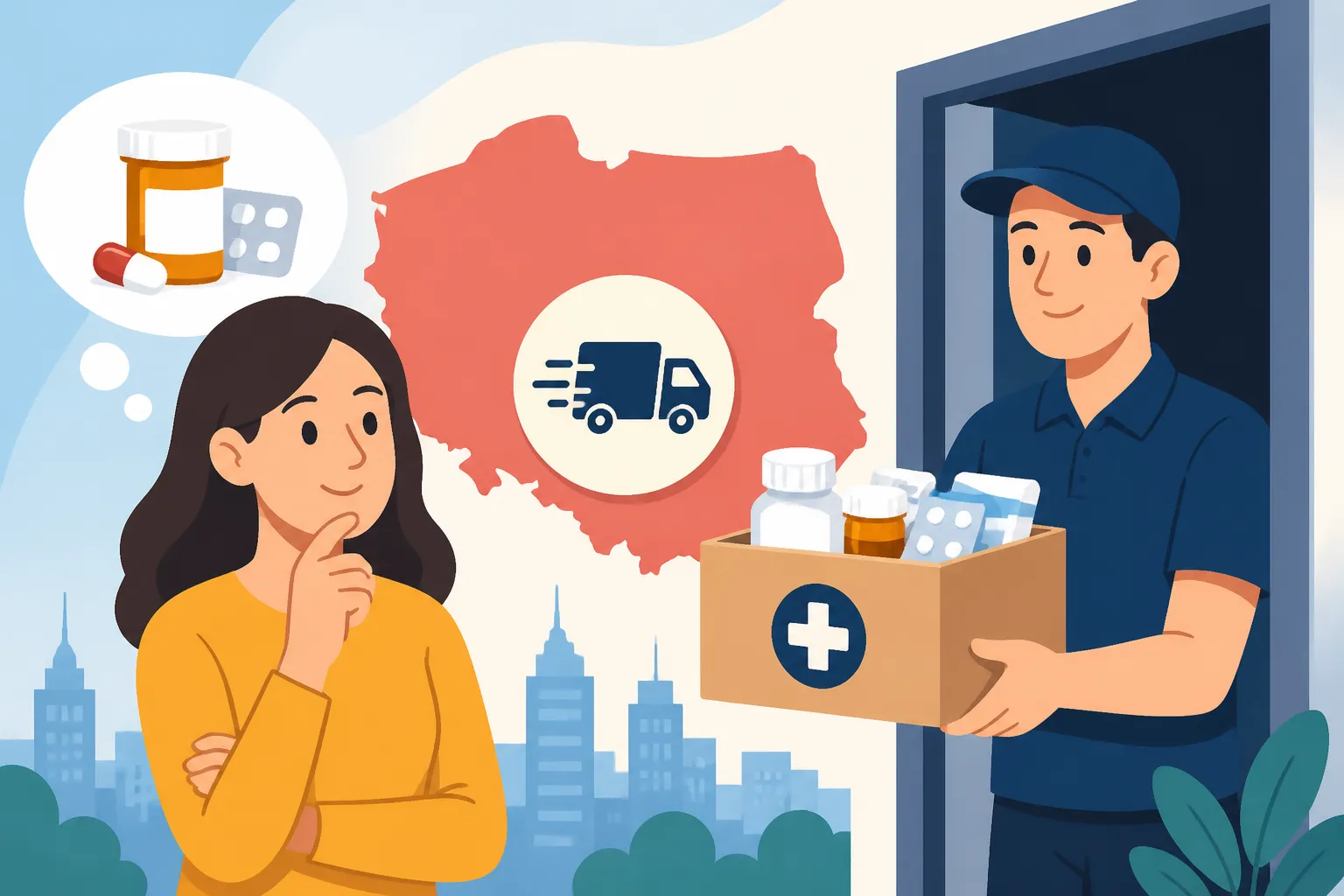
You’ve just arrived in Poland, or maybe you’ve been here a while and you’re feeling under the weather. The last thing you want to do when you’re sick is trek out to a pharmacy, especially if you’re still getting your bearings or battling a nasty flu. Naturally, you might wonder, "Can I get my prescriptions delivered in Poland, like in many other countries?" It’s a perfectly reasonable question, and one that often leads to a bit of a reality check for expats. This guide will delve deep into the intricacies of prescription delivery here in Poland, covering what’s possible, what’s not, and how to navigate the system effectively.
The Nuances of Prescription Delivery in Poland: A Different Landscape
Let's cut right to it: prescription delivery for actual prescription-only medications in Poland isn't as straightforward or universally available as you might hope if you're coming from a country where it's a common service. The Polish pharmaceutical market operates under strict regulations, primarily designed to ensure patient safety and proper dispensing of medicines. This often means a physical interaction at an apteka (pharmacy) is still the norm, especially for scheduled drugs.
However, the landscape is slowly evolving, and it's essential to understand the distinctions. Over-the-counter (OTC) medications and general health products are a different story entirely, and you'll find more flexibility there. But when it comes to that specific antibiotic your doctor just prescribed, the rules tighten up considerably. Many expats, even those with robust international health insurance like SafetyWing, often find themselves surprised by this difference, expecting a seamless service that isn't quite yet universal here.
The Role of E-Recepta: A Digital Step, Not a Delivery Guarantee
Poland has made significant strides in modernizing its healthcare system, and one of the most beneficial changes for patients, especially foreigners, has been the widespread adoption of the e-recepta, or e-prescription. This digital system allows doctors to issue prescriptions electronically, which are then accessible at any pharmacy nationwide simply by providing your PESEL number and a four-digit access code (or showing a printout/PDF with a barcode).
The e-recepta system has undeniably streamlined the process of obtaining medications, reducing the need for paper prescriptions and allowing for greater flexibility in where you fill them. You no longer have to worry about losing a piece of paper or deciphering a doctor’s handwriting. You can simply walk into any pharmacy, provide your details, and collect your medication. This is a massive improvement, and you can learn more about it in our comprehensive guide on Understanding the e-Recepta (E-Prescription) System in Poland.
However, it's crucial to understand that the e-recepta facilitates the issuance and retrieval of prescriptions, not necessarily their delivery to your doorstep. While some pharmacies may offer limited delivery services, the e-recepta itself doesn't automatically enable or guarantee home delivery for prescription-only medicines. It's a digital bridge to the pharmacy counter, not a delivery service.
Legal and Logistical Hurdles for Prescription Medication Delivery
The primary reason behind the limited availability of prescription drug delivery boils down to a combination of strict legal regulations and complex logistics. Polish law heavily controls the dispensing of prescription medicines. These regulations aim to prevent counterfeiting, ensure proper storage conditions (temperature control, security), and guarantee that the correct medication is given to the correct patient, often with a pharmacist’s counsel.
For example, a licensed pharmacist is usually required to be physically present when dispensing prescription drugs to provide necessary information and answer patient questions. This personal interaction is seen as a crucial safeguard. While there are some pilot programs or specific exceptions being explored, a widespread, unregulated home delivery system for prescription-only medicines would fundamentally challenge these established legal and professional standards.
Logistically, maintaining the integrity of the cold chain for certain medications, ensuring secure transport, and verifying the identity of the recipient at their home address adds significant layers of complexity. Many pharmacies, especially smaller independent ones, simply don’t have the infrastructure or the legal clearance to handle these challenges on a broad scale.
Navigating the Options: What's Actually Available
So, if direct prescription delivery for regulated medicines is a bit of a tightrope walk in Poland, what are your options? It’s not a complete desert, but you need to know where to look and what to expect.
Online Pharmacies and Click & Collect Services
Many large pharmacy chains in Poland have embraced the digital age, offering extensive online catalogs for over-the-counter medications, supplements, cosmetics, and other health-related products. This is where you'll find the most readily available "delivery" options. Companies like DOZ.pl, Gemini.pl, and Apteka Melisa are popular choices.
These online platforms allow you to browse products, add them to your cart, and have them delivered directly to your home or a convenient pickup point (like a Żabka convenience store or a parcel locker). However, there’s a catch: these services generally do not include prescription-only medications. For anything requiring an e-recepta, you'll typically be directed to a "click & collect" model.
With click & collect, you can often "reserve" your prescription medication online or through an app, indicating which specific pharmacy location you'll pick it up from. The pharmacy will then prepare your order, and you go to the counter to present your e-recepta details and collect the medicine. This saves you time browsing shelves but still requires a physical visit. It’s a half-step towards convenience, but not full home delivery. To understand the overall pharmacy system better, you might find our guide on Prescription Medications and Pharmacies in Poland: The Complete Guide quite useful.
Private Medical Providers and Subscription Services
This is where things get a bit more interesting, especially if you have private medical insurance or a subscription plan with a major provider. Companies like LUX MED and Medicover, which offer comprehensive private healthcare services, sometimes have slightly more flexible options for their registered patients. While they don't universally offer prescription delivery, they often integrate their pharmacies directly into their clinics.
This means if you've seen a doctor within a LUX MED or Medicover facility, your e-recepta is immediately in their system, and you can often pick up your medication from their in-house pharmacy without leaving the building. For some select, non-urgent cases, or for chronic conditions where refills are consistent, these providers might have limited programs or partnerships for delivery, but it's usually on a case-by-case basis and not a standard service.
If you’re relying on an international travel insurance like SafetyWing, remember that while it covers medical emergencies and doctor visits, the logistics of obtaining and delivering prescriptions once a doctor has issued them typically fall outside their service scope. It’s always best to clarify these points with your private provider or directly with the pharmacy services offered by your clinic. Our guide on Understanding Private Medical Subscriptions (Medicover, LUX MED) in Poland can give you more insights into these options.
What About Courier Services like Glovo or Wolt?
You might see services like Glovo, Wolt, or local couriers advertising pharmacy pickups. It's crucial to understand what they can and cannot do. These services are generally limited to picking up and delivering over-the-counter medications or other non-prescription items that a pharmacy sells. Think paracetamol, vitamins, cough syrup, or cosmetics.
They cannot legally pick up or deliver prescription-only medicines. Why? Because the courier is not a pharmacist, cannot verify your identity, cannot counsel you on the medication, and cannot handle the legal and safety protocols associated with scheduled drugs. Attempting to use these services for a prescription will almost certainly result in refusal from the pharmacy.
| Service Type | Prescription-Only Medication Delivery | OTC Medication/Other Pharmacy Items Delivery | Common Providers | Notes |
|---|---|---|---|---|
| Traditional Pharmacies | Extremely Rare / Pilot Programs | No (in-store pickup only) | Local aptekas | Some independent pharmacies might offer very local, informal delivery to known patients, but this is not a widespread or advertised service. |
| Online Pharmacy Platforms | No (Click & Collect only) | Yes | DOZ.pl, Gemini.pl, Apteka Melisa | You can "reserve" prescriptions online, but must pick them up in person at a physical pharmacy location, showing your e-recepta. |
| Private Medical Providers | Very Limited / Specific Programs | No (in-clinic pharmacy pickup only) | LUX MED, Medicover | Primarily for in-house pharmacy pickup after a consultation; some limited delivery might exist for chronic, stable conditions, but it's not a standard, advertised service. |
| Third-Party Couriers | No | Yes | Glovo, Wolt, various local delivery apps | Can deliver non-prescription items from a pharmacy but cannot legally handle prescription drugs. |
How to Get Your Prescriptions When Delivery Isn't an Option
Given the current situation, most expats will still need to physically visit a pharmacy for their prescription medications. Here’s how to make that process as smooth as possible, even when you're feeling unwell.
Plan Ahead: Doctor's Visit and E-Recepta Access
The first and most crucial step is ensuring you have a valid e-recepta. If you’re feeling ill, try to get an appointment with a doctor promptly. If you don't yet have a family doctor (lekarz rodzinny), our guide on The Expat Guide to Finding a Family Doctor (Lekarz Rodzinny) in Poland can help you find one. Many clinics now offer teleconsultations, where a doctor can issue an e-recepta without you having to leave your home, which is a huge convenience.
Once the e-recepta is issued, you’ll receive an SMS with a four-digit code. Keep this code safe, along with your PESEL number. If you don't have a PESEL yet, it's vital to get one, as it's often linked to your healthcare access and e-recepta. Check out How to Get Your PESEL Number and Why It Matters for Healthcare for detailed steps. You can also access your e-recepty through your Internetowe Konto Pacjenta (IKP) Patient Account, which is a fantastic digital hub for all your health information.
Finding a Pharmacy and Communication
With your e-recepta in hand (or rather, in the system), you need to find a pharmacy. Pharmacies are ubiquitous in Polish cities and towns, often marked with a green cross. Look for larger chain pharmacies, as they tend to have more staff who might speak English, especially in major cities like Warsaw, Krakow, or Wroclaw. Pharmacies like DOZ and Gemini are widely available. You can easily find the nearest apteka using Google Maps.
When you get there, simply approach the counter and state that you have an e-recepta. Provide your PESEL number and the four-digit code from your SMS. If you have a printout or the PDF on your phone, you can show the barcode. The pharmacist will retrieve your prescription and dispense the medication. Don't hesitate to ask any questions you have about dosage, side effects, or administration.
Asking for Help: Friends, Family, or Interpreters
If you're genuinely too ill to leave the house, or if you're alone and struggling with the language barrier, don't be afraid to ask for help.
- Friends or Family: The most straightforward solution is to ask a trusted friend, family member, or even a kind neighbor to pick up your prescription for you. They will need your PESEL number and the four-digit e-recepta code. Legally, anyone can pick up your e-recepta for you as long as they have these details.
- English-Speaking Doctors or Pharmacists: If language is the main hurdle, try to find an English-speaking doctor or a pharmacy known to have English-speaking staff. Our guide on How to Find an English-Speaking Doctor in Poland can be a great resource here. While not common, some larger pharmacies in expat-heavy areas may have staff who can assist.
- Private Clinic Assistance: If you're a patient of a private clinic like LUX MED or Medicover, their patient service lines might be able to offer specific assistance or guidance, or even coordinate with their internal pharmacies for more convenient pickup options if you explain your situation. Even if you're covered by international insurance like SafetyWing, having a local private provider for day-to-day issues can make a huge difference in navigating these situations.
- Volunteers or Community Groups: For those in a truly dire situation without local support, look for expat groups on social media. Often, kind-hearted individuals in these communities are willing to help a fellow expat in need, whether it's by providing advice or even picking up a prescription.
The Future of Prescription Delivery in Poland
While the current situation for prescription delivery of regulated medicines is somewhat limited, it's not entirely static. The Polish government and pharmaceutical industry are continually evaluating ways to modernize and improve access to healthcare services. The success of the e-recepta system demonstrates a willingness to embrace digital solutions.
There are ongoing discussions and pilot programs exploring more regulated forms of prescription delivery, particularly for patients with chronic conditions or those living in remote areas. The pandemic certainly accelerated these conversations, highlighting the need for more flexible healthcare access. However, any widespread implementation would require careful legal revisions, robust logistical frameworks, and strong security measures to ensure patient safety remains paramount.
For now, the best strategy for expats in Poland is to be prepared to visit a physical pharmacy, utilize the convenience of the e-recepta and online reservation systems, and leverage personal networks for support when feeling unwell. Keep an eye on local news from health authorities for any significant changes, as the system is indeed in a state of gradual evolution. Navigating the Polish healthcare system can sometimes feel like a puzzle, but with the right information, it's certainly manageable. If you’re looking for a broader overview, our guide on Navigating the Polish Healthcare System: An Expat's Roadmap (2027) is an excellent resource.
Disclaimer
The information provided in this article is for general guidance only and does not constitute legal or medical advice. Regulations and services in Poland can change, and it is always advisable to consult official government sources, your healthcare provider, or a legal professional for the most accurate and up-to-date information pertaining to your specific situation.