Can I Use My German EHIC Card at a Polish Hospital?
If you are traveling from Berlin to Warsaw or relocating from Munich to Krakow, the last thing you want to worry about is whether your German health insurance will be recognized if you suddenly fall ill. Navigating a foreign medical system while in pain is a nightmare every expat fears, but this guide provides the clarity you need to use your German EHIC card effectively in Poland while highlighting the critical gaps you must fill to avoid massive out-of-pocket expenses.
Understanding How Your German EHIC Works in the Polish Public System
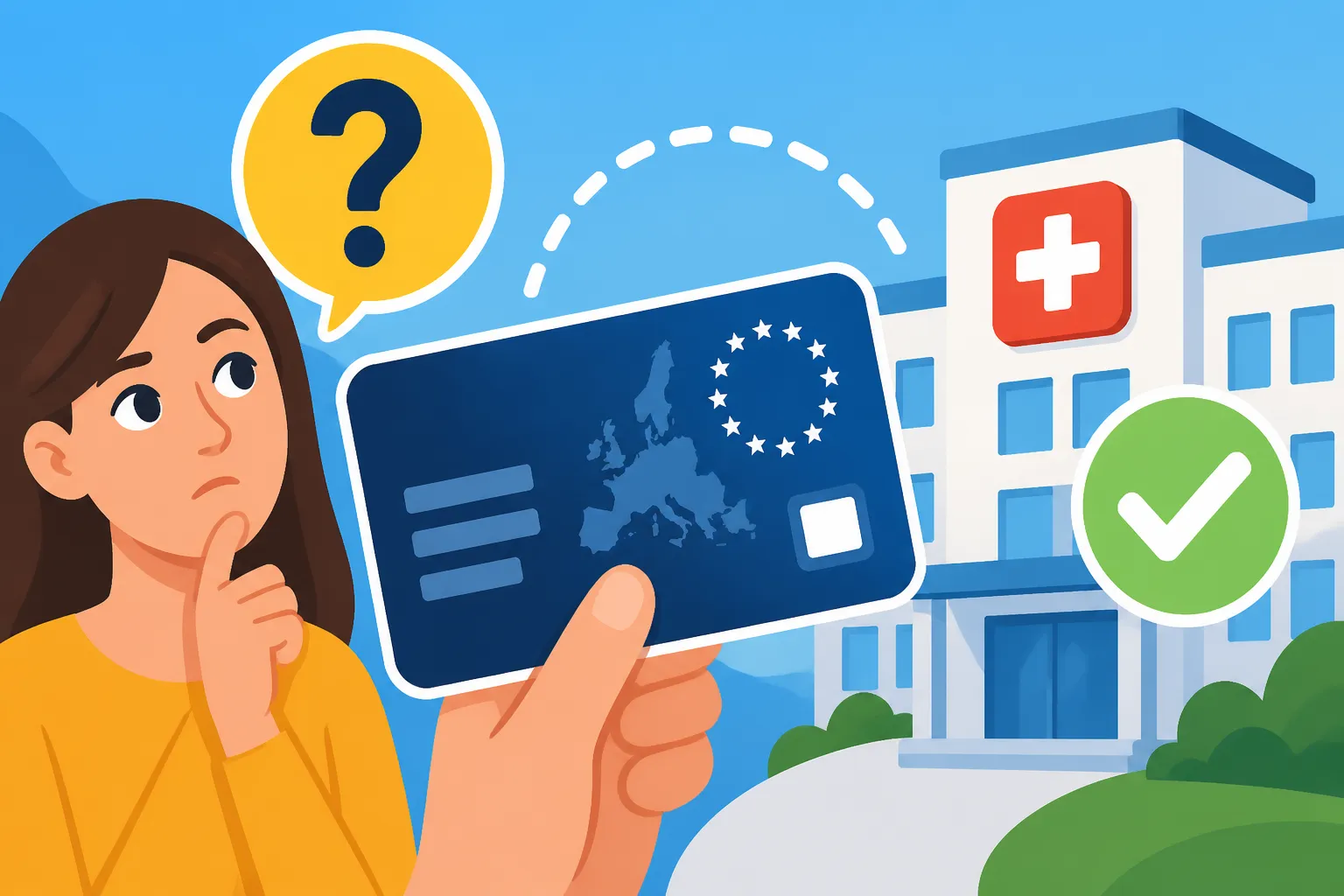
The short answer is yes, you can absolutely use your German European Health Insurance Card (EHIC) at a Polish hospital, but there are layers of bureaucracy you need to understand first. Both Germany and Poland are members of the European Union, which means they participate in a reciprocal healthcare agreement. In Poland, the public healthcare provider is known as the Narodowy Fundusz Zdrowia (NFZ). When you present your German card, you are essentially telling the Polish authorities that the German state will settle the bill for your "medically necessary" treatment.
However, many newcomers confuse "medically necessary" with "free healthcare for everything." This is a dangerous assumption. Your German EHIC entitles you to the same treatment a Polish citizen would receive under the public system. If a specific service requires a co-payment from a local Pole, you will likely have to pay that same amount. Fortunately, most emergency services in Poland are covered, but the card does not turn a private clinic into a free service. You must understand public vs private healthcare to ensure you are going to the right type of facility from the start.
What is Covered vs. What Is Not
The EHIC is designed for "temporary stays," which includes holidays, business trips, or the first few months of an expat’s life before they secure a local contract. It covers treatment that cannot wait until you return to Germany. This includes things like sudden appendicitis, a broken bone from a slip on a frozen sidewalk in Zakopane, or a severe flu that requires a doctor's intervention. It also covers chronic conditions that require monitoring, such as dialysis or oxygen therapy, though you usually need to arrange these with a facility in advance.
What it does not cover is "medical tourism." You cannot drive from Frankfurt to Poznan specifically to get a hip replacement or expensive dental work on the German taxpayer’s dime without prior authorization (the S2 form). Furthermore, the EHIC is strictly for the public system. If you walk into a shiny private medical center in the middle of Warsaw, they will likely ask for a credit card, not your EHIC. This is where private health insurance becomes a vital topic for anyone staying longer than a weekend, as the public system has its limitations.
Necessary Care vs. Planned Treatment
The distinction between necessary and planned care is the most common source of billing disputes. Necessary care is defined by the treating physician in Poland. They decide if you need immediate intervention to continue your stay safely. If you are a student or a digital nomad using your German insurance, you might find that while the emergency room visit is covered, the follow-up physical therapy sessions three months later might be scrutinized if they believe you could have traveled back to Germany for that care.
For those moving permanently, the EHIC is only a temporary bridge. Once you start working for a Polish employer or register as a freelancer, you will need to look into registering with the NFZ to ensure you are properly integrated into the local system. Until that transition happens, your German card remains your primary shield, but it is a shield with holes that need to be patched with supplemental coverage like SafetyWing, which can handle the private side of things that the NFZ ignores.
Finding an NFZ-Contracted Facility (Przychodnia vs. Szpital)
To use your German EHIC, you must ensure the facility has a contract with the National Health Fund. In Poland, you will see a prominent blue and green logo that says "NFZ" near the entrance of hospitals (Szpital) and clinics (Przychodnia). If you do not see this logo, you are likely in a purely private facility where your German card holds no power. Most large state hospitals will have an ER (SOR – Szpitalny Oddział Ratunkowy) that is required to accept the EHIC for emergency cases.
If you are looking for a routine doctor's visit because of a chest infection or a minor injury, you should look for a "Przychodnia," which is a primary healthcare clinic. You can ask for a "Lekarz Pierwszego Kontaktu" (First Contact Doctor). When you arrive, the receptionist might be confused if they don't deal with foreigners often. Be prepared to show your German EHIC and your passport. It is also helpful to know how to find English-speaking doctors if you are in a major city, as they are more likely to have staff accustomed to processing international EU cards.
Spotting the NFZ Logo and Understanding Access
The NFZ logo is your green light. In Poland, healthcare is divided into "Primary Healthcare" (POZ) and specialist care. With your German EHIC, you have direct access to a GP at an NFZ clinic. However, if you need to see a specialist—like a dermatologist or a cardiologist—you usually need a referral (skierowanie) from that GP, just like a Polish citizen would. The exception is for emergencies, where you can go directly to the hospital's emergency ward.
If you find yourself in a situation where you are unsure where to go, you can look for a "Publiczny Zakład Opieki Zdrowotnej" (Public Healthcare Institution). These are the standard state-run facilities. While the facilities might look a bit more "vintage" than the high-end private clinics in Berlin, the medical staff is generally highly trained. For those who prefer a more modern experience, many expats choose to supplement their EHIC with a plan from SafetyWing, which allows them to seek care in more modern private settings without worrying about the strict NFZ referral rules.
Emergency vs. Routine Visits
In an emergency, dial 112 or 999. If an ambulance is called and takes you to an NFZ hospital, your German EHIC will cover the cost of the transport and the emergency treatment. If you are conscious, make sure the paramedics know you have an EU insurance card. In Poland, the emergency system is robust, but the wait times in the SOR (Emergency Room) for non-life-threatening issues can be several hours.
For routine issues, you might want to look into seeing a doctor outside of business hours to see how the system handles things after hours. There are specific "Nocna i Świąteczna Opieka Zdrowotna" (Night and Holiday Healthcare) centers that handle cases when regular clinics are closed. Your German EHIC is valid there too. However, keep in mind that the EHIC does not cover "convenience." If you want a specific brand of medication or a private room in a hospital, you will be paying for those extras yourself.
| Feature | German EHIC (Public) | Private Insurance (e.g., SafetyWing) | Polish NFZ (Local) |
|---|---|---|---|
| Emergency Room | Covered at NFZ hospitals | Covered (including private) | Covered |
| GP Visits | Covered (NFZ only) | Covered (Private clinics) | Covered |
| Planned Surgery | Not covered | Covered (per policy) | Covered |
| Med. Evacuation | Not covered | Included/Covered | Not covered |
| Dental Care | Limited (emergency only) | Included/Covered | Limited |
The Limitations of EHIC and Why Travel Insurance Matters
The most significant mistake I see German expats and travelers make is assuming the EHIC is a "catch-all" for every medical problem. It is not. The EHIC is a basic safety net, not a premium insurance policy. One of the biggest shocks for people moving from Germany to Poland is the lack of medical repatriation coverage. If you are seriously injured in a car accident on the S7 highway and need to be flown back to a specialist hospital in Munich, the NFZ and your German EHIC will not pay for that flight. The cost of an air ambulance can easily exceed 20,000 EUR.
This is why veteran expats often use the EHIC for the "boring" stuff—like a quick trip to the GP for a sinus infection—but keep a policy with SafetyWing for the "catastrophic" stuff. SafetyWing provides that extra layer of security, especially for digital nomads who move between countries frequently and need coverage that doesn't care which side of the border they are on. It covers things the EHIC ignores, such as private hospital stays, specialized diagnostics without the six-month NFZ waitlist, and the aforementioned emergency evacuation back to Germany.
Why EHIC Isn't Enough for Expats
If you are staying in Poland long-term, you will eventually encounter the "Waitlist Problem." The Polish public healthcare system is notorious for long queues. While your German EHIC gives you the right to see a specialist, it doesn't give you a priority seat. You will be placed on the same waiting list as everyone else, which for some procedures can be months or even years. If you have a nagging sports injury, you don't want to wait until 2027 to get an MRI.
Furthermore, language can be a significant barrier in NFZ facilities. While many younger doctors speak English or even German, the administrative staff and nurses in public hospitals often do not. Private facilities, which are not covered by the EHIC, almost always have English-speaking staff. By using a service like SafetyWing, you can bypass the public bureaucracy and go straight to a private provider where you can be understood and treated within days rather than months. You should also read about paying for private healthcare to see if that is a more cost-effective route for your specific situation.
Private Healthcare in Poland: A Different World
The private healthcare sector in Poland is world-class. Brands like Medicover and Lux Med operate clinics that look more like five-star hotels than hospitals. Many expats find it worth the investment to have a private subscription. However, these subscriptions are often "local-only." If you travel back to Germany or over to Prague for a weekend, that local Polish subscription won't help you.
A global travel medical insurance like SafetyWing acts as the perfect middle ground. It allows you to use those high-end Polish private clinics if you get sick while in Poland, but it also follows you when you cross the border back into Germany or go on holiday elsewhere. It essentially fills the gap between your basic German EHIC and the high-cost private reality of modern medicine. When considering your options, it is helpful to look at how much private health insurance costs to understand how to bridge that gap during your first few months in the country.
Step-by-Step: What to Do If You Need a Hospital in Poland
If you find yourself needing to use a hospital in Poland with your German EHIC, don't panic. The process is standardized, though it can feel overwhelming if you're feeling unwell. First, ensure you have your physical card. A digital copy or a photo on your phone might be accepted in some modern clinics, but the official rule is that you need the actual plastic card. If you've lost your card, you must contact your German Krankenkasse (like TK or AOK) and ask them to email you a "Provisional Replacement Certificate" (PEB).
When you arrive at the hospital, head to the registration desk (Rejestracja). Tell them you are from Germany and show your EHIC. You might hear the term "EKUZ"—this is just the Polish acronym for EHIC. They will likely take a photocopy of your card and your ID. Once registered, you will be triaged based on the severity of your condition. It is also a good idea to know about hospital care at a Szpital so you know what to expect regarding the "quality of life" during a stay in a Polish public ward.
Documents to Bring and Formalities
In addition to your EHIC and passport, keep a record of your entry date into Poland. If you have been in the country for more than 90 days, the hospital might start asking questions about your residency status. For most tourists and short-term visitors, this isn't an issue. However, if you are an expat in the middle of a move, you might need to show proof of your residency status to prove your legal stay and your right to access services.
Always ask for a "Karta Informacyjna" (Information Card) or "Wypis" (Discharge Paper) when you leave. This document contains the details of your diagnosis, the treatment provided, and any medications prescribed. You will need this if you need to follow up with your doctor back in Germany or if you need to file a claim with a supplemental insurer like SafetyWing. In Poland, prescriptions are now mostly electronic (e-recepta), but as a foreigner without a PESEL number, you might still receive a paper prescription. Check prescription medications and pharmacies in Poland to see how to handle these at the local pharmacy.
Dealing with the Bureaucracy and Language
Bureaucracy is part of the Polish experience. If a clerk tells you that they don't accept the EHIC, they are likely mistaken. Politely ask for a supervisor or mention that you are covered under EU Directive 2011/24/EU. However, don't let a bureaucratic argument delay life-saving care. If you are forced to pay upfront in an emergency because of a misunderstanding, keep every single receipt and "faktura" (invoice). You can later claim reimbursement from your German health insurance provider.
To avoid these headaches entirely, many people choose to carry SafetyWing precisely because it provides a dedicated support line that can help mediate between you and a hospital. Having someone to call who can explain the insurance details in English can be a lifesaver when you’re dealing with a stressed nurse in a busy Krakow ER. Also, if you find yourself needing specialized help, you can look for someone who can guide you through the system more smoothly.
Disclaimer
The information provided in this guide is for informational purposes only and does not constitute legal or medical advice. Healthcare regulations in Poland and EU reciprocal agreements can change. Always verify the current status of your coverage with your German health insurance provider before traveling or relocating. We are not responsible for any costs incurred or medical outcomes resulting from the use of the information in this article.