Can My Children Join Me on a Polish Residence Permit?
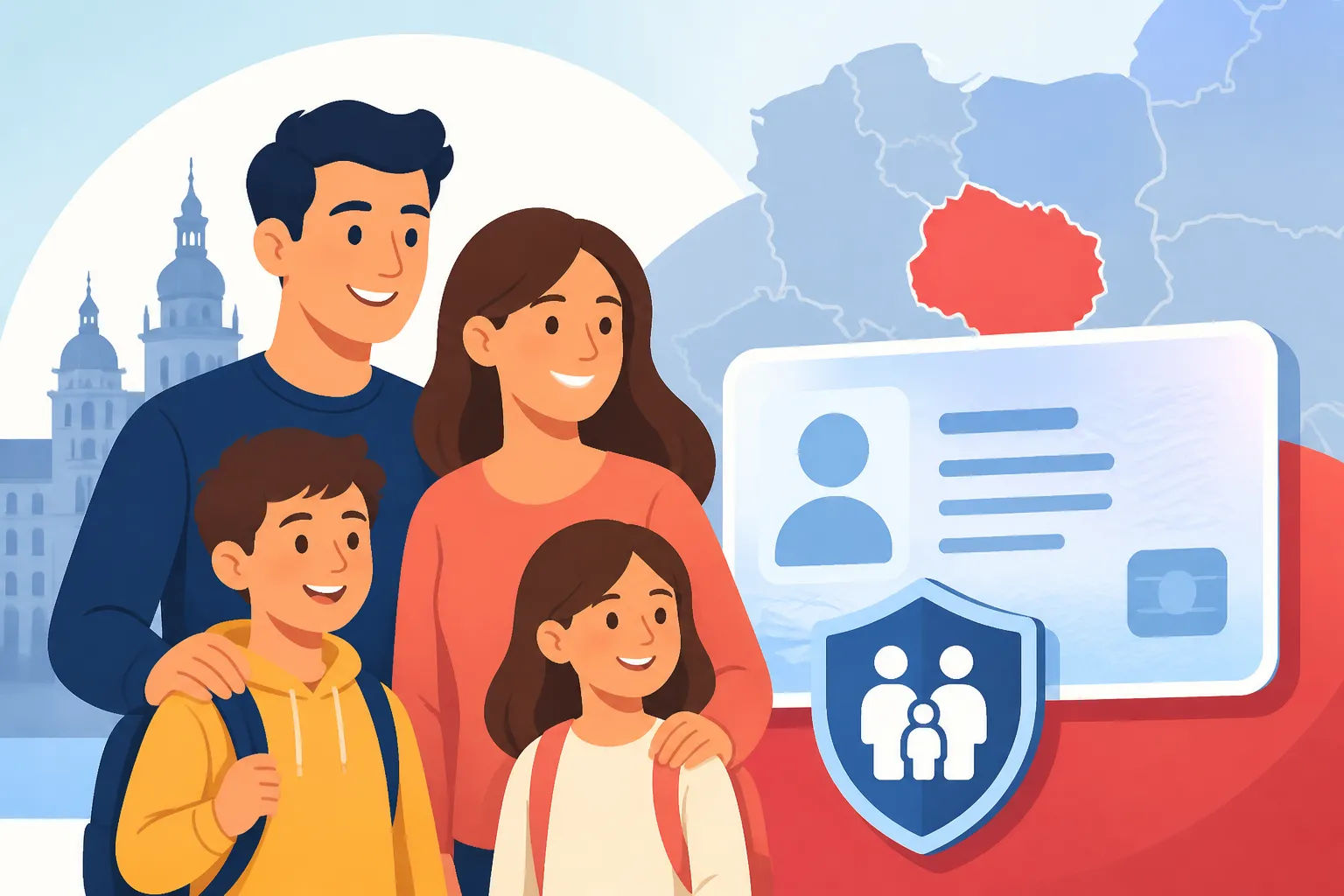
You've landed that dream job or started your own business in Poland, secured your own residence permit, and now the big question looms: Can your precious little ones, your children, actually join you here? The administrative labyrinth of Polish immigration can feel like a maze even for a single person, let alone a whole family. Rest assured, it is absolutely possible for your children to join you, but it's rarely a straightforward "add-on" to your own permit. This guide will meticulously walk you through the process of obtaining residence permits for your children to ensure your family can be together in Poland.
Understanding Family Reunification for Children in Poland
When you think about bringing your family over, the term "family reunification" is the official lingo you'll often encounter in Poland. It essentially refers to the process where a foreign national residing legally in Poland can apply for residence permits for their close family members, including children. This isn't just about applying for another visa; it's about establishing their legal right to live, study, and eventually integrate into Polish society alongside you.
The Legal Basis: Who Qualifies?
The core of family reunification for children in Poland lies within the Act on Foreigners. Generally, this act allows foreign nationals who hold a stable residence permit (such as a temporary residence permit based on work, EU long-term resident status, or permanent residence) to apply for similar permits for their minor children. A "child" in this context typically refers to an unmarried individual under the age of 18. This also extends to adopted children, as long as the adoption is legally recognized in Poland.
It's crucial to understand that your own residence status forms the bedrock of your children's application. If you, as the primary applicant parent, only have a short-term visa or an unstable legal status, the chances of securing a long-term permit for your children through family reunification are slim to none. The Polish authorities want to see evidence of your commitment to Poland and your ability to financially support your entire family here. This means if you have a Temporary Residence Permit (Karta Pobytu) in Poland (2026), you're in a good position to apply for your children. If you're an EU citizen, the process is slightly different and generally simpler, often involving registration of residence rather than a full permit application for your children.
Common Pitfalls and Misconceptions
One of the biggest misconceptions expat parents have is that their residence permit automatically extends to their children, especially newborns in Poland. While some countries might have provisions for immediate dependency, Poland typically requires each individual, regardless of age, to have their own legal basis for stay. This means your child will need their own Karta Pobytu, just like you. Thinking you can "just show up" with your kids and sort it out later is a recipe for stress and potential legal issues.
Another common pitfall is underestimating the sheer volume and precision required for the documentation. It's not just about a birth certificate; it's about a translated and apostilled birth certificate, among many other papers. I've seen countless expat families get stuck in the application process because a single document was missing, not properly translated, or not authenticated. The administrative staff at the Urząd Wojewódzki (Provincial Office) are sticklers for detail, and a minor oversight can lead to significant delays, sometimes forcing you to re-submit your entire application. This is why proactive planning and meticulous organization are absolutely vital, particularly for non-EU/EEA nationals whose cases often involve more scrutiny.
Eligibility and Documentation: Getting Your Ducks in a Row
Preparing to apply for your children's residence permits is a serious undertaking. It requires a deep dive into your personal and financial situation, as well as gathering a significant pile of documents. Missing even one piece of paper can set you back for months, a frustration I've personally experienced more times than I care to admit.
Key Eligibility Criteria for Your Children
Beyond the general requirement of you having a stable residence permit, your children themselves need to meet specific criteria. First and foremost, you need to prove your kinship. This usually means a birth certificate for each child, which must be an original, ideally with an apostille (a certification that authenticates the origin of the public document) from the country of issue, and accompanied by a sworn translation into Polish. For adopted children, the legal adoption papers will be required.
Secondly, you, as the parent, must demonstrate sufficient financial means to support your children without relying on Polish social assistance. The exact amount can vary by Urząd Wojewódzki and year, but it's generally a certain sum per person in your household per month. This isn't just a number on paper; they often want to see consistent bank statements and your employment contract to prove stable income. You'll also need proof of accommodation for the entire family. This could be your rental agreement (umowa najmu) or a title deed (akt notarialny) if you own property, indicating enough space for everyone.
Lastly, and critically, your children must have health insurance coverage. This can be through the Polish public system (NFZ) if you are employed and contributing, or through private health insurance. We'll delve into this more, but it’s a non-negotiable requirement. While rare for minors, if your child is older (e.g., a teenager), authorities might request a certificate of no criminal record, though this is far more common for adult applicants. Of course, valid passports for all children are also a fundamental requirement.
The Mountain of Paperwork: What You'll Need
Let's talk about the documents. This is where most expats start pulling their hair out, but a structured approach can save you a world of pain. For each child, you will need:
- Completed Application Form: The official Wniosek o udzielenie zezwolenia na pobyt czasowy (Application for a Temporary Residence Permit). Make sure it's the latest version, filled out in Polish, and signed correctly.
- Valid Passport Copies: Original passport for inspection, plus photocopies of all pages with stamps and visas.
- Birth Certificate: Original, apostilled/legalized, and translated into Polish by a sworn translator. This is often the most time-consuming document to obtain and certify from your home country.
- Four Biometric Photos: These need to be current, professional, and meet very specific Polish biometric standards. Don't skimp here; poor photos are a common reason for application rejection.
- Proof of Stable and Regular Income: Your employment contract, recent payslips, bank statements showing consistent income, and potentially your latest PIT (tax declaration). This demonstrates your ability to support your family.
- Proof of Accommodation: Your rental agreement or property deed, confirming that your living space is adequate for your family size. You'll also need Proof of Address and Zameldowanie Documents in Poland for your children.
- Health Insurance Confirmation: If you're covered by NFZ through your employment, you'll need a document from your employer or ZUS confirming your and your children's enrollment. Otherwise, a private health insurance policy is required. Many expats consider robust private health insurance, perhaps from a provider like Cigna Global, especially in the initial stages or if their children have specific health needs, as it can offer immediate access and English-speaking services, bypassing public system waits.
- Receipt of Payment: Evidence that you've paid the application fee at the Urząd Wojewódzki cash desk or via bank transfer.
- Your Karta Pobytu and Passport: Copies of your own permit and passport, as you are the primary sponsor.
- Power of Attorney (if applicable): If one parent is applying on behalf of both, or if a legal representative is assisting, a notarized power of attorney is necessary.
I cannot stress this enough: check the specific requirements of your local Urząd Wojewódzki for Immigration. While the general list is consistent, individual offices might have nuances or additional forms. Always refer to their official website or call them if you can. For a general overview of the documents you'll need, you can consult a guide like How to Prepare Documents for a Karta Pobytu Application.
The Application Process: Navigating the Urząd Wojewódzki
Alright, you've gathered your documents – a monumental task in itself. Now comes the actual submission, which for many expats, is where the real "Polish bureaucracy adventure" begins. This process, mostly handled by the Urząd Wojewódzki, requires patience, persistence, and often, a good sense of humor.
Step-by-Step: From Submission to Decision
- Preparation and Double-Checking: Before you even think about booking an appointment, meticulously go through every single document one last time. Are all translations sworn? Are all copies clear? Are birth certificates apostilled? Is the application form fully completed? Having everything perfectly in order will save you immense heartache.
- Booking an Appointment: This is often the first major hurdle. Booking a slot at the Urząd Wojewódzki can feel like trying to win the lottery. Many offices use online booking systems that fill up within seconds of new slots being released. You might have to try for days, or even weeks. Some urzędy allow for in-person drop-offs without an appointment (especially for EU citizens), but for non-EU family reunification, an appointment is usually mandatory. Be prepared for early morning logins and a lot of refreshing. Refer to guides like How to Book an Appointment at the Urząd Wojewódzki for Immigration for specific tips.
- Submission Day: Arrive early for your appointment. Bring all originals and copies. It's often required that the child (or children) whose permit is being applied for be present, especially if they are over six years old, as their fingerprints will need to be taken. The official will review your documents. If anything is missing, they might give you a list of supplementary documents and a deadline to submit them.
- Biometrics: If your child is 6 years or older, their fingerprints will be scanned during the application submission. This is a standard part of the process for issuing the biometric Karta Pobytu.
- The Waiting Game: Once your application is submitted and accepted, you enter the infamous "waiting game." This period can be incredibly frustrating. Processing times vary wildly, from a few months to well over a year, depending on the Urząd Wojewódzki's workload and the complexity of your case. For non-visa nationals, a stamp will be placed in your child's passport confirming the submission of their application, allowing them to legally remain in Poland while the decision is pending. This stamp is vital for travel.
- Decision (Decyzja): Eventually, you will receive a decision letter (decyzja) in Polish. If it's positive, congratulations! If it's negative, it will state the reasons, and you usually have the right to appeal.
- Collecting the Karta Pobytu: Once the positive decision is issued, you'll be invited to collect your child's Karta Pobytu (residence card). This card is their official ID in Poland and proof of their legal residence. Remember, each child will have their own physical card. For more details on this step, check out How to Get a Residence Card (Karta Pobytu) and Its Biometrics in Poland.
Practical Tips for a Smoother Process
- Start Early: This cannot be emphasized enough. Begin gathering documents and researching the process long before you plan for your children to arrive. The more lead time you have, the less stressful it will be.
- Get Professional Help: If you feel overwhelmed by the bureaucracy or the Polish language, consider hiring a legal consultant or an immigration agency specializing in expat services. While it's an investment, it can save you considerable time and prevent costly mistakes.
- Learn Basic Polish Phrases: Even a few polite phrases like "Dzień dobry" (Good morning/day), "Proszę" (Please), and "Dziękuję" (Thank you) can go a long way with officials. It shows respect and a willingness to integrate.
- Keep Copies of Everything: Every single document you submit, every letter you receive, every email you send – make a copy. Create a well-organized folder for each child's application.
- Follow Up Politely: If too much time passes without an update, you can try to contact the Urząd Wojewódzki by phone or email. Be persistent but always polite. Remember, the squeaky wheel sometimes gets the grease, but an angry wheel just gets ignored.
- Be Prepared for an Interview: While not always required for children's permits, the Urząd Wojewódzki can call you for a supplementary interview to clarify any details. Be truthful and consistent with your submitted documents.
Life for Expat Children in Poland: Beyond the Paperwork
Once the bureaucratic hurdles are cleared and your children have their shiny new Karta Pobytu, the real adventure of living in Poland as a family begins. This phase is about making Poland feel like home, from finding the right school to ensuring their well-being and integration.
Schools, Social Life, and Integration
Education is often one of the first and most critical considerations for expat families. Poland offers several options:
- Polish Public Schools: These are free and provide an immersive experience in the Polish language and culture. For younger children, adaptation can be quicker, but for older children, the language barrier can initially be very challenging. It's a fantastic way for them to fully integrate, but prepare for a learning curve. You can find comprehensive information in Schools and Education in Poland: A Complete Guide for Expat Families.
- Private and International Schools: Poland has a growing number of international schools, particularly in major cities like Warsaw, Krakow, and Wroclaw. These schools often follow foreign curricula (e.g., British, American, International Baccalaureate) and teach in English or other languages. They are an excellent option for maintaining continuity in education and for children who might struggle with immediate Polish immersion. However, they come with significant tuition fees. For a deeper dive, read Understanding International Schools and Their Costs in Poland. There are also private Polish schools, which can offer smaller class sizes and sometimes bilingual programs.
Beyond school, facilitating a robust social life is key for your children's happiness. Seek out expat communities in your city through online forums or social media groups. Many cities have international playgroups or family events. Encourage your children to participate in local sports clubs, art classes, or scout groups, even if they're still learning Polish. These activities are phenomenal for language acquisition and building local friendships.
If you have very young children, childcare options like żłobki (nurseries) for under-3s and przedszkola (kindergartens) for 3-6 year olds are widely available, both public and private. Public ones are much cheaper but often have long waiting lists and are Polish-speaking environments.
Once the paperwork is done, your focus shifts to making Poland home for your little ones. Getting settled in, finding the right school, and setting up their rooms are all part of the big move. Companies found through platforms like Sirelo can simplify the logistical headache of shipping toys, books, and furniture, ensuring their new Polish bedroom feels just as comforting as their old one.
Healthcare and Everyday Well-being
Securing health coverage for your children is paramount. As mentioned, they'll need it for their residence permit application. If you are employed in Poland, your children should be covered under your NFZ (National Health Fund) insurance. This provides access to public healthcare services, including visits to a lekarz rodzinny (family doctor/GP), pediatricians, and specialists. Registering with a GP for your child is one of the first things you should do, as they are the first point of contact for all non-emergency medical needs. Our guide on The Expat Guide to Finding a Family Doctor (Lekarz Rodzinny) in Poland walks you through this.
The Polish public healthcare system is comprehensive, but it can be challenging to navigate due to language barriers and specialist waiting times. Many expat families, myself included, choose to supplement NFZ with private medical subscriptions (like Medicover or LUX MED) or robust private health insurance from reputable international providers. For instance, a provider like Cigna Global can offer peace of mind, ensuring your children have immediate access to English-speaking doctors and specialists without the typical waiting times often associated with the public system, especially for non-urgent matters or for those initial weeks before NFZ coverage kicks in smoothly. This parallel approach often provides the best of both worlds.
Pharmacies (Apteka) are well-stocked, and the e-recepta (e-prescription) system is convenient. Emergency care is available, but for non-life-threatening issues, your child's GP or an out-of-hours clinic (nocna i świąteczna opieka zdrowotna) should be your first port of call. For a holistic view, refer to The Complete Guide to Healthcare in Poland for Expats (2027).
Beyond the essential services, Poland is generally a very child-friendly country. Cities boast numerous parks, playgrounds, and family-oriented activities throughout the year. Embrace the local culture, explore the beautiful outdoors, and help your children build a rich and fulfilling life in their new Polish home.
Summary of Key Documents for Children's Residence Permits
To make the documentation part a little less daunting, here's a quick overview of the essential documents you'll need for each child's residence permit application:
| Document Category | Specific Document | Notes |
|---|---|---|
| Personal Identification | Completed Application Form (Wniosek) | In Polish, signed by parent(s) |
| Child's Valid Passport | Original + copies of all relevant pages | |
| Four Biometric Photos | Recent, high-quality, meeting specific standards | |
| Proof of Kinship | Child's Birth Certificate | Original, apostilled/legalized, sworn translated into Polish |
| Adoption Papers (if applicable) | Original, apostilled/legalized, sworn translated into Polish | |
| Parent's Status | Parent's Karta Pobytu | Copy |
| Parent's Passport | Copy | |
| Parent's PESEL number | Copy of official confirmation (if available) | |
| Financial & Accommodation | Proof of Sufficient Funds (Parent's) | Bank statements, employment contract, tax declarations |
| Proof of Accommodation | Rental agreement (umowa najmu) or property deed (akt notarialny) | |
| Zameldowanie (Residence Registration) | Confirmation of child's registration | |
| Health Coverage | Health Insurance Confirmation | NFZ enrollment document or private health insurance policy |
| Administrative | Urząd Wojewódzki Application Fee Payment Confirmation | Receipt or bank transfer confirmation |
| Power of Attorney (if applicable) | Notarized, if one parent is not present or using representative |
Disclaimer
Please remember that immigration laws and procedures in Poland can change. While this guide is based on the most current information available, it is always advisable to consult the official websites of the Polish Urząd do Spraw Cudzoziemców (Office for Foreigners) or your local Urząd Wojewódzki, or seek advice from a qualified immigration lawyer in Poland for the most up-to-date and personalized guidance for your specific situation. This article is for informational purposes only and does not constitute legal advice.