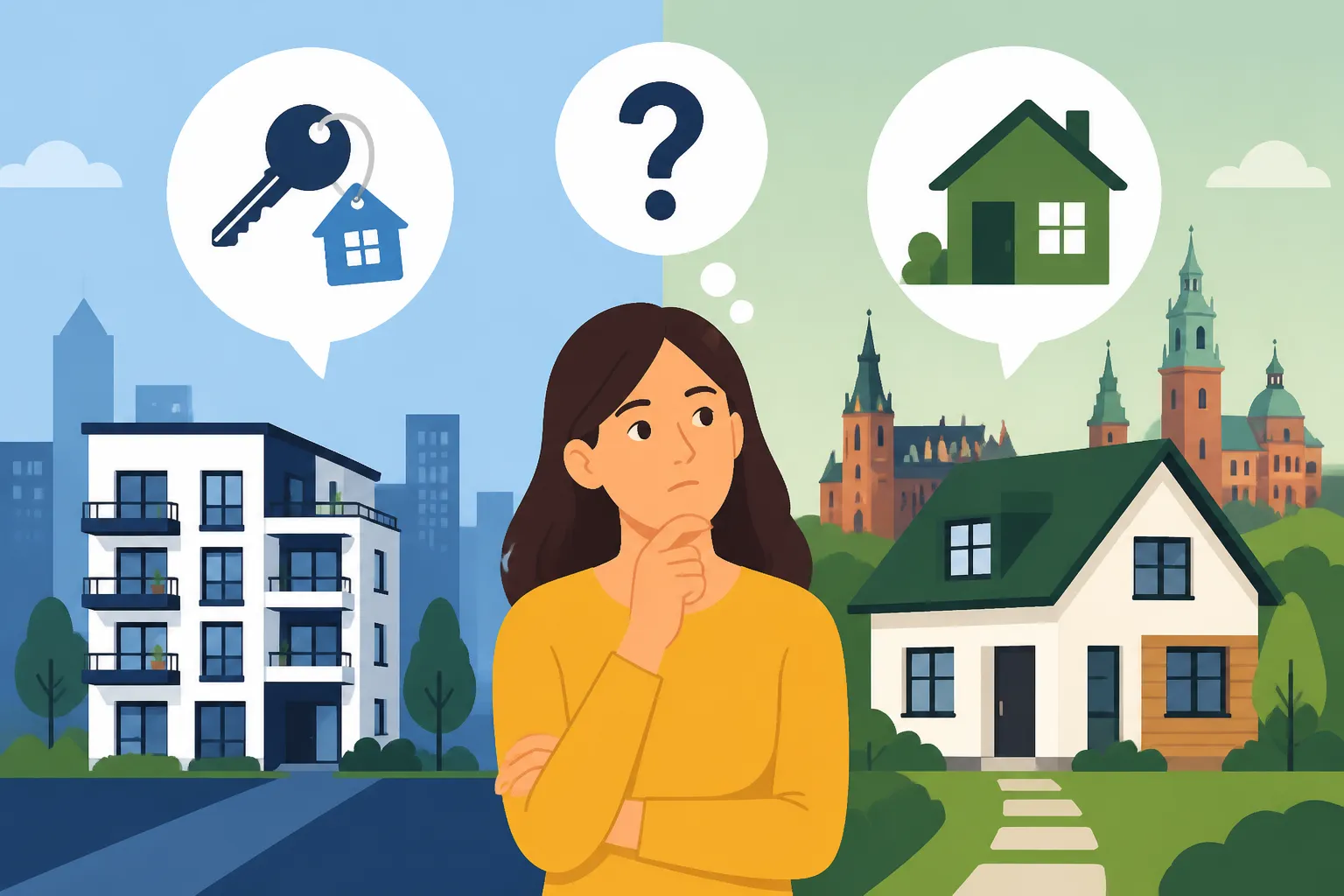
How Do I Choose Between Renting and Buying in Poland?
The moment you truly start to settle into Poland, a familiar question begins to nag at the back of your mind: "Should I rent an apartment here, or is it time to put down some roots and actually buy a place?" This isn't just a financial decision; it’s a deeply personal one, tinged with the hopes and anxieties of expat life. This guide is here to walk you through the labyrinth of factors involved in making that choice, offering a realistic perspective on both renting and buying property in Poland.
The Case for Renting in Poland: Flexibility and Lower Upfront Costs
For many expats, especially those new to Poland or uncertain about their long-term stay, renting remains the most practical and least stressful option. It offers a degree of freedom and a lower initial financial commitment that can be incredibly appealing.
Initial Investment and Financial Flexibility
Let's be brutally honest: moving to a new country is expensive. There are visas, flights, setting up bank accounts, and just the sheer cost of living while you get on your feet. Renting significantly eases the initial financial burden compared to purchasing property. Typically, when you rent an apartment in Poland, you'll be asked for a security deposit, usually equivalent to one or two months' rent, plus the first month's rent upfront. If you're using a real estate agency, there might be an additional one-off agency fee. That's a substantial amount, no doubt, but it pales in comparison to the down payment required for buying a home.
This lower upfront cost means your capital isn't tied up in property, leaving you with more liquid funds for other crucial expat expenses. Perhaps you're still figuring out which city truly feels like home – Krakow's historic charm, Warsaw's bustling international vibe, or Gdańsk's coastal appeal. Renting allows you to test the waters without a massive commitment. Imagine you land a fantastic job opportunity in a different city two years down the line; if you're renting, you can typically give notice and move on with relative ease. If you'd bought a place, selling it quickly and profitably could be a whole different saga. This flexibility is a huge mental relief, especially when so much of expat life involves adapting to the unknown. You'll find a detailed walkthrough of the process in our guide, The Complete Guide to Renting an Apartment in Poland (2027).
Maintenance, Responsibilities, and Hidden Costs of Renting
One of the biggest advantages of renting, and one that often gets overlooked until something goes wrong, is that the landlord is generally responsible for major repairs and structural maintenance. The leaky faucet? The broken boiler? The heating system on the fritz in the dead of winter? Those headaches usually fall squarely on the landlord's shoulders. As an expat, navigating local contractors, finding trustworthy repairmen, and dealing with potential language barriers for something as critical as a burst pipe can be incredibly daunting. With renting, you simply inform your landlord, and they're obliged to sort it out. This alone can save you significant stress, time, and unforeseen expenses.
However, renting isn't entirely free of "hidden" costs. Beyond the basic rent, you'll almost always pay for utilities (electricity, gas, water, internet) and a monthly czynsz. The czynsz is an administration fee paid to the building's cooperative or community, covering things like common area maintenance, waste collection, sometimes heating, and often a portion of water usage. It's crucial to clarify with your landlord what exactly the czynsz covers and how utilities are calculated when signing your rental contract. Sometimes, utilities are included in the czynsz or a fixed monthly payment, but more often, they are metered and paid separately. Always read your rental agreement carefully to understand your obligations, and our comprehensive guide on How to Sign a Rental Contract (Umowa Najmu) in Poland can help demystify the process.
The Appeal of Buying Property in Poland: Investment and Stability
For expats who have firmly planted their feet in Polish soil and envision a longer-term future here, the idea of buying property often shifts from a distant dream to a tangible goal. It represents stability, a sense of belonging, and a significant investment in your new life.
Long-Term Investment Potential and Stability
Owning your home in Poland isn't just about having a roof over your head; it's about building equity and making a potentially sound long-term investment. Poland's economy has shown remarkable resilience and growth over the past decades, leading to a steady appreciation in property values, particularly in desirable urban centers like Warsaw, Krakow, Wrocław, and Poznań. If you plan to stay for five, ten, or even more years, buying can offer a financial return that renting simply cannot. You're not just paying someone else's mortgage; you're investing in your own future.
Beyond the financial aspect, there's an undeniable emotional value to owning your own place. It's the freedom to paint the walls any color you like, to renovate the kitchen of your dreams, or to plant a garden without needing a landlord's permission. It’s a sense of permanence and belonging, especially if you have a family and children who are settling into local schools. This stability can be incredibly comforting for expats who have spent years navigating temporary accommodations and the feeling of always being a transient resident. It truly becomes "your" home. You can explore the detailed journey of property acquisition in How to Buy Property in Poland as a Foreigner: The Full Guide (2027).
Upfront and Ongoing Costs of Ownership
While the emotional and financial rewards of buying can be significant, the upfront costs are considerably higher than renting, and it's vital to be prepared for them. The biggest hurdle for most buyers is the down payment, which typically ranges from 10% to 20% of the property's purchase price. This figure alone can be daunting.
On top of the down payment, there are several other substantial costs you'll encounter:
- Notary Fees: All property transactions in Poland must be conducted through a public notary. Their fees are regulated but can still amount to a few thousand złoty, depending on the property value.
- Tax on Civil Law Transactions (PCC): For the purchase of resale property (not new-build from a developer), you'll pay a 2% PCC tax on the transaction value. This is a significant lump sum. For new-builds, VAT is included in the price instead of PCC.
- Real Estate Agent Fees: If you use an agent, their commission can range from 1.5% to 3% (plus VAT) of the purchase price, usually paid by the buyer.
- Legal Fees: While not mandatory, it's highly advisable for expats to engage a lawyer specializing in real estate to review contracts, especially if your Polish isn't fluent.
- Mortgage Origination Fees: Banks often charge a fee for processing your mortgage application.
- Property Valuation: The bank will require a professional valuation of the property.
As an example, if you're looking at an apartment in a city like Warsaw, these additional costs can easily add tens of thousands of złoty to your initial outlay. Our guide, How Much Does It Cost to Buy an Apartment in Warsaw?, offers a detailed breakdown.
Once you own the property, the ongoing costs also continue. You'll have your monthly mortgage payments, of course, but also:
- Higher Czynsz: As an owner, your czynsz will likely be higher than a renter's, as it covers broader building maintenance, potential renovation funds for the building, and shared utility costs.
- Property Tax (Podatek od Nieruchomości): This is an annual tax paid to the local municipality, generally a relatively small amount compared to taxes in other countries, but it's an added expense.
- Home and Contents Insurance: Highly recommended to protect your investment.
- Maintenance and Repairs: Unlike renting, you are now responsible for everything inside your four walls, from a dripping tap to a broken washing machine. You'll need to budget for these eventualities.
Key Factors to Consider for Your Polish Property Decision
This isn't a one-size-fits-all answer. Your personal circumstances, financial situation, and future plans will heavily influence whether renting or buying is the right path for you in Poland.
Your Residency Status and Long-Term Plans
This is perhaps the most critical factor. Your ability to buy property in Poland, especially land or houses, can depend significantly on your citizenship and residency status.
- EU/EEA Citizens: Generally, if you're an EU/EEA citizen, you face very few restrictions when buying apartments or houses in Poland. You're treated much like a Polish citizen, provided you have registered your residence in Poland.
- Non-EU/EEA Citizens: This is where it gets a bit more complicated. Non-EU/EEA citizens can generally buy apartments (flats) in Poland without needing a special permit. However, buying land, or a property with land (like a house with a garden), typically requires a permit from the Ministry of Interior and Administration. This process can be lengthy and complex, requiring justification for the purchase. If you're on a temporary residence permit, and aren't sure if you'll secure permanent residency, buying might add unnecessary complications down the line. It's crucial to understand the intricacies of The Complete Guide to Polish Residence Permits for Expats (2027) before making a move.
Beyond legalities, consider your long-term commitment. If you envision yourself in Poland for less than five years, the transaction costs associated with buying (notary, taxes, agent fees) might make it difficult to recoup your investment, especially if the market doesn't appreciate significantly or you need to sell quickly. The general rule of thumb is that you need at least 5-7 years to make buying financially sensible compared to renting.
Financial Standing and Mortgage Availability
Can you genuinely afford it? This isn't just about the down payment. Polish banks will scrutinize your income, employment stability, credit history (both Polish and potentially from your home country), and debt-to-income ratio. For foreigners, securing a mortgage can be more challenging. Banks often require higher down payments (sometimes 20-30%) and a stable employment history in Poland. They might also be more cautious if your income is primarily in a foreign currency, due to exchange rate risks.
You'll need a solid financial history in Poland, which often means having a well-established Polish bank account for your income and expenses for a period. Our guide on Banking in Poland: A Complete Guide for Foreigners (2027) can help you get started on that front. Be prepared to provide extensive documentation, including employment contracts, salary slips, tax declarations (PIT forms), and potentially translated bank statements from your home country. It's not uncommon for the process to feel like a never-ending request for more paperwork.
Market Conditions and Location
The Polish real estate market, like any other, is subject to cycles. Is it currently a buyer's market (where there are more properties than buyers, leading to lower prices) or a seller's market (more buyers than properties, driving prices up)? What are the current interest rates on mortgages? Higher interest rates significantly increase your monthly payments and the total cost of borrowing. Keep an eye on the National Bank of Poland's decisions.
Location is also paramount. Property values and rental prices vary drastically across Poland. Major cities like Warsaw, Krakow, and Wrocław generally have higher prices and more robust rental markets, making them potentially better long-term investments but also more expensive to enter. Smaller towns or less central districts might offer more affordable options but could have slower appreciation or be harder to sell quickly if needed. Consider also the infrastructure – is it close to public transport? Good schools (refer to Schools and Education in Poland: A Complete Guide for Expat Families)? Amenities? These factors impact both livability and resale value.
Personal Preference and Lifestyle
Ultimately, this decision also boils down to what you prioritize in your life. Do you cherish the idea of customizing your living space, knowing you're building equity with every mortgage payment, and having a fixed, stable base? Or do you prefer the freedom to pack up and move easily, to explore different neighborhoods or cities, and to offload all maintenance worries onto a landlord?
For those with demanding jobs or who travel frequently, the responsibilities of homeownership (dealing with repairs, property tax, cleaning common areas if you're in a co-op) might feel like an additional burden you don't need. Renting offers a more "hands-off" approach to housing. But for others, those same responsibilities are a small price to pay for the deep satisfaction of owning their own home. Also, don't forget the practicalities of setting up your utilities in either case; our post on The Expat Guide to Setting Up Utilities in Poland can help.
Navigating the Process: Resources and Practicalities
Whether you decide to rent or buy, both processes in Poland come with their own unique set of administrative challenges. As an expat, having the right support and resources can make a world of difference.
Finding Support for Your Decision
Making such a significant decision in a foreign country can be overwhelming, but you don't have to do it alone.
- Legal Counsel: For property purchases, especially for non-EU citizens or if you're dealing with complex contracts, engaging a Polish real estate lawyer is highly recommended. They can review contracts, verify the property's legal status (e.g., checking the Land and Mortgage Register, Księga Wieczysta), and ensure your interests are protected.
- Real Estate Agents (Pośrednicy): A good agent can be invaluable, whether you're renting or buying. They can help you navigate the market, find suitable properties, and explain local customs and procedures. However, choose carefully, as quality varies. Look for agents with experience working with expats. Our guide How to Find a Reliable Real Estate Agent (Pośrednik) in Poland provides tips.
- Financial Advisors/Mortgage Brokers: If you're considering a mortgage, a broker specializing in expat mortgages can help you compare offers from various banks and guide you through the application process, potentially saving you a lot of legwork and frustration.
During your search for an apartment or house, good communication is key. You'll be making calls, sending emails, and browsing online. For those initial weeks in Poland, having reliable mobile data is crucial. Services like Airalo can provide you with an eSIM to get you connected instantly, allowing you to research properties, contact agents, and coordinate viewings without a hitch.
Moving and Settling In
Once you've made your decision – rented or bought – the next step is the physical move. This can be one of the most stressful parts of relocating, but careful planning can ease the burden. Whether you're moving across town or across continents, comparing removal services is a smart move. Platforms like Sirelo can help you get quotes from various moving companies, ensuring you find a reliable and affordable option.
And don't forget the administrative tasks that come with any move in Poland, regardless of ownership status. You'll still need to handle things like registering your residence, especially if you're planning a longer stay. Registering Your Residence (Zameldowanie) in Poland: The Complete Guide is a key resource for understanding this process.
In the end, the choice between renting and buying in Poland comes down to a careful balance of your financial readiness, your long-term intentions, your risk tolerance, and your personal desire for flexibility versus stability. Take your time, do your homework, and don't be afraid to seek professional advice.
Disclaimer
The information provided in this guide is for general informational purposes only and does not constitute financial, legal, or real estate advice. While we strive to keep the information up-to-date and accurate, laws, regulations, and market conditions in Poland can change rapidly. It is essential to consult with qualified local professionals (e.g., lawyers, financial advisors, real estate agents) for advice tailored to your specific situation before making any significant decisions regarding renting or buying property in Poland.