How Do I Access Cancer Screening Programs in Poland?
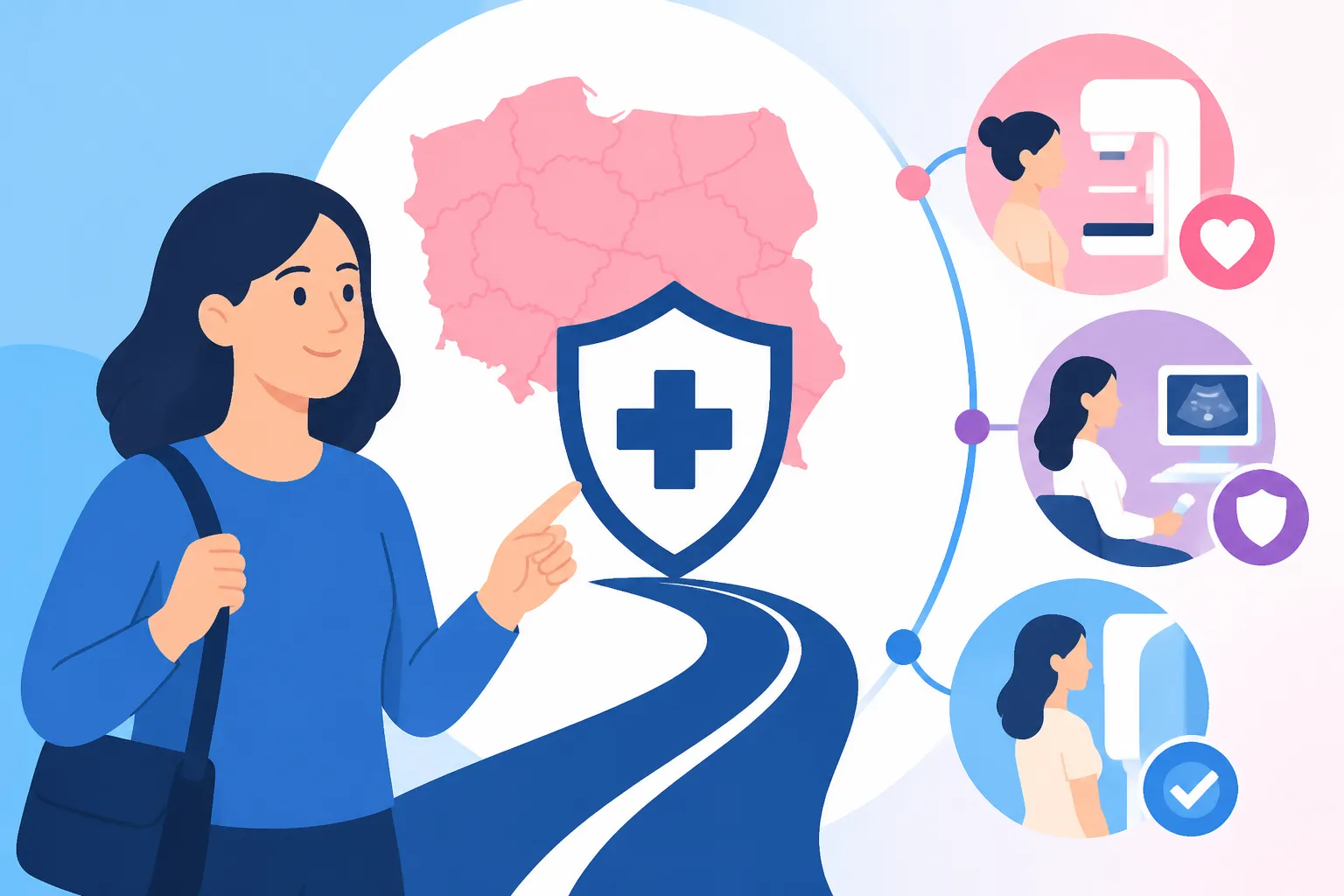
Navigating a new healthcare system is stressful enough when you have a cold, but when it comes to preventative care like cancer screenings, the stakes feel much higher. Many foreigners in Poland find themselves stuck between confusing government portals and a fear of the unknown. This guide breaks down exactly how to access national screening programs, understand eligibility, and bridge the gap with private options.
Understanding the NFZ Prevention Framework
The Polish public healthcare system, managed by the Narodowy Fundusz Zdrowia (NFZ), actually places a surprisingly high priority on preventative care, which they call "Profilaktyka." For an expat, the biggest hurdle isn't usually the lack of services, but simply knowing that they exist and that you are often entitled to them for free. If you are legally employed or otherwise covered by the state system, you have access to these programs.
The first thing you need to realize is that How Poland's National Health Fund (NFZ) Works: A Full Overview is built on the idea of centralized data. Because you have a PESEL number, the system already "knows" how old you are and which risk categories you fall into. In the past, the NFZ used to send physical paper invitations to your registered address (zameldowanie) for things like mammograms or pap smears. Today, the system has shifted toward the digital.
If you haven't already, the most important step you can take for your health in Poland is How to Set Up an Internetowe Konto Pacjenta (IKP) Patient Account. This online portal is where you will see notifications for available screening programs tailored to your age and gender. It is also where your results will eventually appear. When you log in, look for the "Profilaktyka" tab. If you are eligible for a national program, it will often show up there as an "e-referral" (e-skierowanie) that is already waiting for you, meaning you don't even have to visit a GP to get started.
Key Cancer Screening Programs in Poland
Poland runs several "Population Programs" (Programy populacyjne) aimed at the early detection of the most common cancers. These are generally available without a specific referral from a doctor, provided you meet the age criteria.
Cervical Cancer Screening (Cytologia)
The cervical cancer prevention program is one of the most well-established in the country. It is designed for women aged 25 to 64. Under this program, you are entitled to a free smear test (cytologia) once every three years. If you are in a high-risk group (such as those with HIV or taking specific medications), the frequency increases to once every year.
To access this, you don't need to see your family doctor first. You can simply find a gynecologist that has a contract with the NFZ. When you call to book, you should explicitly state that you want to have a "cytologia w ramach programu NFZ." Many expats find that Understanding the Role of the Przychodnia (Clinic) in Poland is vital here, as these local clinics are the primary point of contact for such screenings. The test is performed by a midwife or a doctor, and the results are typically available within two to three weeks.
Breast Cancer Screening (Mammografia)
For women aged 45 to 74, the NFZ provides free mammograms every two years. This age range was recently expanded to include younger and older women, reflecting a push for better coverage. A unique feature of the Polish system is the "Mammobus"—specialized mobile diagnostic units that travel to smaller towns and park outside shopping malls or community centers.
You can check the schedule of these Mammobuses on the NFZ website or via your IKP. If you live in a large city like Warsaw or Krakow, you can also go to any stationary clinic that has a mammography lab and an NFZ contract. Again, no referral is needed if you are in the target age group. You just need your PESEL and proof that you are Registering with the NFZ in Poland: The Complete Expat Guide (2027) correctly.
Colorectal Cancer Screening (Kolonoskopia)
Colorectal cancer screening via colonoscopy is available for people aged 50 to 65, or starting at age 40 if you have a first-degree relative who was diagnosed with the disease. Unlike the other programs, this one can be a bit more daunting because of the nature of the procedure. However, Poland has made strides in offering this with "sedacja" (sedation) in many facilities to make it more comfortable for patients.
You can access this program in two ways: through a "zaproszenie" (invitation) system or by simply reporting to a facility that performs these screenings. The NFZ maintains a list of accredited centers. Because this procedure requires preparation, you will usually have a preliminary consultation where the clinic provides the necessary prep kits and instructions.
| Program | Age Group | Frequency | Referral Needed? |
|---|---|---|---|
| Cervical (Cytology) | 25 – 64 | Every 3 years | No |
| Breast (Mammography) | 45 – 74 | Every 2 years | No |
| Colorectal (Colonoscopy) | 50 – 65 | Once | No (for target age) |
| Lung (LDCT Scan) | 55 – 74 (smokers) | Varies | Yes (Specialist) |
How to Navigate the Booking Process
The "how-to" of booking these screenings can be the most frustrating part for an expat. You might find that the receptionist at a local clinic speaks very little English. This is where The Expat Guide to Finding a Family Doctor (Lekarz Rodzinny) in Poland becomes your secret weapon. Even if you don't need a referral for the screening, your family doctor can guide you to the specific clinics in your neighborhood that are known for being expat-friendly or having shorter wait times.
When you are ready to book, follow these steps:
- Check your IKP: See if there are active e-referrals or notifications under the "Prophylaxis" section.
- Find a provider: Use the NFZ "Gdzie się leczyć" (Where to get treated) search engine. You can filter by "Programy profilaktyczne."
- The Phone Call: If you don't speak Polish, try to have a Polish-speaking friend help you, or use a translation app to prepare a few sentences. Say: "Chciałabym umówić się na badanie profilaktyczne" (I would like to make an appointment for a preventative screening).
- Prepare your PESEL: This is the universal key to the Polish health system. They will ask for it the moment you walk in.
If you are a digital nomad or a freelancer who hasn't fully integrated into the ZUS system yet, you might be using a global health plan like SafetyWing. While SafetyWing is excellent for emergency medical care and travel-related issues, it typically doesn't cover routine national screening programs like the ones mentioned above. However, having SafetyWing is a fantastic safety net for those "in-between" periods when you are moving between jobs or waiting for your Polish residency paperwork to clear.
Private Sector Alternatives
Sometimes the wait times in the public system—or the language barrier—can be too much to handle. This is when many expats turn to private providers like Medicover, LUX MED, or Enel-med. Understanding Private Medical Subscriptions (Medicover, LUX MED) in Poland is essential because these companies often include annual "check-up" packages that go beyond what the NFZ offers.
In the private sector, you can often get a "Package for Women" or "Package for Men" that includes blood markers (like PSA for prostate cancer), ultrasounds of the breast or abdomen, and dermatological mole checks. While the NFZ programs are strictly age-gated, private clinics allow you to pay for these screenings at any age. This is particularly useful if you have a family history of cancer but don't yet meet the NFZ age requirements.
If you choose the private route, you can often find an How to Find an English-Speaking Doctor in Poland much more easily. The doctors in these private centers are often more accustomed to dealing with international patients and can explain the results in English, which provides a level of comfort that is hard to find in a busy state-run przychodnia.
Dealing with Results and Referrals
If your screening comes back with an "irregularity," the system moves into a different phase. In Poland, there is a fast-track system for suspected cancer called the "DiLO card" (Karta Diagnostyki i Leczenia Onkologicznego). This green card is a literal lifesaver. It prioritizes you for diagnostic tests and specialist consultations, bypassing the standard Public vs Private Healthcare in Poland: Which Should Expats Choose? debate because the state-funded oncology centers are often the most advanced in the country.
Your GP or the specialist who performed the screening will issue this card if there is a justified suspicion of cancer. With a DiLO card, you are no longer subject to the standard waiting lists. You will be assigned a coordinator who helps manage your appointments between different specialists and Understanding Hospital Care at a Szpital in Poland.
It is also important to understand How e-Skierowanie (E-Referrals) Work for Specialists in Poland during this time. Everything is tracked digitally, so if you go to a specialist in Warsaw but had your initial scan in Krakow, the doctors should be able to see your history through the central system, provided you have authorized them to do so in your IKP settings.
Overcoming Cultural and Language Hurdles
The Polish approach to healthcare can sometimes feel blunt to those from the US or UK. Doctors might be very direct, and receptionists might seem impatient. Don't take it personally; it's a byproduct of a system that is often underfunded and overworked. As a veteran expat, my advice is to be your own advocate. If you feel like something is wrong, don't wait for an invitation. Even if you don't fit the age bracket for a "program," go to your GP and ask for a referral based on symptoms.
If you are worried about the language, many younger doctors in major cities speak excellent English. However, the administrative staff rarely do. Bringing a printed copy of your IKP dashboard or a written note in Polish can save you a lot of stress. Remember that the goal of these screenings is early detection, and the Polish oncology system, while bureaucratic, has some of the most dedicated specialists in Europe once you are "in" the system.
While your local insurance or a plan like SafetyWing will handle the immediate costs of being sick, the long-term management of preventative health is a marathon, not a sprint. Take the time to set up your digital accounts, learn where your local clinic is, and don't be afraid to navigate the NFZ—it's a service you are paying for through your taxes, and it's there to keep you healthy.
Medical Disclaimer
This article is for informational purposes only and does not constitute professional medical advice, diagnosis, or treatment. The Polish healthcare system and NFZ regulations are subject to change. Always seek the advice of a qualified healthcare provider in Poland with any questions regarding a medical condition or to confirm your eligibility for specific screening programs. Never disregard professional medical advice or delay seeking it because of something you have read in this guide. In case of a medical emergency, dial 112 immediately.