Prescription Medications and Pharmacies in Poland: The Complete Guide
One of the most perplexing initial challenges for expats in Poland often isn't finding a doctor, but rather understanding how to actually get your hands on the medications they prescribe. The pharmacy system, while modern and efficient once you get the hang of it, operates quite differently from many other countries, and navigating everything from electronic prescriptions to reimbursement rules can feel like deciphering a secret code. This guide aims to demystify the world of Polish pharmacies and prescriptions, walking you through every step so you can confidently access the medicines you need.
Navigating the Polish Pharmacy Landscape (Apteka)
When you first arrive in Poland, stepping into a pharmacy might feel like entering a very serious, slightly intimidating space. But don't worry, once you understand the system and the local etiquette, it becomes second nature.
What is an Apteka? Understanding the Polish Pharmacy
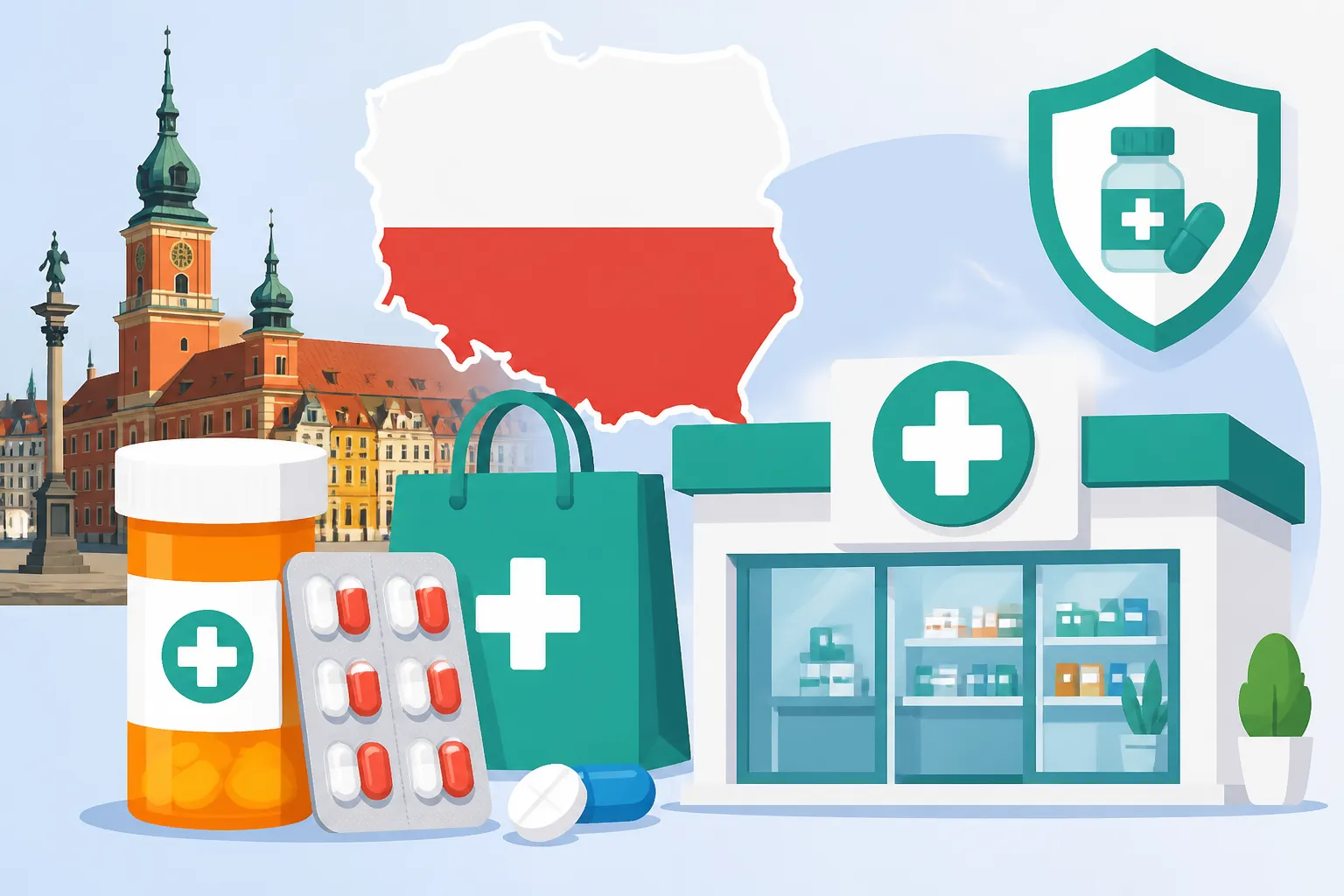
In Poland, a pharmacy is called an "Apteka" (pronounced: ap-TEH-kah), and it's a dedicated establishment for dispensing medications, medical supplies, and often a range of health and beauty products. They are highly regulated, clean, and typically run by professional pharmacists. You'll find them everywhere – on main streets, in shopping centers, and tucked away in residential areas.
There are generally two types of pharmacies you'll encounter. The most common are private pharmacies, which might be independent or part of smaller chains. Then you have larger pharmacy chains, like Dr. Max or Gemini, which are widespread and often have extended opening hours. While the look and feel might differ slightly, the core services and regulations remain consistent across them all. You'll usually see a green cross sign, sometimes illuminated, indicating its presence. Pharmacists in Poland play a significant role, not just dispensing, but also offering advice on over-the-counter options, basic health concerns, and potential drug interactions. They are often your first point of contact for minor ailments, much like a general practitioner in some other countries, making the Navigating the Polish Healthcare System: An Expat's Roadmap (2027) a bit smoother.
Common Frustrations and Cultural Differences
Let's be real, the first few trips to an Apteka can be a bit anxiety-inducing. One of the biggest hurdles is the language barrier. While younger pharmacists might speak English, relying on it can be a gamble, especially outside major cities. You might find yourself miming symptoms or holding up a Google Translate screen, hoping for the best. This is where understanding the system truly helps, as it reduces the need for lengthy explanations.
Another significant difference for many expats is the format of prescriptions and the role of the pharmacist. Unlike some countries where a pharmacist might simply hand you exactly what the doctor wrote, Polish pharmacists have a bit more leeway, especially with reimbursed medications or when a direct equivalent isn't available. They might suggest a generic version or a different brand with the same active ingredient, which can be confusing if you're expecting a specific box. The electronic prescription system (e-recepta), while efficient, also has a learning curve for those used to paper slips. The good news is that these differences, once understood, make the process surprisingly streamlined.
Understanding the Polish Prescription System (e-Recepta)
Poland has made significant strides in modernizing its healthcare system, with the widespread adoption of the electronic prescription, or "e-recepta," being a prime example. This digital approach aims to simplify the process, reduce errors, and make accessing your medications much easier.
The Digital Revolution: How e-Recepta Works
Gone are the days of deciphering a doctor's handwriting on a paper prescription (mostly!). The e-recepta system means your prescription is issued digitally by your doctor and stored in a central system. When your doctor issues an e-recepta, they generate a unique 4-digit code. This code, along with your PESEL number, is all you need to present at any pharmacy in Poland to get your medication. You might receive this code via SMS, email, or directly through your Internetowe Konto Pacjenta (IKP) account. Sometimes, the doctor will also print out an "informational printout" which looks like a paper prescription but simply contains the details of your electronic one, including the crucial 4-digit code and a QR code.
The e-recepta contains all the necessary information: the prescribed medication, dosage, quantity, and whether it's eligible for NFZ reimbursement. This system has vastly improved efficiency, as pharmacists no longer need to manually enter prescription details, reducing potential errors. It also means you can get your medication from anywhere in the country, not just the pharmacy next to your doctor's office. Learning How e-Skierowanie (E-Referrals) Work for Specialists in Poland and Understanding the e-Recepta (E-Prescription) System in Poland are vital steps for navigating Polish healthcare.
Getting Your Prescription: From Doctor to Pharmacy
The journey from consultation to medication typically goes like this: After your appointment, whether it's with a GP (Lekarz Rodzinny) you found through The Expat Guide to Finding a Family Doctor (Lekarz Rodzinny) in Poland or a specialist, the doctor will issue an e-recepta. They'll ask how you'd like to receive the code – typically SMS is the easiest if you have a Polish phone number. If you have an How to Set Up an Internetowe Konto Pacjenta (IKP) Patient Account, the e-recepta will also automatically appear there, giving you a digital record of all your prescriptions.
What if you don't have a PESEL number yet? This is a common point of frustration for many new arrivals. While a PESEL is crucial for most administrative tasks, including full NFZ access, some doctors can issue an e-recepta using your passport number or another form of ID as a temporary measure. However, this often means you won't be able to benefit from any NFZ reimbursement, and you'll pay the full price for your medication. It's a temporary workaround, emphasizing why it's so important to get your PESEL as soon as possible, as detailed in How to Get Your PESEL Number and Why It Matters for Healthcare. Without it, even simple tasks become more complicated, impacting everything from taxes to healthcare access.
Filling Your Prescription: Step-by-Step
Once you have your e-recepta code, heading to the pharmacy is the next logical step. The process is generally straightforward, but knowing what to expect can ease any potential stress.
Presenting Your e-Recepta
When you approach the counter at any Apteka, you'll need to provide the 4-digit code you received from your doctor. Crucially, you'll also need to provide your PESEL number. If you received the e-recepta via SMS, the text usually contains both. Alternatively, if you have the informational printout from the doctor, the pharmacist can scan the QR code. It's a good habit to have your PESEL number memorized or easily accessible on your phone or ID. If you only have your ID (like a passport) and no PESEL, you might be able to get your prescription filled, but as mentioned, prepare to pay the full, non-reimbursed price.
The pharmacist will input the code and your PESEL into their system, which then retrieves your specific prescription from the central database. This typically takes only a few moments. If you have multiple prescriptions, you can give them all the codes at once. Don't be shy about asking for clarification if something isn't clear, even with a translation app. Many pharmacies in larger cities now have at least one English-speaking pharmacist, but it's not guaranteed.
Understanding Medication Availability and Substitutions
One thing that might surprise expats is the common practice of medication substitution in Poland. If your prescribed medication isn't available, or if there's a cheaper generic alternative with the exact same active ingredient and dosage, the pharmacist has the authority to suggest or even dispense the substitute. They will always inform you if they are making a substitution. For instance, if your doctor prescribed "Leczenie Forte," but the pharmacy only has "Wzmocnienie Max" (both being different brands of the same common painkiller, for example), the pharmacist will likely offer you the latter. They're well-trained to ensure the substitute is therapeutically equivalent.
However, a pharmacist cannot substitute a medication if the doctor explicitly stated "nie zamieniać" (do not substitute) on the e-recepta, or if it's a very specific, unique drug. This practice is part of the system designed to ensure you get your medication even if a specific brand is out of stock, and it also promotes the use of more affordable generics. Don't hesitate to ask if you prefer the original brand, though you might have to check other pharmacies or pay a higher price if the original isn't reimbursed. This system is a core part of Prescription Medications and Pharmacies in Poland: The Complete Guide and helps manage The Cost of Healthcare in Poland: A Complete Breakdown for Foreigners (2026).
| Feature | Polish Practice | Common Foreigner Expectation (e.g., US/UK) |
|---|---|---|
| Prescription Format | Primarily e-recepta (digital 4-digit code/QR) | Paper slip, direct communication to pharmacy, or online portal |
| Pharmacist Role | Dispense, offer advice, make generic substitutions, initial health advice | Dispense, verify, may consult on interactions |
| Identification | PESEL number is key for reimbursement | Name and date of birth, insurance card |
| Substitution | Common with therapeutically equivalent generics unless specified | Less common, often requires doctor approval |
| Language | Primarily Polish (but improving in cities) | Often English-speaking staff in diverse areas |
Prescription Costs and Reimbursement
Understanding how much you'll pay for your medications can be a bit of a maze, especially with the different levels of reimbursement. It largely depends on whether you're covered by Poland's public health insurance (NFZ) or relying on private insurance.
Public (NFZ) vs. Private Pricing
If you are legally employed in Poland and contribute to ZUS, or if you are voluntarily insured with the National Health Fund (NFZ), many of your prescribed medications will be eligible for partial or full reimbursement. This means you pay a reduced price, often just a nominal fee, or sometimes nothing at all. The level of reimbursement (e.g., 30%, 50%, 100%, or fixed amount) depends on the specific medication and its classification by the Ministry of Health. Generally, medications for chronic illnesses or those deemed essential often have higher reimbursement rates. For details on how to get set up with this, you might want to look into How Poland's National Health Fund (NFZ) Works: A Full Overview or Registering with the NFZ in Poland: The Complete Expat Guide (2027).
However, if you're not insured by the NFZ, or if the medication is not on the reimbursement list (which is common for newer, less essential, or cosmetic-related drugs), you'll pay the full commercial price ("100% płatne"). Even with NFZ coverage, some drugs may not be reimbursed at all. The pharmacist will always inform you of the cost before dispensing, and their system automatically calculates the correct price based on your e-recepta and PESEL status. This distinction is a crucial part of The Complete Guide to Healthcare in Poland for Expats (2027).
Health Insurance and Medication Coverage
Your health insurance plays a pivotal role here. If you're covered by the NFZ, your e-recepta will automatically reflect your eligibility for subsidized medications, provided your PESEL is correctly linked to your NFZ status. For private health insurance plans, like those offered by Medicover or LUX MED, the situation is different. While these plans are excellent for faster access to doctors and specialists (as explored in Understanding Private Medical Subscriptions (Medicover, LUX MED) in Poland), they typically do not cover prescription medication costs at the pharmacy itself. You'll usually pay the full price upfront and then, if your specific private plan includes it, you might be able to claim reimbursement directly from your insurer later. It's always best to check the terms of your private policy regarding medication coverage.
What about travel insurance, like SafetyWing? For short-term stays or those who are in a transitional period, travel insurance can be a lifesaver for unexpected medical emergencies. SafetyWing, for example, often covers acute illnesses or injuries and associated urgent medical care, which might include necessary emergency medications. However, it's generally not designed for routine prescription refills or chronic conditions. Always read your policy carefully to understand what is covered under "acute illness" and how to claim any medical expenses, including medications, especially if you get sick before your NFZ registration is complete. This type of insurance can provide a safety net, but it's not a substitute for proper long-term health insurance in Poland, which is thoroughly discussed in Health Insurance in Poland: Mandatory, Private and Subscription Options Explained.
Over-the-Counter (OTC) Medications and Other Pharmacy Services
Pharmacies in Poland are more than just places to pick up prescriptions; they are a valuable resource for a wide range of health needs, including common over-the-counter remedies and expert advice.
Self-Medication and OTC Availability
Just like in many other countries, you can purchase a variety of medications without a doctor's prescription in Poland. These over-the-counter (OTC) drugs, known as "leki bez recepty" (lek-ee bez reh-TSEP-tee), are readily available for common ailments such as headaches, colds, allergies, and minor digestive issues. Common painkillers like ibuprofen (often branded as Ibum, Nurofen) and paracetamol (Apap, Panadol) are easy to find, as are cold and flu remedies (e.g., Gripex, Theraflu).
However, it's worth noting that the line between OTC and prescription can differ from your home country. Some medications that might be freely available in your country could require a prescription in Poland, and vice-versa. For example, stronger allergy medications or certain stomach acid reducers might require an e-recepta here. When in doubt, it's always best to ask the pharmacist. They are a wealth of knowledge and can guide you to the appropriate OTC product or advise if a doctor's visit is necessary. Don't be surprised if they ask you a few questions about your symptoms to ensure they're recommending the right product.
Beyond Medications: What Else Can You Get?
Polish pharmacies are often like mini-health and beauty stores. Beyond just medicines, you'll find a vast array of other products. This includes:
- Dietary Supplements and Vitamins: Everything from Vitamin D and C to specialized probiotics and herbal remedies.
- Medical Devices: Bandages, wound dressings, thermometers, blood pressure monitors, nebulizers, and even some orthopedic supports.
- Cosmetics and Skincare: Many pharmacies carry dermatological skincare brands, often offering high-quality products for sensitive skin or specific conditions. Brands like La Roche-Posay, Vichy, Bioderma, and Avene are common.
- Baby and Childcare Products: Formula, diapers, specialized creams, and other infant care essentials.
- Dental Care: Toothpastes, mouthwashes, and specialized dental hygiene products.
- First Aid Supplies: Everything you need for a basic home first aid kit.
Pharmacists are also a great first stop for advice. They can answer questions about proper medication usage, potential side effects, and offer general health guidance. Many pharmacies also offer services like measuring blood pressure or blood glucose levels, making them a community health hub.
Special Situations and Troubleshooting
Even with the best preparation, unique situations can arise when dealing with prescriptions and pharmacies. Knowing how to handle these can save you a lot of stress.
Foreign Prescriptions in Poland
This is a common question, and the answer, unfortunately, is generally no – you cannot directly use a prescription issued by a doctor in your home country (outside of the EU/EEA) at a Polish pharmacy. Polish law requires prescriptions to be issued according to Polish regulations, which includes the e-recepta format. If you have a critical medication prescribed from abroad, your best course of action is to schedule an appointment with a Polish doctor as soon as possible. They can then review your foreign prescription and issue a local e-recepta. It's a good idea to bring your original foreign prescription, any relevant medical records, and if possible, the medication packaging itself to your appointment to help the Polish doctor understand your needs.
For EU/EEA citizens, a prescription from another EU/EEA country can theoretically be recognized in Poland, provided it meets certain criteria (e.g., specific patient and doctor details, clear medication name). However, in practice, pharmacists may still be hesitant due to unfamiliarity with formats or language barriers. It's often simpler and more reliable to get a fresh e-recepta from a Polish doctor, especially for reimbursed medications. If you're only visiting Poland, travel insurance like SafetyWing might provide emergency coverage, but it will likely still require a Polish doctor to issue the actual prescription after a consultation.
Emergency Prescriptions and After-Hours Pharmacies
Running out of essential medication at 2 AM or on a public holiday is a nightmare scenario for any expat. Thankfully, Poland has a system in place for after-hours access. Many larger cities and towns have "Apteka Całodobowa" (24-hour pharmacies) or "Apteka Dyżurna" (on-call pharmacies) that operate outside regular business hours. These pharmacies often rotate, so it's a good idea to check online or look for notices posted on pharmacy doors that list the nearest open after-hours location. Google Maps is usually reliable for finding these by searching "apteka całodobowa" or "24h pharmacy."
If you find yourself in an emergency and need a prescription immediately, and your regular doctor's office is closed, you might need to visit an emergency clinic (SOR – Szpitalny Oddział Ratunkowy) or an urgent care center (Nocna i Świąteczna Opieka Zdrowotna, or NiŚOZ). A doctor there can assess your condition and issue an emergency e-recepta. For truly life-threatening emergencies, calling 112 (the general emergency number) or 999 (for ambulance directly) is the priority. Understanding Emergency Medical Care in Poland: What Every Expat Needs to Know is crucial for these situations. Always ensure you have a small supply of critical medications when traveling or moving to a new country, just in case of unforeseen delays.
Important Tips for Expats
Navigating a new country's healthcare system is challenging, but with a few proactive steps, you can make the process of getting your medications in Poland much smoother.
Language Aids and Translation Apps
While an increasing number of Poles, especially younger generations and those in urban centers, speak English, relying solely on it at the pharmacy can be risky. Having some linguistic tools in your arsenal can save you a lot of frustration.
- Google Translate: This is your best friend. Use its conversation mode or simply type out what you need to say or show. You can also use its camera function to translate labels or signs.
- Offline Dictionaries: If you anticipate poor internet connectivity, having an offline Polish-English dictionary app can be invaluable.
- Key Phrases: Learning a few basic phrases can go a long way. For example:
- "Mam receptę" (I have a prescription)
- "E-recepta" (Electronic prescription)
- "Kod: [your 4-digit code]" (Code: [your 4-digit code])
- "Mój PESEL to: [your PESEL number]" (My PESEL is: [your PESEL number])
- "Czy macie to po angielsku?" (Do you have this in English?)
- "Czy jest to na receptę?" (Is this on prescription?)
- "Dziękuję" (Thank you)
Even a small effort to speak a few words of Polish is often appreciated and can help bridge the communication gap.
Document Essentials: PESEL and ID
We've mentioned it repeatedly, and for good reason: your PESEL number is absolutely paramount for almost all interactions with the Polish healthcare system, especially when it comes to prescriptions. It's your unique national identification number and is linked to your health insurance status. Without it, you cannot access NFZ-reimbursed medication and will almost always pay full price. Always have your PESEL ready when visiting a pharmacy.
In addition to your PESEL, always carry a valid form of identification, such as your passport or Polish residence card (Karta Pobytu). While the PESEL is usually enough for e-recepta, having an ID ensures that if there are any issues or further verification is needed, you can provide it. Getting your How to Get Your PESEL Number and Why It Matters for Healthcare should be one of your top priorities upon moving to Poland. It simplifies so many aspects of life, not just healthcare.
Understanding Internetowe Konto Pacjenta (IKP)
The Internetowe Konto Pacjenta, or IKP, is Poland's online patient portal, and it's an incredibly useful tool for managing your healthcare. Think of it as your personal digital health hub. Once you set it up (which requires a PESEL and a trusted profile, Profil Zaufany), you can:
- Access your e-recepty: See all your active and fulfilled electronic prescriptions. This is fantastic if you forget a code or need to check details.
- View e-skierowania: Access your electronic referrals to specialists or for diagnostic tests.
- Check your health insurance status: Confirm your NFZ coverage.
- Review your medical history: See records of doctor visits, treatments, and test results.
- Change your GP: You can easily switch your primary care physician through the IKP.
Setting up your How to Set Up an Internetowe Konto Pacjenta (IKP) Patient Account is highly recommended. It gives you greater control and transparency over your health information and significantly simplifies the process of managing your prescriptions.
The Future of Pharmacies in Poland
The pharmaceutical landscape, like all aspects of healthcare, is constantly evolving. In Poland, we're seeing some exciting developments that promise to make accessing medications even more convenient for expats and locals alike.
Telemedicine and Online Pharmacies
Telemedicine has truly boomed in Poland, especially since the pandemic. Many Polish doctors now offer online consultations, during which they can issue e-recepty directly to your IKP account or via SMS. This is particularly useful for routine check-ups, follow-up appointments, or when you simply can't make it to a physical clinic. It means you can have a consultation and receive a prescription without even leaving your home, then simply pick up your medication from your nearest Apteka. Several private healthcare providers, like Medicover and LUX MED, have robust telemedicine platforms, but public healthcare also offers this option.
While physical pharmacies remain the primary point of dispensing, there's a growing trend towards online pharmacies, which allow you to order OTC medications and other health products for home delivery. However, prescription medications still generally require a physical pick-up at a registered Apteka to verify identity and ensure proper dispensing. Keep an eye on this space, as regulations are always adapting to new technologies.
Expanding Roles of Pharmacists
The role of pharmacists in Poland is gradually expanding beyond just dispensing medications. You might notice them offering more health advice, conducting basic health screenings (like blood pressure or glucose tests), and providing consultations for minor ailments. There's a push to utilize their extensive medical knowledge more effectively, potentially reducing the burden on GPs for simple issues. This evolving role means that your local pharmacist can become an even more valuable resource for your everyday health questions and needs. This is part of the larger movement to enhance The Complete Guide to Healthcare in Poland for Expats (2027), making healthcare more accessible and integrated across various points of care.
Disclaimer
The information provided in this guide is for general informational purposes only and does not constitute medical or legal advice. Healthcare regulations and practices in Poland can change, and individual circumstances may vary. Always consult with a qualified medical professional for any health concerns or before making any decisions related to your health or treatment. For specific legal or administrative advice regarding residency, insurance, or other official matters, please consult with relevant Polish authorities or legal experts.