Do I Need Private Insurance for a Polish Residence Permit?
Navigating the bureaucratic labyrinth of a Polish residence permit application is enough to make even the most seasoned traveler want to pack their bags. One of the biggest hurdles is the insurance requirement, which often feels like a moving target depending on which clerk you speak to. This guide demystifies whether you truly need private insurance to secure your Karta Pobytu and how to ensure your policy satisfies the demanding requirements of the Urząd Wojewódzki.
The Core Insurance Requirement for Polish Residency
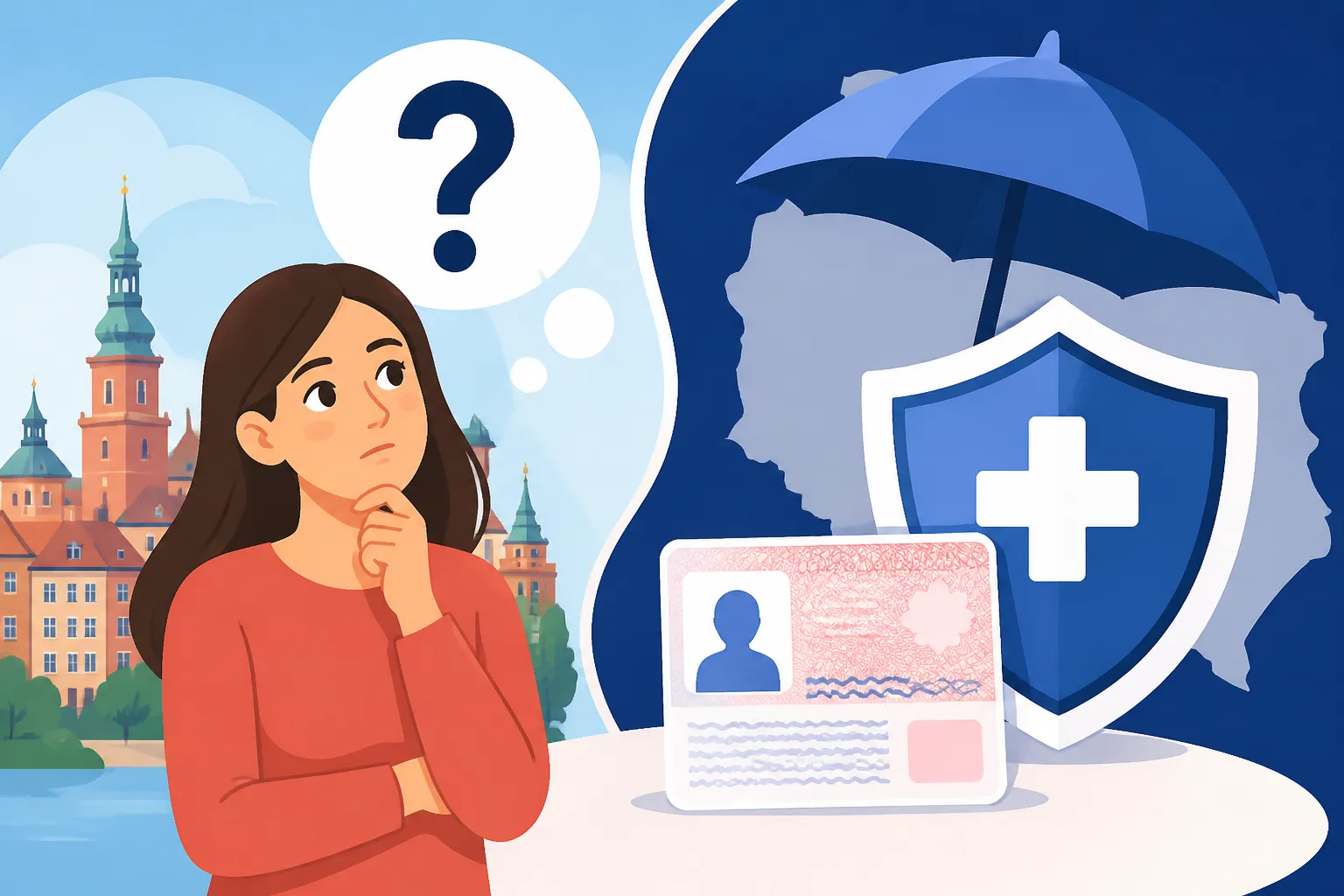
The primary reason the Polish government insists on health insurance for a residence permit is to ensure that no foreigner becomes a financial burden on the state's public healthcare system. When you submit your application for a temporary residence permit (Pobyt Czasowy), the law requires you to prove you have "stable and regular income" and "health insurance as defined by the Law on Healthcare Services." This essentially means you need a way to pay for medical treatment, whether it is through the public system or a private policy that the government recognizes as equivalent.
I remember my first application in Warsaw; I walked in with a simple travel insurance printout from my home country, only to be told it wasn't worth the paper it was printed on. The Polish authorities are very specific about the type of coverage they accept. It isn't just about having a card in your wallet; it is about the specific legal language in the policy. You must demonstrate that your insurance covers the "costs of treatment" in Poland, including hospital stays and emergency procedures. If your policy only covers accidents (NNW) but not illness, your application will likely be stuck in a state of wezwanie (a formal request for missing documents).
For many, the question of What Is Covered by Basic NFZ Insurance in Poland becomes central during this phase. If you are already working legally, you might not need a private policy at all. However, the timing of your application and your specific visa type play a massive role. If you are applying for a permit based on other circumstances, such as being a digital nomad or a student, the insurance requirement becomes your most critical piece of evidence. This is where options like SafetyWing can become incredibly helpful, especially for those who are in a transitional phase or don't yet have access to the state system.
Public vs. Private Insurance: What Does the Urząd Actually Accept?
There is a common misconception that "private" insurance is always mandatory for the residence permit. In reality, the Polish public insurance system, known as the NFZ (Narodowy Fundusz Zdrowia), is the "gold standard" for the Urząd. If you are employed on a standard employment contract (Umowa o Pracę), your employer is already paying your Understanding ZUS Health Contributions (Składka Zdrowotna) in Poland. In this case, you don't need a separate private policy. You simply provide a document called the ZUS ZUA (registration) and a recent ZUS RCA (payment confirmation) to prove you are in the system.
However, the "trap" many expats fall into is relying on private medical subscriptions like LUX MED or Medicover. While these are fantastic for seeing a specialist quickly or getting a blood test, they are technically "medical service subscriptions" and not "health insurance" in the eyes of Polish immigration law. Most of these subscriptions do not cover major surgeries or long-term hospitalizations. If you submit a LUX MED certificate without a state NFZ backup or a proper insurance policy, the clerk will likely ask for additional proof. This is a nuance that catches many off guard, leading to unnecessary stress and delays.
If you aren't yet in the NFZ system—perhaps because you just arrived or you are a freelancer—you must look for a private insurance policy that specifically states it covers medical costs in Poland. A flexible travel medical insurance like SafetyWing is often used by expats as a bridge. It provides the necessary medical coverage for emergencies and hospitalizations that the Urząd requires, often at a fraction of the cost of a full Polish private medical plan. When using such a policy, you need to ensure the certificate clearly states the territory of coverage (Poland or Schengen) and the minimum coverage amount, which is typically 30,000 EUR.
Specific Scenarios for Employees and the Self-Employed
If you are working in Poland, your insurance situation is usually tied to your contract. For those on an Umowa o Pracę, coverage is automatic and mandatory. You are protected from the day you start work, and the Urząd accepts this without question as long as you provide the right ZUS printouts. You can find more details on this in the guide on How Do I Register with the NFZ If Employed by a Polish Company?. The situation becomes slightly more complex for those on an Umowa Zlecenie (mandate contract). While most mandate contracts include health insurance, some are exempt if you are a student under 26. If you are exempt from ZUS on a mandate contract, you must buy private insurance to satisfy the residence permit requirements.
For the self-employed, the burden of proof is entirely on you. When you run a JDG (Sole Proprietorship), you are responsible for paying your own ZUS contributions every month. To prove this to the immigration office, you’ll need to show your registration with ZUS and proof of your latest transfers to the tax office. If you are just starting your business and haven't made your first payment yet, the Urząd may still ask for a private policy to cover the gap. I’ve seen many entrepreneurs struggle with this timing, as the bureaucracy of How Do I Register with the NFZ as a JDG (Sole Trader) Owner? can sometimes take longer than expected.
There is also the "voluntary insurance" route. If you aren't employed but have a PESEL number, you can pay into the NFZ voluntarily. This is often a great long-term solution for those who want full state coverage but aren't currently working. However, the "catch-up" fee for voluntary insurance can be steep if you've had a long gap in coverage. For those who find the voluntary NFZ route too expensive or complicated, a private alternative like SafetyWing offers a more immediate, paperwork-light way to meet the legal requirements for the Karta Pobytu while you get your affairs in order.
| Insurance Type | Accepted by Urząd? | Best For | Typical Proof Required |
|---|---|---|---|
| NFZ (via Employer) | Yes (Always) | Full-time employees | ZUS ZUA & ZUS RCA |
| NFZ (Voluntary) | Yes | Unemployed/Freelancers | Contract with NFZ & payment proof |
| Private Insurance | Yes (If criteria met) | Students, Nomads, New Arrivals | Policy Certificate (in Polish) |
| Medical Subscription | No (Usually) | Quick specialist visits | N/A (Not for residency) |
| Travel Insurance | Sometimes | Short-term bridge | Policy with 30k EUR coverage |
Bridging the Gap: Why SafetyWing and Travel Policies are Crucial
Many expats arrive in Poland on a visa-free entry or a tourist visa and decide to apply for residency while they are here. The moment you submit your application, your legal stay is extended, but your initial travel insurance might expire. This creates a dangerous "insurance gap." If you are in the middle of a residence application and you have a medical emergency without valid insurance, the costs can be astronomical. More importantly, if the Urząd realizes your insurance has lapsed while your case is pending, they can deny your permit on the grounds that you no longer meet the requirements.
This is where a policy from SafetyWing becomes a strategic asset. Because it operates on a subscription model, you can keep it active for the exact duration of your residency processing time. Since some Urząd offices, especially in cities like Wroclaw or Warsaw, can take 6 to 12 months to process a permit, having a flexible policy is much better than buying a rigid one-year plan upfront. I often advise newcomers to use this type of coverage to "bridge the gap" until they are officially registered in the public system via a job or business.
It’s also worth noting that if you are an EU citizen, your EHIC (EKUZ) card is generally not sufficient for a long-term residence permit. The EHIC is designed for temporary stays, and the Polish authorities expect residents to either be in the NFZ system or have a comprehensive private policy. For non-EU citizens, the requirements are even stricter. Having a policy like SafetyWing ensures that you have coverage that meets the Schengen-area standards, which is the baseline the Polish clerks use when evaluating your dossier. You can read more about the nuances of the public system in How Poland's National Health Fund (NFZ) Works: A Full Overview.
The "Hidden" Technical Requirements of Your Insurance Policy
Even if you have private insurance, the Urząd might reject it if it doesn't meet specific technical criteria. First, the coverage amount must be at least 30,000 EUR. This is a non-negotiable figure derived from Schengen regulations. If your policy is in a different currency (like USD or GBP), ensure the converted amount clearly exceeds the 30k EUR threshold. Furthermore, the policy must explicitly cover "all costs that may arise in connection with the need to return for medical reasons, urgent medical assistance, emergency hospital treatment, or death."
Another hurdle is the language of the document. Polish law requires all documents submitted to the Urząd to be in Polish. If you buy a policy from an international provider, you will likely receive a certificate in English. You must get this document translated by a sworn translator (tłumacz przysięgły). This is an extra cost and step that many people forget. However, some modern providers like SafetyWing are well-known in the expat community, and their certificates are often standardized in a way that makes the translation process straightforward or, in some lucky cases with lenient clerks, easily understood if provided with a Polish summary.
Lastly, the insurance must be valid for the duration of the permit you are seeking, or at least for a significant portion of the initial period. If you submit a policy that expires in two weeks, you will immediately receive a request to provide a new one. This is why many choose to provide proof of NFZ coverage, as it is considered "ongoing" as long as you are employed. If you are struggling to find a policy that fits, exploring Understanding Private Medical Subscriptions (Medicover, LUX MED) in Poland can help you understand what additional care you might want, but remember they shouldn't be your only proof for the residence permit.
Proving Your Coverage: A Step-by-Step Document Guide
When you finally head to your appointment at the Urząd Wojewódzki, you need to have your "insurance bundle" ready. If you are an employee, this bundle includes the ZUS ZUA form (which your HR department can provide) and a ZUS RCA from the previous month. If you are a student, you might provide a private policy or a voluntary NFZ contract. For those using a private provider like SafetyWing, you need the main policy certificate and proof of payment (like a bank statement or a receipt).
Step 1: Verify the coverage dates. Ensure the policy starts before or on the day you submit your application.
Step 2: Check the "scope of protection." Does it mention hospital stays and emergency treatment in Poland?
Step 3: Handle the translation. Find a local sworn translator to translate the insurance certificate if it is not in Polish.
Step 4: Make copies. Never give the Urząd your only original copy; they usually need to see the original but will keep a photocopy.
Step 5: Prepare for the How to Get Your PESEL Number and Why It Matters for Healthcare discussion, as your PESEL is often the key to linking your insurance to your digital patient account (IKP).
If you are applying with family members, remember that each person needs their own proof of insurance. If you are covered by the NFZ, you can add your spouse and children to your insurance for free, but you must officially register them via your employer. This generates a document called the ZUS ZCNA, which is the specific proof the Urząd needs for your family's residence permits. Many expats overlook this and assume a marriage certificate is enough—it isn't. You must show they are specifically registered for health coverage. You can find more on this in How to Register Family Members for Health Insurance in Poland.
Frequently Asked Questions and Expat Troubleshooting
A question I often get is: "Can I use travel insurance from my credit card?" Generally, the answer is no. Credit card insurance usually has very limited durations and lacks the specific "costs of treatment" language that Polish immigration law requires. Another common issue is the "waiting period." Some private policies have a 14-day or 30-day waiting period before they become active. If you submit such a policy, the Urząd may argue that you were uninsured during the initial days of your application.
What happens if your application is rejected due to insurance? Don't panic. Usually, you are given a 7-day or 14-day window to "rectify" the situation. This is when people scramble to buy a policy that meets the criteria. Having a reliable, instant-approval option like SafetyWing in your back pocket can save your application at the last minute. It's also vital to stay updated on The Cost of Healthcare in Poland: A Complete Breakdown for Foreigners (2026) so you can estimate whether your private policy’s limits are actually realistic for the Polish market.
Ultimately, whether you need private insurance depends on your stage in the Polish journey. If you have a job, the state system is your best friend. If you are in between jobs, a student, or a nomad, a solid private policy is your legal shield. The Urząd clerks are not out to get you; they just have a checklist to follow. If you provide them with a clear, translated document that shows 30,000 EUR of coverage for hospital stays in Poland, you've cleared one of the biggest hurdles to your new life in the Land of the White Eagle.
Disclaimer
The information provided in this guide is for informational purposes only and does not constitute legal or professional advice. Immigration requirements and health insurance regulations in Poland can change frequently. Always consult with the official website of your local Urząd Wojewódzki or a qualified legal professional before submitting your residence permit application to ensure you meet the most current requirements.