What Happens to My Healthcare If I Lose My Job in Poland?
Losing your job in a foreign country is a visceral, heart-pounding experience that goes beyond just financial stress. In Poland, where healthcare is inextricably linked to your employment status through ZUS contributions, the fear of a medical emergency occurring while you are "between roles" can be paralyzing. This guide explains exactly how to maintain your health coverage, navigate the administrative hurdles of the unemployment office, and ensure you never face a massive hospital bill alone.
The 30-Day Grace Period for Healthcare Access
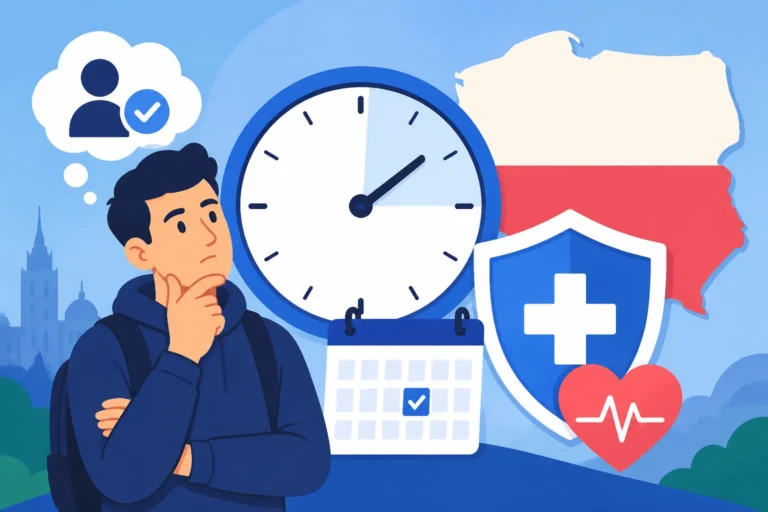
The first thing you need to do is take a deep breath. Contrary to what many expats fear, your health insurance does not vanish the second you hand in your laptop or sign a termination agreement. Polish law provides a specific safety net for employees who have been contributing to the National Health Fund (NFZ). When your employment contract ends, you remain entitled to use the public healthcare system for an additional 30 days.
This 30-day extension is a legal right designed to give you time to find a new position or register with the local authorities. During this window, you can still visit your family doctor, see specialists if you have a referral, or even undergo previously scheduled procedures. It is essential to understand How Poland's National Health Fund (NFZ) Works: A Full Overview to appreciate that this period is covered by your final month's contributions.
However, there is a technical glitch you should prepare for: the eWUŚ system. This is the electronic database doctors use to check your insurance status via your PESEL number. Sometimes, the system turns "red" (indicating no insurance) prematurely because your employer notified ZUS of the contract termination. If this happens during your 30-day grace period, don't panic. You simply need to provide a written declaration of your right to insurance or show your "Świadectwo Pracy" (Work Certificate) to prove your employment recently ended. This is a common frustration, but knowing How to Register with the NFZ as a Foreigner in Poland can help you understand the underlying paperwork.
Registering with the Powiatowy Urząd Pracy
If 30 days pass and you haven't secured a new Umowa o Pracę, your primary route to staying insured is registering as unemployed. This happens at the Powiatowy Urząd Pracy (PUP), or the District Labour Office, corresponding to your place of residence. For many expats, this is the most daunting administrative hurdle because the offices often operate strictly in Polish and require a mountain of original documents.
To register, you typically need your passport, your residence permit (Karta Pobytu), your PESEL, and your original work certificates from all previous Polish employers. Once the registration is successful, the Labour Office becomes your "payer." They will pay your health insurance contributions to ZUS, meaning you can continue to use the public system exactly as you did when you were employed. This coverage starts the day you register and lasts as long as you maintain your status as an unemployed person.
Beyond the public system, many foreigners find the transition period between jobs to be a high-risk time. If your residence permit is tied to your job, the PUP might not be an option for you. In these cases, many expats rely on flexible alternatives like SafetyWing to provide a safety net. SafetyWing is particularly useful because it acts as a bridge, offering global travel medical insurance that can cover you while you are figuring out your next administrative move in Poland. It’s a way to avoid the stress of the NFZ’s "red light" in the system while you're hunting for a new role.
Voluntary Insurance with the NFZ (Dobrowolne Ubezpieczenie)
If you aren't eligible to register as unemployed—perhaps because you are on a specific type of visa or you are a freelancer who just ended a contract—you can choose to pay for the NFZ yourself. This is known as "Dobrowolne Ubezpieczenie Zdrowotne." It involves going to an NFZ branch (for example, the large office on Chałubińskiego in Warsaw) and signing a contract for voluntary insurance.
The cost of this is not fixed; it is calculated as 9% of the average monthly wage in the enterprise sector. For 2026, you can expect this to be a significant monthly expense, often exceeding 700-800 PLN. Furthermore, if there has been a gap in your insurance coverage, the NFZ may charge an "additional fee" for the period you were uninsured. This fee can be quite high, sometimes reaching several thousand zlotys depending on how long you were out of the system.
Before committing to this, it is vital to check Understanding ZUS Health Contributions (Składka Zdrowotna) in Poland to see if you can avoid these fees through other means. Many people find that while they wait for the NFZ paperwork to clear—which can take weeks—having a plan from SafetyWing provides peace of mind. SafetyWing offers a more immediate solution for those who don't want to deal with the bureaucratic lag of the Polish state system.
Managing Family Members and Dependents
In Poland, it is common for a working spouse to "add" their partner or children to their insurance policy. This is a great benefit, but it creates a domino effect if the primary earner loses their job. When your insurance ends, so does the insurance for everyone registered under your name. If you have children in school or a spouse who requires regular medication, this is where the real stress begins.
If you register with the Labour Office, you must remember to explicitly state that you need to register your family members as well. It is not automatic. You will need their PESEL numbers and potentially birth or marriage certificates (translated into Polish) to complete this step. If you're wondering about the logistics, the guide on How to Register Family Members for Health Insurance in Poland provides a step-by-step breakdown of this process.
During this transition, the last thing you want is for a child to get sick while the paperwork is in limbo. This is another scenario where having a supplementary policy like SafetyWing can be a lifesaver. Because it covers medical emergencies and can be started or stopped at any time, it acts as a perfect buffer for families navigating the often slow-moving Polish bureaucracy. It ensures that while you're waiting for the ZUS system to update, your family isn't left vulnerable.
Comparison of Healthcare Options After Job Loss
| Option | Cost | Eligibility | Best For |
|---|---|---|---|
| 30-Day Extension | Free (Included) | Anyone who had a contract | Immediate bridge after firing/resignation |
| Urząd Pracy (PUP) | Free (State Paid) | Residents with right to work | Long-term unemployment |
| Voluntary NFZ | ~700-900 PLN/mo | Almost any legal resident | Freelancers or those not eligible for PUP |
| SafetyWing | Affordable Monthly | Everyone / Digital Nomads | Bridging gaps & travel outside Poland |
| Spouse's Insurance | Free | Spouses of those employed | Families with one person working |
Dealing with Medical Emergencies During a Gap
What happens if you have an accident on day 31, you haven't registered with the PUP yet, and you don't have private insurance? In Poland, emergency rooms (SOR – Szpitalny Oddział Ratunkowy) are legally required to stabilize you. However, if you are uninsured, the hospital will eventually send you a bill for the full cost of the treatment. These bills can range from a few hundred zlotys for a minor stitch to tens of thousands for surgery or an overnight stay.
This is why understanding Emergency Medical Care in Poland: What Every Expat Needs to Know is crucial. You should always check your status in the Internetowe Konto Pacjenta (IKP) Patient Account to see what the state thinks of your insurance status before a crisis hits. If you find yourself without NFZ coverage, SafetyWing can be your most important asset. It is specifically designed to handle these types of unexpected medical costs, allowing you to focus on recovery rather than how you will pay for a hospital bed.
Practical Steps to Take Immediately After Losing Your Job
To avoid a healthcare nightmare, follow these steps the moment you know your contract is ending:
- Request your Work Certificate (Świadectwo Pracy): You cannot register with the PUP or prove your 30-day extension without this document. Employers are legally required to give it to you on your last day.
- Log into IKP: Check your status. If it turns red within the first 30 days, keep a digital copy of your termination notice on your phone to show doctors.
- Evaluate your Karta Pobytu status: If your residency is tied to your employer, you must notify the Urząd Wojewódzki within 15 days. This may affect your ability to stay in the NFZ system.
- Consider SafetyWing: If you suspect there will be a gap of more than a few weeks, or if you plan to travel while looking for work, set up a policy to ensure continuous coverage.
- Gather Translation Documents: If you need to register family members at the PUP, get your marriage and birth certificates translated by a "tłumacz przysięgły" (sworn translator) immediately.
Losing a job is a professional setback, but it shouldn't become a health crisis. By understanding the 30-day rule, utilizing the Labour Office, and using tools like SafetyWing to fill the gaps, you can navigate the Polish administrative landscape with your health and wallet intact. Whether you are Navigating the Polish Healthcare System: An Expat's Roadmap (2027) for the first time or you are a seasoned resident, being proactive about your insurance status is the only way to ensure your peace of mind.
Disclaimer
This guide is for informational purposes only and does not constitute legal or professional medical advice. Healthcare regulations in Poland and the specific requirements of the ZUS and NFZ are subject to frequent changes. Always consult with the official National Health Fund (NFZ) offices or a qualified legal expert regarding your specific residency and insurance situation to ensure you are in compliance with current Polish law.