Can I See a Specialist Privately and Still Use the NFZ for Surgery?
Standing in a pharmacy or a clinic waiting room in Poland, feeling like you are caught between a bureaucratic rock and a very expensive hard place, is a rite of passage for most expats. You are in pain or need a procedure, but the public waiting list is six months long, while a private surgery costs more than your car. This guide explains exactly how to bridge the gap between private consultations and public surgical care without losing your mind or your savings.
The Hybrid Healthcare Strategy: How It Works in Poland
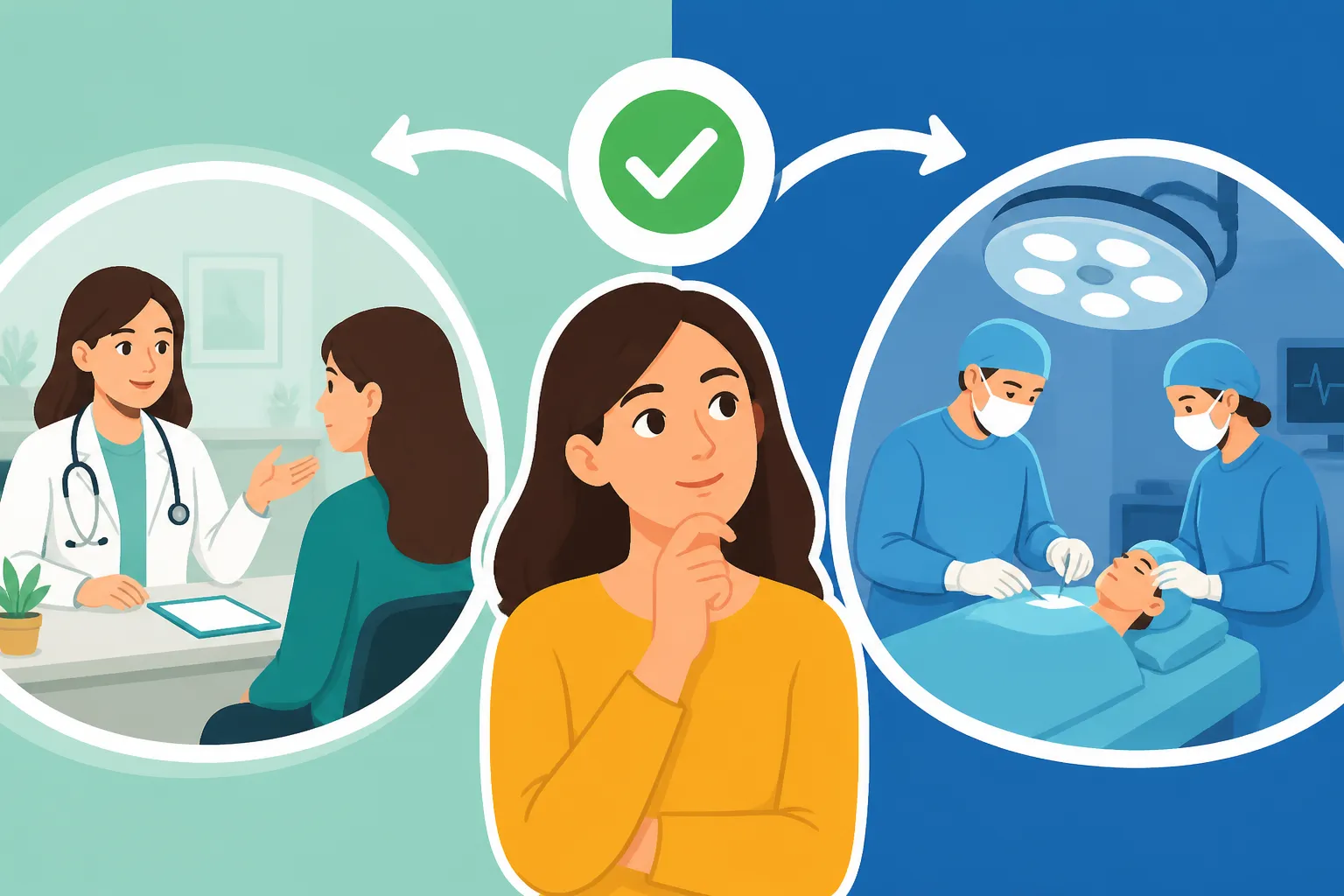
If you have spent any time in local expat groups, you have likely seen the horror stories about waiting lists. In Poland, the Narodowy Fundusz Zdrowia (NFZ) provides comprehensive coverage, but its specialist queues can be daunting. However, many of us veterans have learned that the system isn't an "all or nothing" deal. You can absolutely use the speed of the private sector to get your diagnosis and then pivot back into the public system for the high-ticket items like surgery or long-term hospital stays.
The beauty of the Polish system is that your NFZ eligibility—usually tied to your employment or JDG contributions—doesn't vanish just because you saw a doctor at a private facility like LUX MED or Medicover. You remain a covered individual. The challenge is not whether you are allowed to use the NFZ, but how you "enter" the public surgical pipeline after a private doctor has told you that surgery is necessary. This requires a specific administrative dance that many foreigners get wrong on their first try.
One thing to keep in mind is that while you are waiting for your NFZ status to be confirmed or if you are in a transitional period between jobs, having a reliable safety net is vital. Many expats use SafetyWing to cover medical emergencies or unexpected health hurdles during these gaps. While it won't pay for a planned NFZ surgery, it provides that essential peace of mind while you are navigating the initial diagnostic phases of a health issue in a foreign country.
The Reality of the NFZ Waiting Lists
The public system in Poland is high-quality but high-volume. For something like a routine ACL repair or gallbladder removal, the wait for an initial specialist consultation through the NFZ can stretch for months. This is often where the frustration begins. If you go through the official public route from day one, you must first see your GP, get a referral to a specialist, wait months for that specialist, and then get a referral for surgery.
By seeing a specialist privately, you skip that first massive hurdle. You can often get an appointment within 48 hours for a few hundred złoty. The specialist will perform the necessary ultrasounds or MRIs, confirm the diagnosis, and tell you that surgery is required. At this point, you have saved yourself months of waiting just to find out what is wrong. However, a private doctor's "referral" for surgery is usually only valid at a private hospital where you would have to pay the full commercial rate.
Why Private Consultations Are the Fast Track
Private care in Poland is remarkably affordable compared to Western Europe or the US. A consultation with a top-tier surgeon might cost between 250 and 400 PLN. For an expat, this is a small price to pay to avoid the psychological toll of waiting half a year just to hear a diagnosis. Private clinics are also much more likely to have English-speaking staff, which lowers the barrier to entry when you are trying to explain complex symptoms.
When you go private, you are essentially buying time and clarity. You get a high-quality medical opinion and a stack of diagnostic results (blood work, imaging, etc.) that are yours to keep. These documents are recognized by the NFZ. A common misconception is that NFZ doctors will ignore private test results. In reality, a Polish doctor at a public hospital will look at a private MRI just the same as one done in a public clinic, provided the quality is sufficient. This is a core part of Navigating the Polish Healthcare System: An Expat's Roadmap (2027).
The Critical Link: Transitioning from Private Consults to Public Surgery
This is the most important part of the process. You cannot simply walk into an NFZ hospital with a piece of paper from a private clinic and demand a surgery date. The public system requires an "e-Skierowanie" (e-referral) generated within the NFZ's digital system by a doctor who is currently working under an NFZ contract. This is the "bridge" you must build.
Most specialists in Poland actually "double-hat." They work at a private clinic in the afternoons and at a public NFZ hospital in the mornings. This is your secret weapon. If you see a surgeon privately, ask them directly: "Do you also operate at an NFZ hospital?" If the answer is yes, they can often facilitate your transition into the public queue. They will tell you exactly which public clinic you need to visit to get the official NFZ referral that matches their private diagnosis.
The Role of the Referral (Skierowanie)
In the public system, the referral is the currency of care. To get surgery covered by the state, the referral must be issued by a doctor in a "Przychodnia" (clinic) that has a contract with the NFZ. If your private doctor does not work for the NFZ, you will need to take your private medical records to your NFZ-registered primary care physician. You can learn more about this in The Expat Guide to Finding a Family Doctor (Lekarz Rodzinny) in Poland.
Your GP (Lekarz POZ) can review your private findings and issue a referral to an NFZ specialist. Because you already have the diagnosis and the imaging, that specialist visit will be much faster. The specialist will then issue the final e-skierowanie for the surgery itself. It feels like an extra step, but it is the only way to ensure the NFZ picks up the bill for the hospital stay and the procedure.
Getting Your NFZ GP to Validate the Private Finding
Some expats worry that their NFZ doctor will be offended if they went to a private specialist first. In my experience, it’s quite the opposite. Doctors are often relieved that the diagnostic "heavy lifting" has already been done. When you visit your GP, bring all your private records, printed out and organized. State clearly that you have already seen a specialist privately to save time, and you are now seeking the necessary NFZ referrals to proceed with treatment in the public system.
If you are using SafetyWing to manage your initial health concerns while settling into Poland, you can show those initial records as well. The goal is to prove a continuous medical history. Once the GP enters the data into the system, it becomes part of your official Polish medical record, accessible via the IKP. For more on managing your digital records, see How to Set Up an Internetowe Konto Pacjenta (IKP) Patient Account.
Step-by-Step: The Path from Private Clinic to NFZ Operating Room
Let's break this down into a clear, actionable workflow. Imagine you have a persistent pain that needs surgical intervention. You want the diagnosis now, but you don't want to pay 15,000 PLN for the operation.
| Step | Action | Cost | System |
|---|---|---|---|
| 1 | Visit Private Specialist | 250 – 450 PLN | Private |
| 2 | Complete Diagnostic Tests (MRI, Blood) | 300 – 800 PLN | Private |
| 3 | Visit NFZ Family Doctor (GP) | 0 PLN | NFZ |
| 4 | Obtain NFZ Specialist Referral | 0 PLN | NFZ |
| 5 | Visit NFZ Specialist (with private results) | 0 PLN | NFZ |
| 6 | Receive Surgery Date & E-Referral | 0 PLN | NFZ |
| 7 | Surgery & Hospital Stay | 0 PLN | NFZ |
Step 1: The Private Specialist Appointment
Book an appointment at a major private medical center. During the visit, focus on getting a clear diagnosis and a list of required next steps. Don't be afraid to ask for a "zaświadczenie" (certificate) stating the medical necessity of the surgery. This document carries weight when you later talk to the public system doctors. At this stage, ensure your NFZ contributions are up to date through your employer so that the transition in Step 3 is seamless.
Step 2: Documentation and Diagnosis
Ensure you receive all your results digitally or on a CD (for imaging). In Poland, patients own their medical records. You must keep these organized. If the doctor recommends surgery, ask for the specific "ICD-10" code for your condition. This code is the universal language of Polish healthcare and will help your NFZ GP issue the correct referrals without any confusion. Understanding these codes is part of What Is Covered by Basic NFZ Insurance in Poland.
Step 3: Visiting your Primary Care Physician (Lekarz POZ)
This is where you "link" your private data to the public system. Make sure you are properly registered before you need this appointment. If you haven't done this yet, check How to Choose and Register with a GP (Lekarz POZ) in Poland. Present your private findings. The GP will then issue an e-referral to an NFZ specialist. Because you already have a diagnosis, you can sometimes find a shorter queue by looking for "Hospital-based clinics" rather than general neighborhood clinics.
Costs and Comparisons: Public vs. Private Surgery
While the NFZ is "free" at the point of use, there are intangible costs to consider, mainly time and comfort. Private surgery is fast and feels more like a hotel stay, but the costs can be astronomical for major procedures. For a simple hernia repair, you might pay 5,000 PLN. For complex orthopedic surgery, you could be looking at 25,000 PLN or more.
Conversely, the NFZ covers everything once you are in the system. This includes the surgery, the anesthesia, the hospital bed, and the food (though Polish hospital food is notoriously basic). If you are an expat on a budget, the hybrid model is the only logical choice. You spend about 1,000 PLN on the front end to skip the queues and save 15,000 PLN on the back end. This is a key comparison in Public vs Private Healthcare in Poland: Which Should Expats Choose?.
Hidden Costs of Private Procedures
When you get a quote for private surgery, it often doesn't include everything. You might see a price for the "procedure," but then find out that the hospital stay per night, the follow-up visits, and the rehabilitation are all extra. In the public system, the NFZ "package" is truly comprehensive. Post-operative care and basic physiotherapy are usually included in the referral.
If you are a frequent traveler or your residency status is in flux, you should consider how SafetyWing fits into your broader financial plan. While it won't cover a elective surgery you planned in advance, it protects you from the massive costs of an emergency that happens while you are still navigating the NFZ's administrative hallways.
What the NFZ Covers Completely
The scope of NFZ coverage is actually one of the best in Europe if you can get past the waiting times. It covers advanced robotics in some hospitals, high-end implants, and expensive biologics. If your surgery requires a specialized prosthetic, the NFZ usually covers a high-quality standard version. If you want a "premium" version, the hybrid system becomes more complex, as you cannot usually "top up" an NFZ surgery with private funds for better hardware. You must choose one path or the other for the surgery itself.
Practical Tips for Navigating the System
Language remains the biggest hurdle for expats. While many younger doctors speak excellent English, the administrative staff at public "Przychodnia" clinics and hospital reception desks often do not. If you are heading into the NFZ system for a surgery referral, bring a Polish-speaking friend or use a translation app to ensure you understand the dates and requirements for your "Kwalifikacja" (qualification) visit.
Finding the Right Hospital
You are not restricted to the hospital in your immediate neighborhood. Under NFZ rules, you can choose any hospital in Poland that has a contract for your specific procedure. If the wait in Warsaw is 12 months, check a hospital in Lublin or Kielce. Often, hospitals in smaller cities have much shorter waiting lists and are just as well-equipped for standard surgeries. You can research these options through Understanding Hospital Care at a Szpital in Poland.
Using SafetyWing during these travel-heavy periods of looking for the right care can be a smart move, especially if you are traveling across borders or back home while waiting for your surgery date. It ensures you aren't left vulnerable if something happens while you are "between" different care providers.
Using the e-Skierowanie System
Once your NFZ specialist issues the referral, it is tied to your PESEL number. You will receive a 4-digit code via SMS or email (if you have your IKP set up). You take this code and your PESEL to the hospital's admissions office to get on the waiting list. You can track your position in the queue online through certain government portals. This digital transparency has made the process much fairer than it was a decade ago. For more on the technical side, read Understanding the e-Skierowanie (E-Referrals) Work for Specialists in Poland.
Disclaimer
This guide is for informational purposes only and does not constitute legal or medical advice. Healthcare regulations and NFZ policies in Poland are subject to change. Always consult with a qualified medical professional and verify your insurance coverage with the Narodowy Fundusz Zdrowia or your private provider before undergoing any medical procedures. The experiences shared here are based on common expat scenarios and may not apply to every individual case.