How Do I Register with the NFZ After Moving to Warsaw?
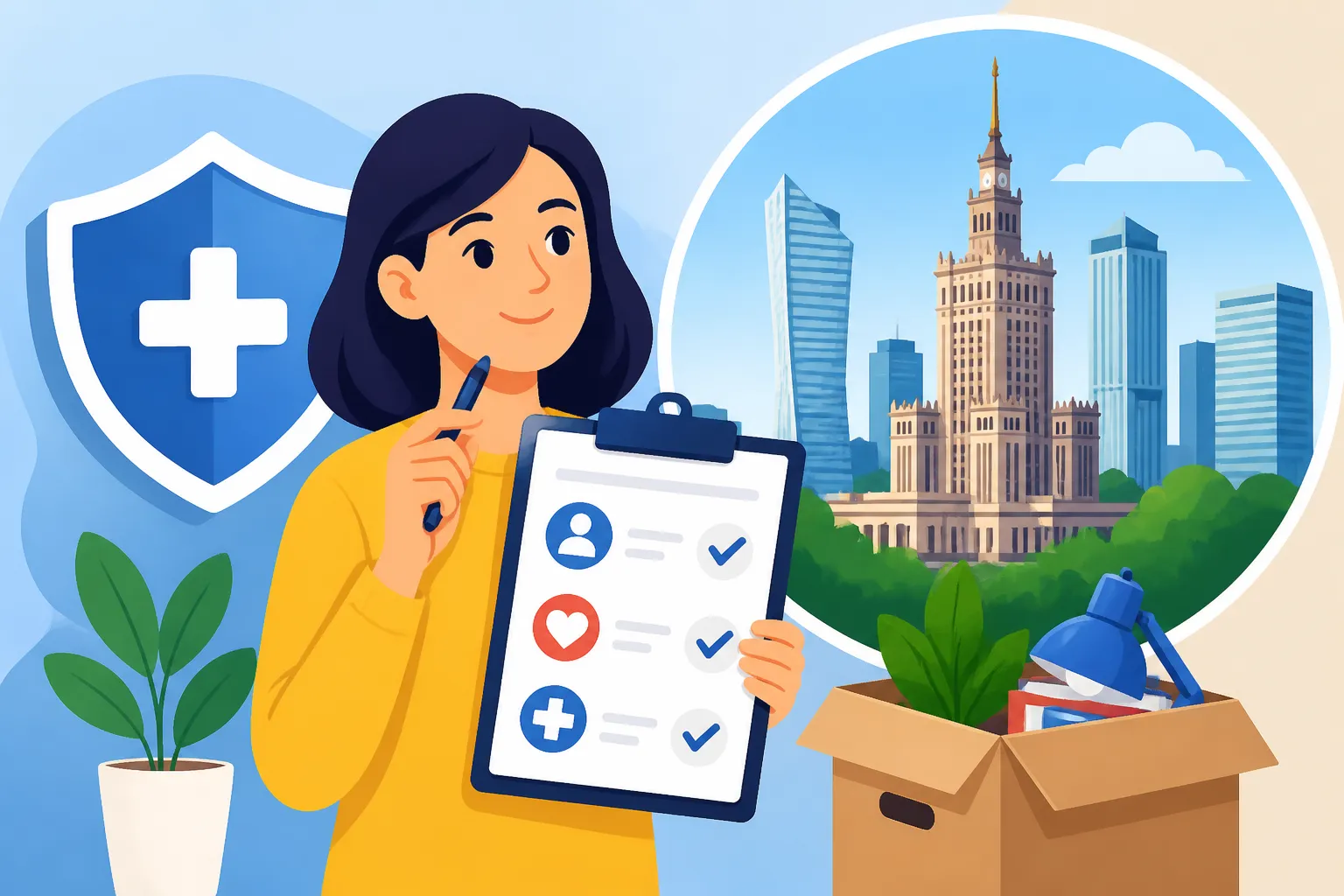
One of the most daunting hurdles when settling into Warsaw is realizing that the Polish healthcare bureaucracy doesn't just happen automatically. Many expats assume their residency permit or work contract handles everything, only to find themselves stuck at a clinic without coverage. This guide provides a detailed, battle-tested roadmap for navigating the National Health Fund (NFZ) registration process specifically for Warsaw residents.
Understanding the NFZ and Your First Administrative Steps
When I first arrived in Warsaw, I thought showing my passport at a hospital would be enough. I quickly learned that the Narodowy Fundusz Zdrowia (NFZ) is the backbone of the public system, and without being properly "in the system," you are looking at significant out-of-pocket costs. In Poland, health insurance is mandatory for almost everyone, but the way you enter the system depends entirely on your legal status—whether you are an employee, a freelancer, or a student.
The very first thing you need to realize is that the NFZ is linked to your identification data. This is why you cannot ignore the importance of the PESEL. Before you even think about the NFZ office on Chałubińskiego, you need to ensure your local administrative ducks are in a row. For most, this begins with the How to Get Your PESEL Number and Why It Matters for Healthcare process at your local district office (Urząd Dzielnicy). Whether you live in Wola, Mokotów, or Praga, the PESEL is the "key" that unlocks the NFZ database.
While you are waiting for your administrative status to solidify, it is common to feel exposed. I remember the stress of those first three weeks in Warsaw when my paperwork was still in a pile at the Voivodeship office. During this transition, many expats rely on services like SafetyWing to provide a safety net. SafetyWing is particularly useful because it offers flexible travel medical insurance that can cover you from the moment you land until the day your NFZ coverage officially "turns green" in the system. It bridges the gap so you aren't left praying you don't trip on the cobblestones of Old Town while uninsured.
How to Register Based on Your Employment Status
In Warsaw, the path to NFZ coverage is not "one size fits all." Your "title" to insurance is what dictates how you are registered. If you are here on a standard employment contract, your life is significantly easier, but if you are running your own business or studying, you have more heavy lifting to do.
Employed by a Polish Company
If you have signed a traditional Understanding Polish Employment Contracts and Worker Rights (2027), specifically an Umowa o Pracę, your employer is legally obligated to register you with the Social Insurance Institution (ZUS). Within seven days of your start date, your HR department should submit the ZUS ZUA form.
However, "should" is the operative word. I have seen countless cases in Warsaw where HR departments, especially in smaller startups, forget to add foreign employees to the health insurance register. You must ask for a copy of the ZUS ZUA confirmation. This document is your proof of insurance until your data migrates to the e-health systems. It is also the mechanism through which Understanding ZUS Health Contributions (Składka Zdrowotna) in Poland are deducted from your gross salary.
Registration for the Self-Employed (JDG)
If you have decided to brave the world of entrepreneurship, you are both the employer and the employee. This means you are responsible for your own registration. Once you have registered your business in the CEIDG, you must submit a form to ZUS within seven days to declare your health insurance contribution.
Many expats in Warsaw’s booming tech scene find this part particularly confusing. You will need to learn How to Register with the NFZ as a JDG (Sole Trader) owner to ensure you are paying the correct monthly "składka." In Warsaw, most people do this through the PUE ZUS online portal, but if your Polish isn't quite there yet, visiting the ZUS office on ul. Senatorska or ul. Czerniakowska with a translator is a common right of passage.
Voluntary NFZ Insurance for Students and the Unemployed
What if you aren't working? Perhaps you are a digital nomad or a student at the University of Warsaw. You can still access the public system through "Dobrowolne Ubezpieczenie Zdrowotne" (Voluntary Health Insurance). This requires a physical visit to the NFZ office.
Be warned: if you have had a long gap in your insurance history in Poland or the EU, the NFZ may charge an "entry fee" that can be quite steep. I’ve spoken to expats who were shocked by a bill of several thousand złoty just to join the system because they hadn't been insured for years. This is another scenario where having a plan like SafetyWing in the interim can be a lifesaver while you negotiate these fees or wait for your student status to be verified.
Step-by-Step NFZ Registration Process in Warsaw
If you are going the voluntary route or if your employer has failed you, you will likely find yourself at the Mazovian Branch of the NFZ. In Warsaw, this is primarily located at ul. Chałubińskiego 8, right near the city center.
Step 1: Gathering Your Documentation
The Polish bureaucracy thrives on paper. Do not show up at Chałubińskiego with just your phone. You need a folder containing:
- Your Passport or ID card.
- Your Residence Permit (Karta Pobytu) or a document proving you have applied for one.
- Proof of Registering Your Residence (Zameldowanie) in Poland: The Complete Guide (the "Meldunek" paper).
- Your PESEL confirmation.
- If you were previously insured in another EU country, form S1 or E104 is vital to avoid that "entry fee" I mentioned earlier.
Step 2: The Visit to the NFZ Office
The NFZ office on Chałubińskiego is busy. When you enter, you will need to take a numbered ticket from the machine. Look for the category "Ubezpieczenie dobrowolne" (Voluntary insurance). While some staff speak English, it is highly hit-or-miss. I recommend having Google Translate ready or bringing a Polish-speaking friend.
You will sign a contract with the NFZ. Once signed, they will give you a copy. But here is the catch: signing the contract does not mean you are finished. You then have to take that contract to a ZUS office to finalize the registration and get your "ZUS ZZA" form.
Step 3: Finalizing with ZUS and Using Your Insurance
After ZUS processes your forms, you are officially in the system. Your next step should be setting up your digital presence. In Poland, we use the How to Set Up an Internetowe Konto Pacjenta (IKP) Patient Account to manage everything. Once your NFZ is active, your IKP will show your insurance status as green.
This account is where you will see your Understanding the e-Recepta (E-Prescription) system in Poland after a doctor's visit. It is incredibly convenient—no more deciphering a doctor's messy handwriting; you just get an SMS code to show at the pharmacy (Apteka).
Comparison of NFZ Registration Pathways in Warsaw
| Path Type | Primary Office | Key Document Needed | Responsibility |
|---|---|---|---|
| Employee | Employer's HR | ZUS ZUA Form | Employer |
| Self-Employed (JDG) | ZUS (Senatorska/Czerniakowska) | CEIDG Entry | You (The Owner) |
| Voluntary | NFZ (Chałubińskiego 8) | Contract + ZUS ZZA | You (The Individual) |
| Student | University Office | Student ID / Zaświadczenie | University Administration |
| Spouse/Family | Employer's HR | ZUS ZCNA Form | Primary Insured Person |
Navigating the System Once Registered
Once you have that glorious "green" status in the system, you aren't just done; you have to know how to use it. The public system in Warsaw operates on a "Primary Care" model. You cannot just walk into a specialist's office.
You must first undergo The Expat Guide to Finding a Family Doctor (Lekarz Rodzinny) in Poland at a local clinic (Przychodnia). You will need to fill out a declaration form (deklaracja wyboru lekarza) at a clinic near your home in Warsaw. This doctor will be your gatekeeper. If you need to see a cardiologist or a dermatologist, your family doctor must issue an e-referral (e-skierowanie).
Many expats find that the wait times in the public system for specialists can be months long. Because of this, it is very common in Warsaw to use a hybrid approach. You might use the NFZ for your primary care and emergency needs, but keep a private subscription or use a service like SafetyWing for unexpected medical issues while traveling or for quicker access to certain diagnostics. To decide if the public route is enough for you, read my comparison on Public vs Private Healthcare in Poland: Which Should Expats Choose?.
Common Pitfalls for New Warsaw Residents
If I could go back in time, I would tell myself to be more patient and more prepared. One common mistake is forgetting to add family members. If you are insured through work, your spouse and children are not automatically covered. You must specifically ask your HR to "pull them in" using the ZUS ZCNA form.
Another pitfall is the "Meldunek." While some offices are getting more relaxed about the residence registration paper, the Mazovian NFZ branch often insists on it for voluntary contracts. Make sure you have completed your Registering Your Residence (Zameldowanie) in Poland: The Complete Guide before you spend four hours waiting in line at the health fund.
Finally, always keep your ZUS payment confirmations if you are self-employed. The system sometimes "glitches," and showing a bank transfer receipt is the only way to prove to a hospital that you are indeed covered when the computer screen says otherwise.
Disclaimer
The information provided in this guide is for informational purposes only and does not constitute legal or professional medical advice. Immigration laws, healthcare regulations, and administrative procedures in Poland are subject to frequent changes. While I strive to keep this information up to date based on the 2026 standards, always verify specific requirements with the official Narodowy Fundusz Zdrowia (NFZ) or Zakład Ubezpieczeń Społecznych (ZUS) websites or consult with a qualified legal professional before making administrative decisions.