Can I Become a Polish Citizen Without Giving Up My Passport?
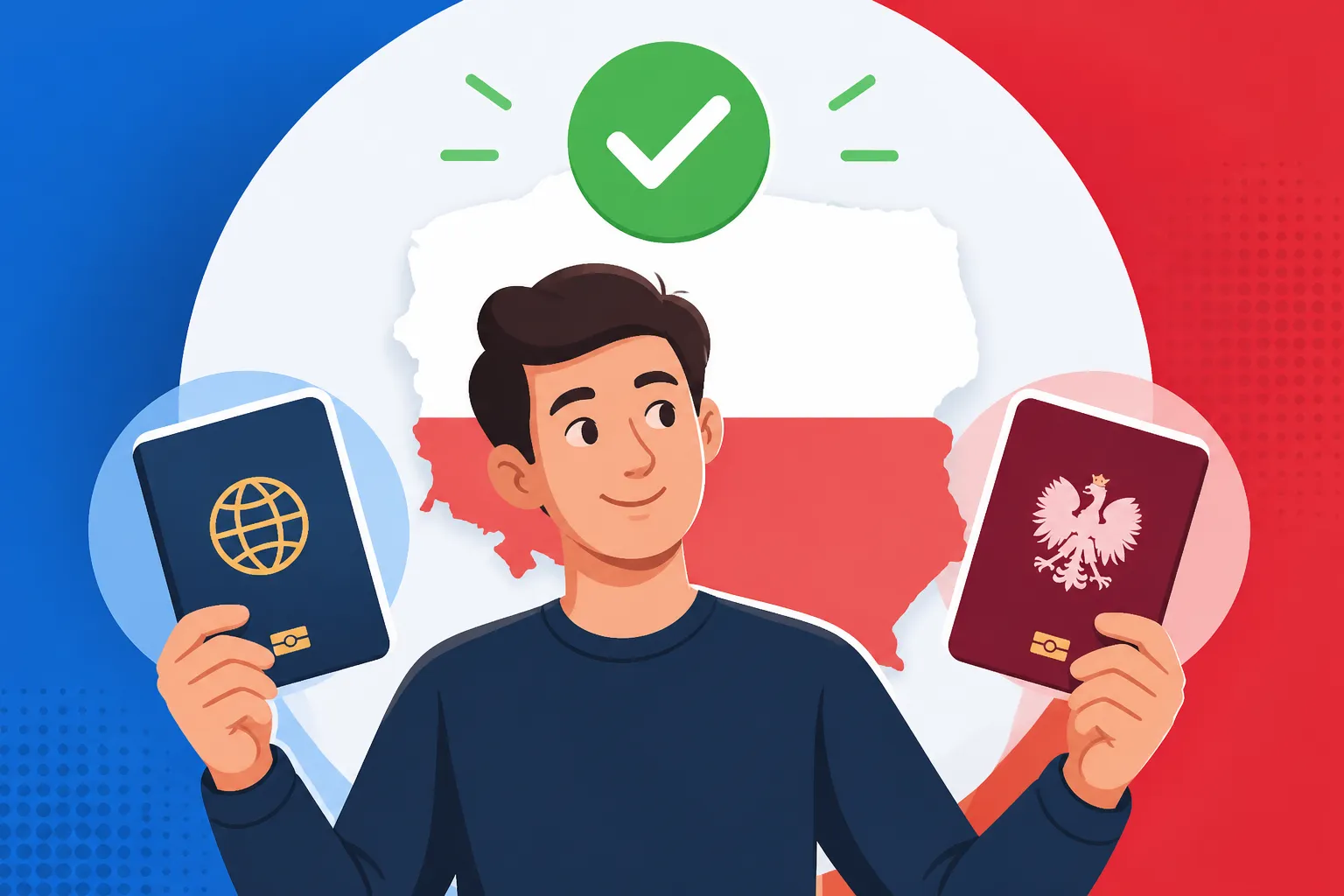
The journey to becoming a Polish citizen can feel like navigating a labyrinth, and one of the most common, whispered questions among expats in Poland is whether taking that final step means severing ties with their original nationality. The good news is, for many, the answer is a resounding 'yes,' Poland generally embraces dual citizenship. This guide will meticulously break down what that means for you, the practical realities, and the legal nuances of holding two passports in this beautiful country.
Understanding Poland's Stance on Dual Citizenship
When you've spent years living, working, and building a life in Poland, the idea of formalizing your connection through citizenship often comes with a significant internal debate: what about my original passport? Many countries worldwide force you to choose, making you renounce one for the other. Thankfully, Poland isn't one of them, but there are crucial subtleties you absolutely need to grasp.
The Legal Framework: What the Law Says
Poland's citizenship law (Ustawa o obywatelstwie polskim) does not explicitly prohibit dual nationality. This is key. Unlike some nations that demand you formally renounce all other citizenships upon naturalization, Poland doesn't make such a demand. This means that if your home country's laws also permit you to hold another citizenship, you won't be required by Polish authorities to give up your original passport when you become a Polish citizen.
However, and this is a significant "however," Polish law operates on the principle of exclusive allegiance while you are within Poland's borders. What does this mean in practical terms? It means that if you are a Polish citizen, regardless of any other passports you may hold, Polish authorities will treat you solely as a Polish citizen. You are expected to fulfill all the obligations and enjoy all the rights of a Polish citizen. This includes using your Polish passport for entering and exiting Poland, participating in elections if eligible, and abiding by Polish laws. They won't acknowledge your other nationality for official purposes within their jurisdiction. It's not a question of them denying your other citizenship exists, but rather, for legal and administrative purposes on Polish soil, you are Polish.
The Crucial "Other Country" Factor
While Poland is generally fine with you having two passports, your original country might not be. This is the critical piece of the puzzle that often gets overlooked in the excitement of considering Polish citizenship. Many nations have strict rules against dual nationality, and if you acquire Polish citizenship, you could automatically lose your original citizenship under their laws.
For instance, some countries might require you to apply for retention of your original citizenship before you gain another. Others might simply strip you of your nationality the moment you swear allegiance to another state. It is your sole responsibility to thoroughly investigate the citizenship laws of your current country. This isn't something the Polish authorities will do for you, nor will they typically advise you on it. You need to contact your own country's embassy, consulate, or legal experts specializing in nationality law to understand the implications for your specific situation. This research should be one of your very first steps when seriously considering Polish citizenship.
Pathways to Polish Citizenship and Dual Nationality
There are several routes to becoming a Polish citizen, and while the overarching principle of allowing dual nationality applies to most, the journey itself will vary depending on your personal circumstances. Each path has its own set of requirements, processing times, and often, bureaucratic hurdles that test the patience of even the most seasoned expat.
Citizenship by Descent (Confirmation of Polish Citizenship)
If you have Polish ancestors, this is often the most straightforward path, assuming you can gather the necessary documentation. This process isn't about acquiring new citizenship, but rather confirming that you already are a Polish citizen by birthright, even if you never knew it or never held a Polish passport. This is regulated by the principle of ius sanguinis (right of blood).
The key here is that if you are confirmed to be a Polish citizen by descent, you have been one all along, even if you’ve been living with a different passport your entire life. Therefore, the question of renunciation simply doesn't apply from the Polish perspective. You're just getting official recognition of an existing status. This often leads to natural dual citizenship, as your original nationality is unlikely to be affected by merely acknowledging an ancestral citizenship. However, again, always check your original country's laws. The administrative process can be lengthy and requires meticulous documentation, often tracing back generations. It can involve digging through archives in Poland and abroad, translating historical documents, and proving continuous lineage without any breaks in Polish citizenship status (e.g., through certain historical renunciations or foreign naturalizations that pre-date current laws).
Naturalization (Grant of Polish Citizenship)
This is the most common path for expats who have lived in Poland for a significant period and want to make it their permanent home. It involves applying to the President of Poland for a grant of citizenship. This process is discretionary, meaning the President has the final say, but it's typically based on meeting specific criteria.
Generally, you need:
- Long-term legal residence: Typically 3 years of continuous, uninterrupted residence on a Permanent Residence (Pobyt Stały) in Poland: The Complete Pathway (2026) or EU Long-Term Resident Status in Poland.
- Stable and regular income: To prove you can support yourself and your family.
- Legal title to an apartment or house: Demonstrating a stable place of residence.
- Polish language proficiency: Usually B1 level confirmed by a state certificate. You can find more details on How to Validate Polish Language Skills for Employment (CEFR Levels) or when applying for citizenship.
- No threats to national security.
Crucially, when applying for naturalization through the Presidential grant, Poland does not require you to renounce your previous citizenship. If your application is successful, you will receive Polish citizenship while retaining your original passport, assuming your home country allows it. This is where most expats achieve their dual nationality status. The process usually starts with submitting documents to the local Urząd Wojewódzki, but the final decision rests with the President. This entire process can be quite time-consuming, often taking more than a year, sometimes much longer, depending on the complexity of your case and the volume of applications.
Recognition as a Polish Citizen
This route is for foreigners who have a stronger connection to Poland, often through marriage to a Polish citizen, or if they have Polish origins but cannot prove continuous descent in the same way as confirmation. It's often for those who have lived in Poland for a certain number of years, meeting similar criteria to naturalization (stable income, residence, language skills), but with potentially shorter residence requirements if married to a Pole for a specific duration.
Like naturalization, this process also does not require you to renounce your existing citizenship. The authorities will recognize you as a Polish citizen without forcing you to give up your other nationality. The key here is demonstrating genuine ties to Poland and fulfilling all the administrative conditions. The documents you need to prepare will be extensive, mirroring those for a presidential grant, focusing on your legal residence, integration, and financial stability.
Important Considerations During the Application Process
Regardless of your path, preparing your application documents is a monumental task. You'll need official translations of foreign documents, often apostilled or legalized. You'll also need proof of your legal residence, financial stability, and for naturalization or recognition, evidence of your Polish language skills. Many expats find navigating the Urząd Wojewódzki an exercise in patience and precision. It can feel like a test of your resolve, but remember, countless others have gone through it successfully. Many also consider using services like Sirelo to help them with the moving process and settling in, especially when consolidating belongings or planning a final, permanent relocation based on citizenship.
The Practical Realities of Dual Citizenship in Poland
So, you've successfully acquired Polish citizenship while holding onto your original passport. Congratulations! But what does this really mean for your day-to-day life and interactions? It’s more than just having two cool-looking documents in your wallet.
Travel and Identification
This is perhaps the most critical practical implication: when in Poland or traveling to/from Poland, you must use your Polish passport. Polish law dictates that a Polish citizen cannot be treated as a foreigner by Polish authorities. This means that at the border, you must present your Polish passport, even if you arrived on another passport previously. Trying to enter or exit Poland on your other passport when you are a Polish citizen can lead to complications, delays, and potentially fines. You are expected to uphold your duties as a Polish citizen, and that includes identifying yourself as such within the country.
When travelling outside Poland, especially to your other country of citizenship, you should use the relevant passport. For instance, if you are a Polish-American citizen traveling from Poland to the USA, you would exit Poland on your Polish passport and enter the USA on your American passport. The reverse applies when returning. This "double passport" travel can sometimes confuse airline staff who are not familiar with dual citizenship rules, so always be prepared to politely explain the situation or show both passports if asked, particularly for visa checks in transit countries.
Rights and Obligations
As a dual citizen in Poland, you gain all the rights and responsibilities of a Polish citizen. These include:
- The right to reside freely in Poland: Without needing residence permits or visas.
- The right to vote: In national and local elections (if you meet age requirements).
- The right to hold a Polish passport: Granting visa-free travel to numerous countries, including the entire Schengen Area.
- Access to Polish public services: Including healthcare (via NFZ, assuming you contribute or are registered), education, and social benefits. For comprehensive health coverage, even with Polish citizenship, some expats opt for private insurance like Cigna Global, especially if they travel frequently or want broader international options. For details on public healthcare, you can check out How Poland's National Health Fund (NFZ) Works: A Full Overview.
- Military service: Historically, this was a significant concern for dual citizens. However, Poland transitioned to a professional army, and conscription was suspended in 2008. While all male citizens are still theoretically subject to military registration at age 19, active mandatory service is not currently required. In times of war or national emergency, conscription could be reinstated, and as a Polish citizen, you would be subject to it, regardless of your other nationality.
- Taxation: Your tax residency will be determined by where you spend most of your time and where your centre of vital interests lies. Holding Polish citizenship doesn't automatically make you a Polish tax resident if you don't meet the criteria, but it certainly strengthens the argument if you live in Poland. Understanding Tax Residency in Poland: A Definitive Guide for Expats (2027) is crucial.
Security and Consular Protection
This is another important area. When you are in Poland, as a Polish citizen, you are under the consular protection of Poland. Your other embassy or consulate generally cannot intervene on your behalf in Polish legal matters, as Poland views you solely as its own citizen. For example, if you were arrested in Poland, your other country's embassy would have limited, if any, official standing to assist you beyond humanitarian concerns, as you would be considered a Polish citizen under Polish jurisdiction.
However, when you travel abroad, especially to a third country, you can typically choose which passport to use for consular protection. If you are in a country where Poland has no diplomatic representation, but your other country does, you would naturally seek assistance from your other country's embassy. Conversely, if you're in a country hostile to your other nationality but friendly with Poland, you could present your Polish passport and seek protection from Polish authorities. This flexibility is one of the distinct advantages of dual citizenship.
Scenarios Where Dual Citizenship Might Be Complex
While generally allowed, there are niche scenarios and potential misunderstandings that can complicate the dual citizenship experience. Being aware of these can help you navigate any tricky situations that might arise.
Potential Conflicts with Your Original Country's Laws
We touched on this, but it bears repeating: the most significant complication arises if your original country does not allow dual citizenship. For example, if you are from a country like India or China, which generally do not permit dual nationality, acquiring Polish citizenship might automatically lead to the loss of your original citizenship. This is a choice you might be forced to make, and it's essential to understand the implications of losing your original nationality, such as visa requirements for future travel to that country, property ownership, inheritance laws, or even familial connections.
It's not uncommon for individuals to proceed with Polish citizenship without fully understanding their original country's stance, only to find themselves inadvertently renounced by their home country later. Don't let this happen to you – do your homework.
The "Polish First" Principle and Confusion at Borders
Even if your original country allows dual citizenship, occasional issues can arise from the "Polish first" principle. Border officials, airline staff, or even less informed administrative staff might sometimes be confused by a person presenting two passports or questions about their nationality.
A common scenario: you try to use your non-Polish passport to enter or exit Poland. This is a direct violation of Polish law for Polish citizens. Always ensure you use your Polish passport when interacting with Polish authorities at the border. Keep both passports handy, especially if your other passport contains visas for other countries that you need for onward travel. A polite explanation, along with showing both documents, usually resolves any minor confusion.
The Nuance of Public Office and Security Clearances
While not a concern for most expats, it's worth noting that holding certain high public offices or positions requiring top-level security clearance in Poland may require you to declare or even renounce other citizenships. These are very specific cases, far removed from the average expat's experience, but they highlight the exclusive allegiance principle when it comes to national service.
For most people, becoming a Polish citizen while retaining their original passport is a perfectly viable and often beneficial option. It grants you greater stability, mobility, and a deeper connection to the country you've chosen to call home, all without forcing you to abandon your roots.
| Aspect | Polish Stance | Your Other Country's Stance | Practical Implication |
|---|---|---|---|
| Dual Nationality | Generally allowed, no forced renunciation. | Varies greatly by country. | Crucial Research Required: Your original country might revoke your citizenship if you naturalize elsewhere. |
| Travel to/from PL | Must use Polish passport. | Use relevant passport for entry. | Polish authorities treat you only as a Polish citizen. Using another passport can cause issues. |
| Rights & Duties | Full Polish citizen rights (vote, services). | Maintain rights in original country. | Access to Polish public services, including healthcare via NFZ, or private options like Cigna Global for broader coverage. |
| Consular Protection | By Poland when in Poland. | By your other country abroad. | Polish embassy/consulate will protect you abroad, but your other embassy has limited power in Poland. |
| Military Service | Subject to Polish laws (currently no conscription). | Varies by country. | If conscription returns in Poland, you would be subject to it as a citizen. |
| Public Office | May require sole Polish citizenship for high-level roles. | N/A | Not a concern for most, but indicates the "Polish first" principle in sensitive areas. |
What to Consider Before Applying for Polish Citizenship
Taking the plunge into Polish citizenship is a big step, and it requires careful consideration. Beyond the legalities of dual nationality, think about the long-term impact on your life, your family, and your future.
Long-Term Commitment to Poland
Applying for Polish citizenship signifies a deep commitment to the country. It’s not just about a passport; it's about integrating into society, understanding the culture, and being a part of the nation. For many expats who have resided here for years, this is a natural progression of their life in Poland. Whether you first came to Poland on a How to Access Healthcare on a Work Visa in Poland or as a student, the journey from temporary resident to citizen is a significant one.
Consider if you truly see yourself living in Poland for the foreseeable future. Do you feel connected to the community? Have you built a network of friends and colleagues? Do you see your career and family flourishing here? These personal questions are just as important as the legal ones. If you are still in the early stages of contemplating a permanent move and considering where to live, resources like Sirelo can assist with planning your international relocation, whether it's from abroad to Poland or even within Europe.
Financial and Administrative Implications
Gaining Polish citizenship comes with all the financial and administrative obligations of any citizen. You will be fully subject to Polish tax laws, and while you may already be a tax resident, citizenship solidifies your connection. Your ZUS Health Contributions (Składka Zdrowotna) in Poland will be tied to your employment or self-employment status. You'll also need to ensure you're registered correctly for various administrative purposes, just like any other citizen.
While there are many benefits to being a Polish citizen, like easier travel within the EU, remember that it's a serious step with lifelong implications. It ties you more deeply to the nation, its policies, and its future. Ensure you are comfortable with this level of commitment before submitting your application.
The Importance of Legal Advice
Given the complexities of citizenship law, especially when it involves dual nationality, it's highly advisable to seek legal counsel specializing in Polish immigration and citizenship law. An experienced lawyer can review your specific circumstances, advise you on the most suitable path to citizenship, help you prepare a robust application, and crucially, guide you on potential implications regarding your original nationality. They can also help you understand the intricacies of documents needed for your Karta Pobytu application, which is often a prerequisite for citizenship.
While this guide offers a comprehensive overview, personal situations are unique, and professional legal advice can save you significant time, stress, and potential pitfalls down the line. Remember, the goal is not just to acquire Polish citizenship, but to do so smoothly and with full awareness of what it entails for your dual national status.
Disclaimer
The information provided in this article is intended for general guidance and informational purposes only, and does not constitute legal, financial, or professional advice. While we strive to keep the information up-to-date and correct, laws and regulations regarding citizenship, immigration, and related matters in Poland are subject to change and interpretation. Therefore, it is essential to consult with qualified legal professionals, particularly those specializing in Polish immigration and nationality law, for advice tailored to your specific situation before making any decisions. We are not liable for any actions taken or not taken based on the content of this article.