Understanding Przedszkole and Żłobek (Preschool) Enrolment in Poland
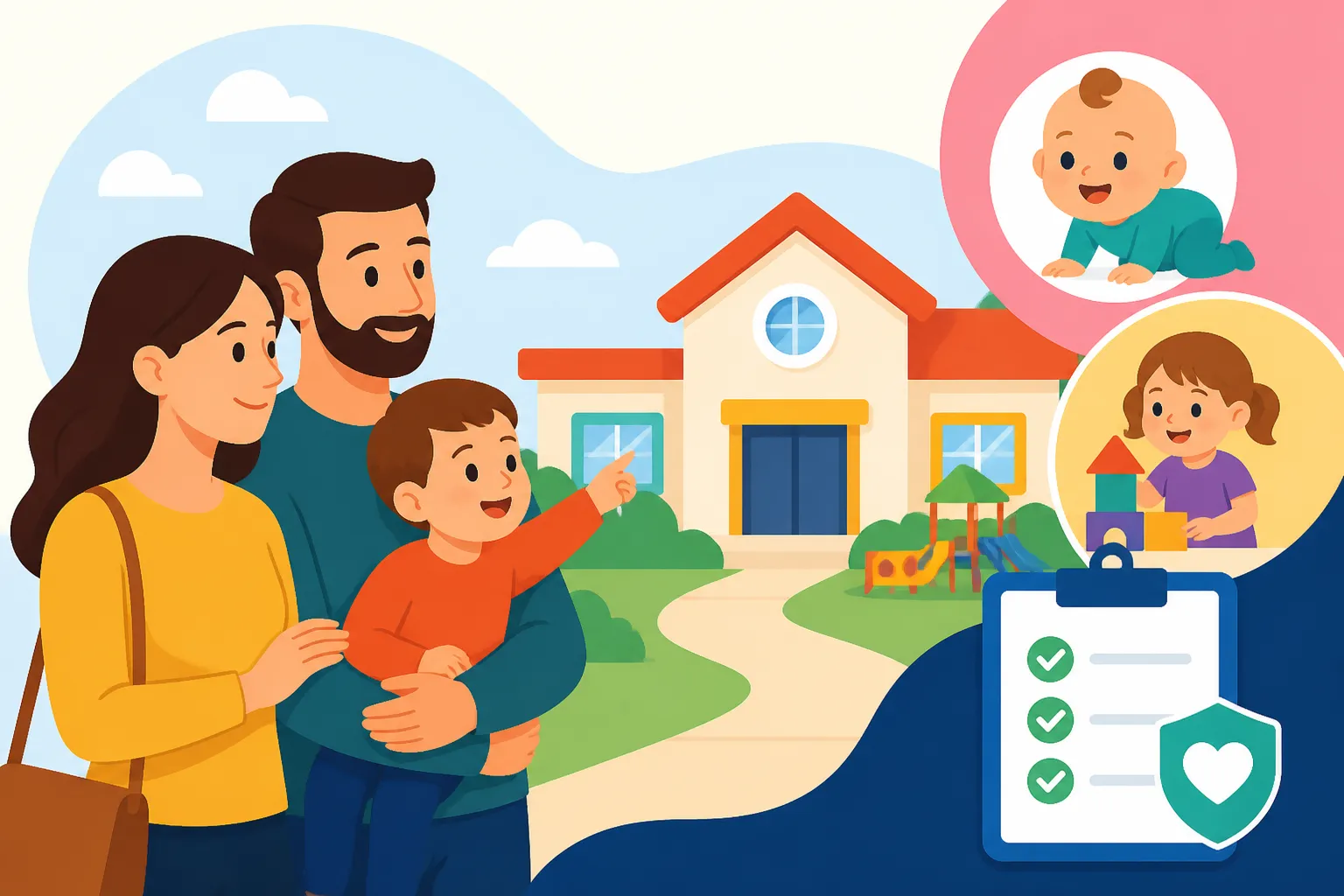
You have just landed in Warsaw, Kraków or Wrocław, your toddler needs a daycare place, and every Polish parent you meet says the deadline already passed in March. That panic is common, and usually fixable. This guide explains how żłobek and przedszkole enrolment really works, which documents you need, how points are scored, and what to do when the list says no.
The Polish Early Childhood System in Plain Terms
When my own family arrived, I assumed “preschool” was one thing. In Poland it is two quite separate worlds, run under different laws, funded in different ways and even supervised by different ministries. Getting the vocabulary straight saves you a lot of confused phone calls with the local urząd, so let us start there before talking about forms and deadlines.
If you want the bigger picture of how kindergarten fits into primary and secondary education, my overview of Schools and Education in Poland: A Complete Guide for Expat Families covers the full ladder from zerówka to matura. Here we stay firmly in the years before school.
What a Żłobek Is
A żłobek is a nursery or crèche for the youngest children, generally from around 20 weeks old up to the age of three. In some situations a child can stay a little longer, for example when there is a documented reason a move to przedszkole is not yet possible. Żłobki fall under the family and social policy side of government rather than the education ministry, which explains why the focus is on care, sleep, feeding and safe play rather than a formal curriculum.
Public żłobki are run or commissioned by the gmina, the municipal authority. They tend to have long opening hours suited to working parents, often from early morning until late afternoon. Because demand in big cities far outstrips supply, a public żłobek place in central Warsaw or the fast-growing districts of Kraków can feel like winning a small lottery.
Alongside the classic żłobek there are smaller formats. A klub dziecięcy, or children’s club, usually takes children from one year old and offers shorter care hours. A dzienny opiekun is a registered day carer who looks after a small group of children, sometimes in a home setting. Many expat parents never hear of these options until a Polish neighbour mentions them, yet they can be a brilliant bridge while you wait for a public place.
What a Przedszkole Is
A przedszkole is a kindergarten for children from three years old until they start primary school, which normally happens in the calendar year they turn seven. This is part of the education system proper, regulated by the education law and following a national core curriculum called the podstawa programowa. Teachers are qualified educators, and the day includes structured learning through play, early literacy, music, movement and social skills.
There are also smaller cousins of the przedszkole. A punkt przedszkolny or a zespół wychowania przedszkolnego offers preschool education in a more limited format, often with fewer hours, and they are common in villages and suburban areas where a full kindergarten building would not make sense.
The Compulsory Year Before School
The year a child turns six brings an important change. Every six-year-old must complete one year of preschool preparation, known as roczne przygotowanie przedszkolne and often nicknamed zerówka. This can take place in a przedszkole or in a so-called oddział przedszkolny attached to a primary school. Children aged three, four and five have a legal right to a preschool place provided by their gmina, but attendance is not compulsory for them. At six, it becomes an obligation.
For foreign families this matters because the obligation applies to children living in Poland, not just to Polish citizens. If your child turns six in the year you arrive, the gmina expects them to be enrolled somewhere. Once your little one is ready for the next step, read How to Enrol Your Child in a Polish Public School to see how the transition to first grade works.
| Feature | Żłobek | Przedszkole |
|---|---|---|
| Typical age range | About 20 weeks to 3 years | 3 years until starting primary school |
| Overseeing ministry | Family and social policy | Education |
| Legal right to a place | No, places depend on availability | Yes, for children aged 3 to 5 in their gmina |
| Compulsory attendance | Never | Only the year the child turns 6 |
| Curriculum | Care focused, no national curriculum | National core curriculum |
| Cost structure in public settings | Municipal fee, often offset by state support | Free core hours, paid extra hours and meals |
Who Can Enrol and What You Need Before Applying
The good news is that Polish law treats foreign children generously when it comes to education. The education law gives non-Polish children access to public preschools and schools on the same terms as Polish children, and that includes the przedszkole stage. Żłobki operate under a different act, but in practice municipalities accept foreign families who live locally on equal footing. Your nationality is not the issue. Your paperwork and your address are.
Residency and the Gmina Rule
Public preschool recruitment is organised around where the child lives. In the first round, priority goes to children who reside in that gmina. The key word is reside, not hold permanent residency. You do not need a karta pobytu or a citizen’s ID to apply, and families on visas or still waiting for decisions on their residence cards enrol children every year.
What you do need is a credible declaration of your address. Most recruitment systems ask parents to sign a statement confirming where the child lives, and the commission can ask for proof. Having completed zameldowanie, the formal residence registration, makes this far smoother, so I strongly recommend doing it early. The process is explained in How to Register Your Residence (Zameldowanie) at the Urząd in Poland, and it is worth tackling within your first weeks rather than leaving it until recruitment season.
PESEL and Identity Documents
Most online recruitment portals ask for the child’s PESEL number, the Polish national identification number. Without one, you are not locked out. Every system I have seen offers a field for a passport number or another identity document instead, although the online form sometimes hides this behind a checkbox labelled something like “brak numeru PESEL”. If the portal refuses to cooperate, go to the chosen przedszkole or the district education department in person and they can register the application manually.
That said, a PESEL makes life easier across the board, from the doctor to the tax office, and it unlocks family benefits. If you have not sorted it yet, my guide on How to Get a PESEL and NIP Number in Poland walks through the documents and the urząd visit step by step.
Practical Readiness Before Recruitment Opens
Online recruitment platforms send login confirmations, password resets and status updates by email and sometimes by SMS. If you are still between countries, a travel eSIM from a provider such as Airalo can keep you connected for email and portal access during the first weeks, but bear in mind that many Polish systems and banks prefer a local number for text messages. Getting a Polish SIM early is the safer path, and How Do I Get a Polish SIM Card as a New Arrival? explains how to do it with a passport.
Before recruitment opens, I suggest assembling a small folder with the following items:
- The child’s passport and, if available, PESEL confirmation.
- Proof of your address, such as a zameldowanie confirmation or a rental contract.
- An employment certificate, known as zaświadczenie o zatrudnieniu, for each working parent, or proof of self-employment or study.
- A copy of your Polish tax return or a tax office confirmation if your city rewards local taxpayers.
- Any documents proving statutory criteria, such as a disability certificate or a court decision on single parenthood, translated into Polish by a sworn translator if they are in another language.
How Recruitment Works Step by Step
Recruitment, called rekrutacja, is where many expat parents lose their footing. The system is fair once you understand it, but it is unforgiving about deadlines. Missing one confirmation step can cost you a place you had already won.
The Annual Recruitment Calendar
For przedszkole, the main recruitment round takes place in late winter and early spring for places starting on 1 September. Each gmina publishes its own timetable, usually in January, with dates for submitting applications, publishing the qualified list, confirming your intention, and publishing the final admitted list. In large cities like Warsaw, Kraków, Gdańsk, Poznań and Wrocław the process runs through an electronic recruitment platform, while smaller municipalities may still rely on paper forms handed in at the kindergarten office.
Families whose children already attend a przedszkole simply submit a declaration of continuation, the deklaracja o kontynuowaniu wychowania przedszkolnego, shortly before the new recruitment opens. That is why places for newcomers can be tight: existing children keep their spots, and only the remaining capacity is up for grabs.
Żłobek recruitment is less standardised. Some cities run a single annual round, others operate rolling enrolment all year with a waiting list that updates as places free up. In Warsaw, for instance, the żłobek system works through an electronic register where you can list several preferred nurseries and keep your application active. Check your own city’s rules carefully, because the logic can differ even between neighbouring municipalities. For a city-specific walkthrough, see How Do I Enrol My Child in a Przedszkole (Preschool) in Warsaw?
Submitting the Application
The typical przedszkole process looks like this:
- Find the recruitment portal for your gmina, usually linked from the city hall or the municipal education office website, and read the official timetable.
- Browse the list of public kindergartens and note their addresses, opening hours and whether they have integrated or language groups.
- Fill in the online application, listing your preferred kindergartens in order. Most cities allow you to rank several, often up to three, and the order matters because the system tries your first choice first.
- Mark each criterion that applies to your family and attach or prepare the supporting statements.
- Print the completed application, sign it by both parents where required, and deliver it to the kindergarten you placed first, or submit it electronically with a trusted profile if your city allows it.
- Keep the confirmation of submission and note the dates for the next stages.
The trusted profile, profil zaufany, is an online identity tool that lets you sign documents electronically. Setting one up requires a PESEL and a Polish bank account or a visit to an office, so many newcomers simply print and sign by hand. That is perfectly acceptable.
Confirming Your Place
This is the step that catches out more expats than any other. When the commission publishes the list of qualified children, the lista zakwalifikowanych, your child is not yet admitted. You must then submit a written confirmation of intent, the potwierdzenie woli, within a short window, usually a few working days. Only after that does the commission publish the lista przyjętych, the admitted list.
If you miss the confirmation, the place goes to the next child. I have met a British family in Mokotów who assumed the qualified list was the final word, went on holiday, and returned to find their daughter had dropped off entirely. Set a calendar reminder the moment you submit the application.
Points, Criteria and How Places Are Allocated
Polish recruitment is points based, and the criteria are published in advance. Understanding them helps you choose kindergartens strategically rather than hoping for the best.
Statutory Criteria in the First Stage
In the first stage, every gmina applies the same set of statutory criteria laid down in the education law. Each has equal weight. They include:
- A large family, meaning three or more children, known as wielodzietność rodziny.
- A disability of the child.
- A disability of one parent.
- A disability of both parents.
- A disability of a sibling.
- Single parenthood, where a parent raises the child alone.
- The child being in foster care.
Only children living in the gmina compete in this round. If there are more applicants than places after it, the commission moves to the second stage.
Local Criteria in the Second Stage
The second stage uses criteria set by the municipal council, and this is where cities differ dramatically. Common local criteria include both parents working, studying or running a business; a sibling already attending the same kindergarten; the child being placed in the preferred przedszkole as a first choice; and one or both parents paying personal income tax in that city. Warsaw, for example, has long rewarded families who settle their PIT there, which is one reason why expats who file taxes in Poland sometimes do better than those still taxed abroad.
For żłobki, municipalities have similar freedom. Some award points for both parents working, for siblings already enrolled, or for the child having received mandatory vaccinations, which certain cities introduced after the law allowed it. Ask your local żłobek directorate for the exact list, because the weighting can change from year to year.
| Criterion | Stage | Who sets it | What proves it |
|---|---|---|---|
| Large family of three or more children | First | National law | Parent’s signed statement |
| Disability of child, parent or sibling | First | National law | Disability certificate |
| Single parent | First | National law | Court ruling or statement |
| Child in foster care | First | National law | Court or care authority document |
| Both parents working or studying | Second | Gmina council | Employer or university certificate |
| Sibling at same kindergarten | Second | Gmina council | Statement from parents |
| Parents paying PIT in the city | Second | Gmina council | Tax return copy or statement |
When Points Are Tied
When several children have identical points, the commission decides using rules set by the gmina, and that can include a lottery or the order in which applications were entered. You cannot game this, but you can widen your chances by applying to a realistic spread of kindergartens instead of three oversubscribed ones within the same street. In my experience, kindergartens a tram stop or two away from the trendy centre are much easier to get into, and the quality difference is often negligible.
Costs, Funding and Financial Support
Money is the question every expat parent asks first, and the answer is pleasantly reasonable in the public system. The figures below describe how fees are structured rather than exact amounts, because each gmina sets its own rates and they change. For a wider comparison including private nurseries and nannies, read How Much Does Childcare Cost in Poland? alongside this section.
Public Przedszkole Fees
In a public przedszkole, the hours covering the national core curriculum, at least five hours a day, are free. Additional hours beyond that are charged at an hourly rate that national law caps at a low level, and the year a child turns six, the compulsory year, the extra hours are generally free as well. Meals are paid separately, and the daily food rate, the stawka żywieniowa, is the largest regular cost for most families.
Families in difficult financial situations can often apply for meal subsidies through the local social welfare office, the ośrodek pomocy społecznej. Some cities also offer discounts for large families holding the Karta Dużej Rodziny, the large family card, which foreign families with three or more children can obtain once they meet residence conditions.
Żłobek Fees and State Support
Public żłobek fees are set by each municipality and historically varied a great deal between cities. National support has reshaped this picture in recent years. Under the government’s Aktywny Rodzic programme, families can receive a monthly subsidy towards nursery care that is paid directly to the żłobek, klub dziecięcy or dzienny opiekun, which in many public nurseries has reduced the parent’s share of the basic fee to zero. Meals are still usually charged separately.
The programme has other strands as well. Working parents of children in a certain age bracket who choose another form of care, such as a grandparent or a nanny, can instead receive a payment linked to their employment, while parents who stay at home can receive a smaller amount. Eligibility depends on the child’s age, the parents’ employment status and residence conditions, and applications go through ZUS electronic channels. Foreign residents can qualify, but read the current conditions on the ZUS website before counting on it.
On top of this, the universal child benefit known as 800 plus is paid monthly for each child under 18 to eligible families, including many foreign residents who live and work in Poland. It is not tied to childcare, but it does soften the overall cost. For the tax side, see What Tax Reliefs Can Families Claim in Poland?, which explains the child relief that can significantly reduce a family’s annual PIT bill.
Private and Non-Public Options
A niepubliczne przedszkole, a non-public kindergarten, can be run by a company, foundation, association or individual. Many receive municipal subsidies per child, which keeps their fees moderate, while others operate fully privately with bilingual programmes and longer hours. Private żłobki follow a similar spread. Fees, registration charges and deposits vary widely, so always ask for a written price list and check what happens with fees during holidays and illness.
For families planning to move children on to English-language education later, private bilingual kindergartens often feed into international schools. If that is your path, Understanding International Schools and Their Costs in Poland compares tuition structures and admission timelines so you can plan years ahead.
| Option | Typical cost shape | Main advantage | Main drawback |
|---|---|---|---|
| Public żłobek | Municipal fee often offset by state subsidy, meals extra | Low cost, long hours | Very competitive in big cities |
| Klub dziecięcy or dzienny opiekun | Moderate fee, subsidy may apply | Small groups, easier entry | Shorter hours in some cases |
| Public przedszkole | Free core hours, capped extra hours, meals extra | Affordable, qualified teachers | Spring deadline, Polish only |
| Non-public subsidised przedszkole | Moderate monthly fee | Year-round entry, flexible | Fees add up over the year |
| Fully private bilingual kindergarten | Higher monthly tuition plus extras | English support, small groups | Expensive, quality varies |
Settling In and Handling Common Problems
Getting a place is only half the story. The first months bring their own surprises, from adaptation weeks to medical paperwork, and a few families face rejection letters along the way. Here is what I wish someone had told me.
Adaptation, Language and Daily Routine
Most Polish kindergartens run an adaptation period, adaptacja, in the first days or weeks. Parents may be asked to stay for part of the day at first, then leave for gradually longer stretches. Plan your work schedule accordingly, because many expats return to the office on 1 September expecting a full day of care and discover their child is only staying until lunch for the first week.
Language is usually less of a problem than parents fear. Children absorb Polish astonishingly fast, and teachers in larger cities are used to foreign pupils. Public kindergartens are entitled to organise additional Polish language support for children who need it, so ask the director what is available. At home, keep reading in your own language; bilingual development is a gift, not a burden.
Daily routines tend to be strict. Breakfast, second breakfast, lunch and an afternoon snack follow a fixed timetable, and late drop-offs can mean your child misses a meal. Many kindergartens also expect children to bring slippers, a change of clothes and a labelled drink bottle. Parent communication often happens through a mobile app or a noticeboard by the entrance, so check both regularly.
Health matters come up quickly too. Children who are visibly unwell will be sent home, and after longer absences some kindergartens ask for a note from a doctor. Registering with a local paediatrician before September makes those calls much less stressful.
If Your Child Is Not Admitted
A rejection is not the end. If your child does not appear on the admitted list, you have the right to follow a formal appeal route:
- Within seven days of the list being published, request a written justification from the recruitment commission.
- Once you receive it, you have seven days to appeal to the director of the kindergarten.
- If the director upholds the refusal, you can take the matter to the regional administrative court, although few families go this far.
For children aged three to five, there is another important safety net. Because the gmina must ensure a preschool place for every child living there, the municipal education office will propose an alternative kindergarten if your chosen ones are full. The offered place may be less convenient, sometimes in a different district, but it exists. Respond promptly, because these offers have their own deadlines.
Many gminas also run supplementary recruitment, rekrutacja uzupełniająca, in late spring or summer for places that remain empty. Keep an eye on the portal after the main round closes, and ring kindergartens directly in August, when last-minute withdrawals free up spots.
Arriving Mid-Year
Families who arrive in October or February are not stuck until next September. Outside the main recruitment, the director of a public przedszkole can admit children during the school year if places are available. Walk in with your documents, ask politely, and leave contact details. Directors talk to one another, and a friendly visit can lead to a phone call when a family moves away.
If you are still planning your relocation, choosing a home near several kindergartens instead of just one popular school widens your options considerably. Comparison sites such as Sirelo can help you gather quotes from international movers so your arrival date is fixed early, which in turn lets you target the right recruitment round. For help with the logistics of the move itself, How Do I Find a Reliable Moving Company to Poland? is a practical starting point, and once you know your arrival date, Sirelo listings can also give a feel for which firms handle family relocations with small children.
Balancing Work and Childcare in the First Year
Many parents arriving with a baby will be combining childcare with employment rights. Polish leave rules are generous, and planning your return to work around the żłobek calendar can save a lot of stress. My guide on Understanding Maternity and Parental Leave for Workers in Poland explains how maternity, parental and paternity leave fit together, which matters because the timing of your leave can determine whether you apply for a żłobek in spring or wait for the following year.
If you have a choice, aim for your child to start the żłobek or przedszkole a couple of weeks before you return to full-time work. The adaptation period, inevitable first colds and the general novelty of the routine all take time, and a short overlap keeps everyone calmer. A nanny, or niania, employed under a special contract with state-covered social security contributions can bridge any gap, and many expat families mix a part-time nanny with a short club day while waiting for a public place.
The system rewards preparation more than luck. Register your address, get your PESEL, note your gmina’s timetable the moment it is published in January, apply widely, and never forget the confirmation step. Do those things and your child has a very good chance of starting in a warm, affordable Polish kindergarten, with the bonus of growing up bilingual.
Disclaimer
This article is for general informational purposes only and does not constitute professional advice. Laws, prices and regulations vary by location and change over time. Consult a qualified professional for guidance on your specific situation.