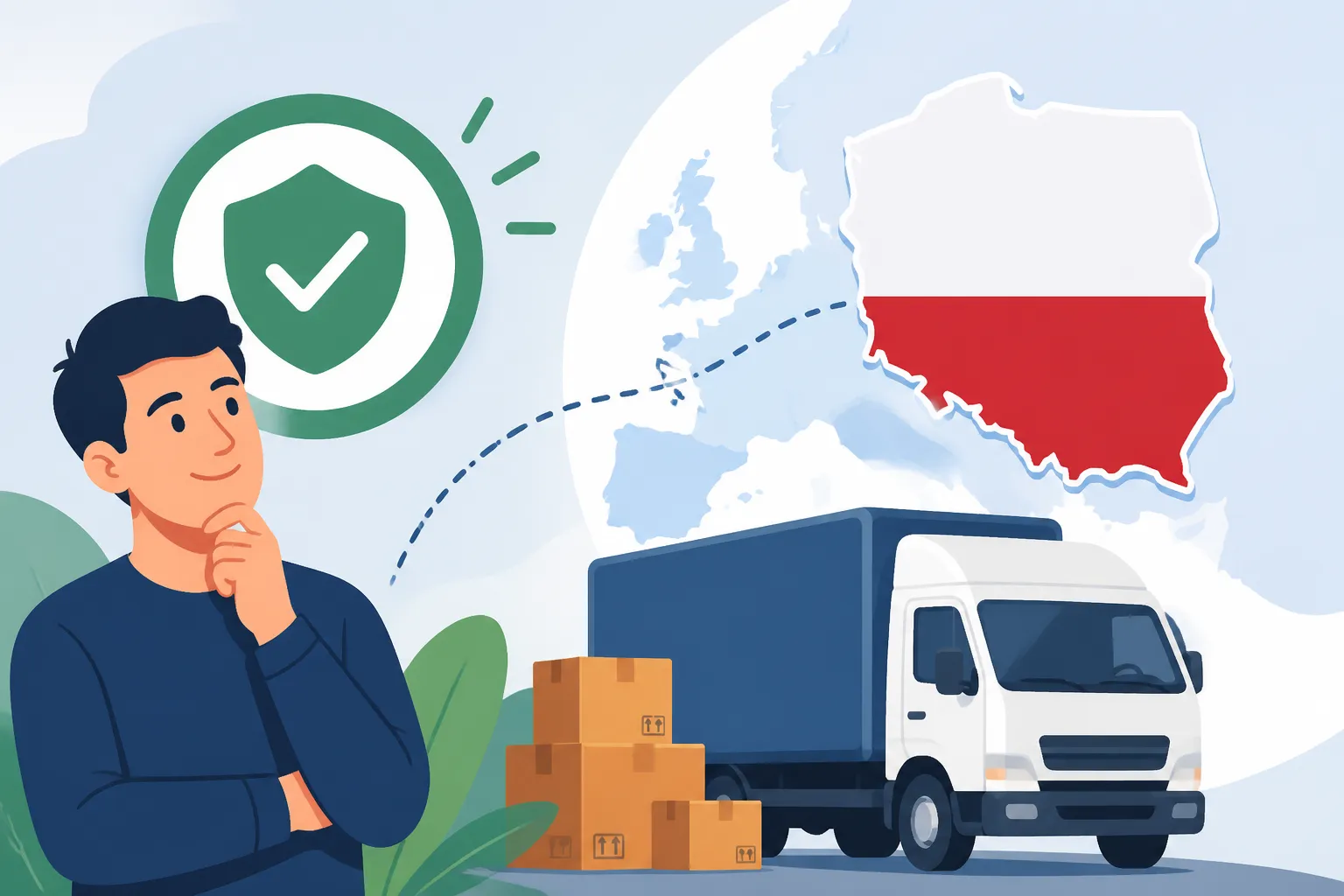
How Do I Find a Reliable Moving Company to Poland?
Moving your entire life to a new country like Poland can feel like scaling a mountain blindfolded. The logistical nightmare of packing up your home, navigating customs, and entrusting your beloved possessions to strangers is a major source of anxiety for many expats. This guide aims to demystify the process of finding a reliable moving company to Poland, helping you avoid common pitfalls and ensure your belongings arrive safely.
The Grand Endeavor: Why Finding the Right Moving Company to Poland is Crucial
The excitement of a new chapter in Poland often comes hand-in-hand with the daunting reality of international relocation. It's not just about packing boxes; it's about meticulously planning, understanding complex regulations, and finding a partner you can truly trust with your entire household.
More Than Just Boxes: The Unique Challenges of International Relocation
When you’re moving within your own country, it’s usually a pretty straightforward affair: pack, load, drive, unload. But an international move to Poland? That's a different beast entirely. You're not just crossing a state line; you're crossing borders with different laws, languages, and logistical hurdles. Think about everything from the specific customs declarations required for importing household goods into the EU and then Poland, to the type of packing materials that will survive a long journey by sea or road. Your belongings might spend weeks or even months in transit, passing through multiple hands and storage facilities.
This complexity means that a cheap, local mover might not have the experience or the network to handle the intricacies of an international move to a country like Poland. They might not be familiar with the nuances of Polish customs procedures, the best routes, or even how to properly secure items for such a long haul. For instance, did you know that certain items might be subject to import duties even if they're personal effects, depending on how long you've owned them or if they're brand new? Getting this wrong can lead to costly delays and unexpected fees at the Polish border. It's truly a headache you want to avoid.
The Hidden Costs and Common Pitfalls Expats Face
Oh, the hidden costs! They can sneak up on you faster than a Polish winter. Many expats focus solely on the base price quoted by a moving company, only to be surprised by additional charges later. These can include extra fees for customs clearance, storage if your new place isn't ready, insurance that wasn't explicitly included, or even surcharges for difficult access at either end (think narrow Polish streets or fifth-floor walk-ups without an elevator). It’s not uncommon for quotes to seem low initially, only to balloon once the process is underway.
Another common pitfall is misunderstanding the scope of services. Some quotes might be for "door-to-port" services, meaning your items are delivered to a port in Poland, but then you are responsible for arranging onward transport and customs clearance yourself. Others might offer "door-to-door" but only include basic curbside delivery, leaving you to manage unpacking and furniture assembly. Imagine arriving in Krakow, exhausted, only to find your entire life sitting in boxes on the pavement, with no clear path to getting it inside your new apartment. This is where a little extra due diligence up front can save you a world of trouble, not to mention a significant chunk of change.
Your Toolkit for Vetting International Movers to Poland
Finding a good moving company isn't about luck; it's about being informed and asking the right questions. You need to approach this like a detective, gathering clues and verifying facts.
Starting Your Search: Where to Find Reputable Companies
The internet is your friend, but it can also be a minefield. Start by looking for international moving companies that specifically advertise services to Poland. Websites like Sirelo can be incredibly helpful here, as they allow you to compare multiple international moving companies and get quotes all in one place. This saves you the tedious work of contacting dozens of companies individually and helps you get a sense of market rates and available services. Don't limit yourself to just the big names; sometimes smaller, specialized firms offer more personalized service and a better understanding of niche routes.
Beyond online platforms, personal recommendations are invaluable. Ask other expats in Poland – those who have already gone through the process – who they used and what their experience was like. Expat forums, Facebook groups for foreigners in Warsaw or Krakow, or even local expat meetups are goldmines for this kind of information. People are usually very candid about good and bad experiences when it comes to something as stressful as moving. Also, consider if your employer is sponsoring your move, as they might have preferred partners or relocation agencies with established reliability records.
Decoding Quotes and Services: Apples, Oranges, and What's Included
When you start receiving quotes, you'll quickly realize they aren't always comparing apples to apples. One company might quote based on volume (cubic meters), another on weight, and a third on a flat rate for a specific container size. It’s crucial to understand what each quote actually includes. Does it cover packing materials? Disassembly and reassembly of furniture? Customs brokerage fees in Poland? Storage at either end if needed? Insurance? Are there any surcharges for stairs, long carries, or shuttle services if a large truck can’t access your street?
Always ask for a detailed, itemized quote. If something isn’t explicitly listed, assume it’s not included. Don't be shy about clarifying every single line item. For example, if you're bringing a vehicle, ensure that aspect is clearly defined. This is a good opportunity to learn more about Driving in Poland: Licences, Registration and Rules for Expats (2027). The more questions you ask now, the fewer surprises you'll face later. A reputable company will be happy to break down their costs and explain their services in detail.
The All-Important Background Check: Licenses, Insurance, and Reviews
Before you commit, do your homework. Firstly, check if the company is properly licensed for international shipping. For moves to Poland, they should ideally be affiliated with reputable international moving associations, such as FIDI Global Alliance or IAM (International Association of Movers). These affiliations often indicate adherence to certain quality standards and ethical practices. Don't just take their word for it; verify their membership.
Secondly, inquire about their insurance policies. What kind of coverage do they offer? Is it basic liability (which often only covers a minimal amount per kilogram, practically worthless for electronics or antiques), or do they offer comprehensive "all-risk" coverage? Understand the deductible and the claims process. You absolutely want adequate insurance for an international move. Finally, dive deep into online reviews. Look beyond the company's own website testimonials. Check independent review sites, expat forums, and Google reviews. Pay attention to recurring themes – good or bad – and how the company responds to negative feedback. A company that actively addresses customer complaints, even negative ones, often shows a commitment to service recovery.
Table: Key Questions to Ask Your International Moving Company
| Category | Questions to Ask |
|---|---|
| Experience & Credentials | Are you licensed and insured for international moves to Poland? What international moving associations are you a member of (e.g., FIDI, IAM)? How many moves to Poland have you handled in the last year? Do you use your own staff or third-party agents at destination? |
| Services Included | Is this a door-to-door or door-to-port service? Does the quote include packing, dismantling, and reassembly? Are customs clearance fees, port charges, and delivery to my specific address in Poland included? |
| Pricing & Payment | What is the final, all-inclusive price? Are there any potential hidden fees (e.g., shuttle service, long carry, stairs, storage)? What are the payment terms and schedule? What happens if the volume/weight differs from the estimate? |
| Insurance | What types of insurance coverage do you offer (basic liability vs. all-risk)? What is the deductible? What is the claims process, and how long does it typically take? |
| Logistics & Timeline | What is the estimated transit time to Poland? How will I track my shipment? What are the documentation requirements from my side? Do you handle customs declarations? |
| Support | Who is my dedicated point of contact throughout the move? How can I reach them during transit? What happens if there are delays or issues? |
Navigating Polish Customs and Paperwork with Your Mover
This is often the trickiest part of an international move, and it's where a truly reliable moving company earns its stripes. The Polish customs system, while part of the broader EU framework, has its own specific requirements and bureaucratic quirks.
Understanding Import Regulations for Household Goods
When your belongings arrive in Poland, they will go through customs. For most personal effects, you can usually import them duty-free, provided you meet certain conditions. Generally, this means proving you've lived outside the EU for at least 12 months, that the goods have been in your possession and used for at least six months, and that you intend to use them in Poland for at least 12 months. You'll also need to prove your intent to reside in Poland, which often involves showing a rental agreement or property ownership documents, and potentially a residence permit. Getting your The Complete Guide to Polish Residence Permits for Expats (2027) in order is key.
However, certain items have restrictions or require special declarations. Alcohol, tobacco, firearms, and some types of plants or food items are often heavily regulated or prohibited. Even seemingly innocuous items like bicycles or new electronics might raise questions if they appear to be for commercial purposes rather than personal use. Your moving company should be well-versed in these specific Polish regulations and guide you through what can and cannot be imported without hassle. If they seem vague or dismissive about customs, that's a red flag.
Essential Documents Your Moving Company Will Need From You
Get ready for some paperwork! Your moving company will typically provide you with a detailed checklist, but expect to gather a substantial amount of documentation. This will likely include:
- Passport copies: For all family members.
- Visa or residence permit: Proof of your legal right to reside in Poland.
- Proof of address in Poland: Your rental agreement or property deed, crucial for showing where your goods are going.
- Proof of prior residence: Utility bills, bank statements, or similar documents from your previous country to prove you lived there for the required period.
- Detailed inventory list: A precise list of everything you're shipping, with approximate values. This needs to be accurate for customs purposes.
- Signed customs declarations: Forms stating that your goods are personal effects and not for resale.
- PESEL number: You'll likely need this Polish identification number for various administrative tasks, and it might be requested during customs processing. If you haven't got one, you'll need to know How to Get Your PESEL Number and Why It Matters for Healthcare.
It’s crucial that all this paperwork is accurate and complete. Any discrepancies can lead to significant delays, additional storage fees, or even the seizure of your goods. Your moving company should review these documents with you to ensure everything is in order before shipment.
Preparing for Potential Delays and Unexpected Bureaucracy
Even with the most meticulous planning and a top-notch moving company, delays can happen. Customs inspections might take longer than expected, unforeseen port congestion could occur, or road closures might impact delivery schedules. It's Poland, after all, and sometimes bureaucracy moves at its own unique pace. Building a buffer into your timeline is a smart move. Don't plan to have your entire household delivered the day you arrive, especially if you're setting up a new home.
Have a contingency plan for temporary accommodation if your shipment is delayed. It’s also wise to pack a "survival kit" or "first night box" with essentials like toiletries, a change of clothes, important documents, chargers, and any critical medications that you'll need immediately upon arrival. This way, if your main shipment is held up, you won't be completely stranded. Remember that communication with your moving company’s local agent in Poland will be vital here. Having a working phone on arrival is critical; consider setting up an eSIM with a service like Airalo so you're connected from the moment your plane lands, ready to coordinate.
The Journey Itself: From Packing to Polish Delivery
Once your items are packed and shipped, the journey begins. This phase is largely out of your hands, but staying informed and prepared for potential bumps in the road is essential.
Communication is Key: Staying in the Loop During Transit
A good international moving company will provide you with tracking information and regular updates on your shipment's progress. You should know if your goods are on a ship, what port they are heading to, and when they are expected to clear customs in Poland. Clear and consistent communication channels are vital. Who should you contact if you have questions or concerns? Is there a local agent in Poland who will be coordinating the final leg of the delivery? Ensure you have their contact details, including phone numbers and email addresses.
Don't be afraid to proactively check in if you haven't heard anything in a while. While you shouldn't pester them daily, a weekly or bi-weekly update request for a long transit period is perfectly reasonable. Knowing that your belongings are moving steadily towards your new home in Poland provides a huge sense of relief, especially when you're busy with other aspects of settling in, like sorting out your Registering Your Residence (Zameldowanie) in Poland: The Complete Guide or finding a school for your children (check out Schools and Education in Poland: A Complete Guide for Expat Families for help).
Dealing with Unexpected Issues: Damage, Delays, and Disputes
Unfortunately, despite everyone's best efforts, things can sometimes go wrong. Damage to items, unforeseen delays, or even disputes over final costs can occur. This is where your thorough vetting, especially regarding insurance, will pay off. If you notice any damage upon delivery, document it immediately. Take clear photos and note it on the delivery receipt before the movers leave. This is critical for any insurance claim.
If there are significant delays, your moving company should be transparent about the reasons and provide revised timelines. If you find yourself in a dispute, refer back to your contract and all written communications. Having a clear understanding of the terms and conditions from the outset is your best defense. Reputable companies will have a formal complaints procedure and will work to resolve issues fairly. If things escalate and you used a platform like Sirelo to find your mover, they sometimes offer mediation services or advice on how to proceed.
Settling In: What Happens After the Truck Arrives
The final stage is when your belongings finally reach your new home in Poland. This isn't the end of the moving process, but the start of your new life!
Unpacking and Assembly Services: Should You Opt In?
Many international moving companies offer additional services upon arrival, such as unpacking boxes and even reassembling furniture. For some, this might seem like an unnecessary extra cost, but for others, it's a lifesaver. After a long journey and the stress of relocation, having someone else unpack your kitchenware and put together your bed can feel like a luxury. Consider your energy levels, how quickly you need to get settled, and whether you have local help available. If you're arriving in a new city like Warsaw or Gdansk alone, these services can significantly reduce the initial overwhelm.
Think about your priorities. If you just want the basics set up so you can sleep comfortably and have a functional kitchen, you might opt for partial unpacking. If you want everything unpacked and put away, that's also an option. Discuss these services in detail during the quoting phase so you know exactly what’s included and what the additional costs are. Remember, a smooth move facilitates a smoother start to your new life in Poland.
Beyond the Move: Connecting and Getting Established
Once your boxes are in, and your furniture is in place, the real work of making Poland home begins. This involves a whole host of administrative tasks, from setting up internet and utilities (The Expat Guide to Setting Up Utilities in Poland is a great resource) to getting your Polish bank account in order (check out How to Open a Bank Account at a Polish Bank as a Foreigner). You'll also want to start exploring the local area, finding your nearest grocery store, and figuring out public transport.
Don't forget to budget for these initial settling-in costs. The Complete Guide to Cost of Living in Poland for Expats (2026) can give you a comprehensive overview. The first few weeks are often a whirlwind, but take time to celebrate your accomplishment. You've navigated a complex international move, and that's no small feat. Lean on expat communities, join local groups, and give yourself time to adjust. Poland has so much to offer, and with the right moving company, you've set yourself up for a fantastic start.
Disclaimer
The information provided in this guide is intended for general informational purposes only and does not constitute legal, financial, or professional advice. While we strive to provide accurate and up-to-date content, regulations and procedures in Poland can change. It is always recommended to consult with relevant authorities, legal professionals, or certified moving specialists for advice tailored to your specific situation. We are not responsible for any actions taken based on the information presented herein.