How to Access Healthcare on a Work Visa in Poland
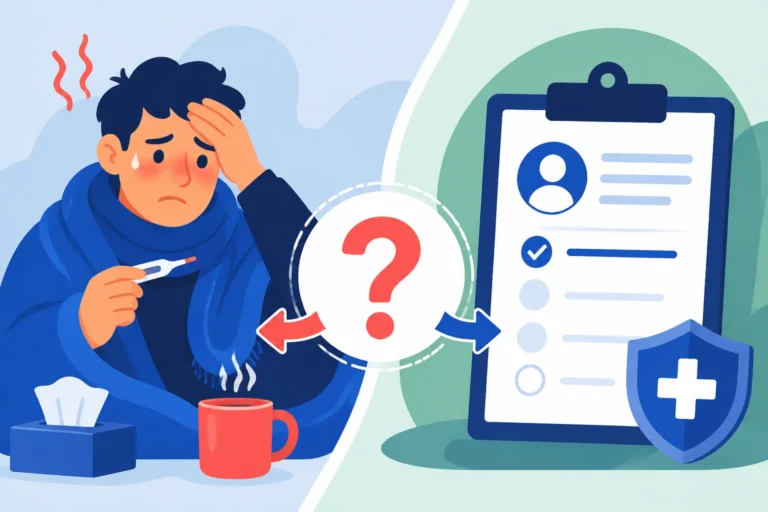
Landing in Warsaw or Krakow with a fresh work visa in your passport is a massive win, but the immediate realization that you are one flu or twisted ankle away from a bureaucratic nightmare is a common expat rite of passage. This guide explains how to bridge the terrifying gap between your arrival and your first official day of work, ensuring you navigate the Polish healthcare system without going broke or losing your mind.
The Immediate Reality: Your First Days on a Polish Work Visa
When you first step off the plane, you are technically in a state of administrative limbo. Your work visa gives you the right to enter and eventually work, but it does not instantly grant you access to the Polish healthcare system. I remember my first week in Wroclaw; I was so worried about catching a cold before my HR department filed my paperwork that I lived like a hermit. The reality is that your public coverage only begins once your employer registers you with the Social Insurance Institution (ZUS), which usually happens after you sign your formal contract.
The Gap Between Arrival and Your First ZUS Contribution
The biggest shock for many new arrivals is that "having a visa" is not the same as "having insurance." You might arrive two weeks before your start date to find an apartment and settle in. During those fourteen days, the National Health Fund (NFZ) does not know you exist. If you walk into a public hospital during this window, you will be treated as a private patient, and the bills for even minor diagnostic tests can be eye-watering.
This period of vulnerability is where many expats choose to maintain a nomadic or transitionary policy. Using a flexible option like SafetyWing can be a literal lifesaver during this transition month. It provides a safety net while you are waiting for your employer to finish the mountain of paperwork required by the Polish authorities. It is much easier to have a policy you can cancel later than to face a five-figure bill for an emergency appendix removal in your first week in the country. To better understand this timeline, you should look into How Long Does It Take to Get NFZ Coverage as a New Resident? to see how the bureaucratic gears actually turn.
Mandatory Travel Insurance vs. National Coverage
You likely had to show proof of insurance to get your visa at the consulate back home. However, many of those "consular-approved" policies are the bare minimum. They are designed to satisfy a visa officer, not to provide comprehensive care. Once you start working, your employer is legally obligated to enroll you in the NFZ. This is a mandatory deduction from your gross salary, and unlike some other countries, you cannot "opt-out" just because you have a private policy.
The public system, managed by the NFZ, covers everything from basic GP visits to complex neurosurgery, provided you have been registered correctly. However, the travel insurance you used for your visa application will quickly become redundant once your ZUS contributions start. If you are coming from outside the EU, understanding the nuances of How to Access Healthcare on a Work Visa in Poland is essential to avoid paying twice for the same coverage or, worse, having no coverage at all during a critical moment.
Understanding the NFZ and Your Rights as a Foreign Employee
The Polish healthcare system is built on a foundation of solidarity. Everyone who works contributes, and everyone who contributes has access. As a foreigner on a work visa, you have the exact same rights to medical care as a Polish citizen once you are in the system. The challenge is rarely about your rights and almost always about the "how-to" of accessing those rights when you don't yet speak the language or understand the hierarchy of the clinics.
How Employment Automatically Triggers Health Insurance
In Poland, your employer is your gateway to the system. The moment you sign an Umowa o Pracę (Employment Contract), your employer has seven days to report you to ZUS. This registration is the "trigger" that activates your rights. It is not enough to just have the contract in your drawer; the digital notification to the ZUS system is what makes you "green" in the national database.
I’ve seen many expats get frustrated because they went to a doctor on their third day of work and were told they weren't covered. This usually happens because the ZUS system hasn't updated yet. In these cases, you are legally allowed to show your signed contract as proof of insurance, but it often leads to a long, exhausting argument in Polish at the reception desk. For a deeper dive into these requirements, you can check What Documents Do I Need to Get a PESEL in Poland? as this ID number is the key that unlocks the whole digital medical record.
The Role of ZUS (Social Insurance Institution)
ZUS is the giant engine that runs the Polish social welfare state. A portion of your gross salary, known as the Składka Zdrowotna, is funneled through ZUS and into the NFZ. This covers you, and remarkably, it can also cover your non-working family members at no extra cost. If you have a spouse or children moving with you, they don't need their own work visas to be insured; they simply need to be "attached" to your insurance.
This is one of the best features of the Polish system, but it requires proactive steps. Your employer won't automatically add your spouse. You must provide their details to your HR department and request that they be registered. If you are curious about how this works for different types of employment, you should read Understanding ZUS Health Contributions (Składka Zdrowotna) in Poland. It’s vital to understand that if you are on an Umowa Zlecenie (Mandate Contract) instead of a standard employment contract, the rules for your health insurance might differ slightly, so always read the fine print of your job offer.
Navigating the Administrative Hurdles of Registration
The first few months in Poland are often a blur of visiting various Urzędy (offices). While it feels like you are being buried in paper, each document serves a purpose. Without a PESEL number and a verified account in the national health portal, you are essentially a ghost in the system, which makes getting a simple prescription far more difficult than it needs to be.
Getting Your PESEL Number for Healthcare Access
The PESEL is your 11-digit national identification number. In the past, foreigners struggled to get one, but now, you usually receive it automatically when you complete your Zameldowanie (residence registration). You walk into the city office (Urząd Miasta), tell them where you are living, and they hand you a piece of paper with your PESEL.
This number is critical because it is how doctors find you in the EWUŚ system (the system used to verify insurance status). Without a PESEL, every doctor's visit involves bringing a folder of paper contracts and ZUS forms to prove you've paid your dues. It is honestly the most important thing you can do in your first 48 hours. If you're feeling overwhelmed by the process, How to Get Your PESEL Number and Why It Matters for Healthcare provides a step-by-step roadmap for exactly which office to visit and what to say.
Confirming Your Coverage via the IKP Portal
Once you have your PESEL, you need to set up your Internetowe Konto Pacjenta (IKP). This is an online portal where you can see all your prescriptions, referrals, and medical history. In modern Poland, doctors don't give you paper prescriptions anymore; they give you a four-digit code or it just shows up in your IKP app.
Setting up the IKP usually requires a "Trusted Profile" (Profil Zaufany), which you can often set up through your Polish bank account. Once you are in, you can see if your employer has actually been paying your contributions. If the portal shows you as "uninsured," you know you need to have a stern talk with your HR department. For the full setup guide, look at How to Set Up an Internetowe Konto Pacjenta (IKP) Patient Account. It is an absolute game-changer for avoiding long lines at the clinic just to get a refill on your medication.
Practical Steps for Accessing Medical Care
Actually getting to see a doctor is the next hurdle. In Poland, you don't just go to the hospital for a fever. The system is tiered, and understanding where to go first will save you hours of waiting in the wrong building.
Finding and Registering with a Primary Care Doctor (GP)
Your first point of contact is the Lekarz POZ, commonly known as your family doctor. Unlike some countries where you are assigned a doctor based on your street address, in Poland, you have the right to choose any doctor who has a contract with the NFZ. You simply walk into a clinic (Przychodnia), fill out a form, and they become your official gateway to the healthcare system.
The trick is finding a clinic that has English-speaking staff. In big cities like Warsaw or Gdansk, this is easier, but in smaller towns, it can be a challenge. I recommend checking local expat Facebook groups for recommendations before you actually get sick. You can change your GP twice a year for free, so don't feel like you are married to the first one you pick. If you're unsure how to start the search, check The Expat Guide to Finding a Family Doctor (Lekarz Rodzinny) in Poland for tips on what to look for in a clinic.
Understanding Public vs. Private Clinics (Przychodnia)
In Poland, the word Przychodnia refers to a health center or clinic. Some are purely public, others are private but have a contract with the NFZ to provide public services. This is confusing for many foreigners. You might see a very fancy, modern building and assume it's private and expensive, only to find out it's actually an NFZ-contracted facility where your visit is free.
The main difference is the wait time. Public NFZ clinics for specialists (like a cardiologist or neurologist) can have waitlists that stretch for months. This is why many expats use a hybrid approach: they use the NFZ for their GP and basic labs but go private for specialists. For a breakdown of how to navigate these two worlds, you should read Public vs Private Healthcare in Poland: Which Should Expats Choose?. It explains why you might want to keep a foot in both camps.
| Feature | NFZ (Public) | Private (Medicover/LUX MED) | Travel/Nomad (SafetyWing) |
|---|---|---|---|
| Cost | 9% of salary (Mandatory) | Monthly subscription/Fee | Low monthly premium |
| Wait Times | Can be long for specialists | Usually 1-7 days | Immediate (Emergency focus) |
| English Speakers | Hit or miss | Very high | 24/7 Support |
| Prescriptions | Fully integrated (IKP) | Fully integrated | Reimbursement based |
| Hospitalization | Fully covered | Partial (Specialized clinics) | Emergency only |
Bridging the Gap with Private Options
Most corporate jobs in Poland offer a "private medical package" as a standard perk. This is usually through providers like LUX MED or Medicover. While these are excellent for getting an appointment with a dermatologist on short notice, they are not a replacement for the state system.
Corporate Benefits: LUX MED and Medicover Subscriptions
If your employer offers a private subscription, take it. These providers have their own clinics, usually with English-speaking doctors and high-end equipment. You can book appointments through an app, and the facilities look more like boutique hotels than hospitals. However, these private subscriptions rarely cover major surgeries, oncology, or long-term hospital stays. For those, you will always be referred back to the NFZ.
It's a common mistake to think that because you have LUX MED, you don't need to worry about the NFZ. In reality, they work together. Your private doctor can give you a prescription, but if you want that prescription to be subsidized by the government, you often need an NFZ-registered doctor to sign off on it. You can learn more about this dynamic in Understanding Private Medical Subscriptions (Medicover, LUX MED) in Poland.
Supplementary Insurance for the Early Days
Before your corporate benefits kick in, or if you are working on a contract that doesn't offer them, having supplementary insurance is a smart move. Even if you are already paying into the NFZ, the "emergency" aspect of the public system can be daunting. Having a policy through a provider like SafetyWing can provide that extra layer of comfort, especially if you plan on traveling outside of Poland during your first few months.
Standard NFZ insurance covers you within the EU (if you get the EKUZ card), but it doesn't help you if you decide to take a weekend trip to a non-EU country or if you need to be repatriated in an extreme emergency. For many, the peace of mind of having a private emergency policy far outweighs the small monthly cost. If you're wondering about the specific costs of these backups, How Much Does Private Health Insurance Cost in Poland in 2026? has the most current pricing data.
Costs, Contributions, and Hidden Fees
One of the best parts about the Polish system is the lack of "surprise" bills. If you are insured through the NFZ, you don't pay a co-pay to see a GP, and you don't get a bill for a hospital stay. However, there are some costs you should be aware of so you can budget effectively.
How Much is Actually Deducted from Your Salary?
The health insurance contribution is currently 9% of your assessment basis (usually your gross salary minus some social security contributions). This sounds like a lot, but remember: it covers everything. There are no deductibles, no "out-of-network" penalties, and no caps on coverage for chronic illnesses.
If you are a high-earner, your contribution might feel steep compared to a flat-rate private plan in another country. However, the socialized nature of the system means you are also paying for the right to use the highest-level trauma centers and specialized public hospitals that private plans simply cannot afford to run. For a full breakdown of the math, check The Cost of Healthcare in Poland: A Complete Breakdown for Foreigners (2026).
What is Free and What Requires Extra Payment?
While the medical service itself is free, medications are not always 100% covered. Poland uses a reimbursement list. Some "life-saving" drugs are almost free (a few złoty), while others are 30%, 50%, or 100% paid by the patient. Dental care is another area where the public system is quite limited. While basic extractions and some fillings are covered, anything cosmetic or high-end (like crowns or implants) will be out-of-pocket.
It’s also worth noting that if you choose to see a private doctor without a subscription, you will pay between 200 and 400 PLN per visit. This is why getting your NFZ registration right is so important—it’s the difference between a "free" specialist and a very expensive one. For more information on what to expect at the counter, Prescription Medications and Pharmacies in Poland: The Complete Guide is an essential read for understanding how to navigate the Apteka system.
Disclaimer
This guide is for informational purposes only and is based on the personal experiences of expats and the current regulations in Poland as of 2026. Administrative rules and insurance laws in Poland can change frequently. You should always consult with your employer’s HR department, a legal professional, or the official NFZ website to confirm your specific insurance status and requirements. We are not a medical or legal authority.