How Do I Transfer Utility Bills to My Name When Renting in Poland?
Moving into a new rental apartment in Poland is exciting, but let's be honest, the administrative hurdles can feel like a gauntlet. One of the most perplexing tasks for many expats is figuring out how to transfer utility bills into their own name. This guide will walk you through the entire process, demystifying the ins and outs of connecting your new Polish home to electricity, gas, internet, and all the other essentials, so you can settle in without a mountain of unexpected bills.
Understanding Utility Bills in Poland for Renters
When you first arrive in Poland, especially if you're coming from a country with a different system, the way utilities are handled can be a real head-scratcher. It's not always as straightforward as just calling one company to set everything up.
What Utilities Are We Talking About?
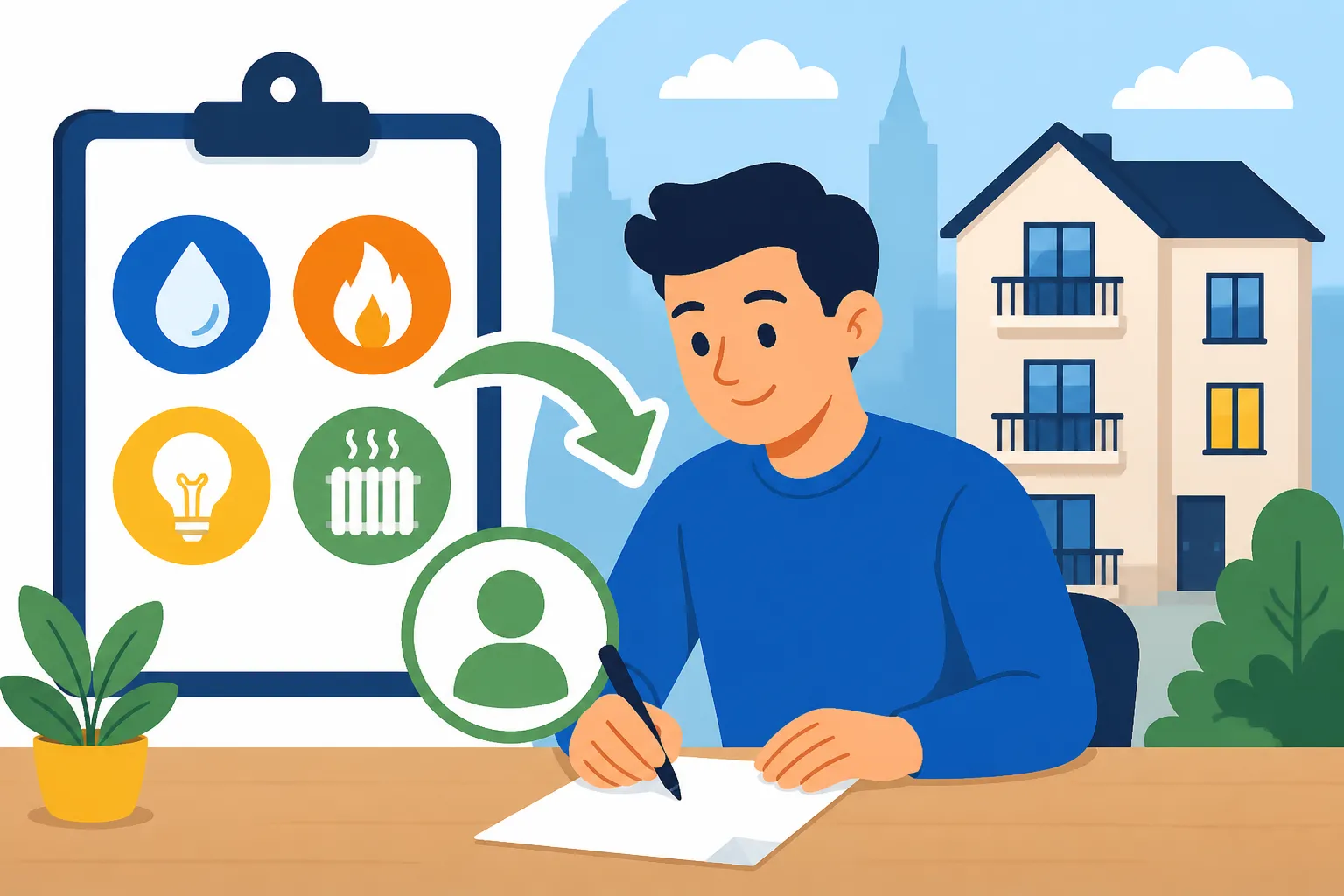
First, let's break down what we typically mean by "utilities" when renting in Poland. The big ones are usually electricity (energia elektryczna), gas (gaz ziemny), water (woda), heating (ogrzewanie), and waste collection (śmieci). Then, of course, there are the modern essentials like internet and television (internet i telewizja). It’s a lot to keep track of, and who is responsible for what can vary wildly.
Here’s the thing many new expats don't realise: not all of these are necessarily transferred directly into your name. Often, especially for water, heating, and waste collection, these are included as part of your czynsz (pronounced 'chinsz'), which is the building administration fee paid to your landlord or directly to the housing cooperative (spółdzielnia mieszkaniowa). This means the landlord holds the main contract, and you reimburse them based on your consumption or a fixed fee. It’s crucial to clarify this upfront.
This can be a significant source of confusion. You might expect to set up individual accounts for everything, only to find out that half of it is covered under the landlord's existing arrangement. This isn't necessarily a bad thing, as it can simplify some processes, but it does mean you need to be extra diligent in understanding your rental agreement. Don't be shy about asking your landlord for a detailed breakdown of what's included in the czynsz and what you'll need to set up yourself.
Why Transferring Utilities Matters
Transferring the utilities that are your responsibility directly into your name isn't just a suggestion; it's a critical step that protects both you and your landlord. Legally speaking, it establishes your responsibility for consumption from the moment you move in, preventing disputes over who owes what. Imagine moving into an apartment where the previous tenant left behind a massive electricity bill – without a proper transfer, you might find yourself in a sticky situation, even if you never consumed that power.
Beyond legal responsibility, having utilities in your name gives you direct control over your consumption and, more importantly, your costs. You'll receive bills directly from the provider, allowing you to monitor usage, choose tariffs (where applicable), and resolve any issues without needing to go through an intermediary. This transparency is invaluable, especially when trying to budget for your new life in Poland.
Finally, for some administrative tasks, having utility bills in your name can serve as additional proof of residence, although it's usually not the primary document required for something like a residence permit or zameldowanie. However, it can sometimes be useful as supplementary evidence. Primarily, it's about good financial hygiene and avoiding potential headaches down the line. It ensures a clean break from the previous tenant and a clear start for your own tenancy.
The Step-by-Step Process for Transferring Utilities
Alright, let's get down to brass tacks. Transferring utilities in Poland involves a bit of paperwork and often some patience, but it's entirely doable. Think of it as a rite of passage for every expat.
Gathering Essential Documents
Before you even think about calling a utility provider, you need to arm yourself with the right paperwork. The Polish bureaucracy loves its documents, and having everything ready will save you countless trips and phone calls. The absolute must-haves include:
Your rental agreement (umowa najmu): This is your golden ticket. It proves you have the right to occupy the property and usually contains key information like the property address, landlord's details, and the start date of your tenancy. Make sure you have the original or a certified copy.
Your identification document: This will typically be your passport or your Polish ID card (dowód osobisty) if you have one.
Your PESEL number (or NIP): If you’re planning to live in Poland for more than a brief period, you’ll most likely have a PESEL number. This is your universal identification number, and it’s required for almost all official transactions, including utility contracts. If you don't have one yet, it's worth understanding How to Get Your PESEL Number and Why It Matters for Healthcare. If you're self-employed or run a business, you might use a NIP (Tax Identification Number) instead, but for most residential utility transfers, PESEL is king.
You'll also need details from the previous tenant or, more commonly, your landlord. This includes the existing contract number for the utility, the meter readings at the time you take possession of the apartment, and sometimes the previous account holder’s name. This ensures a smooth handover and that you're not charged for someone else's consumption. Remember, bureaucracy here can be a bit like navigating a maze, but patience and a meticulously organised folder of documents will be your best friends. It’s perfectly normal to feel a bit overwhelmed by it all, so don’t hesitate to ask your landlord or a Polish-speaking friend for help with the initial steps. For a broader look at rental documentation, our guide on What Documents Do I Need to Rent an Apartment in Poland? can offer more insights.
Contacting Utility Providers
Once your documents are in order, the next step is to actually reach out to the utility companies. This is where things can get a little tricky due to the sheer number of providers and regional differences. For electricity, you'll likely deal with one of the major players like PGE, Tauron, Enea, or Energa, depending on your region. For gas, the national provider PGNiG (now largely operating under the ORLEN brand) is the one to contact. Water and waste services are usually handled by municipal companies (wodociągi for water, and local urban services for waste), but as mentioned, these are often managed through your czynsz.
You can contact these providers in a few ways: online portals, dedicated phone lines, or in-person at their customer service offices. Many companies are improving their online services, but for complex issues or initial setup, an in-person visit might still be necessary. Be prepared for potential language barriers – while some larger providers might have English-speaking staff, it's not guaranteed. Bringing a Polish-speaking friend or even hiring an assistant for an hour can save you a world of stress. For electricity, our comprehensive guide How to Set Up Electricity in Your Polish Home dives much deeper into what to expect.
When you contact them, clearly state that you are a new tenant and wish to transfer the existing utility account into your name, or set up a new one if it's a completely fresh connection. Provide all the documents you gathered, including the previous account holder's details if available. This handover process, known as cesja umowy (assignment of contract), is usually smoother than starting completely from scratch.
Meter Readings and Contract Finalization
This step is absolutely critical. Before the previous tenant leaves or immediately upon receiving the keys, you must take clear, documented meter readings for electricity, gas, and any other utilities that will be in your name. Take photos of the meters showing the readings, and have both you and the landlord (or previous tenant) sign a simple protocol confirming these numbers. This serves as undeniable proof of your starting point and prevents you from being charged for the previous occupant's usage.
Once you’ve submitted your application and the initial meter readings, the utility provider will typically prepare a new contract for you. Read this contract carefully. It will outline your chosen tariff (e.g., single-rate or dual-rate for electricity), billing cycle, and payment methods. You'll sign this, often in-person at their office or sometimes they can send it by post. Many providers will allow you to set up direct debit payments (polecenie zapłaty) from your Polish bank account, which is the easiest way to ensure you never miss a payment. Alternatively, you'll receive paper bills with a unique account number that you can pay via online banking or at any post office or bank branch. For internet and TV, setting up new service is typically a fresh contract rather than a transfer. We cover this in more detail in How to Set Up Home Internet and TV in Poland, where you'll explore various providers and packages.
Specific Utility Provider Considerations
Each utility comes with its own quirks and main players. Knowing who you're dealing with can make the process much smoother.
Electricity (Energia Elektryczna)
Poland's electricity market is regulated by a few large regional players. For example, if you're in Warsaw, you're likely dealing with PGE. In Krakow or Wroclaw, it might be Tauron. In Poznan, Enea, and in Gdansk, Energa. It’s worth asking your landlord who the current provider is for your apartment. Knowing this upfront prevents you from contacting the wrong company.
When transferring the contract, you'll typically be offered different tariff options. The most common residential tariff is G11, which is a single rate for all hours. However, if you use a lot of electricity during off-peak hours (e.g., running dishwashers or washing machines at night), a dual-rate tariff (like G12 or G12w) might be cheaper, with different prices for peak and off-peak times. The provider's customer service can help you understand these options, though it might require a Polish speaker. They will typically require your rental agreement, PESEL, and the previous contract number, along with the meter readings. You can find more targeted advice on this in our guide: How Do I Set Up Electricity After Moving Into a Polish Apartment?.
After signing, you’ll start receiving bills. These can be monthly or bi-monthly, and you'll typically get an estimated bill based on previous consumption, with periodic actual readings to adjust. Make sure you know how to submit your own meter readings if required, usually via an online portal or a dedicated phone line, to ensure accurate billing.
Gas (Gaz Ziemny)
For natural gas in Poland, the dominant player is PGNiG, which is part of the ORLEN Capital Group. Whether you need to transfer a gas contract depends on how your apartment is heated and if you have a gas stove. Many modern apartments use central heating provided by the building, and electric stoves are becoming more common. However, if your apartment has a gas boiler for heating or hot water, or a gas hob for cooking, you'll need to deal with PGNiG.
The process is similar to electricity: gather your documents, get the meter reading, and contact PGNiG. They have a fairly user-friendly website (often with English options) and customer service points. Be prepared to specify whether the gas is for cooking, heating, or both. If your apartment has a gas installation that hasn't been used for a while, there might be a requirement for a technical inspection before they can reactivate the supply, which will add a bit of time and cost.
Once the contract is in your name, you’ll receive bills, again usually based on estimated consumption with periodic actual readings. Setting up direct debit is highly recommended to avoid late payment fees. For a deeper dive into how to manage your gas supply, check out our article on How Do I Set Up Gas and Heating in My Polish Apartment?.
Water, Heating, and Waste (Woda, Ogrzewanie, Śmieci)
This is where the czynsz comes into play. In most rental situations, particularly in apartment buildings, the contracts for water supply, central heating, and waste collection remain in the landlord's name or with the building's administration. You, as the tenant, pay your share of these costs as part of your monthly czynsz.
The czynsz is typically composed of two parts: the fixed building maintenance fees (which cover things like common area cleaning, lift maintenance, building insurance, etc.) and variable advance payments for utilities like water, heating, and waste. These variable payments are usually estimates based on the size of your apartment and previous consumption. Periodically (e.g., annually), the building administration will reconcile the actual consumption against your advance payments. If you’ve used less, you get a refund; if more, you owe an additional payment. This system means you don't directly interact with the water company (wodociągi) or the heating plant.
It is absolutely crucial to get a clear breakdown of what your czynsz includes from your landlord and how often the reconciliations happen. This helps you budget and avoid nasty surprises. Ensure your rental agreement clearly states which utilities are covered by czynsz and which you are responsible for setting up directly. For a more detailed explanation of these charges, our guide on Understanding Building and Administration Fees (Czynsz) in Poland is a must-read. If you're particularly interested in waste collection specifics, How to Set Up Waste Collection and Recycling in Poland might be helpful too.
Internet and Mobile (Internet i Komórka)
Setting up internet and mobile services is typically a new contract process, not a transfer. You have a vast array of providers to choose from, offering competitive rates. Major players for home internet include UPC (now largely integrated with Play), Orange, T-Mobile, Netia, and local fibre optic providers. For mobile, Orange, Play, T-Mobile, and Plus dominate the market.
When choosing a provider, consider internet speed, contract length, and whether you need a TV package bundled in. Most companies offer fibre optic internet, which is generally fast and reliable. For mobile, prepaid options are great for immediate connectivity, but for long-term residency, a post-paid contract often offers better value. For initial connectivity, especially when you first land, a local SIM card or even an eSIM from a provider like Airalo can be a lifesaver, ensuring you have data and a Polish number while you sort out your long-term internet plan.
Signing up for internet and mobile usually requires your PESEL, an ID, and proof of address. The process is generally more streamlined and often has English-language support compared to traditional utilities. You can usually apply online or visit one of their many retail stores. Installation for home internet typically takes a few days to a couple of weeks, depending on the building's existing infrastructure. Our guide on How to Choose a Mobile and Internet Provider in Poland offers a deep dive into your options.
Common Challenges and How to Overcome Them
Navigating utility transfers in a new country, especially one with a different language and administrative culture, comes with its own set of hurdles. But trust me, you're not alone, and these challenges are absolutely surmountable.
Language Barrier
This is, without a doubt, the biggest headache for most expats dealing with Polish administration. While younger staff in urban centres might speak some English, it's not guaranteed, especially at smaller utility company branches or over the phone. The language barrier can turn a simple inquiry into a frustrating game of charades.
How to Overcome It:
- Google Translate is your best friend: Seriously, have it ready on your phone, especially the voice translation feature. It's not perfect, but it helps bridge the gap.
- Bring a Polish-speaking friend: If you have a trusted Polish friend, offering them a coffee and asking for an hour of their time can save you immense stress. Many Poles are happy to help a friend in need.
- Expat groups: Online expat groups on Facebook or forums are great places to ask for advice or even find someone who offers paid administrative assistance.
- Hire a professional: For more complex situations or if you simply don't have the time or patience, consider hiring a local assistant or a relocation agency. While there's a cost, the peace of mind can be priceless. Companies like Sirelo, while primarily known for moving services, sometimes offer or can recommend assistance with local setup, including utilities.
Bureaucracy and Patience
Polish bureaucracy is legendary, and not always in a good way. Appointments can be hard to get, waiting times in offices can be long, and requirements for documents can sometimes feel arbitrary or redundant. It's a system that values formal procedures and paper trails.
How to Overcome It:
- Expect delays and multiple visits: Don't go into it expecting a one-and-done process. Plan for at least a couple of interactions for each utility.
- Be prepared for anything: Even if you've done your research, be ready for an unexpected document request or a slightly different procedure than what you read online.
- Take a deep breath: Frustration is normal, but getting angry won't speed things up. A calm, polite, and persistent approach generally yields the best results.
- Document everything: Keep copies of every application, every email, every received document. Date everything. This paper trail is invaluable if issues arise later.
Disputed Bills or Missing Information
What if the meter readings don't quite match, or the previous tenant left an outstanding balance? These scenarios can definitely add a layer of complexity.
How to Overcome It:
- Involve your landlord immediately: They have a vested interest in resolving these issues as they own the property. They can often mediate with the previous tenant or the utility company.
- Stick to your documented evidence: This is why those initial, signed meter readings and photos are so important. They are your proof.
- Do not pay for someone else's debt: If there's an outstanding bill from before your tenancy, make it clear to the utility company and your landlord that this is not your responsibility. Utility providers generally cannot hold you accountable for previous tenants' debts if you have a new contract in your name.
- Seek legal advice if necessary: In very rare, persistent cases of dispute, it might be worth consulting with a legal professional specializing in expat affairs, though this is usually a last resort.
Key Takeaways and Best Practices for Expats
Navigating Polish utilities can feel like a marathon, not a sprint. But with a strategic approach and a good dose of patience, you'll get there. Here are some golden rules to keep in mind.
Early Communication is Key
Don't wait until you've moved in to start thinking about utilities. This conversation should happen with your landlord before you even sign your rental agreement. Get clarity on:
- Which utilities are included in the czynsz and which you are responsible for transferring.
- Who the current providers are for electricity and gas.
- The procedure for taking final meter readings with the previous tenant or landlord.
- Whether the landlord will assist with the transfer process, particularly with translation or initial calls.
Get all these details in writing, ideally as an addendum to your rental agreement or in a separate email exchange. This clear communication prevents misunderstandings and sets expectations for both parties, making your move-in much smoother. For a deeper dive into rental agreements, check out The Complete Guide to Renting an Apartment in Poland (2027).
Keep Records of Everything
I cannot stress this enough: document, document, document! Polish bureaucracy thrives on paper. Every piece of information related to your utility setup is important:
- Copies of all contracts: Keep digital and physical copies of your electricity, gas, internet, and mobile contracts.
- Initial meter readings: Photos of the meters with dates, signed by both you and the landlord.
- Correspondence: Emails, letters, and even notes from phone calls (with dates and names of the person you spoke to, if possible).
- Bills and payment confirmations: Keep all your utility bills and proof of payment.
This meticulous record-keeping will be your shield against any future disputes or discrepancies. It’s your undeniable proof if a question ever arises about billing, consumption, or contract terms.
Consider Professional Help (If Needed)
While many expats manage to sort out utilities themselves, there's absolutely no shame in seeking professional help, especially if you're short on time, don't speak Polish, or simply find the process too overwhelming.
- Relocation agencies: Many agencies specializing in expat services offer packages that include utility setup. They can handle all the calls, paperwork, and even accompany you to offices.
- Local administrative assistants: You can often find freelancers who offer administrative support, including utility transfers, at a more affordable rate than a full relocation agency. Ask in expat groups for recommendations.
- Your landlord: Some landlords are incredibly helpful and will actively assist you. Don't be afraid to ask for their support. After all, a happy tenant who pays bills on time is in their best interest.
Remember, the goal is to get your home set up and functioning so you can enjoy your new life in Poland. Choose the path that makes the most sense for your situation and budget.
Summary of Utility Transfer Responsibilities in Poland
To give you a quick overview, here's a table summarising who typically handles which utilities when you're renting in Poland:
| Utility Type | Typical Responsibility | Notes |
|---|---|---|
| Electricity | Tenant (direct contract) | You sign a contract with a regional provider (PGE, Tauron, Enea, Energa). Requires PESEL, rental agreement. |
| Gas | Tenant (direct contract) | You sign a contract with PGNiG/ORLEN, especially if you have gas heating/stove. Requires PESEL, rental agreement. |
| Water | Landlord / Building Admin (czynsz) | Usually included in your monthly czynsz payment to the building or landlord. |
| Heating | Landlord / Building Admin (czynsz) | Primarily included in czynsz if central heating. If gas boiler, linked to your gas contract. |
| Waste Collection | Landlord / Building Admin (czynsz) | Included in czynsz. The landlord/admin registers inhabitants with the municipality. |
| Internet/TV | Tenant (new contract) | You choose and sign a new contract with a provider (Play, Orange, T-Mobile, Netia). No transfer usually. |
| Mobile Phone | Tenant (new contract) | You choose and sign a new contract (or prepaid) with a provider (Orange, Play, T-Mobile, Plus). |
Disclaimer
The information provided in this guide is intended for general informational purposes only and does not constitute legal, financial, or professional advice. While we strive to ensure the information is accurate and up-to-date, utility regulations, provider policies, and administrative procedures in Poland can change. It is always recommended to verify specific requirements with the relevant utility providers, your landlord, or a legal professional for your individual situation. We are not responsible for any actions taken based on the information provided herein.