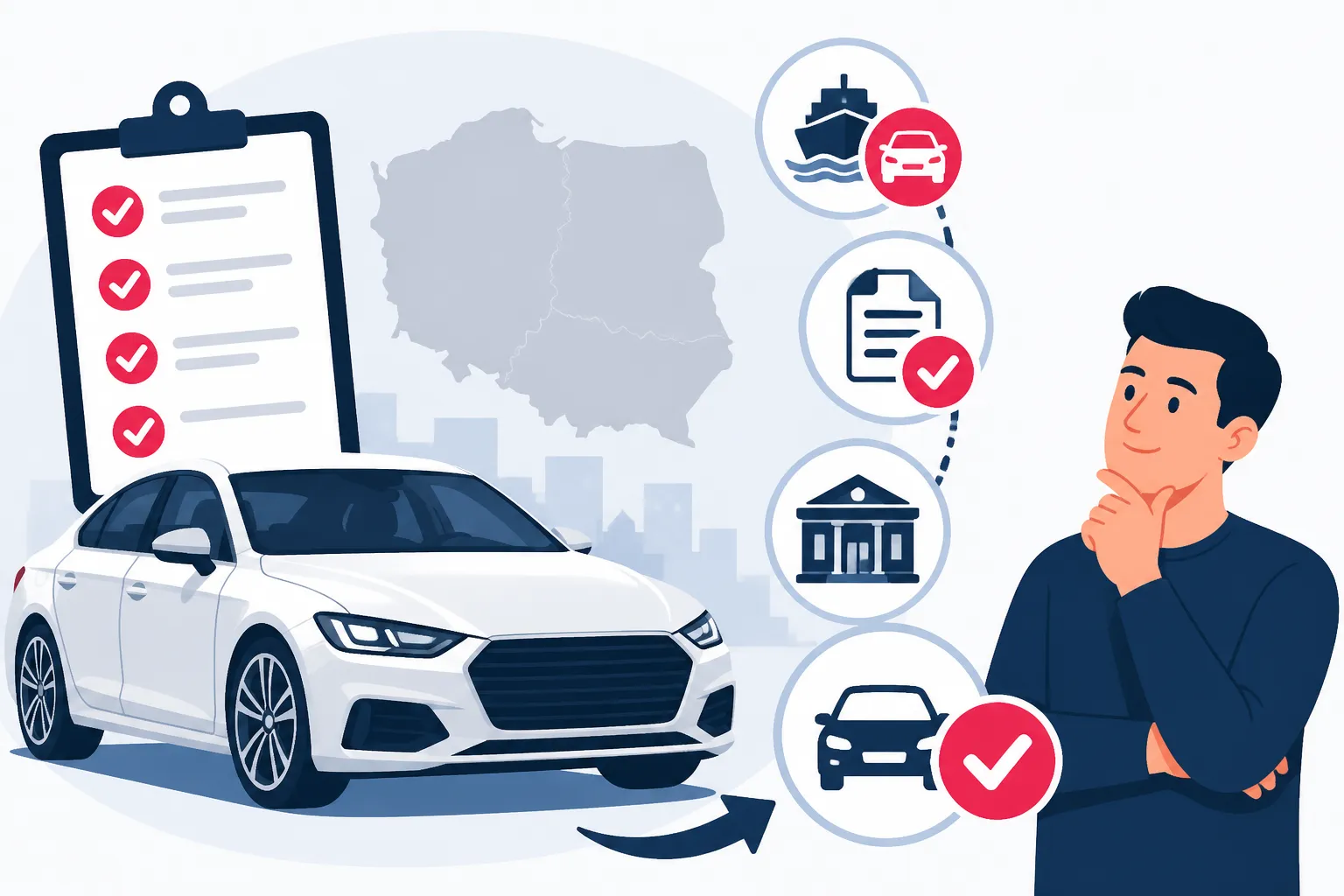
How Do I Register an Imported Car in Poland?
Bringing your car to Poland from another country can feel like navigating a bureaucratic obstacle course blindfolded, and believe me, you're not alone in that frustration. The rules are intricate, the paperwork can be overwhelming, and the language barrier often adds an extra layer of difficulty. This guide is here to untangle that knot for you, breaking down exactly how to register an imported car in Poland, from the initial inspection to getting those coveted Polish plates on your vehicle. We'll walk through the process, highlight common pitfalls, and share practical advice to make it as smooth as possible for you.
Understanding the Initial Hurdles: Before You Even Start Paperwork
Before you even think about stepping into the Urząd Komunikacji (Vehicle Registration Office), there are a few crucial aspects to get your head around, depending on where your car is coming from. The process for importing a car from an EU country is significantly simpler than from outside the European Union. This initial distinction will dictate many of the subsequent steps, costs, and documentation you’ll need to prepare.
EU vs. Non-EU Vehicle Imports: A Critical Distinction
If you're bringing your car from another EU member state, consider yourself lucky. The process is streamlined due to the principle of free movement of goods. You generally won't face customs duties or VAT, provided you've already paid VAT in the original EU country, and the car isn't brand new (less than 6,000 km or six months old). Your biggest challenges will be the technical inspection and gathering the right documents.
However, if your beloved vehicle is arriving from outside the EU – say, from the US, Canada, or Asia – then buckle up. You're looking at customs clearance, import duties, and Polish VAT (usually 23%), even if you bought the car decades ago. The customs process itself can be a saga, requiring declarations, valuations, and ensuring all fees are paid before the vehicle is officially released. Many expats moving their entire lives, including their car, from distant shores opt for a relocation service. If you're undertaking such a big move, companies like Sirelo can be incredibly helpful in coordinating the logistics and customs declarations, saving you a lot of headaches in the process. Remember, you'll need proof that all these duties and taxes have been settled before the registration office will even look at your application.
Essential Documents You'll Need to Gather
The cornerstone of a successful car registration is having all your ducks in a row when it comes to paperwork. It’s always best to have originals and copies, and be prepared for some documents to require certified Polish translations by a sworn translator (tłumacz przysięgły). Don't try to skimp on this; the Urząd officials will send you packing if a translation isn't up to snuff.
Here's a breakdown of the critical documents:
- Proof of Ownership: This is non-negotiable. It could be a purchase invoice, a sales contract, a gift agreement, or customs declaration documents if imported from outside the EU. It needs to clearly show who the owner is and the vehicle details.
- Original Vehicle Registration Certificate: This is like the car's passport. You'll need both parts (Part I and Part II, if applicable in your home country).
- Proof of Customs and Excise Duty (Akcyza) Payment: For EU imports, you'll generally need to pay excise duty in Poland unless it's an electric or hydrogen car. This varies based on engine capacity (e.g., under 2000cc vs. over 2000cc). You typically submit a declaration (AKC-U/S) and pay online via the National Revenue Administration's PUESC platform. For non-EU imports, you’ll also need proof of customs clearance and import duties paid.
- Certificate of Conformity (COC) or Individual Approval: This document confirms that your vehicle meets EU safety and environmental standards. Newer cars usually have a COC from the manufacturer. Older cars, or those from outside the EU, might need an individual approval process through a diagnostic station or a technical expert, which involves a detailed technical inspection and often some modifications.
- Valid Technical Inspection Certificate (Badanie Techniczne): Your imported car, regardless of its origin, will need to undergo a full technical inspection at a certified diagnostic station in Poland (Stacja Kontroli Pojazdów). This is more stringent than a regular annual check-up, especially for non-EU vehicles, as it confirms the car's compliance with Polish road regulations.
- Proof of PESEL or NIP Number: For individuals, your How to Get Your PESEL Number and Why It Matters for Healthcare is crucial for almost any administrative task in Poland, including car registration. If you're registering the car as a business, you'll need your NIP (Tax Identification Number).
- Proof of Identity: Your passport, Karta Pobytu (residence permit), or EU ID card.
- Application Form: This will be provided by the Urząd Komunikacji or can often be downloaded from their website.
This list isn't exhaustive for every possible scenario (e.g., specific exemptions, classic cars), but it covers the vast majority of cases. Always check the specific requirements of your local Urząd Komunikacji or their website, as processes can sometimes vary slightly between different cities.
The Step-by-Step Process for Registering Your Imported Car
Once you have your documents in hand, the real journey begins. This is where patience becomes your best friend, because Polish bureaucracy, bless its heart, operates on its own unique timeline.
Step 1: Technical Inspection (Badanie Techniczne)
This is often your first hands-on interaction with the Polish vehicle system. You need to take your car to a certified diagnostic station (Stacja Kontroli Pojazdów) for a full technical inspection. For imported vehicles, particularly those from outside the EU, this is more than just a routine check. They will scrutinize your vehicle's compliance with Polish and EU regulations. This could mean anything from headlight adjustments (especially if you're coming from a country that drives on the left) to emissions standards.
The inspector will issue a zaświadczenie (certificate) upon successful completion. This document is absolutely vital for registration. If your car fails, they’ll tell you what needs fixing before you can get the certificate. Finding a station that has experience with imported cars, especially non-EU ones, can save you a lot of hassle. Sometimes it's worth calling a few places in advance to explain your situation.
Step 2: Payment of Excise Duty (Akcyza)
For most imported cars, even from within the EU, you'll need to pay excise duty. Electric and hydrogen vehicles are usually exempt, and hybrids have reduced rates. The amount depends on the engine capacity: typically 3.1% for cars with engines up to 2,000 ccm and 18.6% for those above 2,000 ccm. This is paid through the PUESC platform. You'll need to declare the vehicle and its value, then pay the duty. The proof of payment is essential.
This step can be tricky, as you need to accurately declare the vehicle's value. It’s important to research comparable vehicle values in Poland to ensure your declaration is realistic, as the tax office can challenge it. You can find more general information about various taxes, including excise duty, in guides like The Complete Guide to Taxes in Poland for Expats 2026.
Step 3: Payment of Civil Law Transactions Tax (PCC)
If you bought your car from an individual (not a company) in Poland, or sometimes even if it's considered a secondary purchase after import, you might need to pay the Civil Law Transactions Tax (Podatek od Czynności Cywilnoprawnych, or PCC). This is typically 2% of the market value of the vehicle. This tax is paid to the tax office (Urząd Skarbowy) using a PCC-3 form. This is usually only required if the car was purchased in Poland from an individual. If you imported the car and paid VAT abroad (EU) or customs/VAT at the border (non-EU), you might be exempt. It's crucial to clarify this based on your specific purchase scenario. Understanding this process correctly is vital, and you can learn more about it in Understanding the Tax on Civil Law Transactions PCC in Poland.
Step 4: Translation of Documents
Remember those sworn translations? Now’s the time they come into play. Any foreign document (like your original registration certificate or purchase invoice) that isn't already in Polish or doesn't have an EU standard format will need to be translated by a tłumacz przysięgły. This ensures legal validity in Poland. Don't underestimate the time this takes or the cost; plan for it in your schedule and budget.
Step 5: The Visit to the Urząd Komunikacji (Vehicle Registration Office)
This is the big one. With all your documents, certificates, and proofs of payment ready, you head to your local Urząd Komunikacji (which is usually part of the Starostwo Powiatowe or City Hall). Be prepared for queues, especially in larger cities. Some Urząd offices allow online booking of appointments, which is highly recommended. You can often find contact details or booking portals via your city's official website.
Here's what happens:
- Submit your application: Hand over your completed application form and all supporting documents. The official will meticulously check everything.
- Temporary Registration (Miękki Dowód Rejestracyjny): If everything is in order, they will issue you a temporary registration certificate (Miękki Dowód Rejestracyjny) and temporary plates. These are valid for 30 days. This means you can legally drive your car while you wait for the permanent documents.
- Payment of Fees: You'll pay the registration fees, which include the cost of the permanent registration certificate, control sticker, and new license plates.
Step 6: Obtaining Permanent Registration and Plates
Within the 30-day validity period of your temporary registration, the Urząd will process your permanent dowód rejestracyjny (registration certificate) and control sticker. You'll receive an SMS notification or a phone call when they are ready for collection. You then go back to the Urząd to pick them up, exchanging your temporary documents and plates for the permanent ones. Finally, your car is officially Polish!
Costs and Fees: Budgeting for Your Polish Car Registration
Registering an imported car in Poland involves several costs beyond the purchase price of the vehicle itself. It's vital to budget for these from the start to avoid any unwelcome surprises.
Breakdown of Typical Fees
Here’s a general overview of the expenses you can expect:
| Fee Type | Estimated Cost (PLN) | Notes |
|---|---|---|
| Permanent License Plates | 80 | Standard white plates. You can get custom plates for a significantly higher fee. |
| Registration Certificate (Dowód Rej.) | 54 | The main document confirming your car is registered. |
| Control Sticker | 18.50 | Placed on your windshield. |
| Temporary Registration & Plates | 62 | Issued initially, valid for 30 days. |
| Technical Inspection (Badanie Tech.) | 98 – 180+ | Standard fee is around 98 PLN, but for imported non-EU vehicles or specific complex cases, it can be higher, up to 180 PLN or more if special approvals are needed. |
| Excise Duty (Akcyza) | 3.1% or 18.6% of value | Depends on engine capacity (>2000cc vs <2000cc) and vehicle value. Electric/hydrogen cars exempt, hybrids reduced. |
| PCC Tax (Podatek od Czynności Cywilnoprawnych) | 2% of market value | Only if purchased from an individual in Poland. May not apply to direct imports where VAT/customs were paid. |
| Sworn Translations | 100 – 300+ per document | Varies greatly by translator and document length. Budget a few hundred złoty for this. |
| Total Estimated Basic Fees | Approx. 312.50 + Taxes | This excludes excise duty, PCC, and translations, which are highly variable. Your total could easily run into thousands of złoty depending on your car's value and origin. |
Please note: These figures are approximate and subject to change. Always verify current fees with your local Urząd Komunikacji.
Additional Potential Costs
Beyond the core fees, be aware of other potential expenses:
- Customs Duties and VAT (Non-EU imports): This can be a substantial cost, typically 10% duty on the vehicle's value plus 23% VAT on the total (value + duty + shipping).
- Vehicle Modifications: If your car doesn't meet Polish technical standards (e.g., specific lighting requirements, emissions), you'll need to pay for adjustments before it passes inspection. This is particularly common for cars from countries with different regulations, such as the US.
- Insurance (OC – Third-Party Liability): Mandatory for all vehicles in Poland from the day of registration. You must have this in place before you pick up your permanent plates. Shop around, as prices vary significantly between insurers and depend on factors like your driving history, age, and the car itself.
- Agent Fees: If you opt to use an agent or specialist company to handle the registration process for you (which many expats do to save time and stress), you'll pay for their service. This can be a worthwhile investment if you're short on time or struggling with the language.
Navigating these financial aspects requires careful planning. If you're a new arrival and dealing with various administrative tasks, having reliable communication is key. Services like Airalo can provide you with an eSIM, ensuring you have internet access to research prices, contact officials, or use translation apps on the go, without relying on local SIM cards immediately.
Common Pitfalls and Tips for a Smoother Process
Registering an imported car in Poland is notorious for being a test of patience. Knowing what to expect and how to prepare can make a world of difference.
The Bureaucratic Maze: Expect Delays and Inconsistencies
One of the biggest frustrations for expats in Poland is the sheer unpredictability of administrative processes. What one Urząd in Krakow accepts, another in Warsaw might reject, or even the same Urząd might have a different interpretation depending on the official you encounter on any given day. The best approach is to be over-prepared. Bring more documents than you think you need, extra copies, and always have your PESEL number handy. You might also find yourself waiting for weeks, if not months, for your permanent documents, though the temporary plates allow you to drive.
The Urząd Komunikacji staff, while generally helpful, might not always be fluent in English. Having a Polish-speaking friend, colleague, or an interpreter with you can save you immense frustration and misunderstandings. Remember that patience and a polite demeanor, even when you feel like tearing your hair out, often go a long way.
Don't Forget About Insurance!
This is a critical point that often catches new arrivals off guard. In Poland, it is mandatory to have third-party liability insurance (ubezpieczenie OC) for your vehicle from the day of registration. You cannot legally drive the car without it, and the Urząd will likely ask for proof of insurance when you collect your permanent documents.
You can purchase OC insurance from various providers such as PZU, Warta, Ergo Hestia, or Link4. It’s highly recommended to get quotes from several companies as prices can vary widely. Factors like your age, years of driving experience (even foreign experience, if acknowledged), your car's make and model, and engine size will all influence the premium. Some companies might offer discounts if you bundle it with other insurance policies, like home insurance. This is an ongoing cost, so factor it into your annual budget.
Crucial Tips for Expats
- Start Early: Do not leave car registration until the last minute. The entire process, especially for non-EU imports, can take weeks or even months.
- Utilize Online Resources: Check the website of your specific Urząd Komunikacji (often part of your local Starostwo Powiatowe or Urząd Miasta). Many provide checklists of required documents and sometimes even allow you to book appointments online.
- Seek Local Help: If you’re not confident in your Polish language skills, consider bringing a Polish friend or hiring an agent. Their knowledge of the system can be invaluable.
- Keep Everything Organized: Create a dedicated folder for all your car documents, both original and copies, and keep it meticulously organized. You’ll be referring back to them frequently.
- Double-Check Requirements: Before each step (inspection, excise duty payment, Urząd visit), double-check the latest requirements, as regulations can change. A quick phone call or website check can save a wasted trip.
- Understand Your Driving in Poland Licences, Registration and Rules for Expats: Beyond car registration, ensure you understand all the broader rules for driving on Polish roads, from speed limits to winter tire requirements. If your foreign driving license isn't an EU one, you'll need to look into How to Exchange Your Foreign Driving Licence in Poland within six months of establishing residency.
Registering an imported car in Poland is definitely a marathon, not a sprint. But armed with the right information and a hefty dose of patience, you can navigate the process successfully and soon be enjoying the freedom of the open road in your own vehicle.
Disclaimer
The information provided in this guide is for general informational purposes only and does not constitute legal or professional advice. While we strive to keep the information up-to-date and accurate, regulations regarding vehicle registration, customs, and taxation in Poland can change frequently. Expats are strongly advised to consult with the relevant Polish authorities (e.g., Urząd Komunikacji, Urząd Skarbowy, Customs Office) or a qualified legal/tax professional for advice tailored to their specific situation. We cannot be held responsible for any inaccuracies or omissions, or for any actions taken based on the information provided herein.