What Happens to My Healthcare If I Lose My Job in Poland?
Maintaining health coverage in Poland after job loss involves a 30-day grace period, labor office registration, or voluntary contributions.

Maintaining health coverage in Poland after job loss involves a 30-day grace period, labor office registration, or voluntary contributions.

Finding a dermatologist in Warsaw requires comparing public and private healthcare options, using booking portals, and understanding e-prescriptions.

Public healthcare physiotherapy in Poland offers free treatments through the NFZ for insured expats with valid doctor referrals.

Registering with a family doctor in a small town in Poland requires a PESEL number, proof of insurance, and a completed declaration form.

Medical differences between a Polish clinic and a hospital help patients choose the right facility for outpatient care, emergencies, and referrals.
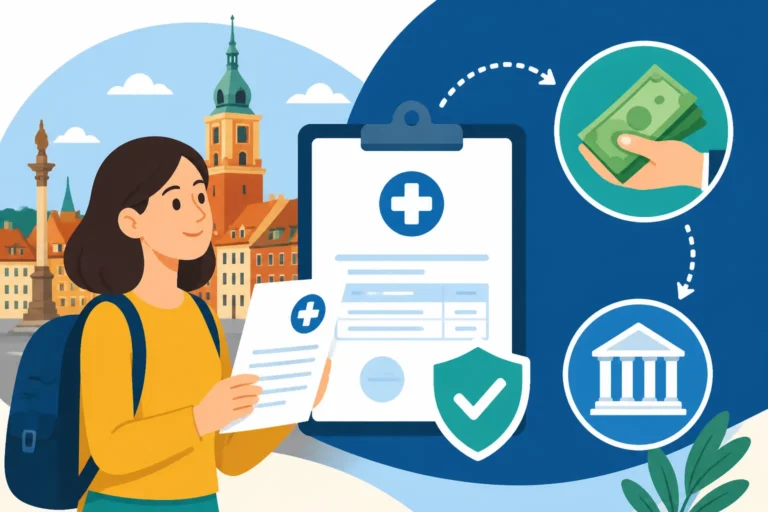
Medical cost reimbursement for care received abroad through public and private insurance in Poland requires specific documentation.

Private healthcare costs in Poland vary, but subscriptions and pay-as-you-go options provide faster access and English-speaking doctors for expats.

The healthcare landscape for expats in Krakow involves choosing between public NFZ services, private subscriptions, and pay-as-you-go visits.

Ambulance services in Poland are free for insured residents, but uninsured patients and false alarms incur significant out-of-pocket costs and fines.

German health insurance and European health insurance cards cover medically necessary treatment at public Polish hospitals and clinics.