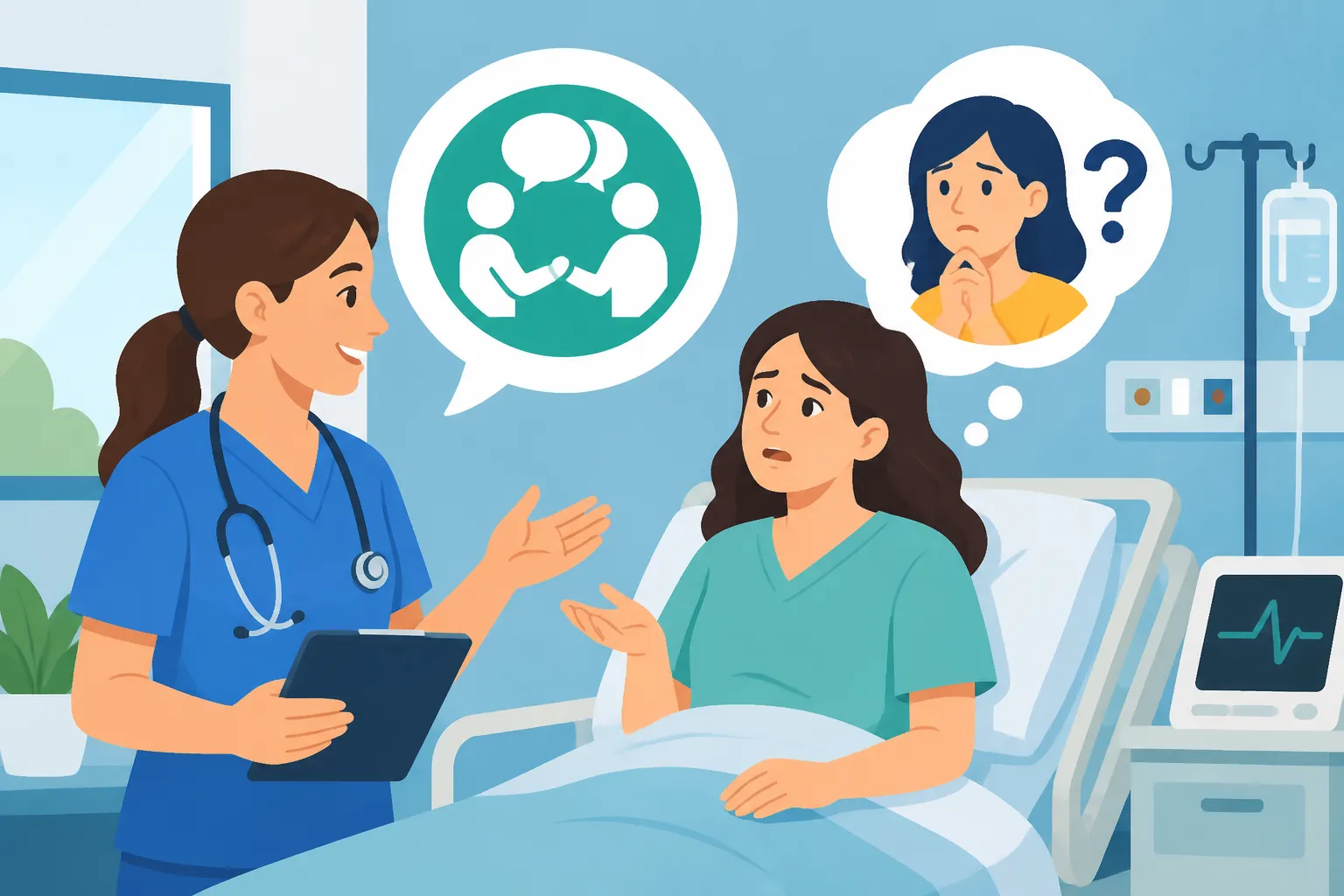
How Do I Handle a Hospital Stay as a Non-Polish Speaker?
Finding yourself in a Polish hospital when you don't speak the language is one of those expat nightmares we all hope to avoid. It's a terrifying scenario where you're not only dealing with potential illness or injury but also the immense frustration of a language barrier that feels like an insurmountable wall. This guide is here to walk you through the realities of a hospital stay as a non-Polish speaker, offering practical advice, tips, and a healthy dose of empathy to help you navigate this challenging experience.
The Initial Shock and How to Communicate Even Without Words
Let's face it, the moment you realize you're being admitted to a hospital in a foreign country, a wave of panic can set in. The bustling corridors, the stern-faced medical staff, the unfamiliar smells – it's all amplified when you can't understand the whispers around you. But don't despair. There are concrete steps you can take to ensure your basic needs are met and critical information is conveyed, even if your Polish vocabulary extends only to "dzień dobry" (good day) and "dziękuję" (thank you).
Non-Verbal Communication and Basic Phrases That Save Lives
In those first crucial moments, when words fail, your body language becomes your most powerful tool. Pointing directly to where you feel pain, making universal gestures for "yes," "no," "hot," "cold," or "thirsty" can go a long way. Polish medical staff, though sometimes appearing stoic, are generally trained to understand these basic cues. Don't be shy about showing them where it hurts, even if it feels awkward. Use a pain scale – hold up fingers to indicate your pain level from 1 to 10. This is universally understood.
Beyond gestures, having a few key phrases memorized or written down can be a game-changer. These aren't just polite courtesies; they are vital for your care. Phrases like "boli mnie tu" (it hurts here), followed by pointing, are essential. "Potrzebuję pomocy" (I need help) is another crucial one. If you're experiencing symptoms like nausea ("jest mi niedobrze"), dizziness ("kręci mi się w głowie"), or difficulty breathing ("trudno mi oddychać"), having these written down or in a translation app can literally make all the difference. While Google Translate or other apps can be lifesavers for single words or simple sentences, remember they're not perfect. Medical terminology is complex even in your native tongue, so try to keep your sentences short and direct.
The Power of a Prepared Medical History
This is perhaps the single most important piece of advice any expat living in Poland should heed. Before you ever find yourself in an emergency, create a concise, up-to-date document of your medical history. This should be in both English and Polish, if possible. Don't wait until you're already in a hospital bed feeling unwell. Include:
- Your Name, Date of Birth, PESEL number (if you have one), and contact information for an emergency person who does speak Polish. If you're wondering how to get one, our guide on How to Get Your PESEL Number and Why It Matters for Healthcare offers detailed steps.
- Known Allergies: This is non-negotiable. Clearly list any drug allergies (e.g., penicillin, ibuprofen), food allergies, or allergies to materials like latex. Specify the reaction (e.g., "wysypka" – rash, "obrzęk" – swelling).
- Current Medications: List all prescription and over-the-counter medications you are taking, including dosages and frequency. Include any vitamins or supplements.
- Existing Medical Conditions: Diabetes, asthma, heart conditions, previous surgeries, chronic illnesses – list them all.
- Vaccination History: Especially relevant if you're unconscious or unable to communicate.
- Your Primary Care Physician's (GP's) Contact: This is your lekarz rodzinny.
- Insurance Information: Your NFZ details, private insurance policy number, or travel insurance details.
Keep this document on your phone, printed in your wallet, and accessible to a trusted friend. Imagine the peace of mind knowing that even if you can't utter a single word, the medical staff has vital information at their fingertips. This simple preparation can prevent potentially dangerous miscommunications and ensures you receive appropriate care from the get-go.
Getting an Interpreter: Your Right and How to Advocate for It
Navigating the Polish healthcare system, especially during an emergency, is tough enough even for those with a firm grasp of the language. When you don't speak Polish, securing an interpreter becomes absolutely critical. While some larger hospitals in major cities like Warsaw or Krakow might have English-speaking staff, particularly younger doctors or nurses, it's far from guaranteed, especially in smaller towns or at night.
Polish law does not explicitly mandate that hospitals provide free medical interpreters for foreign patients in all situations. This can come as a shock, and it's a huge source of frustration for many expats. You might find a kind nurse or doctor who speaks some English, or perhaps a younger staff member might use a translation app on their phone. However, relying on this ad-hoc system is risky, especially when discussing complex medical conditions or treatment plans.
Here's how to advocate for interpretation:
- Politely but firmly request an interpreter: Use your translation app to communicate "Potrzebuję tłumacza" (I need an interpreter) or "Czy jest ktoś, kto mówi po angielsku?" (Is there anyone who speaks English?).
- Inquire about paid services: Some hospitals or clinics, particularly private ones, might offer a paid interpreter service or suggest external agencies they work with. Be prepared for this to be an out-of-pocket expense if not covered by your insurance. Our comprehensive guide on The Cost of Healthcare in Poland: A Complete Breakdown for Foreigners (2026) delves deeper into potential costs.
- Lean on your support network: If you have friends, colleagues, or even your employer's HR department (if you're employed) who speak Polish, call them. They can often communicate with the staff over the phone. Make sure you grant explicit permission for the hospital to speak with them about your medical information.
- Consider professional medical translation services: In non-emergency situations, or if you need to understand complex discharge papers, investing in a professional medical translator is highly advisable. These services understand the nuanced medical terminology and can provide accurate interpretations.
- Private insurance and travel insurance: If you have private health insurance in Poland or a comprehensive travel insurance policy like SafetyWing, check if they offer assistance with medical interpretation. Many global plans understand the importance of this service and can help arrange it or reimburse the cost. This is a significant benefit to consider when choosing your coverage.
Remember, clear communication is fundamental to good medical care. Don't be afraid to assert your need for an interpreter, even if it feels like you're being a nuisance. Your health and well-being depend on it.
Navigating the Hospital Environment as an Expat
Polish hospitals, especially the public ones (szpital), can feel very different from what you might be used to in your home country. The routines, the roles of staff, and even the approach to patient comfort can take some getting used to. Understanding these dynamics can significantly reduce your stress levels during a stay. For a broader perspective on hospital care, our guide on Understanding Hospital Care at a Szpital in Poland can be incredibly helpful.
Understanding the Polish Hospital Hierarchy and Ward System
Hospitals in Poland generally operate with a clear hierarchy. Doctors (lekarze) are at the top, making decisions, performing examinations, and prescribing treatments. Nurses (pielęgniarki) are responsible for day-to-day care, administering medications, monitoring patients, and assisting with hygiene. There are also auxiliary staff (salowe or pomoc medyczna) who help with cleaning, meals, and transporting patients.
- Doctor's Rounds (Obchód lekarski): Typically, doctors will do their rounds once, sometimes twice a day, often in the morning. This is your primary opportunity to speak with a doctor. They might be accompanied by other medical staff or students. During these rounds, if you have an interpreter or a Polish-speaking friend on the phone, ensure they are present. This is when key decisions about your treatment or discharge are made.
- Nurses' Station (Dyżurka pielęgniarek): This is your main point of contact for immediate needs. Don't hesitate to go there (or ask a visitor to go for you) if you need something urgently, like pain relief, assistance to the bathroom, or if you feel unwell. There's often a bell next to your bed, but sometimes going directly to the dyżurka is more effective.
- Wards (Oddział): Hospitals are divided into oddział (wards) specializing in different types of care (e.g., oddział wewnętrzny for internal medicine, oddział chirurgiczny for surgery). You'll typically be assigned to a room within a ward, which might be a private room (rare in public hospitals) or a multi-bed room. Privacy can be limited in public hospitals, and you should be prepared for this.
It's common for doctors to communicate directly with patients, but nurses are the backbone of daily care. Building a good rapport with your nurses, even through smiles and basic phrases, can make a real difference in your comfort.
Meals, Visitors, and Daily Routines: What to Expect
Let's be realistic: Polish hospital food is often a subject of wry jokes among locals and expats alike. It's designed to be bland and easy to digest, not gourmet. Expect simple, often boiled dishes. If you have specific dietary requirements (e.g., vegetarian, gluten-free), you must communicate this clearly and repeatedly. It's a good idea to have friends or family bring in supplementary food if allowed and if your condition permits.
- Meal Times: Meals are served at fixed times, usually breakfast around 8:00 AM, lunch around 1:00 PM, and dinner around 6:00 PM.
- Visiting Hours (Godziny odwiedzin): Public hospitals have strict visiting hours, which can vary by ward. It's important for your visitors to adhere to these. Children might have restricted visiting access. If you have an international private health insurance plan like SafetyWing, they often have concierge services that can help loved ones understand these rules.
- Personal Items: Bring your own toiletries, comfortable pajamas, a towel, and perhaps some slippers. Hospitals usually provide basic bedding, but personal touches can make a long stay more bearable. A book, headphones, or a tablet can help pass the time.
- Daily Cleanliness: While hospitals are generally clean, you'll be responsible for your personal hygiene unless your condition prevents it. Nurses will assist with bathing or changing if necessary, but don't expect hotel-level service.
Understanding these aspects of daily life can help manage your expectations and prevent unnecessary frustration.
Managing Your Comfort and Needs
Being cooped up in a hospital can be uncomfortable and anxiety-inducing, especially when you feel like you can't express your needs. But remember, you have a right to comfort and care.
- Pain Relief (Leki przeciwbólowe): Do not suffer in silence! If you are in pain, ask for medication. "Boli mnie, potrzebuję leków przeciwbólowych" (I am in pain, I need pain medication) is a crucial phrase. Clearly indicate where the pain is and its intensity. Doctors often err on the side of caution with strong painkillers, so you might need to be persistent if your pain isn't being adequately managed.
- Hygiene and Bathroom Access: If you need help getting to the bathroom, or with personal hygiene, inform the nurses. Use simple phrases or gestures. "Potrzebuję do łazienki" (I need to go to the bathroom) is a good one to know.
- Calling for Assistance: The call bell next to your bed is there for a reason. If you need urgent assistance, use it. If there's a delay, or if you need non-urgent help, the nurses' station (dyżurka pielęgniarek) is your next stop.
- Medication Schedule: Keep track of when you receive medication. If you feel you've missed a dose or are unsure, ask the nurse.
- Feeling Unwell: If your condition changes, you suddenly feel worse, or develop new symptoms, tell a nurse immediately. Don't assume they already know or that it's minor. It's always better to over-communicate in these situations.
Empowering yourself with a few key phrases and knowing the routines can help you take control of your situation and ensure your comfort is prioritized as much as possible.
Financials, Follow-Up, and Getting Home
The hospital stay isn't over until you've successfully navigated the discharge process, understood your follow-up care, and sorted out any financial implications. This final stage can be just as daunting as admission for a non-Polish speaker, but being prepared makes a world of difference.
Understanding Your Bills and Insurance Coverage
This is where things can get complicated, especially if you're not fully integrated into the Polish public healthcare system (NFZ) or if you have a mix of public and private coverage. Our general guide, The Complete Guide to Healthcare in Poland for Expats (2027), provides an excellent overview of the system.
- NFZ Coverage: If you are legally employed in Poland and contribute to ZUS, you should be covered by the NFZ. This means your hospital stay, treatment, and medications administered during your stay are generally free at the point of care. However, certain procedures or amenities (like a private room) might not be covered. Always confirm your coverage status. You can learn more about registering with the NFZ in our guide Registering with the NFZ in Poland: The Complete Expat Guide (2027).
- Private Health Insurance: If you have private insurance (e.g., a subscription plan like those offered by Medicover or LUX MED, or a comprehensive international plan like SafetyWing), ensure the hospital staff are aware of it. These plans often cover hospital stays in private facilities or can supplement public care by offering access to English-speaking doctors. Before you're discharged, confirm what your private insurance will cover and what you might be liable for.
- Travel Insurance: For tourists or those on short-term stays, travel insurance is absolutely crucial. Policies like SafetyWing are designed for digital nomads and travelers, providing coverage for unexpected medical emergencies abroad. They can often handle direct billing with the hospital, or guide you through the reimbursement process, alleviating a significant financial burden. Without adequate insurance, a hospital stay in Poland, while generally less expensive than in Western Europe or North America, can still rack up substantial bills. Our guide on Health Insurance in Poland: Mandatory, Private and Subscription Options Explained provides a deeper look into your options.
- Getting Your Bill (Rachunek or Faktura): If you are liable for any costs, make sure you receive a detailed, itemized bill. Ask for it in English if possible, or have someone translate it for you. Don't be afraid to question charges you don't understand.
Post-Discharge Instructions and Follow-Up Care
Leaving the hospital isn't the end of your healthcare journey; it's often the beginning of the recovery phase. Understanding your discharge instructions is paramount to a successful recovery.
- Discharge Summary (Wypis ze szpitala): You will receive a discharge summary, which is a critical document. It details your diagnosis (rozpoznanie), treatment received (leczenie), medications prescribed (zalecane leki), and instructions for follow-up care (dalsze zalecenia). This document will almost certainly be in Polish. Do not leave the hospital without understanding this document. If an interpreter wasn't available during your stay, insist on having someone go through it with you or arrange for a professional translation immediately.
- Prescriptions (Recepty): Any medications prescribed upon discharge will be given via an e-prescription system (e-recepta). You'll receive a four-digit code and often an SMS or email with a PDF. You'll need your PESEL and the code to collect your medication from any pharmacy (apteka). Our guide on Prescription Medications and Pharmacies in Poland: The Complete Guide offers comprehensive details.
- Follow-Up Appointments (Wizyta kontrolna or Wizyta u specjalisty): The discharge summary will specify if you need to see a specialist (specjalista) or your GP (lekarz rodzinny) for a follow-up. Public healthcare often involves long waiting lists for specialists. If your condition is serious, inquire about urgent specialist appointments or consider a private consultation. For accessing specialist care, our article How to Access Specialist Care Through the Polish Public System might be useful.
- Your Internetowe Konto Pacjenta (IKP): If you have a PESEL, you can set up an IKP. This online patient portal (accessible via the website or mObywatel app) stores all your e-prescriptions, e-referrals, and other medical records digitally. It's incredibly useful for tracking your health information and can be a huge help in managing follow-up care. Check out How to Set Up an Internetowe Konto Pacjenta (IKP) Patient Account for a step-by-step guide.
Your Support System: Friends, Family, and Expat Networks
Never underestimate the importance of a strong support system when dealing with health issues in a foreign country.
- Trusted Friends or Family: Having someone who can visit, bring comfort items, act as a liaison with staff (even if just for basic non-medical communication), and simply be a familiar face is invaluable. If they speak Polish, even better.
- Expat Networks: Online expat groups in Poland (e.g., on Facebook) can be a fantastic resource. You might find someone willing to lend an ear, share their own experiences, or even offer practical help like translating a simple document.
- Employer Assistance: If you're employed, your company's HR or an expat relocation specialist might be able to offer assistance, especially with communication or understanding administrative procedures.
Remember, accepting help is not a sign of weakness; it's a smart strategy when you're at your most vulnerable. Don't try to go it completely alone.
Here's a handy table of essential phrases for a hospital stay:
| English Phrase | Polish Translation | Pronunciation (approx.) | Context |
|---|---|---|---|
| I need help. | Potrzebuję pomocy. | po-tre-BOO-ye po-MO-tsy | General call for assistance. |
| It hurts here. (point) | Boli mnie tu. | BO-lee mnyeh too | Indicating pain location. |
| I am in pain. | Jestem w bólu. | YES-tem v BOO-loo | To communicate overall pain. |
| I need pain medication. | Potrzebuję leków przeciwbólowych. | po-tre-BOO-ye LEH-koov pshe-chiv-BOO-lo-vich | Asking for painkillers. |
| I feel sick. (nauseous) | Jest mi niedobrze. | YEST mee nye-DOB-zhe | Feeling nauseous or unwell. |
| I need to go to the bathroom. | Potrzebuję do łazienki. | po-tre-BOO-ye do wa-ZHEN-kee | Requesting bathroom access. |
| I don't speak Polish. | Nie mówię po polsku. | NYE moo-VYEH po POL-skoo | Basic communication of language barrier. |
| Do you speak English? | Czy mówi Pan/Pani po angielsku? | CHY moo-VEE pan/PAH-nee po an-GYEL-skoo | Asking if someone speaks English (Pan for male, Pani for female). |
| I need an interpreter. | Potrzebuję tłumacza. | po-tre-BOO-ye TWU-ma-cha | Direct request for an interpreter. |
| My allergies are… | Moje alergie to… | MO-yeh a-LER-gye to… | Stating your allergies. |
| My medications are… | Moje leki to… | MO-yeh LEH-kee to… | Stating your current medications. |
| I have condition. | Mam condition. | MAM condition | Stating a medical condition (e.g., Mam cukrzycę – I have diabetes). |
| I am thirsty. | Jestem spragniony/spragniona. | YES-tem spra-GNYO-nee/spra-GNYO-na | Feeling thirsty (spragniony for male, spragniona for female). |
| I am hungry. | Jestem głodny/głodna. | YES-tem GWOD-nee/GWOD-na | Feeling hungry (głodny for male, głodna for female). |
| Thank you. | Dziękuję. | jen-KOO-ye | Always good to be polite! |
| When can I go home? | Kiedy mogę iść do domu? | KYEH-dee MO-ge eesh do DO-moo | Asking about discharge. |
| Where is the nurse's station? | Gdzie jest dyżurka pielęgniarek? | GJEH yest dy-ZHOOR-ka pyel-yen-GNYA-rek | Asking for the nurses' station. |
Facing a hospital stay in a foreign country is genuinely tough, but with preparation, persistence, and a little help from your support network, you absolutely can get through it. Stay strong, keep advocating for yourself, and remember that many expats have walked this path before you.
Disclaimer
Please remember that this guide offers general information and personal advice based on expat experiences. Medical situations are highly individual. Always consult with medical professionals for personalized advice, diagnosis, and treatment. Information regarding legal and administrative procedures, including healthcare regulations and insurance policies, can change, so it's always wise to verify the most current requirements with official sources or qualified experts.