How Do I Get a Prescription Renewed Online in Poland?
You’re staring at the last two pills in your blister pack, and the realization hits: you need a renewal, but your regular doctor is booked for three weeks. Navigating Polish clinics can be a bureaucratic nightmare, especially when you're just trying to manage a chronic condition. This guide solves that panic by explaining exactly how to renew your Polish prescriptions online.
The Digital Revolution of the Polish Apteka
When I first moved to Poland, I remember the dread of having to visit a crowded "przychodnia" just to get a piece of paper for a routine medication I’d been taking for years. Thankfully, those days are largely gone. Poland has moved almost entirely to a digital system. Understanding how this works is the first step to reclaiming your time and sanity.
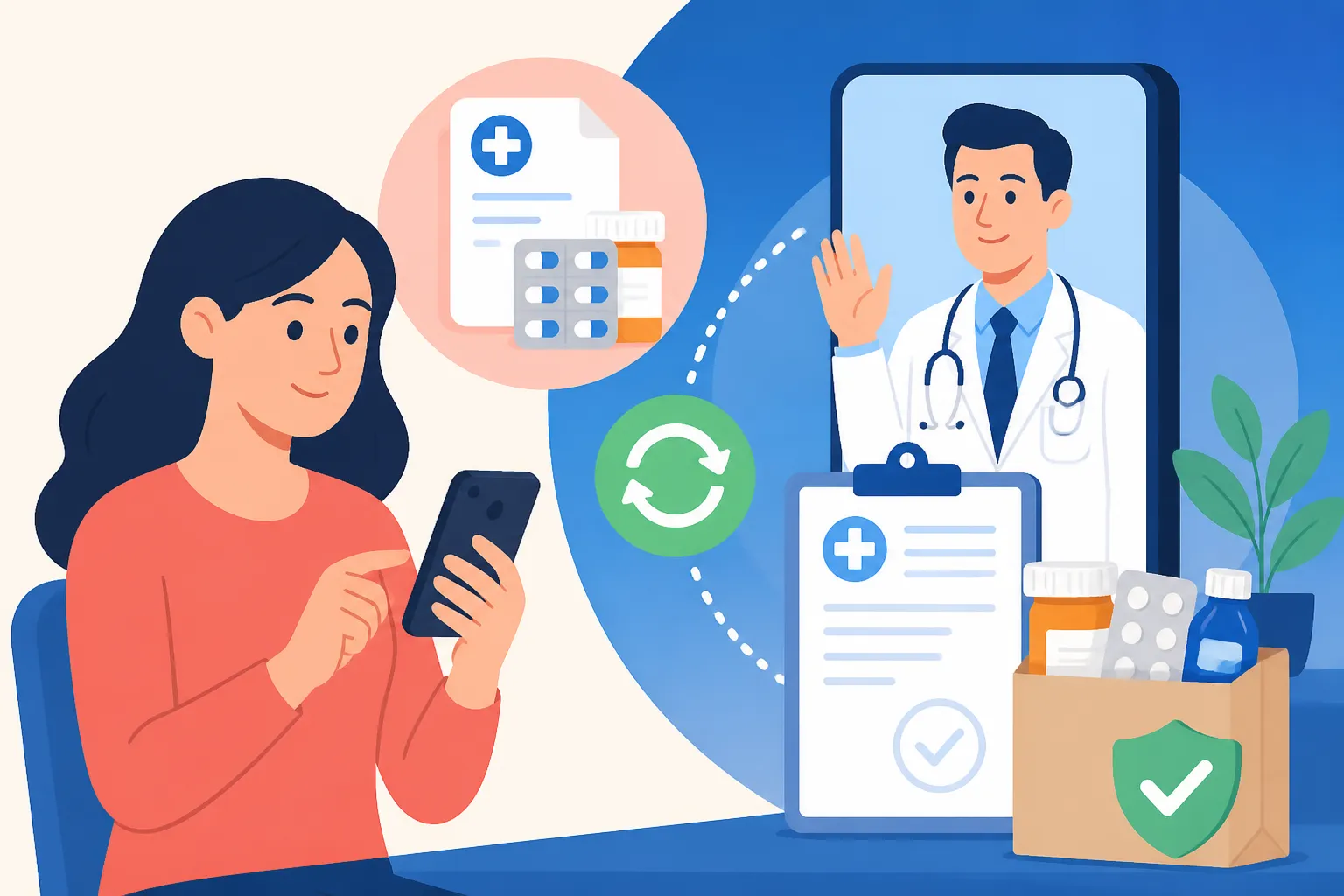
The e-recepta is now the standard. Instead of a handwritten scrawl on a piece of paper, your doctor generates a digital file in the national system. You receive a 4-digit code via SMS or email, which you then take to any pharmacy along with your PESEL number. If you are still learning the ropes of the local medical landscape, Understanding the e-Recepta (E-Prescription) System in Poland is a great place to start.
The beauty of this system is that the prescription exists in the cloud. You don't need a physical appointment to "receive" it. If a doctor has your medical history on file, they can simply click a few buttons and send that 4-digit code directly to your phone. This is particularly life-saving for expats who might be traveling back home or working remotely from another Polish city and realize they’ve forgotten their meds. If you've already got your code and just need to know what happens next, check out How Do I Fill an e-Recepta at a Pharmacy in Poland? for the pharmacy-side details.
Three Paths to Your Online Prescription Renewal
Depending on how you are insured and how much of a hurry you are in, there are three distinct ways to get your meds renewed without leaving your sofa. Each has its pros and cons, especially regarding cost and speed.
Using the Public NFZ System and IKP
If you are working legally in Poland, you are likely paying into the National Health Fund. The most "official" way to get a renewal is through the Internetowe Konto Pacjenta (IKP). This is your digital patient hub. Within this portal, you can actually see a list of your previous prescriptions and click a button to "request a renewal" from your assigned primary care physician.
The catch? Your doctor has to approve it. Some doctors are very proactive and will issue it within 24 hours. Others might ignore the digital request, requiring you to call the clinic receptionist to nudge them. To use this, you must be properly registered with a local clinic. If you haven't done that yet, you should look into How to Choose and Register with a GP (Lekarz POZ) in Poland. This method is free, but it requires you to have a "Profil Zaufany" (Trusted Profile) to log in.
Private Medical Subscriptions
Many expats choose to skip the public queues by using private providers. If your employer provides a plan, Understanding Private Medical Subscriptions (Medicover, LUX MED) in Poland will be very familiar to you. These companies have sleek apps where you can request a "tele-consultation" or a simple "order prescription" service for chronic medications.
I personally use this route most often. In the Medicover or LUX MED app, you can often find a section for "Orders." You select the medication from your history, provide a brief justification (e.g., "continuing treatment"), and a doctor usually reviews it within a few hours. The code then pops up in the app notifications. It’s efficient, but you are paying for the subscription. If you are debating whether the cost is worth it, I’ve broken down the details in Is a Medicover or LUX MED Subscription Worth It in Poland?.
Third-Party Telemedicine Portals
This is the "emergency" option. There are now dozens of legal Polish websites (like receptomat, e-recepta.pl, etc.) where you pay a one-time fee—usually between 40 PLN and 100 PLN—to have a doctor review your request. You fill out a medical questionnaire, pay via BLIK or card, and often receive your code via SMS in less than 15 minutes.
This is a godsend for digital nomads or those who are in between jobs and haven't sorted their local insurance yet. While these services are efficient, they will often ask for proof of previous treatment (like a photo of an old box or a previous prescription) to ensure they aren't dispensing restricted meds irresponsibly. For those traveling or recently arrived, having a flexible plan like SafetyWing can provide peace of mind for other medical emergencies while you navigate these local prescription portals. SafetyWing is often a favorite for its ease of use among the expat community who haven't yet settled into the NFZ system.
| Method | Typical Wait Time | Cost | Best For |
|---|---|---|---|
| IKP (NFZ) | 1 – 3 Days | Free | Chronic meds, budget-conscious |
| Private App | 2 – 6 Hours | Monthly Sub | Speed, convenience, English support |
| Telemedicine Portal | 15 – 30 Mins | 40 – 100 PLN | Emergencies, no local insurance |
| Physical Visit | Weeks (NFZ) / Days (Private) | Free / 200+ PLN | New symptoms, restricted meds |
The IKP: Your Essential Online Patient Portal
If you plan on living in Poland for more than a few months, you absolutely must set up your Internetowe Konto Pacjenta. It is the backbone of the entire medical system. I avoided it for my first year because I was intimidated by the Polish-only interface, but once I got in, it changed everything.
To log in, you’ll need your PESEL. If you are still in the paperwork phase of your move, you might be wondering, Can I Get Treatment in Poland Without a PESEL?. While emergency care is available, the IKP and the ease of online renewals really do require that number. Once logged in, the IKP shows your entire history of visits, every prescription you’ve ever filled in Poland, and even your vaccination records.
Under the "Prescriptions" tab, there is a "Request renewal" option. You select the specific medicine and the clinic where your doctor works. This sends a digital ping to their system. I recommend writing a short note in the comments field (even using Google Translate) like: "Proszę o przedłużenie recepty na lek [Medicine Name]. Kontynuacja leczenia." (Please extend the prescription for [Medicine Name]. Continuation of treatment.) For a detailed walkthrough of the setup, check out How Do I Set Up an Internetowe Konto Pacjenta (IKP) in Poland?.
While the IKP is great, remember that it only tracks what happens within the Polish system. If you are a global citizen, using a service like SafetyWing ensures that if you are outside Poland and lose your meds, you have some level of international support that the local IKP simply cannot provide.
Practical Tips for Expats Navigating Renewals
There are a few "hidden" rules about Polish prescriptions that I had to learn the hard way. First, not all medications can be renewed online. If you are taking highly regulated substances, such as strong painkillers or certain psychiatric medications, a doctor will almost always insist on a face-to-face (or at least a video) consultation to check your well-being.
Secondly, prescriptions have an expiration date. Most standard e-recepty are valid for 30 days from the date of issue. However, if the doctor marks it as a "yearly" prescription, you have 365 days to fill it. But be careful: even with a yearly prescription, if you don't buy the first pack within the first 30 days, the pharmacist might have to reduce the total amount of medication they can give you. It’s a quirk of the Polish system that catches many foreigners off guard.
If you are struggling to get a renewal because your medication is specialized, you might need a specialist's opinion rather than just a GP. Navigating this can be tricky, so I recommend reading How Do I Get a Specialist Referral Without Long Waits in Poland?.
Lastly, always have a backup. Whether it's keeping a photo of your foreign prescription or ensuring your SafetyWing coverage is active while you travel, being prepared prevents the stress of a medical "dead end." If you ever find yourself in a situation where you've run out of meds on a Sunday (when most pharmacies are closed), look for an "Apteka Całodobowa"—a 24-hour pharmacy. Every major city has at least one, and they are your last line of defense in an emergency.
Disclaimer
The information provided in this guide is for informational purposes only and does not constitute medical or legal advice. Always consult with a qualified healthcare professional in Poland regarding your specific medical needs and treatment options. The Polish healthcare system and its regulations are subject to change, and while we strive to provide the most up-to-date information, you should verify any administrative procedures with the relevant authorities or your healthcare provider.